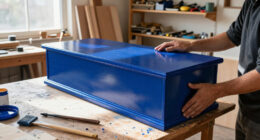

For most woodworking, the 3M Rubber Sanding Block is my best overall pick: its firm, simple shape gives better control on flat surfaces than a soft sponge. The 16-Piece Contoured Hand Sanding Block Set with 40 Hook-and-Loop Sandpaper Sheets suits shaped work, while the Milescraft 1622 Multi-Surface Sanding Block offers a more adaptable option for mixed surfaces. The central tradeoff is control versus conformity: firm blocks keep edges and faces flat, while flexible sponges and contoured kits follow curves but can round over details. Grit range, abrasive attachment, and how many shapes come in a kit also affect whether it fits your workflow. Read on for the full comparison and guidance on choosing a sanding block for your woodworking tasks.

Get business pricing on tools and workshop supplies
- Business-only prices and quantity discounts
- Tax-exempt purchasing
- Multiple users, one account, clear invoices
Complete the kit



Key Takeaways
- The 3M Rubber Sanding Block leads for flat work because a firm block supports even pressure better than a compressible sponge.
- Contoured kits are the specialist choice: the 16-piece set with hook-and-loop sheets pairs shape variety with included abrasives, but adds more pieces than a simple block requires.
- Sanding sponges favor flexibility and reuse; washable options can be useful for curved or awkward surfaces, while soft edges can make it harder to keep a crisp corner.
- Wide grit ranges are not automatically better for woodworking. Kits reaching very fine grits fit finish refinement, but many routine jobs need fewer, clearly spaced grits.
- Attachment and shape matter as much as piece count. Before choosing a large kit, check whether its block faces and abrasive format suit your regular projects.
| 16-Piece Contoured Hand Sanding Block Set with 40 Hook-and-Loop Sandpaper Sheets |  | Best for Detailed Contours | Block quantity: 16 | Sandpaper quantity: 40 sheets | Sandpaper size: 4 x 2.75 inches | VIEW LATEST PRICE | See Our Full Breakdown |
| 56-Piece Hand Sanding Block Set with 16 Contoured Blocks and 40 Sandpaper Sheets |  | Best Contour Kit for Beginners | Set contents: 16 sanding blocks and 40 sandpaper sheets | Sheets per grit: 5 | Grits: 40, 60, 80, 120, 180, 220, 400, 600 | VIEW LATEST PRICE | See Our Full Breakdown |
| 3M Rubber Sanding Block, 4.75 x 2.63 in |  | Best Traditional Sandpaper Holder | Model: 9292 | Block material: Rubber | Dimensions: 4.75 x 2.63 inches | VIEW LATEST PRICE | See Our Full Breakdown |
| 8 Pack Sanding Sponge – 60/80/120/180/220 Grit Assortment |  | Best Reusable Grit Assortment | Number of blocks: 8 | Grit assortment: 60, 80, 120, 180, 220 | Quantity per grit: 2 blocks | VIEW LATEST PRICE | See Our Full Breakdown |
| 3M Extra Large Fine-Grit Sanding Sponge, 2-7/8 x 8 in |  | Best for Long, Fine Sanding Strokes | Model: 910PSA | Grit: Fine | Dimensions: 2-7/8 x 8 inches | VIEW LATEST PRICE | See Our Full Breakdown |
| Romeda 8-Pack Washable Sanding Sponges, 60/80/120/220 Grit |  | Best for Coarse-to-Finish Wood Prep | Brand: Romeda | Included components: 8 sanding sponges | Grits: 60, 80, 120, and 220 | VIEW LATEST PRICE | See Our Full Breakdown |
| SACKORANGE 4-Pack Sanding Sponge Set, 120–400 Grit |  | Best for Fine Hand Sanding | Brand: SACKORANGE | Set size: 4 sanding sponges | Grits: 120, 220, 320, and 400 | VIEW LATEST PRICE | See Our Full Breakdown |
| Milescraft 1622 Multi-Surface Sanding Block |  | Best for Switching Between Profiles | Brand: Milescraft | Model: 1622 | Power source: Hand powered | VIEW LATEST PRICE | See Our Full Breakdown |
| SCOTTCHEN Hand Sanding Block Kit with 24 Sandpaper Sheets, 12 Grits from 120 to 3000 |  | Best for a Wide Grit Range in One Kit | Manufacturer: SCOTTCHEN | Model: MSK-01 | Material: Plastic | VIEW LATEST PRICE | See Our Full Breakdown |
| 16-Piece Contoured Hand Sanding Block Set |  | Best for Moldings and Complex Profiles | Pieces: 16 interchangeable sanding blocks | Material: Foam | Attachment: Hook and loop | VIEW LATEST PRICE | See Our Full Breakdown |
| 16-Piece Interchangeable Contoured Hand Sanding Block Set |  | Best for Shaped and Hard-to-Reach Areas | Set size: 16 sanding blocks | Block length: About 3.8 inches | Material: PU foam | VIEW LATEST PRICE | See Our Full Breakdown |
| S SATC 5-Inch Hook-and-Loop Hand Sanding Blocks, 2-Piece Set |  | Best for 5-Inch Disc Users | Quantity: 2 sanding blocks | Shapes: Round and mouse | Compatible disc size: 5 inches | VIEW LATEST PRICE | See Our Full Breakdown |
| 24-Piece Sanding Sponge Set, 80–3000 Grit |  | Best for Fine-Finish Grit Coverage | Quantity: 24 pieces | Grits: 80, 120, 180, 240, 320, 400, 500–600, 800–1000, 1200–1500, 2000, 2500, 3000 | Dimensions: 3.93 × 2.75 × 0.19 inches each | VIEW LATEST PRICE | See Our Full Breakdown |
| 8-Piece Hand Sanding Sponge Set, 120–400 Grit |  | Best for Straightforward Refinishing | Quantity: 8 sanding sponges | Grits: 120, 220, 320, and 400 | Listed grit allocation: Two per grit; listing quantity details conflict | VIEW LATEST PRICE | See Our Full Breakdown |
| Pihemum Mini Detail Sanding Kit, 180 Pieces, 80–1000 Grit |  | Best for Detail Sanding with Abrasives Included | Included components: 180 sandpapers and 1 hand sanding tool | Sandpaper grits: 80, 120, 180, 220, 320, 400, 600, 800, 1000 | Sander material: PU foam | VIEW LATEST PRICE | See Our Full Breakdown |
| sanding blocks for woodworking | Material |
|---|---|
| 16-Piece Contoured Hand Sandin | — |
| 56-Piece Hand Sanding Block Se | — |
| 3M Rubber Sanding Block | — |
| 8 Pack Sanding Sponge | Industrial-grade brown corundum sponge |
| 3M Extra Large Fine-Grit Sandi | Flexible foam with abrasive |
| Romeda 8-Pack Washable Sanding | High-density sponge |
| SACKORANGE 4-Pack Sanding Spon | High-density sponge |
| Milescraft 1622 Multi-Surface | — |
| SCOTTCHEN Hand Sanding Block K | Plastic |
| 16-Piece Contoured Hand Sandin | Foam |
| 16-Piece Interchangeable Conto | PU foam |
| S SATC 5-Inch Hook-and-Loop Ha | — |
| 24-Piece Sanding Sponge Set | Aluminum oxide abrasive with flexible foam |
| 8-Piece Hand Sanding Sponge Se | High-density sponge |
| Pihemum Mini Detail Sanding Ki | — |
More Details on Our Top Picks
16-Piece Contoured Hand Sanding Block Set with 40 Hook-and-Loop Sandpaper Sheets
This set earns its place for woodworking that involves moldings, grooves, and curved furniture parts, where a flat block cannot keep even contact. Its 16 interchangeable foam shapes give it more contour-specific options than the 3M Rubber Sanding Block, which is better suited to straightforward flat sanding. The included sheets cover eight grits from 40 to 600, so one kit spans rough shaping through fine surface work. Hook-and-loop attachment also makes switching between shapes and grits simpler than cutting paper for a conventional block. The tradeoff is that every sheet is sized for these blocks, and the hand-powered format takes time on broad panels. I’d choose it for detailed work, not as my only block for large, flat boards.
Pros:- Sixteen interchangeable convex and concave foam shapes address a wide range of profiles.
- Hook-and-loop attachment makes changing blocks and abrasives straightforward.
- Eight grits from 40 to 600 cover coarse removal through fine sanding.
- Soft foam is suited to delicate trim and moldings.
Cons:- Hand sanding is slow and tiring across broad surfaces.
- The supplied sheets are sized for the included blocks, limiting flexibility with other abrasives.
Best for: Woodworkers sanding profiles, trim, furniture details, and other projects with varied convex and concave surfaces.
Not ideal for: Anyone mainly sanding large flat panels or seeking a block that uses standard, easily cut sheets.
- Block quantity:16
- Sandpaper quantity:40 sheets
- Sandpaper size:4 x 2.75 inches
- Grits:40, 60, 80, 120, 180, 220, 400, 600
- Attachment:Hook-and-loop
- Block material:Foam
- Abrasive:Aluminum oxide and zirconia alumina
- Power source:Hand-powered
Our verdict“Choose this kit when shaped woodworking details matter more than speed on large, flat surfaces.”
56-Piece Hand Sanding Block Set with 16 Contoured Blocks and 40 Sandpaper Sheets
For a woodworker new to hand-sanding profiles, this kit pairs 16 soft contoured blocks with 40 sheets, removing much of the guesswork about which shape and grit to try. It covers grooves, curves, moldings, and inner holes, while the eight-grit range from 40 to 600 also handles work beyond fine detailing. Compared with the Tockrop 16-Piece Contoured Set, the stated contents and five sheets per grit make this kit’s abrasive allocation easier to plan; however, it does not give individual block dimensions, so judging fit before purchase is harder. Like the Tockrop kit, it requires manual effort and its specialty shapes are less practical for quickly leveling a broad tabletop. It makes most sense as a starter assortment for varied small projects, rather than a speed-focused choice.
Pros:- Sixteen interchangeable contoured foam blocks serve convex and concave work.
- Forty sheets include five sheets at each of eight grits.
- Grits span coarse sanding through fine polishing tasks.
- Designed for use without special tools.
Cons:- Manual sanding takes considerable effort on larger projects.
- Individual block dimensions are not specified, making fit harder to judge.
- The assortment is less efficient than a broad flat block for large panels.
Best for: Beginning woodworkers who want a ready-made assortment for learning to sand grooves, curves, and trim by hand.
Not ideal for: Buyers who need documented block dimensions, powered sanding speed, or a primary tool for wide flat surfaces.
- Set contents:16 sanding blocks and 40 sandpaper sheets
- Sheets per grit:5
- Grits:40, 60, 80, 120, 180, 220, 400, 600
- Block material:Foam
- Attachment:Hook-and-loop
- Power source:Hand-powered
- Item weight:1.32 pounds
- Package dimensions:7.8 x 7.24 x 4.25 inches
Our verdict“This is a practical first kit for beginners tackling varied hand-sanded contours, provided they do not need exact block dimensions.”
3M Rubber Sanding Block, 4.75 x 2.63 in
This compact rubber block is the straightforward pick for woodworkers who prefer to supply their own paper rather than store a collection of shaped blocks. Its secure grip on sandpaper helps keep a sheet from shifting during strokes, and it accepts pre-cut sheets or paper cut to fit. That makes it more adaptable to a personal abrasive supply than either the Tockrop or tonmp contour kits, whose included sheets are part of a specialized hook-and-loop setup. Its firm, simple form suits flat edges and general hand-sanding better than complex profiles; the contoured kits offer more contact choices for moldings and grooves. The main compromise is clear: no sandpaper is included, and the block lacks the conforming foam of the larger 3M sanding sponge. Choose it for a basic, reusable holder, not contour work.
Pros:- Rubber construction holds paper securely during sanding.
- Works with pre-cut sheets or paper cut to fit.
- Compact size is suited to controlled hand sanding.
- Can be used on wood as well as paint and other listed materials.
Cons:- Sandpaper is not included.
- One basic block shape is less suited to grooves and curved profiles than the contour kits.
- The specified grit information is not a useful substitute for selecting separate abrasives.
Best for: Woodworkers who already keep assorted sandpaper and want a compact, reusable holder for general flat sanding.
Not ideal for: Buyers who need contoured shapes, a soft conforming surface, or an all-in-one kit with abrasives included.
- Model:9292
- Block material:Rubber
- Dimensions:4.75 x 2.63 inches
- Item dimensions:5 x 1.5 x 5 inches
- Item weight:13.61 g
- Compatible materials:Fiberglass, metal, plastic, wood
- Sandpaper included:No
- Included components:Sanding block
Our verdict“Pick this block if you want a simple paper holder and already have the abrasives to match your woodworking task.”
8 Pack Sanding Sponge – 60/80/120/180/220 Grit Assortment
This set suits woodworkers who want ready-to-use, washable sanding sponges for routine shaping and finishing rather than a dedicated holder with replaceable paper. Two blocks at each of five grits make it easy to keep a coarse and finer option available, and the color coding helps distinguish them during a project. Unlike the 3M Rubber Sanding Block, these sponges arrive with abrasive surfaces attached; unlike the Tockrop contour kit, they do not offer a range of interchangeable shapes for tight grooves or specific molding profiles. Their 60-to-220 range fits common woodworking stages but stops short of the finer grits included with that contour set. Wet-or-dry reuse is convenient, though sponge blocks cannot match a firm rubber holder’s feel when a rigid, flat sanding face is the priority.
Pros:- Eight blocks provide two pieces at each of five grits.
- Washable and reusable for wet or dry applications.
- Color coding and printed grit numbers help identify abrasives.
- Corundum abrasive is described as tear-resistant.
Cons:- The grit range ends at 220, below the fine options in the Tockrop contour kit.
- Fixed sponge shapes are less adaptable to detailed profiles than interchangeable blocks.
- A flexible sponge face may be less suitable when a rigid, flat sanding surface is needed.
Best for: Woodworkers who want reusable abrasive sponges for general furniture, finish-prep, and household sanding in several common grits.
Not ideal for: Buyers who need very fine grits, specialized concave and convex shapes, or a firm holder for standard sandpaper.
- Number of blocks:8
- Grit assortment:60, 80, 120, 180, 220
- Quantity per grit:2 blocks
- Dimensions:4 x 2.75 x 0.65 inches
- Material:Industrial-grade brown corundum sponge
- Use:Wet or dry
- Item weight:3.2 ounces
- Reusable:Washable and reusable
Our verdict“Choose this set for reusable everyday sanding across common grits, but look elsewhere for fine finishing or specialized contours.”
3M Extra Large Fine-Grit Sanding Sponge, 2-7/8 x 8 in
The 3M extra-large sponge is the lineup’s better fit for long, controlled finishing strokes across boards, furniture parts, or broad painted surfaces. At 8 inches long, it covers more area per pass than the compact 3M Rubber Sanding Block, while its flexible foam can follow mild contours and irregular surfaces. It can also be rinsed and reused after wet or dry sanding, unlike a conventional block that depends on separate paper. The tradeoff is that it comes in fine grit only, so it is not the choice for heavy stock removal or a full grit progression. Its single-angle shape may also miss tight corners that the Tockrop interchangeable contour blocks can reach. I’d select it as a finishing sponge, not as a versatile all-purpose woodworking kit.
Pros:- Eight-inch length covers more surface per stroke than a compact block.
- Flexible foam follows flat, contoured, and irregular surfaces.
- Suitable for wet or dry use and can be rinsed for reuse.
- Block form provides a handhold for controlled sanding.
Cons:- Fine grit is less suited to heavy material removal.
- Single-angle shape may not reach tight corners.
- One block provides no alternate grit for a complete sanding progression.
Best for: Woodworkers finishing broad surfaces or gently curved parts who want a reusable fine-grit sponge for wet or dry sanding.
Not ideal for: Buyers removing substantial material, seeking multiple grits, or sanding tight corners and narrow profiles.
- Model:910PSA
- Grit:Fine
- Dimensions:2-7/8 x 8 inches
- Shape:Block with single angle
- Material:Flexible foam with abrasive
- Recommended surfaces:Wood, paint, metal, plastic, drywall
- Use:Wet or dry
- Package quantity:1
Our verdict“Choose this sponge for reusable fine sanding across broad or gently contoured surfaces, not for rough shaping or detail work.”
Romeda 8-Pack Washable Sanding Sponges, 60/80/120/220 Grit
I’d choose the Romeda 8-Pack when a woodworking job needs both material removal and basic finish sanding from one set. Its eight sponges include two each of 60, 80, 120, and 220 grit, so there’s a spare at each grade and a clear progression from rough shaping toward surface prep. The flexible, washable blocks can be used wet or dry, which suits hand sanding across varied surfaces and helps extend their use. Compared with the SACKORANGE 4-Pack, Romeda offers duplicate sponges and coarser 60- and 80-grit options, but SACKORANGE reaches 320 and 400 grit for finer polishing. The main limitation is Romeda’s 220-grit ceiling: woodworkers seeking a very smooth finish will need finer abrasives. I’d also choose a rigid block instead for work where keeping a flat surface is the priority.
Pros:- Two sponges at each of four grits provide spares during a project.
- 60- and 80-grit options handle more aggressive sanding than the finer-grit SACKORANGE set.
- Flexible, tear-resistant construction can conform to shaped surfaces.
- Washable and suitable for wet or dry use.
Cons:- The set stops at 220 grit, limiting fine finish sanding.
- A flexible sponge is less suited than a rigid block to maintaining flat edges and faces.
Best for: Woodworkers who want duplicate sponges for rough stock preparation, general smoothing, and washable wet-or-dry sanding.
Not ideal for: Finish-focused woodworkers who need grits above 220 or anyone who needs a rigid block to keep broad surfaces flat.
- Brand:Romeda
- Included components:8 sanding sponges
- Grits:60, 80, 120, and 220
- Quantity per grit:2
- Material:High-density sponge
- Dimensions:2.62 x 3.9 x 7.8 inches
- Use:Wet or dry
- Weight:0.13 kg
Our verdict“Pick Romeda for reusable coarse-to-220-grit sanding with duplicate blocks, but add finer abrasives for finish work.”
SACKORANGE 4-Pack Sanding Sponge Set, 120–400 Grit
For smoothing wood after the heavier cuts are done, I’d favor the SACKORANGE 4-Pack over a set weighted toward coarse removal. Its 120, 220, 320, and 400 grits carry a project farther into fine sanding, and each block has four usable abrasive sides to spread wear across its faces. The high-density sponge is flexible, washable, and rated for wet or dry use, making it a versatile choice for edges and shaped details. Against the Romeda 8-Pack, SACKORANGE gives up duplicate blocks and the 60- and 80-grit options in exchange for 320 and 400 grit. That makes it better for refinement than rapid stock removal. Each grit comes only once, and the 0.7-inch thickness can make these blocks awkward in narrow gaps. I’d skip it as the only set for rough lumber.
Pros:- 320- and 400-grit blocks extend the range beyond the Romeda set’s 220-grit limit.
- Four abrasive sides provide multiple working faces on each block.
- Flexible sponge construction suits contours and edges.
- Washable and usable wet or dry.
Cons:- Only one sponge is included at each grit.
- The set lacks coarse grits for fast removal on rough wood.
- The 0.7-inch block thickness can restrict access in narrow spaces.
Best for: Woodworkers who already have coarse abrasives and want a compact set for smoothing, between-coat sanding, and finer hand finishing.
Not ideal for: Buyers who need aggressive stock removal, duplicate sponges at each grit, or a thin abrasive for narrow slots.
- Brand:SACKORANGE
- Set size:4 sanding sponges
- Grits:120, 220, 320, and 400
- Dimensions:4 x 2.6 x 0.7 inches each
- Material:High-density sponge
- Abrasive design:Four sides
- Use:Wet or dry sanding
- Weight:0.04 kg
Our verdict“Choose SACKORANGE for reusable fine-grit sanding after rough work, not as a standalone set for taking down uneven stock.”
Milescraft 1622 Multi-Surface Sanding Block
The Milescraft 1622 stands apart from the sponge sets because its value is not a spread of included grits; it’s the ability to use quarter-sheet sandpaper across several profiles. Its flat, concave, convex, rounded, and tight-edge shapes help a woodworker follow moldings or shaped parts without relying on one flexible sponge for every surface. The quick-snap lock also makes changing paper simpler, and compatibility with quarter sheets in any grit lets buyers choose the abrasive progression themselves. By comparison, the SCOTTCHEN Hand Sanding Block Kit arrives with 24 sheets spanning 12 grits, while Milescraft includes only 150-grit paper. That makes Milescraft more adaptable to a shop’s existing sandpaper, but less ready to use across a full range straight from the box. Its small-project focus and hand-powered operation are not a fit for broad, fast sanding.
Pros:- Multiple profiles cover flat, concave, convex, rounded, and tight-edge sanding.
- Accepts quarter sheets in any grit, so users can choose their preferred abrasives.
- Quick-snap lock speeds paper changes compared with the SCOTTCHEN kit’s screw-fastened handle.
- Includes 150-grit sandpaper to get started.
Cons:- Only 150-grit paper is included, unlike the SCOTTCHEN kit’s 12-grit assortment.
- Designed for small projects and detailed work rather than broad panels.
- Manual operation takes longer than powered sanding on larger jobs.
Best for: Woodworkers who regularly sand moldings, curved parts, and tight edges and already keep quarter-sheet abrasives on hand.
Not ideal for: Anyone seeking a large sanding surface, a full assortment of sandpaper in the package, or powered sanding for faster material removal.
- Brand:Milescraft
- Model:1622
- Power source:Hand powered
- Sandpaper compatibility:Quarter sheets, any grit
- Included grit:150
- Profiles:Flat, concave, convex, rounded, and tight edge
- Weight:0.04 kg
- Warranty:3-year limited
Our verdict“Choose the Milescraft 1622 for profile variety and quick quarter-sheet changes when detail work matters more than sanding large surfaces.”
SCOTTCHEN Hand Sanding Block Kit with 24 Sandpaper Sheets, 12 Grits from 120 to 3000
I’d put the SCOTTCHEN Hand Sanding Block Kit on the shortlist for woodworkers who want a block and a broad abrasive range in one package. Its 24 sheets cover 12 grits from 120 to 3000, so the kit can move from ordinary surface preparation toward very fine sanding without sourcing every grade separately. Rounded and beveled edges give the block more utility on curves and corners than a plain flat holder. Compared with the Milescraft 1622, SCOTTCHEN supplies far more grits, while Milescraft offers more explicitly described profiles and a quick-snap paper lock. Here, paper changes require unscrewing the handle, which is slower when switching grades. The block’s dimensions are not specified, so fit in the hand and access to tight details are harder to judge from the product data. Its very fine grits may also be more range than a basic woodworking job needs.
Pros:- Includes 24 sheets across 12 grits from 120 to 3000.
- Rounded edge is suited to sanding curves.
- Beveled edge helps reach corners.
- The included block and sandpaper make it a more complete starting kit than the Milescraft 1622.
Cons:- Replacing paper requires unscrewing the handle, slower than the Milescraft quick-snap lock.
- Block dimensions are not specified.
- The grit range extends well beyond what many routine woodworking tasks need.
Best for: Woodworkers who want a single hand-sanding kit with many grit steps for surface preparation, fine finishing, and curved or corner details.
Not ideal for: Buyers who prioritize fast abrasive changes, need confirmed block dimensions before purchase, or only require a few common woodworking grits.
- Manufacturer:SCOTTCHEN
- Model:MSK-01
- Material:Plastic
- Sandpaper sheets:24
- Grit range:12 grits, 120 to 3000
- Package quantity:1
- Item weight:6.2 ounces
- Package dimensions:6.65 x 5.71 x 1.69 inches
Our verdict“Choose SCOTTCHEN when a wide included grit range matters more than rapid sheet changes or clearly specified block sizing.”
16-Piece Contoured Hand Sanding Block Set
For woodworking with lots of trim, carved details, or shaped furniture parts, I’d give this 16-piece contoured set the clearest role in the lineup. Its assorted convex and concave foam blocks provide shapes for sanding profiles that a conventional flat block can’t follow easily. The hook-and-loop attachments make changing the block shape quicker than switching among separate fixed-profile tools, and the soft foam is suited to delicate moldings and baseboards. Compared with the Milescraft 1622, this set offers 16 interchangeable shapes rather than five described profiles, but Milescraft accepts quarter-sheet paper in any grit and has a quick-snap lock. The product data does not specify included sandpaper, so buyers may need to supply abrasives separately. Foam also gives less rigid support than a firm block, making this a poor choice for flattening wide faces or keeping edges crisp.
Pros:- Sixteen assorted convex and concave shapes cover a range of profiles.
- Hook-and-loop attachment allows quick changes between shapes.
- Soft foam is suited to delicate trim and shaped surfaces.
- Hand-powered blocks need no special equipment.
Cons:- Foam offers less rigid support than a firm block for flattening surfaces.
- No powered sanding function is described.
- The product data does not specify included sandpaper or grit options.
Best for: Woodworkers and furniture refinishers who hand-sand moldings, baseboards, and varied concave or convex profiles.
Not ideal for: Buyers who need a rigid block for flat panels, precise straight edges, or a clearly documented included supply of sandpaper.
- Pieces:16 interchangeable sanding blocks
- Material:Foam
- Attachment:Hook and loop
- Power source:Hand-powered
- Profiles:Assorted convex and concave shapes
- Weight:1.23 pounds
- Package dimensions:7.99 x 7.32 x 4.33 inches
- Manufacturer:tonmp
Our verdict“Pick this set for hand-sanding complex wood profiles and delicate trim, but use a firmer block for flat, precise surfaces.”
16-Piece Interchangeable Contoured Hand Sanding Block Set
For woodworking that moves between grooves, curves, corners, and flatter spots, this set’s main advantage is shape variety: 16 compact blocks give you more ways to follow a profile than a single rectangular hand block. Each is about 3.8 inches long, which helps with small details but makes broad panel sanding slower than with a larger option such as the 3M Extra Large Fine-Grit Sanding Sponge. Hook-and-loop backing makes changing compatible paper quick, though sandpaper is not included, so you’ll need to source it separately. The soft PU foam is suited to contour work where a rigid block may not sit flush. I’d choose this set for furniture details and shaped components, not as my only tool for flattening large boards.
Pros:- Sixteen assorted profiles handle curves, grooves, corners, holes, and flatter surfaces.
- Hook-and-loop attachment allows quick changes between compatible abrasives.
- Soft PU foam can conform to shaped workpieces.
- Compact blocks can reach tight details more easily than a large sanding sponge.
Cons:- The 3.8-inch blocks are inefficient on broad, flat woodworking surfaces.
- Sandpaper is not included, adding a separate sourcing step.
- The assortment prioritizes varied shapes over a single larger, easier-to-grip block.
Best for: Woodworkers sanding carved furniture details, moldings, grooves, and small curved components who want several block profiles in one set.
Not ideal for: Woodworkers focused on large tabletops or panels, because the short blocks cover little area per pass, or buyers who need sandpaper included.
- Set size:16 sanding blocks
- Block length:About 3.8 inches
- Material:PU foam
- Attachment:Hook and loop
- Item weight:1 pound
- Package dimensions:7.76 × 7.17 × 4.25 inches
- Model:VOLSIVE V035
Our verdict“Choose this set for varied small profiles and tight woodworking details, but pair it with a larger block for broad surfaces.”
S SATC 5-Inch Hook-and-Loop Hand Sanding Blocks, 2-Piece Set
This pair makes the most sense for woodworkers who already keep 5-inch sanding discs on hand and want to use them manually for edges or localized smoothing. The round block suits broader curved passes, while the mouse-shaped block is better suited to vertical corners and tighter areas. That gives it a more focused role than the 16-piece contoured set, which offers many profiles but does not include abrasive; here, compatibility is limited to one disc size. The flexible PU backing plate is designed for wet or dry sanding and may help the block follow a surface, though it won’t provide the firm, flat support some users want when leveling a board. Because these are hand-powered, they also require more effort than powered sanding.
Pros:- Round and mouse shapes serve different hand-sanding tasks.
- Hook-and-loop attachment speeds up disc changes.
- Compatible with standard 5-inch sanding discs.
- Flexible PU backing is designed for wet or dry sanding.
Cons:- Limited to 5-inch sanding discs, unlike sets offering multiple block profiles or abrasive formats.
- Manual sanding takes more effort than powered sanding.
- Flexible backing may be less suitable when a firm, flat sanding face is needed.
Best for: Woodworkers with compatible 5-inch hook-and-loop discs who want a round hand block and a mouse-shaped block for corners and smaller passes.
Not ideal for: Buyers using other abrasive sizes or seeking a rigid block for flattening large, flat panels; these blocks are hand-powered and tied to 5-inch discs.
- Quantity:2 sanding blocks
- Shapes:Round and mouse
- Compatible disc size:5 inches
- Backing material:Polyurethane
- Attachment:Hook and loop
- Use:Wet or dry sanding
- Item weight:7.8 ounces
Our verdict“Pick this pair if your abrasive supply is already built around 5-inch discs and you want manual control for corners and smaller areas.”
24-Piece Sanding Sponge Set, 80–3000 Grit
The standout here is the 80–3000 grit range, which spans rougher material removal through very fine finishing and polishing. That breadth suits woodworkers who also work with paint, metal, or plastic, though the finest grits are less central to routine stock preparation than the coarser and middle options. Unlike the Pihemum Mini Detail Sanding Kit, this set is made up of flexible abrasive sponges rather than a hook-and-loop block with separate sheets; the foam can conform directly to curves and corners, but offers less support when you need to keep a broad surface flat. Each piece is only 0.19 inches thick, a slim format that can reach into narrow spaces but gives less cushioning and grip than a thicker sponge. Wet-or-dry use and washable, reusable construction add flexibility.
Pros:- Grits from 80 to 3000 cover coarse work through fine polishing.
- Flexible foam conforms to curves, corners, and uneven surfaces.
- Can be used wet or dry on multiple materials.
- Washable, reusable construction is designed to resist tearing.
Cons:- At 0.19 inches thick, the sponges provide limited cushioning and grip.
- Flexible sponges offer less guidance for keeping large flat surfaces level than a rigid block.
- The very fine grit range may be more than a basic woodworking sanding routine requires.
Best for: Woodworkers who need a wide grit progression for furniture refinishing, detail sanding, and fine surface work across wood and other materials.
Not ideal for: Anyone looking for a thick, cushioned hand block or a firm guide for flattening broad wood surfaces; these thin sponges may provide less support.
- Quantity:24 pieces
- Grits:80, 120, 180, 240, 320, 400, 500–600, 800–1000, 1200–1500, 2000, 2500, 3000
- Dimensions:3.93 × 2.75 × 0.19 inches each
- Material:Aluminum oxide abrasive with flexible foam
- Use:Wet or dry
- Features:Flexible, reusable, washable, tear-resistant
Our verdict“Choose this set when broad grit coverage and flexible contour sanding matter more than the firm control of a dedicated sanding block.”
8-Piece Hand Sanding Sponge Set, 120–400 Grit
For everyday woodworking prep and finish sanding, this set keeps the grit selection to 120, 220, 320, and 400 rather than extending into the polishing range of the Pukamam 24-Piece Sanding Sponge Set. That narrower progression is easier to match to common tasks such as smoothing a piece between finish coats, while the four abrasive sides on each sponge give you more usable faces before changing pieces. The 4 × 2.6 × 0.7-inch format offers more body than the thin Pukamam sponges, making it easier to hold and control across small workpieces. The tradeoff is access: that thickness can obstruct narrow recesses. The listing also conflicts on the quantity per grit, so I would not rely on a specific count of each grade without checking the package details.
Pros:- Four familiar grits cover common smoothing and finish-sanding steps.
- Four abrasive sides provide multiple working faces per sponge.
- Washable and reusable for repeat sanding tasks.
- Thicker than the Pukamam set, giving a more substantial handhold.
Cons:- The 120–400 range omits both very coarse and fine polishing grits.
- The 0.7-inch thickness can make narrow recesses harder to reach.
- The listing gives conflicting information about the quantity per grit.
Best for: Furniture makers and DIY woodworkers who want a simple medium-to-fine grit selection for hand sanding small parts and between-coat smoothing.
Not ideal for: Buyers who need coarse grits for substantial material removal, very fine polishing grades, or confident counts of each grit before purchase.
- Quantity:8 sanding sponges
- Grits:120, 220, 320, and 400
- Listed grit allocation:Two per grit; listing quantity details conflict
- Dimensions:4 × 2.6 × 0.7 inches each
- Material:High-density sponge
- Use:Wet or dry
- Abrasive sides:4 per sponge
Our verdict“Choose this set for uncomplicated medium-to-fine sanding on accessible wood surfaces, but skip it if you need a broader grit range or narrow-recess access.”
Pihemum Mini Detail Sanding Kit, 180 Pieces, 80–1000 Grit
This kit stands apart from the other picks by pairing a compact hook-and-loop sander with 180 abrasive sheets, so buyers get a tool and a substantial supply of changing grits together. Its nine grades, from 80 to 1000, cover rough shaping through finer smoothing, while the 3.54 × 1.18-inch block is aimed at trim, grooves, corners, and small parts. That narrow footprint reaches places a larger sponge set cannot, but it makes little sense for sanding tabletops or other broad surfaces. Compared with the 16-piece VOLSIVE contoured set, this is a more focused tool-and-abrasive package rather than a collection of distinct block shapes. The listing gives slightly different tool dimensions in separate places, and the mini form trades coverage for access and control.
Pros:- Includes one hand sander and 180 sheets across nine grits.
- Compact block is suited to corners, grooves, and trim.
- Hook-and-loop backing supports quick abrasive changes.
- Aluminum oxide abrasives are described as resistant to tearing, clogging, and crumbling.
Cons:- The narrow mini block is inefficient on broad surfaces.
- The listing gives slightly different tool dimensions.
- Unlike the VOLSIVE contoured set, it supplies one block shape rather than a range of profiles.
Best for: Woodworkers who regularly sand trim, grooves, corners, and small furniture details and want a compact block with multiple grits supplied.
Not ideal for: Anyone sanding large panels or wanting broad, shaped-block coverage; the narrow mini sander covers little area, and its listed dimensions vary slightly.
- Included components:180 sandpapers and 1 hand sanding tool
- Sandpaper grits:80, 120, 180, 220, 320, 400, 600, 800, 1000
- Sander material:PU foam
- Abrasive material:Aluminum oxide
- Backing attachment:Hook and loop
- Sander dimensions:3.54 × 1.18 inches; listing also gives approximately 3.5 × 1.1 inches
- Compatible materials:Wood, metal, plastic, drywall, painted surfaces, furniture, and craft materials
Our verdict“Choose this kit for frequent small-area woodworking detail work when an included range of abrasives matters more than broad coverage or multiple block shapes.”

How We Picked
I compared these 15 options by how well their formats address common woodworking tasks: flattening faces, smoothing edges, sanding curves, and refining a finish. I weighed block firmness and shape, abrasive attachment, grit coverage, the usefulness of included sheets or sponges, and whether reusable or washable materials could reduce replacement needs. For woodworking, predictable pressure and a flat contact surface carry more weight for general-purpose picks than a high piece count or an unusually broad grit range.
That puts the 3M Rubber Sanding Block first as a straightforward choice for controlled hand sanding, while contoured sets and flexible sponges rank higher for specialized surfaces. Kits with more pieces are not automatically better: I favor those whose shapes, grit range, or attachment system solve a clear task. The ranking reflects these differences, so a pick lower on the list may still be the better match for detail work, curves, or finish sanding.
Factors to Consider When Choosing Sanding Blocks For Woodworking
Choose a sanding block around the surfaces you sand most, not the biggest kit you can find. The right balance depends on how flat the work must stay, how much curve or detail it has, and whether you prefer replaceable sheets or reusable abrasive material.
Match Block Firmness to the Surface
A firm block spreads hand pressure across a flatter area, which helps keep tabletops, panels, and broad edges even. A flexible sponge follows curves and can reach transitions where a rigid block would leave unsanded spots. The common mistake is using a soft abrasive on a crisp edge and gradually rounding it over. For flat joinery or finish faces, prioritize a firm backing; reserve compressible sponges for shaped profiles and gentle blending. If your projects include both, a firm block plus a small selection of sponges is often more useful than one large assortment of similar soft shapes.
Choose Shapes for the Workpiece, Not the Kit Count
Contoured blocks can help reach grooves, molded profiles, and small curved surfaces, but every shape is useful only if it matches a profile you actually sand. A large assortment may add storage and sorting without improving results on mostly flat boards. Before buying, identify the recurring hard-to-reach areas on your projects and compare them with the block shapes offered. For custom profiles, a flexible sponge or a small hand-shaped sanding pad may fit better than a preset contour. Avoid pressing a narrow block hard into a delicate detail; concentrated pressure can change the profile instead of smoothing it.
Select a Practical Grit Range
Woodworking usually calls for a sequence that removes marks without skipping so far between grits that scratches remain visible. A kit spanning very fine grits can help with finish refinement, but it does not replace a sensible progression for leveling rough wood. Check whether grit labels are clear and whether the included abrasives cover the steps you will use most. A common buying error is choosing the widest stated range while overlooking how few sheets are supplied in the middle grits. If you mostly prepare bare wood, prioritize useful coarse-to-fine steps; if you sand between finish coats, give more weight to fine grits.
Compare Abrasive Attachment and Replacement
Hook-and-loop faces make abrasive changes quick, which is helpful when moving through several grits, but the block is only convenient if compatible sheets are easy to source. A plain rubber block may accept more familiar cut-to-size paper, though changing sheets can take longer. Sponge abrasives avoid a separate holder and can be easier to use on curved work, while their wear pattern may vary across the surface. Check whether replacement material is a standard size or tied to a particular kit before committing to a system. For occasional projects, simple sheet compatibility may matter more than a fast-change feature.
Balance Reuse Against Abrasive Wear
Washable sponges can clear dust and extend useful life, but washing does not restore abrasive that has worn smooth or become loaded with resin. Wood species, pressure, and dust extraction all affect how quickly an abrasive clogs. A sponge that works well on a rounded edge may still be a poor choice for keeping a broad face flat. Consider whether you can let washable abrasives dry fully and whether the block’s shape makes it easy to clean. When buying replacement sheets or sponges, compare the ongoing convenience of reuse against the control and cut quality you need for the job.
Pay for Versatility Only When You Will Use It
Extra blocks, broad grit ranges, and mixed shapes can be worthwhile for a shop that handles varied furniture details and finish work. They are less compelling when most sanding happens on flat stock with a small number of grits. A compact, durable block may give more dependable control than a crowded kit whose parts rarely leave the drawer. Beginners often benefit from starting with a firm block and a few appropriate abrasives, then adding a contour tool after a specific need appears. Spend more for a feature that changes how accurately or comfortably you can sand, not simply for a higher part count.
Frequently Asked Questions
Should I use a sanding block or a sanding sponge on a tabletop?
For leveling and smoothing a broad tabletop, I would start with a firm block because it supports more even contact and makes it easier to avoid hollow spots. A sponge can still help around a curved edge or where the surface changes shape, but its flexibility may let hand pressure vary across a flat face. Keep the abrasive clean and use a grit progression suited to the wood and the finish stage. If the tabletop has an intentional profile, switch tools near that edge rather than forcing the flat block into it. The best choice can change within the same piece of furniture.
Is a kit with many grits worth it if I mostly sand bare wood?
Not necessarily. Bare-wood preparation usually benefits more from a practical sequence of grits and consistent technique than from having every grit up to a very fine grade. Very fine abrasives are more relevant to certain finish-sanding tasks, and may add little to ordinary surface preparation. Check which grit sizes are included and whether the kit provides enough abrasive in the grades you use often. If the range is broad but the useful middle steps are sparse, a smaller set of replacement sheets may serve you better.
Can a contoured sanding block replace sanding by hand on detailed profiles?
A contoured block can support abrasive on a repeatable shape and reduce the effort of reaching some grooves or curves. It cannot match every custom profile, and a block that is close but not exact may sand high points more than recesses. For delicate carving or irregular detail, a flexible abrasive or a small piece of sandpaper wrapped around a matching offcut may give better control. Try to preserve the profile rather than pressing harder when the tool does not fit. A contour kit is most useful when its shapes align with details you sand regularly.
Do washable sanding sponges last longer than replaceable sandpaper?
Washable sponges can stay usable after dust is rinsed away, but they still wear down and can lose cutting ability. Their lifespan depends on the material being sanded, how much pressure you apply, and whether resin or finish residue loads the abrasive. Replaceable paper gives you a fresh cutting surface and can be easier to match to a firm block for flat work. Reuse is most appealing for curved surfaces and cleanup between uses, not as a guarantee of lower consumption in every shop. Let a washed sponge dry fully and judge it by how it cuts, not only by whether it looks clean.
What should I buy first if I am new to hand sanding wood?
I would begin with a firm, comfortable block and a small set of abrasives covering the grits you need for your current projects. That combination teaches pressure control and helps keep flat surfaces true without making you sort through many unfamiliar shapes. Add a flexible sponge when you encounter a curved edge, or a contoured kit when repeated profiles make that need clear. Avoid buying an extensive assortment just because it includes more pieces; unused shapes do not improve sanding results. Choose a setup with abrasive replacements you can find and identify easily.
Conclusion
For a dependable all-rounder, I recommend the 3M Rubber Sanding Block as best overall, especially for flat woodworking surfaces where pressure control matters. For best value in a broader setup, the 16-Piece Contoured Hand Sanding Block Set with 40 Hook-and-Loop Sandpaper Sheets combines shape variety with included abrasives; it makes the most sense if you will use several profiles. Beginners can start with the rubber block or the Milescraft 1622 Multi-Surface Sanding Block rather than sorting through a large collection. For premium-style versatility, choose a contoured or multi-surface system only when its added shapes and abrasive format fit your regular work. For curves and awkward details, pick a washable sponge set; for fine finishing, look to the kits that include very fine grits. Match the tool to the surface you sand most, and the choice becomes much clearer.