
The best electric screwdriver for most people in 2026 is the SKIL Rechargeable 4V Cordless Screwdriver with Circuit Sensor Technology, because it pairs real household torque with a live-wire detector no rival in this lineup offers, at a price below most premium kits. If you repair electronics, the Fanttik E2 Ultra is the standout precision option, while the SKIL Pistol Grip 42-piece kit delivers the most bits and storage for the money. The main tradeoff in this category is power versus control: household drivers push 3 to 5 Nm for furniture and fixtures, while precision models cap torque near 0.5 Nm to protect tiny fasteners. Form factor matters just as much — inline drivers reach into cabinets and PC cases, pistol grips give better leverage, and pivoting heads split the difference. I compared all 15 models on torque range, ergonomics, bit kits, and charging to arrive at this ranking. Keep reading for the full breakdown of every pick and who should actually buy it.
Complete the kit


Key Takeaways
- SKIL’s Circuit Sensor models earned the top household spots because the live-wire detector adds a safety layer no Fanttik, HOTO, DEWALT, or Bosch driver in this lineup matches — and the 45-piece kit version is the smarter buy of the two SKIL variants.
- Adjustable torque separated the winners from the also-rans: the Fanttik S2 Pro’s seven settings and the HOTO PixelDrive’s six protect small fasteners, while single-speed budget drivers like the BLACK+DECKER 4V MAX are only safe on larger screws.
- Precision and power turned out to be different tools, not a spectrum — the Fanttik E2 Ultra tops out below 1 Nm for electronics, while the DEWALT FLEXDRIVE and Bosch GSD4V-35 are built to seat screws in softwood, and neither type does the other’s job well.
- Kit size decided the value rankings: the SKIL Pistol Grip’s 42 bits and carrying case undercut the cost of buying a bare driver plus bits separately, and HOTO and Fanttik‘s magnetic cases keep tiny precision bits from vanishing into drawers.
- USB-C charging pushed newer models up the list — the HOTO 12-in-1, Bosch GSD4V-35, and the USB-C version of the SKIL Twist 2.0 charge from any phone cable, a convenience that matters when a driver sits unused for months between projects.






| electric screwdriver | Battery | Charging |
|---|---|---|
| Skil Rechargeable 4V Cordless | — | Micro USB |
| HOTO 25-Piece Upgraded Electri | 1500mAh lithium-ion | — |
| HOTO 12-in-1 Electric Screwdri | 1500mAh | — |
| HOTO PixelDrive Electric Screw | 2000mAh | USB-C |
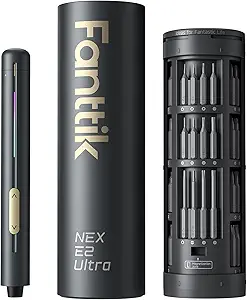
| Fanttik E2 Ultra Electric Scre | 800mAh rechargeable | — |
| Skil Rechargeable 4V Cordless | 4V lithium-ion | Micro USB, charger included |
| Fanttik S1 Pro Electric Screwd | 2000mAh | USB Type-C |
| BLACK+DECKER Cordless Screwdri | 4V MAX | Charger included |
| SKIL Twist 2.0 Rechargeable 4V | — | USB-C |
| DEWALT Cordless Screwdriver 4V | 2Ah, USB rechargeable | — |
| Fanttik S2 Pro Electric Screwd | 2000mAh rechargeable | USB-C, 5V/2A |
| Fanttik S1 APEX Electric Screw | 2500mAh | USB-C |
| SKIL Rechargeable 4V Cordless | Integrated lithium-ion | USB |
| Bosch GSD4V-35 4V Max USB-C Re | — | USB-C |
| Skil Twist 2.0 Rechargeable 4V | Integrated rechargeable | USB-C, cable included |
More Details on Our Top Picks
Skil Rechargeable 4V Cordless Screwdriver with Circuit Sensor Technology
Most electric screwdrivers in this roundup compete on torque and bit counts; the Skil 4V with Circuit Sensor Technology competes on keeping you away from live current. Its sensor detects energized wires behind outlet covers and switch plates, which matters when the job is hanging a sconce or swapping a faceplate rather than building a bookshelf. That focus is also its ceiling: the 4V motor is the weakest class here, so long screws into dense material will stall it where the HOTO 25-Piece Kit pushes through at up to 8 N·m. The dual LED lights earn their keep in dim hallways, but the dated micro-USB port feels old next to the USB-C charging on the HOTO 12-in-1. This option stands out for cautious homeowners working near wiring; anyone assembling furniture weekly should look at the stronger kits instead.
Pros:- Circuit sensor detects live wires before you drive near them
- Dual LED lights genuinely help in dark corners and behind furniture
- Compact, lightweight body suits one-handed overhead work
- USB charging means no proprietary dock to lose
Cons:- 4V power caps it at light-duty tasks; dense materials will stall it
- Dated micro-USB port when rivals have moved to USB-C
- Battery drains quickly during extended sessions
Best for: Homeowners who regularly work near outlets, switches, and light fixtures and want a live-wire warning before driving a screw
Not ideal for: Frequent furniture assemblers — the 4V motor stalls on long screws that the HOTO 25-Piece Kit handles without complaint
- Voltage:4V
- Battery Type:Lithium-ion
- Charging:Micro USB
- Included Bits:9 bits plus bit holder
- Lighting:Dual LED
- Safety Feature:Circuit sensor technology
- Color:Red
Our verdict“Buy this if your projects cluster around wiring and fixtures, where a live-wire alert matters more than torque.”
HOTO 25-Piece Upgraded Electric Screwdriver Kit
This pick makes the most sense as the anchor of the roundup because it refuses to specialize. The 25-piece kit pairs a 3.6V driver with S2 steel bits, an extension rod, and a magnetic case, and its adjustable torque runs to 8 N·m in manual mode — enough for flat-pack furniture, cabinet hardware, and curtain rods from a single box. Compared with the Skil Circuit Sensor model, you give up live-wire detection but gain real versatility across rooms. Against the PixelDrive, it lacks the screen and the finer torque steps, yet costs less while covering the same household territory. The honest drawbacks: HOTO ships it without a charging cable, and the 1500mAh battery fades during marathon assembly sessions. For most buyers, though, nothing else here balances coverage, control, and price this well.
Pros:- S2 steel bits with magnetic quick-change hold up under repeated use
- Torque adjusts from delicate to 8 N·m manual for stubborn screws
- Magnetic case keeps all 25 pieces organized between projects
- Charges fully in under 150 minutes
Cons:- No charging cable included in the box
- Strictly light-duty — not a drill or an impact driver
- 1500mAh battery runs short on all-day assembly marathons
Best for: Renters and new homeowners who want one kit that handles furniture assembly, hardware swaps, and general repairs
Not ideal for: Electronics tinkerers — its torque floor sits far above the Fanttik E2 Ultra’s 0.05 N·m, so it can strip phone and laptop screws
- Kit Size:25 pieces
- Voltage:3.6V
- Battery:1500mAh lithium-ion
- Max Torque:8 N·m (manual mode)
- Charging Time:Under 150 minutes
- Included:Screwdriver, extension rod, bits, magnetic case
- Weight:1.54 pounds
- Dimensions:8.3 x 1.81 x 4.72 inches
Our verdict“The most balanced pick on this list: enough torque, bits, and polish for typical home projects without paying for the PixelDrive’s screen.”
HOTO 12-in-1 Electric Screwdriver Rechargeable, Cordless Set with USB-C Charging
At 0.55 pounds, this is the driver I would hand someone who has never owned one. The HOTO 12-in-1 strips the category down to what a first-timer actually uses: twelve S2 bits, three torque levels, an LED light, and USB-C charging that refills the 1500mAh battery in about two and a half hours. That simplicity is the point, and also the limit. Next to its sibling, the 25-Piece Upgraded Kit, you lose the extension rod, the magnetic case, and half the bit selection; against the PixelDrive, three torque settings feel coarse when you’re matching force to a fragile fastener. For occasional IKEA builds and tightening loose hinges, none of that matters — the thing weighs less than most phones and lives happily in a kitchen drawer. Buy it as a first tool, and expect to outgrow it only if your projects turn ambitious.
Pros:- 0.55-pound body is the lightest full-size option here
- Modern USB-C charging with a full top-up under 150 minutes
- Three torque settings cover everyday household screws
- Durable S2 bits swap quickly without tools
Cons:- Only three torque levels, so delicate work gets imprecise
- Twelve bits means less fastener coverage than the bigger kits
- Battery sags faster under sustained heavy use
Best for: First-time DIYers who want a featherweight, no-learning-curve driver for flat-pack furniture and quick fixes
Not ideal for: Detail-focused users who want fine torque control — the PixelDrive’s six settings leave this one’s three feeling blunt
- Bits:12 S2 steel bits
- Battery:1500mAh
- Charging Port:USB-C
- Charging Time:Under 150 minutes
- Weight:0.55 pounds
- Torque Settings:3 levels
- Max Torque:4 N·m electric, 8 N·m manual
Our verdict“If you’re buying your first electric screwdriver and mostly build furniture, start here and skip the pricier kits.”
HOTO PixelDrive Electric Screwdriver, Rechargeable Cordless with Smart Display
The PixelDrive is what happens when a screwdriver gets a dashboard. A smart display shows torque level and battery status before every screw, six settings span 0.5 to 6 N·m, and dual speed modes — 80 and 200 RPM — let you creep into delicate work or run down long fasteners quickly. Compared with the HOTO 12-in-1, that’s double the torque granularity plus a larger 2000mAh battery, so the upgrade is real rather than cosmetic. Still, its 0.5 N·m floor sits roughly ten times higher than the Fanttik E2 Ultra’s minimum, which means true micro-electronics work belongs to the Fanttik. There’s also no case in the box despite 30 loose bits to keep track of, and you pay for the screen whether or not you glance at it. This model is better suited to tinkerers who want information with their rotation, not just rotation.
Pros:- Smart screen reads out torque setting and remaining battery
- Six torque levels plus dual speed cover a wide job range
- 30 included bits handle most household and gadget fasteners
- 2000mAh battery is the largest capacity in this group
Cons:- No carrying case despite 30 loose bits
- 0.5 N·m minimum torque is still too strong for the smallest electronics screws
- Carries a price premium over HOTO’s simpler kits
Best for: Experienced DIYers who switch between gadgets and furniture and want on-screen confirmation of torque and battery
Not ideal for: Budget buyers — the HOTO 12-in-1 covers the same household jobs for less if you can live without a display
- Battery:2000mAh
- Charging:USB-C
- Torque Settings:6 levels, 0.5–6 N·m
- Speed Modes:Low 80 RPM, High 200 RPM
- Bits Included:30 pieces
- Display:Smart screen showing torque and battery
- LED Light:Yes
Our verdict“The right upgrade if you want visual control over every fastening job, and overkill if you just build the occasional bookcase.”
Fanttik E2 Ultra Electric Screwdriver Precision Set (Grey)
Every other driver on this list is a household tool; the Fanttik E2 Ultra is a bench instrument. Its five gears bottom out at 0.05 N·m — a tenth of the PixelDrive’s minimum — and that gap is the difference between closing a MacBook’s casing and cracking it. Fifty magnetic bits in twelve types, a 5/32-inch hex shank, and a case that keeps everything sorted turn it into a complete phone-and-laptop repair station. The tradeoffs cut deep, though: torque tops out at 0.6 N·m, so furniture assembly is off the table, and the 800mAh battery is the smallest in this lineup. Even the compact Skil 4V is the better choice for anything involving wood, drywall anchors, or cabinet hinges. Treat the E2 Ultra as a specialist that does one job very well, not a household driver with a gentle side.
Pros:- Five gears down to 0.05 N·m protect fragile device screws
- 50 magnetic bits across 12 types cover phones, tablets, and laptops
- Magnetic storage case keeps tiny bits organized and reachable
- USB-C charging is quick and cable-friendly
Cons:- 0.6 N·m ceiling rules out every household fastening task
- 800mAh battery is the smallest here
- 270 RPM feels slow on anything longer than a device screw
Best for: Phone, laptop, and console repair hobbyists who need torque measured in fractions of a newton-meter, not raw power
Not ideal for: Anyone assembling furniture or driving into wood — even the budget Skil 4V outmuscles it on household jobs
- Torque Range:0.05–0.6 N·m
- Speed:270 RPM
- Battery:800mAh rechargeable
- Charging Port:USB-C
- Bits:50 magnetic bits, 12 types
- Bit Length:1.78 inches
- Shank:5/32-inch hex
- Gears:5 (0.05/0.1/0.2/0.4/0.6 N·m)
Our verdict“Buy it for circuit boards and phone screws — not for anything you would call carpentry.”
Skil Rechargeable 4V Cordless Pistol Grip Screwdriver with 42-Piece Bit Set
If I were buying my first electric screwdriver, this is the box I’d want to open. The Skil pistol grip kit’s real selling point isn’t the tool itself — it’s the 42-piece bit set and carrying case that mean you won’t need a second purchase for years. Compared with the BLACK+DECKER 4V MAX, which ships with just two bits, the Skil is a far more complete starter package. The pistol grip handle feels natural for anyone coming from a manual screwdriver, and the LED light helps under sinks and inside cabinets. Where it loses ground is power and charging: the 4V battery caps this at light-duty work, and the dated micro USB port is slower to top up than the USB-C on the SKIL Twist 2.0 or Fanttik S1 Pro. For furniture assembly and picture hanging, though, it covers the basics well.
Pros:- 42-piece bit set covers nearly every household screw type out of the box
- Pistol grip shape feels familiar to manual-screwdriver users
- Carrying case keeps the whole kit organized and portable
- LED light helps in dark cabinets and corners
Cons:- 4V motor limits it to light-duty tasks like furniture assembly
- Micro USB charging is dated and slower than USB-C rivals
- Battery needs frequent top-ups during longer projects
Best for: First-time buyers who want the tool, bits, and case in one box — no extra shopping trips required
Not ideal for: Anyone driving screws into hardwood, studs, or decking — the 4V motor stalls on demanding jobs
- Battery:4V lithium-ion
- Handle Style:Pistol grip
- Bits Included:42-piece set
- Lighting:LED light
- Bit Storage:Magnetic onboard storage
- Charging:Micro USB, charger included
- Extras:Carrying case
Our verdict“The best one-box starter kit for new homeowners tackling light household jobs who want everything included.”
Fanttik S1 Pro Electric Screwdriver with 16 Bits and Magnetic Case
This is the option I’d put in front of most buyers. The Fanttik S1 Pro pairs a 6 N.m maximum torque — the highest in this roundup, edging past the DEWALT’s 5 Nm — with three adjustable torque settings, so it can seat flat-pack furniture screws and snug up cabinet hardware without stripping them. That adjustability matters: lower settings protect soft particleboard, while the top setting handles stubborn fasteners. The 2000mAh battery with USB-C charging also outlasts and out-charges the 4V Skil and BLACK+DECKER models. Its S2 hardened steel bits and magnetic aluminum case feel a class above the plastic kits. The tradeoffs: there’s no variable speed control beyond the torque presets, no pivoting head like the SKIL Twist 2.0 for awkward angles, and 220 RPM is leisurely for long production runs. For general home use, though, it’s the most complete package here.
Pros:- Highest torque in the lineup at 6 N.m, with three adjustable settings
- USB-C charging and a 2000mAh battery beat the 4V pack standard
- 16 S2 hardened steel bits resist wear better than basic sets
- Magnetic aluminum case is durable and genuinely portable
Cons:- No variable speed control beyond the torque presets
- Fixed straight body can’t angle into tight spaces like pivoting-head rivals
- 220 RPM speed feels slow on repetitive, high-volume jobs
Best for: Homeowners who want one screwdriver for furniture assembly, PC building, and general repairs — and who care about bit quality
Not ideal for: Users who regularly work in cramped corners — without a pivoting head, the SKIL Twist 2.0 reaches places this can’t
- Motor Speed:220 RPM
- Torque Settings:1.5 / 3 / 4.2 N.m
- Max Torque:6 N.m
- Battery:2000mAh
- Charging:USB Type-C
- Bits Included:16, S2 hardened steel
- Case:Magnetic aluminum alloy
Our verdict“My top pick for most people — the strongest, best-equipped all-rounder in this group.”
BLACK+DECKER Cordless Screwdriver with LED Light 4V MAX
There’s a certain honesty to the BLACK+DECKER 4V MAX: it’s a screwdriver and LED flashlight in one, and it doesn’t pretend to be more. I’d steer buyers here when the budget is tight and the jobs are simple — tightening a loose hinge, assembling a nightstand. The 3-position pivoting handle switches between straight and pistol configurations, which gives it some of the SKIL Twist 2.0’s flexibility in tight spots, though without that model’s torque settings or USB-C charging. The catch is the two-bit inclusion: set it next to the Skil pistol grip kit’s 42-piece set and the value math gets harder, since most households will need to buy bits separately. Battery life also runs short on anything marathon-length. If you already own bits and want a recognized brand for cheap, it earns its spot. Everyone else should spend up.
Pros:- Doubles as an LED flashlight, handy in dark closets and crawl spaces
- Pivoting handle converts between inline and pistol grip
- Lightweight and unintimidating for casual users
- Low price from a widely available brand
Cons:- Ships with only two bits — most buyers will need to purchase more
- No torque settings, so delicate screws risk overtightening
- Short battery life limits longer sessions
Best for: Budget-minded buyers who already own screwdriver bits and need a simple tool for occasional hinge-tightening and flat-pack jobs
Not ideal for: First-time buyers starting from zero — with only two bits included, the Skil 42-piece kit is the smarter all-in-one spend
- Battery:4V MAX
- Design:2-in-1 screwdriver and LED flashlight
- Handle:3-position pivoting
- Bits Included:2
- Charging:Charger included
- Build:Lightweight, compact
Our verdict“A sensible low-cost pick for light, occasional use — provided you don’t need bits in the box.”
SKIL Twist 2.0 Rechargeable 4V Screwdriver with Pivoting Head
Angled access is the whole story here. The SKIL Twist 2.0’s pivoting head locks at 0°, 22.5°, and 45°, which means cabinet interiors, electrical boxes, and furniture corners stop being wrist-bending ordeals — the tool bends so your hand doesn’t have to. The BLACK+DECKER 4V MAX pivots too, but the Twist adds three torque settings and modern USB-C charging, two upgrades I’d take every time for delicate work like outlet covers, where over-driving cracks the plate. Against the Fanttik S1 Pro, you’re trading raw torque and bit count for that articulating head — the Fanttik hits harder, the Twist reaches further. The downside list is real, though: only two bits come in the box, and the short 2-inch bits won’t reach recessed screws. Buy it for the angles; budget for extra bits.
Pros:- Pivoting head locks at three angles for awkward, cramped spaces
- Three torque settings protect delicate screws and plates
- USB-C charging is faster and more convenient than micro USB rivals
- Light enough for overhead and one-handed work
Cons:- Only two bits included — poor value as a standalone kit
- 2-inch bit length can’t reach recessed screws
- 4V ceiling keeps it out of heavy-duty territory
Best for: DIYers who frequently work inside cabinets, behind furniture, or in electrical boxes where a straight driver won’t fit
Not ideal for: Buyers wanting a complete kit — two short bits in the box means an immediate accessory purchase for most screw types
- Voltage:4V
- Head:Pivoting, locks at 0° / 22.5° / 45°
- Torque Settings:3
- Lighting:LED light
- Charging:USB-C
- Bits Included:2, 2-inch
Our verdict“The right buy when access is your main problem — pick it for tight corners, not for torque.”
DEWALT Cordless Screwdriver 4V USB Rechargeable with FLEXDRIVE Control
DEWALT built this one for people who drive screws for a living, and it shows in the details. The FLEXDRIVE 360° collar wraps the whole body, so direction and activation are always under your fingers regardless of grip angle — no fumbling for a trigger mid-reach. At up to 360 RPM it’s the fastest driver in this lineup, comfortably ahead of the Fanttik S1 Pro’s 220 RPM, and the 14 Nm max manual torque lets you finish stubborn screws by hand after the motor tops out at 5 Nm. A 60-minute recharge also beats every 4V rival here. Compared with the Fanttik, you give up one Nm of electric torque and four bits; compared with the Skil kit, you give up thirty. What you’re paying for is speed, control, and jobsite-grade ergonomics — and it’s still a 4V tool, so lag bolts remain off the menu.
Pros:- FLEXDRIVE collar gives 360° control from any grip position
- Fastest in the group at up to 360 RPM
- 14 Nm manual torque rating allows hand-finishing stubborn fasteners
- Full recharge in about 60 minutes
Cons:- Costs more than comparable 4V models without a big power gain
- Only 12 bits included — modest next to the Skil’s 42-piece kit
- Still a 4V tool, so heavy fasteners are out of reach
Best for: Contractors, maintenance techs, and serious DIYers who drive screws daily and want the fastest, most controllable 4V option
Not ideal for: Casual users assembling the odd bookshelf — the premium over the Skil or BLACK+DECKER buys speed and control you’ll rarely use
- Voltage:4V
- Battery:2Ah, USB rechargeable
- Speed:Up to 360 RPM
- Max Torque (Electric):44 in-lbs (5 Nm)
- Max Manual Torque:124 in-lbs (14 Nm)
- Recharge Time:60 minutes
- Control:FLEXDRIVE 360° collar
- Bits Included:12
- Lighting:LED light
Our verdict“The pro’s choice — worth the premium if speed and one-handed control matter on your jobs every day.”
Fanttik S2 Pro Electric Screwdriver
If I had to point one screwdriver at the widest range of household jobs, it would be the Fanttik S2 Pro. Its 6N·m of torque and 250 RPM motor put it well ahead of 4V pen drivers like the SKIL Circuit Sensor model, so flat-pack furniture and stubborn hinge screws actually seat without hand-finishing. Seven torque settings protect softer materials from stripping, and the 90° angle adapter reaches spots the Bosch GSD4V-35’s fixed body can’t. Compared with the pricier Fanttik S1 APEX, this keeps nearly the same muscle for less money, giving up only the screen and pivoting handle. The tradeoff is size: it’s bulkier than any 4V stick driver here, so it’s awkward for electronics or cramped drawer work. The 2000mAh battery can also run dry during all-day assembly sessions.
Pros:- 6N·m torque and 250 RPM seat furniture screws without hand-finishing
- 90° angle adapter and extension rod reach fasteners straight drivers can’t
- 20 magnetic bits store inside the case so nothing gets lost
- Type-C charging with clear battery status indicators
Cons:- Bulkier than pen-style 4V drivers, awkward for electronics and tight spaces
- 2000mAh battery can run dry during long assembly sessions
- No screen or dual speed modes like the S1 APEX offers
Best for: Renters and homeowners who assemble furniture, hang hardware, and handle general repairs with one do-it-most tool
Not ideal for: Electronics tinkerers — the body is too bulky for delicate laptop or phone screws
- Torque:0.5–6N·m, 7 settings
- Speed:250 RPM
- Battery:2000mAh rechargeable
- Charging:USB-C, 5V/2A
- Bits:20 magnetic bits
- Drive:1/4-inch hex shank
- Extras:Extension rod and 90° angle adapter
- Work Light:Built-in LED
Our verdict“The one I’d recommend to most households: enough power for real furniture work without paying for the S1 APEX’s extras.”
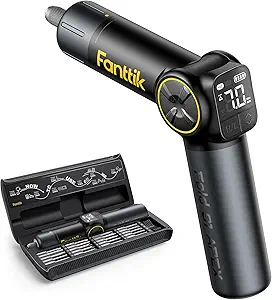
Fanttik S1 APEX Electric Screwdriver with Pivot Handle and Screen Display
The Fanttik S1 APEX is where I’d send buyers who want the most control money buys in this category. The live screen display shows torque level and battery at a glance, removing the guesswork the S2 Pro leaves to feel. Its handle pivots through four angles, and two speed modes (100 and 225 RPM) split delicate electronics work from faster assembly — a flexibility none of the fixed-body Skil or Bosch drivers match. Max torque of 7N·m even edges out the S2 Pro on paper. The catches: it costs more than anything else here, the box holds only 20 bits with no angle adapter, and the folding mechanism is one more part that can loosen over years of use. For occasional picture-hanging, the cheaper Skil Twist 2.0 covers the job for far less.
Pros:- Real-time screen shows torque and battery with no guessing
- Handle pivots to four angles for pistol-grip reach
- Two speed modes separate delicate work from fast assembly
- 7N·m max torque and 2500mAh battery lead the lineup
Cons:- Most expensive screwdriver in the roundup
- Ships with only 20 bits and no right-angle adapter
- Folding hinge adds a part that can loosen over time
Best for: Gadget enthusiasts and frequent DIYers who want visible torque readouts and a pistol-grip option for shelf and cabinet work
Not ideal for: Occasional users tightening a few screws a month — the premium price buys features they’ll rarely touch
- Torque:8 settings, up to 7N·m
- Speeds:100 RPM low / 225 RPM high
- Pivot Angles:0°, 24°, 48°, 72°
- Battery:2500mAh
- Charging:USB-C
- Bits:20 S2 steel bits
- Drive:1/4-inch hex
- Display:Digital screen
Our verdict“Worth the premium if precision readouts and a pivoting grip will genuinely get used; otherwise the S2 Pro covers the same jobs for less.”
SKIL Rechargeable 4V Cordless Screwdriver with Circuit Sensor Technology
The SKIL 4V with Circuit Sensor earns its spot on one feature none of the others have: a built-in live-wire detector. Before tightening an outlet cover or swapping a light fixture, a button press warns if current is present, the kind of reassurance the Bosch GSD4V-35 doesn’t offer. The 45-piece bit set is also the biggest bundle in this lineup, dwarfing the 28 pieces that come with the Skil Twist 2.0. Where it gives ground is control: there’s no adjustable torque and no pivoting head, so delicate screws rely entirely on trigger discipline, and the 4V motor suits small jobs only. Battery life figures aren’t published either, which makes long sessions a question mark. For pure driving finesse, the Bosch is the better 4V tool; for safety-first household fixes, this is the one.
Pros:- Circuit sensor detects live wires before work starts
- 45-piece bit set covers nearly every household fastener
- Dual LED lights illuminate dark junction boxes and cabinets
- USB charging with a carrying case included
Cons:- No adjustable torque or speed settings for delicate screws
- 4V motor stalls on larger furniture fasteners
- Battery life isn’t published, so runtime is a guess
Best for: Homeowners who regularly work around switches, outlets, and light fixtures and want a live-circuit warning before starting
Not ideal for: Anyone assembling flat-pack furniture weekly — fixed 4V torque and no speed control make repetitive driving slow
- Voltage:4V
- Battery:Integrated lithium-ion
- Charging:USB
- Bit Set:45 pieces
- Safety:Circuit sensor technology
- Lighting:Dual LED lights
- Case:Carrying case included
Our verdict“The right 4V driver for safety-conscious DIY electrical touch-ups, though torque-hungry jobs call for the Fanttik S2 Pro.”
Bosch GSD4V-35 4V Max USB-C Rechargeable Screwdriver
At under one pound, the Bosch GSD4V-35 is the driver I’d grab for a junk-drawer toolkit or a crawl around the attic. The dual activation — press the button or push the bit against the screw — makes one-handed starts genuinely easy, something the button-only SKIL Circuit Sensor can’t match. Eight torque settings give it far more finesse than the three on the Skil Twist 2.0, so cabinet hardware and outlet plates don’t get chewed up. The compromise is stamina: Bosch doesn’t publish battery figures, and the 4V ceiling means it won’t drive lag screws or dense hardwoods the way the 6N·m Fanttik S2 Pro will. The small grip also offers less leverage when a screw fights back. It’s a finesse tool, not a muscle tool, and priced accordingly.
Pros:- Weighs under a pound, easy to carry all day
- Push-to-start dual activation enables true one-handed use
- 8 torque settings protect delicate hardware from stripping
- Universal bit locker accepts standard 1/4-inch bits
Cons:- 4V power ceiling rules out heavy-duty driving
- Battery capacity isn’t published, so runtime is unclear
- Compact grip gives less leverage on stuck screws
Best for: Apartment dwellers and pros who want a pocketable driver for hardware, fixtures, and tight cabinet work
Not ideal for: Buyers wanting one screwdriver for furniture assembly too — the 4V motor and small grip run out of leverage on big fasteners
- Weight:Under 1 lb
- Voltage:4V max
- Torque Settings:8
- Activation:Button or push-to-start
- Charging:USB-C
- Bit Fit:Universal 1/4-inch bit locker
- Work Light:Integrated LED
Our verdict“The best pick when portability and precision matter more than raw driving power.”
Skil Twist 2.0 Rechargeable 4V Screwdriver with Pivoting Head
The Skil Twist 2.0 is the screwdriver I’d hand someone assembling their first toolkit. The pivoting head locks at three angles, turning it from a straight stick into a pseudo pistol grip for shelf brackets — a trick the flat-body SKIL Circuit Sensor model never learns. Three torque settings keep decisions simple, and the 28-piece bit set with a case means there’s nothing extra to buy on day one. Against the Fanttik S1 APEX, the only other pivoting option here, it trades the screen, speed modes, and five extra torque steps for a much lower price. Simplicity cuts both ways, though: with just three settings and a single speed, control over delicate electronics screws is limited, and 4V power won’t stretch beyond light household duty. For occasional repairs, that trade is fair.
Pros:- Pivoting head locks at 0°, 22.5°, and 45° for awkward angles
- 28-piece bit set and case included, nothing else to buy
- Three torque settings keep operation simple for newcomers
- USB-C charging with no proprietary cable to lose
Cons:- Only three torque steps and one speed limit precision
- 4V motor is confined to light household tasks
- Battery runtime figures aren’t published
Best for: First-time tool buyers and students who want a complete, ready-to-use kit for light repairs and furniture
Not ideal for: Detail-oriented tinkerers who want fine torque steps or speed control — three settings is the whole adjustment range
- Voltage:4V
- Pivot Head:Locks at 0°, 22.5°, 45°
- Torque Settings:3
- Charging:USB-C, cable included
- Bits:28-piece set
- Battery:Integrated rechargeable
- Case:Carrying case included
Our verdict“An affordable, forgiving first electric screwdriver — step up to the S1 APEX only if finer control becomes necessary.”

How We Picked
I ranked these 15 electric screwdrivers on five criteria, weighted toward what a buyer actually feels mid-project. Torque and speed control came first, because a driver that can’t modulate power either stalls on furniture screws or strips electronics — models with multiple torque settings or pressure-based control like DEWALT’s FLEXDRIVE scored higher than single-speed tools. Ergonomics and form factor came next, since inline versus pistol grip versus pivoting head determines which spaces you can reach, so shape-shifters like the SKIL Twist 2.0 and Fanttik S1 APEX earned extra credit. I also weighed bit selection and storage, because a 4 mm precision set and a 1/4-inch hex kit serve different buyers, and charging convenience, favoring USB-C over older ports. Price only broke ties: a cheaper driver with the right torque range always outranked a pricier one with the wrong one.
The ranking logic stays visible throughout the list. Broadly useful household drivers — the SKIL Circuit Sensor, DEWALT FLEXDRIVE, SKIL Twist 2.0 — sit above niche tools because most readers searching for the best electric screwdrivers need one driver that handles furniture, fixtures, and hardware. Precision specialists like the Fanttik E2 Ultra and HOTO PixelDrive are ranked within their role rather than punished for low torque, and bare-bones options like the BLACK+DECKER 4V MAX land where their limited kits place them. Every product here is the best at something or the best for someone; the order reflects how wide each tool’s usefulness runs for a typical home.
Factors to Consider When Choosing Best Electric Screwdrivers
The reviews tell you what each driver does; this section is where I lay out how to think about the category before you spend anything. In going through this lineup, I kept seeing the same four buying mistakes: purchasing precision torque for furniture jobs, paying for bit kits that duplicate what you already own, picking the wrong grip shape for your projects, and assuming an electric screwdriver can replace a drill. The sections below walk through each decision in roughly the order of how much money it saves or wastes. Read them before you commit to any pick above, and the right model usually selects itself.
Match Torque to Your Actual Projects
The single biggest mistake buyers make is shopping by voltage or RPM instead of torque range. Nearly every driver in this roundup is a 4V tool, yet usable torque runs from roughly 0.2 Nm on precision models up to about 5 Nm of electric drive on household models, with manual finishing torque higher once you lean on the tool. A driver tuned below 1 Nm is the right call for laptops, phones, and RC gear, where one over-torqued screw can crack a plastic boss or strip a thread you cannot replace. Flat-pack furniture, cabinet hardware, and outlet covers want 3 Nm or more, plus enough spindle-lock strength to finish by hand. If your projects genuinely span both ends, the honest answer is two specialized tools — no single 4V driver covers laptop hinges and IKEA wardrobes equally well. Check the manufacturer’s stated torque range rather than marketing adjectives, and be skeptical of any model that doesn’t publish one.
Grip Shape Decides Where the Driver Fits
Electric screwdrivers come in three body styles, and the right one depends on your most common working position. Inline drivers look like fat pens and slide into recessed spots — inside PC cases, behind appliances, between cabinet walls — but they give you the least leverage on stubborn screws. Pistol-grip models put your wrist behind the bit for better pushing force and feel natural on vertical surfaces like walls and doors, at the cost of a bulkier head that won’t fit tight bays. Pivoting designs like the SKIL Twist 2.0 and Fanttik S1 APEX convert between the two, which sounds ideal but adds a hinge joint some buyers find flexy under hard pressure. A practical approach: recall the last three projects that made you reach for a screwdriver, and buy the shape that matches them. Buyers who mostly assemble furniture end up happiest with pistol or pivoted grips, while anyone working inside electronics enclosures should stay inline.
Torque Settings Are Cheap Insurance Against Stripped Screws
A driver with one speed and no clutch treats a glasses hinge the same as a deck screw, which is how threads die. Adjustable torque settings — six on the HOTO PixelDrive, seven on the Fanttik S2 Pro — let you dial output down so the bit stops before the fastener or the material gives way. This matters most on particleboard, soft plastics, and brass hardware, all of which strip at surprisingly low force, and on small machine screws where a stripped head means drilling it out. Single-speed drivers aren’t useless; they simply demand a lighter trigger finger and more hand-finishing, which is fine for occasional picture hanging but tiring across a full room of flat-pack builds. Many models add a spindle lock so the tool works as a manual screwdriver for final snugging, a hybrid approach experienced DIYers end up using constantly. If a product listing never mentions torque settings, a clutch, or manual mode, assume it has none.
Don’t Pay Twice for Bits
Half the products in this roundup are really kits, and the bit bundle is often where the price difference hides. Before paying extra for a 42-piece set, inventory what you already own: most household drivers here use the standard 1/4-inch hex shank, so bits interchange across SKIL, DEWALT, Bosch, and Fanttik household models, and a ten-dollar bit set can turn a bare driver into a full kit. Precision tools are the exception — the Fanttik E2 Ultra and similar models spin 4 mm bits sized for electronics, which don’t swap with household hex bits. Storage is the other half of the equation: magnetic cases and bit carousels keep small bits from disappearing into the junk drawer, and replacing lost specialty bits costs more over time than buying decent storage up front. Pay for bit variety only in the sizes you’ll genuinely use — Phillips #1 and #2, a few slotted, Torx T10 through T25, and a couple of hex drivers cover most homes.
Charging, Battery, and Drawer Time
These are occasional-use tools, so the battery question isn’t runtime — a 4V driver seats hundreds of screws per charge — it’s how the battery survives months in a drawer. Lithium cells in this class hold standby charge reasonably well, but models with a charge indicator or smart display, like the HOTO PixelDrive and Fanttik S1 APEX, spare you from discovering a dead tool mid-project. USB-C charging has become the standard worth insisting on, because it means one less proprietary cable to lose; a few older designs still ship with micro-USB, which is a daily-annoyance downgrade rather than a dealbreaker. Charge time matters less than charge retention — most of these drivers refill in one to three hours, and nobody should pay a premium for faster charging on a tool used ten times a year. What does justify a few extra dollars is a brand with a real warranty, since the battery is the first component to age out.
Know When an Electric Screwdriver Isn’t Enough
An electric screwdriver spins fasteners; it does not drill holes, and it won’t drive lag bolts or long deck screws. If your project list includes drilling pilot holes, boring into studs, or driving anything over about two inches into solid wood, you need a 12V or 18V drill/driver instead — buying a 4V screwdriver for those jobs guarantees a return trip to the store. The honest dividing line: electric screwdrivers excel at repetitive, pre-threaded, light-duty fastening where a drill is overkill and wrist fatigue is the real enemy, like assembling a room of flat-pack furniture or swapping every outlet cover in the house. Many households end up owning both tools, and that’s a reasonable outcome rather than a failure of research. If you can only afford one and your projects lean toward drilling, buy the drill and accept slower, heavier screwdriving. Buyers who already own a drill get the most from this category, because the screwdriver becomes the grab-first tool for the majority of tasks that never need a hole.
Frequently Asked Questions
Is an electric screwdriver worth buying if I already own a cordless drill?
Yes — for most households the two tools complement rather than replace each other. A drill/driver is built around torque and chuck capacity, which makes it heavy, wrist-twisting, and easy to overdrive on light tasks like cabinet knobs or battery covers. A 4V electric screwdriver weighs a fraction as much, fits into recessed spaces a drill head can’t reach, and its lower torque is a feature: it stops before stripping small screws where a drill would plow straight through. Owners of both consistently find the screwdriver becomes the tool they grab first for anything short of drilling or structural fastening. If your projects are mostly flat-pack furniture, wall plates, toys, and gadgets, the screwdriver will see more use; if you regularly drill into studs, the drill stays the priority purchase and the screwdriver comes second.
How much torque do I actually need in an electric screwdriver?
It depends entirely on what you’re fastening, and it’s the spec most buyers skip. For electronics — laptops, phones, game consoles, RC models — you want a ceiling around 0.5 Nm, or adjustable settings that dip that low, because plastic threads and tiny machine screws strip well under 1 Nm. General household work like outlet covers, cabinet hardware, and ready-to-assemble furniture calls for roughly 3 to 5 Nm of electric torque, plus a spindle lock so you can hand-finish the final quarter-turn. Anything beyond that — long screws into solid wood, lag bolts, rusted fasteners — is drill territory, and no 4V screwdriver will save you there. The safest buy for mixed use is a household driver with at least three torque settings, since you can always turn power down but you can’t add power that isn’t there.
Can an electric screwdriver strip screws or damage electronics?
It absolutely can, and single-speed models are the usual culprit. A driver with no clutch delivers its full torque the moment you pull the trigger, which is enough to cam out a Phillips head, shear a plastic thread boss, or spin a small machine screw past its seating point. The fix is choosing a model with adjustable torque settings — the six steps on the HOTO PixelDrive or seven on the Fanttik S2 Pro let you match output to the fastener — and starting on the lowest setting that still seats the screw. For electronics specifically, stick with precision drivers capped under 1 Nm and treat the final bit of tightness as a manual job. Brute force is never the right strategy around circuit boards: if a screw resists, stop and hand-drive it rather than leaning on the trigger.
What is the difference between a precision electric screwdriver and a regular one?
They share a name but not a job. Precision models like the Fanttik E2 Ultra spin smaller 4 mm bits, cap torque under roughly 0.5 Nm, and are shaped like pens for one-handed work inside cramped device housings — think laptops, phones, eyeglasses, and drones. Regular household drivers use the larger 1/4-inch hex shank, push 3 to 5 Nm, and come in inline, pistol, or pivoting bodies aimed at furniture, fixtures, and hardware. The bit systems don’t interchange, so owning one type gets you nothing toward the other. Buyers doing device repair should start with precision; everyone else should start with a household driver and add an inexpensive manual precision set for the occasional battery cover. Buying a household driver for electronics work is the most common mistake in this category, and it usually ends with stripped screws.
Should I hold out for USB-C charging, or is micro-USB fine?
USB-C is worth preferring but not worth a large premium. The practical benefit is cable consolidation — a USB-C driver charges from the same cable as your phone and laptop, so it actually gets topped up instead of languishing next to a lost proprietary cord. Standby behavior matters more day to day: these drivers sit unused for weeks or months, and a healthy lithium cell should still hold usable charge over that span, which a battery indicator helps you verify at a glance. If the driver you want for torque, grip, and kit reasons happens to use micro-USB, buy it anyway and tape the cable to the case. Given two otherwise equal drivers in 2026, though, the USB-C model is the one that will still feel current five years from now, and most of this roundup’s newer releases have already made the switch.
Conclusion
After lining all 15 models up by torque, control, form factor, and kit value, my recommendations sort cleanly by buyer type. For most people, the SKIL Rechargeable 4V with Circuit Sensor Technology — specifically the 45-piece kit version — is the best overall electric screwdriver: real household torque, a live-wire sensor for peace of mind around outlets and switches, and a complete bit kit in one box. Bargain hunters should take the SKIL Pistol Grip 42-piece kit for the best value, or the BLACK+DECKER 4V MAX if the budget is hard-capped and the projects are light. If you want the most refined tool in the category, the Fanttik S1 APEX earns the premium slot with its pivoting handle and on-screen torque readout, with the HOTO PixelDrive close behind for buyers who want a display on a precision-leaning driver. First-time buyers are best served by the HOTO 25-Piece Upgraded Kit, which bundles everything a beginner needs without demanding any bit knowledge. For electronics and device repair, the Fanttik E2 Ultra is the precision pick; for tight corners, the SKIL Twist 2.0 pivots where others can’t reach; and for heavy DIYers who want pro-grade feel, the DEWALT FLEXDRIVE and Bosch GSD4V-35 are the two to shortlist. Match the driver to your most frequent project, buy the torque range your fasteners actually need, and any pick on this list will earn its drawer space.