The best tabletop wood lathe overall is the JET JWL-1221VS, thanks to its 1 HP motor, variable speed, and useful 12-by-21-inch capacity. For a smaller footprint and lighter projects, the WEN 3421 is a compact entry point, while the WEN 34035 offers more bed length and capacity for growing beyond mini-lathe work. The main tradeoff is between compact size and the room, power, and stability needed for larger or more demanding work. Motor ratings, speed adjustment, and stated capacity vary widely across this group, so I weigh the full setup rather than one headline spec. Read on for how the 13 models compare and which one fits your shop and projects.

Get business pricing on tools and workshop supplies
- Business-only prices and quantity discounts
- Tax-exempt purchasing
- Multiple users, one account, clear invoices
Complete the kit



Key Takeaways
- The JET JWL-1221VS leads the group for all-around capability: its 1 HP motor and 12-by-21-inch capacity offer more room to grow than the mini lathes, without moving to the long-bed 14-by-40-inch format.
- Capacity changes the kind of work a lathe can handle: the 8-by-12 and 8-by-13-inch models suit small pieces, while 12-by-18- or 14-by-20-inch machines offer more flexibility for bowls and longer work within their stated limits.
- Motor power is not a substitute for speed control: several 1 HP options list variable speed, while the 14-by-40-inch VEVOR models use four speeds, making adjustment and workpiece fit distinct selection factors.
- The WEN 34035 is the practical step-up from mini-lathe size: its 6-amp motor and 14-by-20-inch capacity provide a larger working envelope than the WEN 3421, but require more bench space.
- Specs need careful comparison across listings: similar VEVOR models differ in stated capacity, motor power, or speed setup, so confirm the exact model’s specifications before choosing based on a product name alone.
| WEN 3421 3.2-Amp Variable-Speed Mini Benchtop Wood Lathe, 8 x 12 Inches | 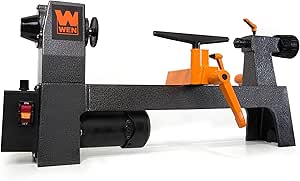 | Best Overall for Small Projects | Motor: 3.2 A | Speed range: 750–3,200 RPM | Maximum workpiece length: 12 in | VIEW LATEST PRICE | See Our Full Breakdown |
| ArtyMaster WM101A-Plus Mini Wood Lathe, 96W |  | Best Compact Pick | Motor power: 96 W | Power supply: 24 V DC, 4 A | Speed control: Infinitely variable | VIEW LATEST PRICE | See Our Full Breakdown |
| WEN 34035 6-Amp Variable-Speed Benchtop Wood Lathe, 14 × 20 in. |  | Best for Larger Benchtop Capacity | Motor: 6 A | Speed range: 250–3,550 RPM | Maximum workpiece length: 20 in | VIEW LATEST PRICE | See Our Full Breakdown |
| JET JWL-1221VS 12″ x 21″ Variable-Speed Benchtop Wood Lathe, 1 HP, 115V |  | Best Premium Benchtop Pick | Motor and power: 1 HP DC; 115 V, 6 A | Speed ranges: 60–900, 110–1,800, and 220–3,600 RPM | Maximum turning diameter over bed: 12-1/2 in | VIEW LATEST PRICE | See Our Full Breakdown |
| VEVOR 8 x 13 in Mini Benchtop Wood Lathe, 1/3 HP, Variable Speed |  | Best Value for a Larger Mini-Lathe Envelope | Motor power: 1/3 HP / 250 W | Speed range: 150–3,200 RPM | Lathe capacity: 8 × 13 in | VIEW LATEST PRICE | See Our Full Breakdown |
| WEN 8-Inch by 13-Inch Variable-Speed Mini Benchtop Wood Lathe | | Best for Small Projects | Swing over bed: 8 inches | Distance between centers: 13 inches | Motor: 3.2 amps, soft-start | VIEW LATEST PRICE | See Our Full Breakdown |
| VEVOR 3/4 HP 12 x 18 in Benchtop Wood Lathe |  | Best for a Mid-Size Capacity Step-Up | Work capacity: 12 x 18 inches | Motor power: 3/4 HP / 560 W | Speed settings: 780, 1,320, 1,920, 2,640, and 3,840 RPM | VIEW LATEST PRICE | See Our Full Breakdown |
| CXRCY 8 × 12-Inch Mini Benchtop Wood Lathe |  | Best Mini Lathe Accessory Bundle | Working capacity: 12 inches between centers; 8-inch swing over bed | Speed: 750–3,200 RPM, infinitely variable | Motor power: 1/3 HP / 220 W | VIEW LATEST PRICE | See Our Full Breakdown |
| VEVOR 14 x 40 in Benchtop Wood Lathe, 1/2 HP, 4 Speeds |  | Best for Long Workpieces | Swing: 14 inches | Distance between centers: 40 inches | Motor power: 1/2 HP / 375 W | VIEW LATEST PRICE | See Our Full Breakdown |
| VEVOR 14 × 40 in Benchtop Wood Lathe, 0.5 HP |  | Best Long-Bed Starter Kit | Work capacity: 14 x 40 inches | Motor: 0.5 HP / 370 W | Speed settings: 885, 1,245, 1,715, and 2,425 RPM | VIEW LATEST PRICE | See Our Full Breakdown |
| VEVOR 1 HP Benchtop Wood Lathe, 14 x 20 in, Variable Speed |  | Best for Larger-Diameter Projects | Model: WL1420 | Motor power: 1 HP / 750 W | Speed range: 150–3,500 RPM | VIEW LATEST PRICE | See Our Full Breakdown |
| VEVOR Wood Lathe, 12 x 18 in, 1 HP, Variable Speed 150–3,800 RPM |  | Best for Small Projects with Brushless Power | Model: WL1218V | Work area: 12 x 18 in (304 x 465 mm) | Motor power: 1 HP / 750 W | VIEW LATEST PRICE | See Our Full Breakdown |
| MECHINHUB 12 x 18 in. Benchtop Wood Lathe with Digital RPM Display, 3/4 HP, 110V |  | Best for Speed Monitoring | Model: MGCC | Work capacity: 12 x 18 in | Motor power: 3/4 HP | VIEW LATEST PRICE | See Our Full Breakdown |
| tabletop wood lathe | Weight | Motor power | Speed range |
|---|---|---|---|
| WEN 3421 3.2-Amp Variable-Spee | 44.7 lb | — | 750–3,200 RPM |
| ArtyMaster WM101A-Plus Mini Wo | 17.03 lb | 96 W | — |
| WEN 34035 6-Amp Variable-Speed | 120+ lb | — | 250–3,550 RPM |
| JET JWL-1221VS 12" x 21" Varia | 121 lb | — | — |
| VEVOR 8 x 13 in Mini Benchtop | 37 lb | 1/3 HP / 250 W | 150–3,200 RPM |
| WEN 8-Inch by 13-Inch Variable | — | — | 750–3,200 RPM |
| VEVOR 3/4 HP 12 x 18 in Bencht | 59.8 lb | 3/4 HP / 560 W | — |
| CXRCY 8 × 12-Inch Mini Benchto | 44 lb | 1/3 HP / 220 W | — |
| VEVOR 14 x 40 in Benchtop Wood | 49.6 lb | 1/2 HP / 375 W | — |
| VEVOR 14 × 40 in Benchtop Wood | 50.6 lb | — | — |
| VEVOR 1 HP Benchtop Wood Lathe | 108.7 lb | 1 HP / 750 W | 150–3,500 RPM |
| VEVOR Wood Lathe | 62.7 lb | 1 HP / 750 W | 150–3,800 RPM |
| MECHINHUB 12 x 18 in. Benchtop | 76.8 lb | 3/4 HP | 650–3,800 RPM |
More Details on Our Top Picks
WEN 3421 3.2-Amp Variable-Speed Mini Benchtop Wood Lathe, 8 x 12 Inches
The WEN 3421 is my balanced pick for a first tabletop lathe when the work is small: its 12-inch length and 8-inch width capacity cover projects such as pens, cups, and chess pieces, while the 750–3,200 RPM variable-speed range gives room to adjust for different stages of turning. Soft start and two tool rests make setup and tool support more approachable than on the compact ArtyMaster WM101A-Plus, which is limited to 3-inch-diameter, 8-inch-long workpieces. The WEN is still a mini lathe, not a route to larger bowls or spindle blanks; the WEN 34035 offers much more capacity and MT2 accessories, but at a far heavier, less portable scale. I like this middle ground for hobbyists who want useful capacity without moving into a full-size benchtop machine.
Pros:- Variable speed from 750 to 3,200 RPM adapts to varied small turning tasks.
- Soft-start 3.2-amp motor provides a gentler startup.
- Two interchangeable tool rests give more choice in tool support.
- Lever clamping simplifies tool-rest and tailstock adjustments.
Cons:- Capacity is limited to workpieces up to 12 inches long and 8 inches wide.
- MT1 tapers offer a smaller accessory interface than the MT2 hardware on the WEN 34035 and JET JWL-1221VS.
Best for: New and hobby woodturners making small bowls, cups, pens, or decorative pieces who want variable speed and straightforward adjustments.
Not ideal for: Turners planning larger bowls or long spindle work; its 12-inch length and 8-inch width limits are well below the WEN 34035 and JET JWL-1221VS.
- Motor:3.2 A
- Speed range:750–3,200 RPM
- Maximum workpiece length:12 in
- Maximum workpiece width:8 in
- Spindle and tailstock taper:MT1
- Faceplate:2.3 in
- Tool rests:4.5 in and 7 in
- Weight:44.7 lb
Our verdict“Choose the WEN 3421 for an approachable, variable-speed tabletop lathe if your projects will stay small.”
ArtyMaster WM101A-Plus Mini Wood Lathe, 96W
If bench space and compact workpieces matter more than capacity, the ArtyMaster WM101A-Plus is the most specialized choice here. At 17.03 pounds, it is far easier to reposition than the WEN 3421 or the 37-pound VEVOR WL0813, and its package includes a chuck, centers, drill chuck, and turning tools with changeable cutter heads. That kit makes it appealing for detail work without assembling accessories one by one. The tradeoff is substantial: its 96W motor and 3-inch diameter by 8-inch length limit rule out many projects the WEN can handle. The supplied data also lists work in wood, POM, and copper, but this is still a compact machine for small pieces rather than a substitute for a conventional wood lathe. Choose it for a constrained workspace, not growth into larger turning.
Pros:- Light 17.03-pound design is easy to move and store.
- Includes a 2-inch chuck, centers, drill chuck, and turning tools.
- Infinitely variable speed supports fine adjustments.
- Steel construction is designed to reduce vibration.
Cons:- Maximum workpiece size is only 3 inches in diameter by 8 inches long.
- The 96W motor and MT1 interface are intended for compact projects, not demanding larger turning.
- Its small working envelope is narrower than the WEN 3421’s 8-by-12-inch capacity.
Best for: Makers with limited bench space who want a lightweight machine and included accessories for turning small wood or other listed compact workpieces.
Not ideal for: Woodturners who want bowls, larger spindles, or room to expand beyond 3-inch-diameter and 8-inch-long work.
- Motor power:96 W
- Power supply:24 V DC, 4 A
- Speed control:Infinitely variable
- Maximum workpiece diameter:3 in
- Maximum workpiece length:8 in
- Spindle interface:MT1
- Weight:17.03 lb
- Noise level:Under 65 dB
Our verdict“Pick the ArtyMaster if portability and an included accessory set outweigh the need for larger work capacity.”
WEN 34035 6-Amp Variable-Speed Benchtop Wood Lathe, 14 × 20 in.
The WEN 34035 is the capacity step-up for buyers who have outgrown mini-lathe limits: it accepts work up to 20 inches long and 14 inches wide, far beyond the WEN 3421’s 12-by-8-inch envelope. Its 250–3,550 RPM range, MT2 tapers, and 1-inch-by-8 spindle thread also make it a more flexible base for varied accessories than the smaller WEN’s MT1 setup. Compared with the JET JWL-1221VS, it offers a wider stated workpiece capacity, while the JET adds a digital speed readout, reverse, and indexing positions. The WEN’s main compromise is its 120-plus-pound weight: it is a benchtop machine in form, but not one most owners will casually move. It suits a dedicated shop bench better than a shared or frequently rearranged workspace.
Pros:- 20-inch workpiece length and 14-inch width offer a larger envelope than the mini lathes.
- MT2 tapers and a 1-inch-by-8 spindle thread support a broad accessory format.
- Variable speed spans 250 to 3,550 RPM.
- Heavy build is designed to reduce walking and wobbling during operation.
Cons:- At more than 120 pounds, it is difficult to move or store between sessions.
- Its maximum 20-inch length is slightly less than the JET JWL-1221VS’s 20-1/4-inch distance between centers.
- The supplied specs do not list a digital speed readout or reverse operation.
Best for: Hobbyists with a permanent, sturdy bench who want more capacity than a mini lathe for longer spindles and wider work.
Not ideal for: Turners who need a portable machine or prioritize a digital speed display and reversible operation, features listed for the JET JWL-1221VS.
- Motor:6 A
- Speed range:250–3,550 RPM
- Maximum workpiece length:20 in
- Maximum workpiece width:14 in
- Headstock and tailstock tapers:MT2
- Spindle thread:1 in × 8
- Tool rest length:8 in
- Weight:120+ lb
Our verdict“Choose the WEN 34035 if you want a larger-capacity benchtop lathe and can leave its heavy frame installed on a sturdy bench.”
JET JWL-1221VS 12″ x 21″ Variable-Speed Benchtop Wood Lathe, 1 HP, 115V
The JET JWL-1221VS is the most feature-rich woodturning option in this group for someone who wants precision controls and a substantial benchtop machine. Its three belt ranges cover 60–3,600 RPM, while the digital readout shows spindle speed directly; forward and reverse operation and 24 indexing positions add control the WEN 34035 does not list. The JET is rated for 12-1/2 inches over the bed and 20-1/4 inches between centers, so it is a strong fit for varied turning, though the WEN 34035 claims a wider 14-inch workpiece capacity. Cast iron and steel, plus a 121-pound frame, favor stability over portability. The stand and bed extension are separate purchases, so the machine needs a planned, sturdy setup; its dedicated-circuit recommendation also makes it less casual than a mini lathe.
Pros:- Digital speed readout and three belt ranges provide clear speed control across a broad range.
- Forward and reverse operation and 24 indexing positions add turning options.
- Cast iron and steel construction with a 121-pound weight supports a stable setup.
- MT2 tapers and a 1-inch-by-8 spindle thread provide compatibility with common accessories.
Cons:- The stand and bed extension are sold separately.
- Its 121-pound weight makes it difficult to move once positioned.
- The recommended dedicated 10A circuit may limit convenient placement compared with compact mini lathes.
Best for: Committed woodturners who want a sturdy benchtop machine with speed readout, reverse, indexing, and room for varied spindle work.
Not ideal for: Beginners seeking a light, simple mini lathe, or buyers who need a stand or bed extension included with the machine.
- Motor and power:1 HP DC; 115 V, 6 A
- Speed ranges:60–900, 110–1,800, and 220–3,600 RPM
- Maximum turning diameter over bed:12-1/2 in
- Maximum distance between centers:20-1/4 in
- Headstock and tailstock tapers:MT2
- Spindle thread:1 in × 8 TPI
- Indexing positions:24
- Weight:121 lb
Our verdict“Choose the JET if precise controls and a stable, feature-rich setup matter more than portability or included stand hardware.”
VEVOR 8 x 13 in Mini Benchtop Wood Lathe, 1/3 HP, Variable Speed
The VEVOR WL0813 is a practical step between tiny detail machines and heavier, larger-capacity benchtop lathes. Its stated 8-by-13-inch capacity slightly exceeds the WEN 3421’s 8-by-12-inch workpiece envelope, and its 150–3,200 RPM variable speed reaches a slower minimum that can help with lower-speed work. At 37 pounds, it is also lighter than the WEN 34035 and JET JWL-1221VS, though heavier than the very compact ArtyMaster. The cast-iron headstock and tailstock are paired with a sheet-metal bed, so its construction is not the same all-around heavy mass as the larger WEN and JET machines. It includes an accessory kit and overcurrent protection, but the provided data gives less detail about the kit and controls than the WEN 3421 listing. This is a sensible small-project choice, not a capacity upgrade for larger turning.
Pros:- 150–3,200 RPM variable speed covers a broad range for small turning tasks.
- Stated 8-by-13-inch capacity is slightly longer than the WEN 3421’s 8-by-12-inch limit.
- Cast-iron headstock and tailstock are designed to help reduce vibration.
- Overcurrent protection and an accessory kit are included.
Cons:- The sheet-metal bed is less substantial than the cast-iron-and-steel construction listed for the JET JWL-1221VS.
- Its 8-by-13-inch capacity still rules out larger work that the WEN 34035 can handle.
- The 110 V AC requirement may restrict placement where suitable power is unavailable.
Best for: Beginners and hobbyists who want a relatively light mini lathe for small projects, with variable speed and a supplied accessory kit.
Not ideal for: Turners planning large bowls, long spindle stock, or a heavy permanent machine; the WL0813 is limited to an 8-by-13-inch capacity.
- Motor power:1/3 HP / 250 W
- Speed range:150–3,200 RPM
- Lathe capacity:8 × 13 in
- Voltage:110 V
- Power source:AC
- Headstock and tailstock material:Cast iron
- Bed material:Sheet metal
- Weight:37 lb
Our verdict“Pick the VEVOR WL0813 for small projects when you want a modestly larger mini-lathe capacity and a lighter machine than full-size benchtop options.”
WEN 8-Inch by 13-Inch Variable-Speed Mini Benchtop Wood Lathe
The WEN LA3421 suits turners focused on pens, chess pieces, small bowls, and other compact work. Its 750–3,200 RPM variable speed gives more adjustment than the fixed speed steps on the VEVOR 12 x 18 in Benchtop Wood Lathe, which can help match the pace to different stages of a small project. The soft-start motor is designed to bring the lathe up to speed gradually, and the two tool rests let buyers choose support suited to the workpiece. The tradeoff is capacity: its 8-inch swing and 13-inch bed distance are limiting compared with the larger VEVOR 14 x 40 in models. The 3.2-amp motor is also aimed at modest turning jobs, not sustained, heavy stock removal.
Pros:- Variable speed from 750 to 3,200 RPM suits a range of small turning tasks.
- Soft-start motor is designed to ramp up gradually.
- Two interchangeable tool rests support different workpiece setups.
- Includes a faceplate, centers, and a knockout rod.
Cons:- 8-inch swing limits the diameter of turnable workpieces.
- 13-inch distance between centers rules out long projects.
- 3.2-amp motor is intended for small-scale work rather than heavy stock removal.
Best for: Hobbyists turning pens, chess pieces, and small bowls who want variable speed and a compact benchtop setup.
Not ideal for: Turners making long table legs or larger-diameter pieces; the 8-inch swing and 13-inch center distance restrict workpiece size.
- Swing over bed:8 inches
- Distance between centers:13 inches
- Motor:3.2 amps, soft-start
- Speed range:750–3,200 RPM
- Spindle and tailstock taper:MT1
- Tool rests:4.5 inches and 7 inches
- Included faceplate:2.3 inches
- Warranty:Two years
Our verdict“Choose the WEN LA3421 for compact projects that benefit from adjustable speed, but pick a 14 x 40-inch lathe if long workpieces are on your list.”
VEVOR 3/4 HP 12 x 18 in Benchtop Wood Lathe
For buyers who have outgrown mini-lathe capacity but do not need a long-bed machine, the VEVOR WL1218 offers a useful middle ground: 12 x 18-inch work capacity and a 3/4 HP motor. That gives it more room for medium-length projects than the WEN LA3421, while keeping the footprint and purpose narrower than VEVOR’s 14 x 40-inch lathes. Five speed settings cover a range from slower shaping to faster finishing, though they are preset rather than continuously adjustable like the CXRCY 8 × 12-Inch Mini. Its metal frame is designed to reduce vibration, and thermal protection adds a motor safeguard. Buyers should note the 110 V AC requirement and that the 18-inch center capacity still excludes long furniture parts.
Pros:- 12 x 18-inch capacity exceeds the small-work range of mini lathes.
- 3/4 HP motor offers more power than the 3.2-amp WEN mini.
- Five speed settings cover several turning stages.
- Thermal protection is designed to shut the motor off if it overheats.
Cons:- Five preset speeds offer less fine adjustment than variable-speed models.
- 18-inch center capacity is insufficient for long furniture parts.
- Requires 110 V AC power.
Best for: Home-shop turners who want more center capacity and motor power than a mini lathe offers, without stepping up to a long-bed machine.
Not ideal for: Turners who need continuous speed adjustment or routinely make table legs and other long pieces beyond 18 inches.
- Work capacity:12 x 18 inches
- Motor power:3/4 HP / 560 W
- Speed settings:780, 1,320, 1,920, 2,640, and 3,840 RPM
- Voltage:110 V AC
- Frame materials:Cast iron and sheet metal
- Weight:59.8 lb
- Dimensions:36.61 x 10.43 x 16.93 inches
- Model:WL1218
Our verdict“Pick the WL1218 if you need a mid-size capacity and stronger motor than a mini lathe, but not the long reach of a 14 x 40-inch model.”
CXRCY 8 × 12-Inch Mini Benchtop Wood Lathe
The CXRCY MC330-WGZ is aimed at new or occasional turners who want a compact machine with useful tools in the box. Its infinitely variable 750–3,200 RPM control matches the adjustment range of the WEN LA3421, while the included HSS chisel, faceplate, centers, and two tool rests give buyers a broader starting kit. The cast-iron construction and 44-pound weight provide a substantial base for a mini lathe, though neither changes its core limits: an 8-inch swing and 12-inch center distance keep it to small work. Compared with the WEN, it includes a turning chisel and safety goggle, but has a lower-rated 1/3 HP motor. Eye protection remains a sensible part of the setup when wood chips can fly.
Pros:- Infinitely variable speed from 750 to 3,200 RPM.
- Includes an HSS lathe chisel, faceplate, centers, and two tool rests.
- Cast-iron construction provides a substantial base for a mini lathe.
- Supplied safety goggle supports a more complete starter setup.
Cons:- 8-inch swing and 12-inch center distance restrict workpiece size.
- 1/3 HP motor is suited to small turning tasks, not heavy stock removal.
- The product description advises eye protection against flying chips.
Best for: Beginning or occasional turners who want a compact machine with a chisel, faceplate, centers, and two tool rests included.
Not ideal for: Turners who need more than 12 inches between centers or want a machine suited to sustained, heavier cuts.
- Working capacity:12 inches between centers; 8-inch swing over bed
- Speed:750–3,200 RPM, infinitely variable
- Motor power:1/3 HP / 220 W
- Voltage:110 V
- Material:Cast iron
- Weight:44 lb
- Tool rests:4.3 inches and 7 inches
- Included chisel:16.7-inch HSS lathe chisel
- Included faceplate:6 inches
Our verdict“Choose the CXRCY if you want a small variable-speed lathe with a useful starter accessory set, but move up in capacity for longer or larger work.”
VEVOR 14 x 40 in Benchtop Wood Lathe, 1/2 HP, 4 Speeds
The standout reason to choose this VEVOR RWL1000IA is its 40-inch distance between centers, which makes it a better fit for long spindles, canes, and table-leg work than the 12 x 18-inch WL1218 or either mini lathe here. Its 14-inch swing also allows larger diameters than those smaller machines. The tradeoff is that the 1/2 HP motor is less powerful than the WL1218’s 3/4 HP unit, so greater length does not mean greater capacity for aggressive cuts. Four fixed speeds cover a practical range, but offer less adjustment than the infinitely variable WEN LA3421. The square tubular frame bed and thermal protection add useful design features; the accessory kit is included, though its individual tools are not specified.
Pros:- 40-inch distance between centers accommodates long workpieces.
- 14-inch swing gives more diameter capacity than the mini and 12 x 18-inch options.
- Four speed settings cover different turning stages.
- Thermal protection is designed to shut the motor off if it overheats.
Cons:- 1/2 HP motor is less powerful than the 3/4 HP VEVOR WL1218.
- Four preset speeds provide less adjustment than variable-speed models.
- The listing does not identify the individual tools in the accessory kit.
Best for: Turners making long spindle projects, such as canes and table legs, who need a 40-inch center distance.
Not ideal for: Buyers prioritizing a stronger motor, continuously variable speed, or a clearly itemized accessory kit.
- Swing:14 inches
- Distance between centers:40 inches
- Motor power:1/2 HP / 375 W
- Speed settings:930, 1,500, 2,050, and 2,500 RPM
- Voltage:110 V AC
- Frame:Square tubular frame bed
- Weight:49.6 lb
- Dimensions:55.91 x 8.07 x 13.58 inches
Our verdict“Choose this VEVOR when long workpieces matter more than motor power or speed flexibility, and compare the accessory contents before buying.”
VEVOR 14 × 40 in Benchtop Wood Lathe, 0.5 HP
This VEVOR MCS1000 pairs a long 40-inch bed and 14-inch swing with a more specified starter package than the RWL1000IA. Its three included chisels, faceplate, centers, and setup tools make the package easier to evaluate before purchase; the other 14 x 40-inch VEVOR lists an accessory kit without naming its contents. Both have 0.5 HP-class motors and four speed steps, so neither offers the power advantage of the 3/4 HP VEVOR WL1218 or the flexibility of a continuously variable mini lathe. The aluminum alloy base and steel headstock are described as vibration-reducing, but this remains a modest-power machine intended for smaller turning projects despite its long capacity. The listing also gives two voltage figures across this roundup’s long-bed options, so check the machine’s required supply before planning its location.
Pros:- 14 x 40-inch capacity accommodates long workpieces.
- Includes three chisels, a faceplate, centers, and setup accessories.
- Four speed settings support different turning tasks.
- Aluminum alloy base and steel headstock are designed to reduce vibration.
Cons:- 0.5 HP motor is modest for demanding stock removal.
- Four preset speeds do not provide continuous adjustment.
- Long-bed dimensions require more bench space than a mini lathe.
Best for: Newer woodturners who want a long-bed lathe and prefer a listed set of chisels and setup accessories over an unspecified kit.
Not ideal for: Turners who need a high-powered motor, continuous speed adjustment, or a compact machine for a crowded bench.
- Work capacity:14 x 40 inches
- Motor:0.5 HP / 370 W
- Speed settings:885, 1,245, 1,715, and 2,425 RPM
- Voltage:120 V
- Materials:Aluminum alloy base and steel headstock
- Weight:50.6 lb
- Dimensions:57.48 x 8.07 x 13.39 inches
- Included accessories:Three chisels, faceplate, centers, wrenches, and setup accessories
Our verdict“Pick the MCS1000 if you need long-bed capacity and want its chisels and setup accessories itemized, but choose a more powerful model for demanding cuts.”
VEVOR 1 HP Benchtop Wood Lathe, 14 x 20 in, Variable Speed
The 14-inch swing gives this VEVOR more room for wider work than the 12-inch VEVOR WL1218V or the MECHINHUB 12 x 18, while its included riser block raises the stated swing to 16 inches. That added clearance can suit larger bowls, but only when the riser is installed; it does not change the lathe’s benchtop format. A 1 HP motor and variable speed from 150 to 3,500 RPM cover both slower roughing and faster finishing, and the cast-iron frame is intended to help limit vibration. Compared with the lighter WL1218V, this model weighs 108.7 pounds, which favors a steadier setup but makes moving it less convenient. The main tradeoff is its lower maximum speed than the WL1218V, alongside the need to account for the riser when planning capacity.
Pros:- 14-inch swing, expandable to 16 inches with the included riser block
- 1 HP motor and variable speed from 150 to 3,500 RPM
- Cast-iron frame helps reduce vibration
- Overcurrent protection is included
Cons:- The 16-inch swing depends on installing the riser block
- Heavier than the VEVOR WL1218V, making it harder to move
- Benchtop format still requires a suitable workbench
Best for: Woodturners with a sturdy bench who want more diameter capacity for bowls and other broad workpieces than a 12-inch lathe provides.
Not ideal for: Turners who need frequent portability or a compact machine; its 108.7-pound weight and benchtop setup are less convenient to relocate.
- Model:WL1420
- Motor power:1 HP / 750 W
- Speed range:150–3,500 RPM
- Swing over bed:14 in; up to 16 in with riser block
- Dimensions:35.04 x 8.66 x 18.5 in
- Weight:108.7 lb
- Frame material:Cast iron
- Power source:AC
- Included components:Wood lathe and accessory kit
Our verdict“Choose this VEVOR if diameter capacity matters more than portability, and skip it if a lighter or faster-spinning compact lathe better fits your work.”
VEVOR Wood Lathe, 12 x 18 in, 1 HP, Variable Speed 150–3,800 RPM
The WL1218V pairs a 1 HP brushless DC motor with a 12 x 18-inch work area, making it a capable fit for pens, cups, and other modest-sized turning projects without stepping up to the heavier 14-inch VEVOR WL1420. Its 150–3,800 RPM variable range gives it a higher stated maximum speed than that larger VEVOR, while electronic speed adjustment avoids manual gear changes. The brushless design also means there are no carbon brushes to replace. A cast-iron body and metal handwheels are aimed at keeping the machine stable, though at 62.7 pounds it is lighter than the WL1420 and may call for secure bench mounting. Capacity is the clear boundary: buyers planning wider bowls will get more room from the WL1420, and those prioritizing the digital readout on the MECHINHUB should compare its display against this model’s motor advantage.
Pros:- Brushless 1 HP motor does not require carbon brush replacement
- Variable speed from 150 to 3,800 RPM without manual gear adjustments
- Cast-iron body and metal handwheels support a stable setup
- Accessory kit is included
Cons:- 12 x 18-inch work area limits project size compared with the VEVOR WL1420
- Lighter 62.7-pound body may need secure bench mounting
- No digital RPM display is listed, unlike the MECHINHUB MGCC
Best for: Turners focused on pens, cups, small bowls, and carvings who want a brushless 1 HP motor and variable speed in a relatively light benchtop machine.
Not ideal for: Buyers turning work wider than a 12-inch swing permits or seeking a larger-capacity setup for broad bowls.
- Model:WL1218V
- Work area:12 x 18 in (304 x 465 mm)
- Motor power:1 HP / 750 W
- Motor type:Brushless DC
- Speed range:150–3,800 RPM
- Voltage:110 V
- Body material:Cast iron
- Weight:62.7 lb
- Dimensions:36.61 x 11.02 x 15.75 in
Our verdict“Pick the WL1218V for small turning projects and brushless power; choose the WL1420 instead when wider workpieces are the priority.”
MECHINHUB 12 x 18 in. Benchtop Wood Lathe with Digital RPM Display, 3/4 HP, 110V
The MECHINHUB’s most distinctive feature is its digital RPM display, which makes the selected speed visible while turning rather than leaving the operator to infer it. Its 12-inch swing and 18-inch distance between centers match the stated work envelope of the VEVOR WL1218V, but the MECHINHUB uses a 3/4 HP motor instead of that model’s 1 HP brushless unit. That makes the VEVOR the stronger fit for buyers who put motor power and brushless operation first; this lathe is more appealing to turners who value a clear speed readout and the listed 1-inch x 8 TPI spindle thread. Its speed range starts at 650 RPM, well above the other VEVOR’s 150 RPM floor, which gives less low-speed flexibility for roughing larger or uneven blanks. The 76.8-pound weight also makes it less portable than the WL1218V.
Pros:- Digital RPM display makes the selected speed easy to read
- 12-inch swing and 18-inch distance between centers
- Adjustable tailstock supports varied workpiece setups
- 1-inch x 8 TPI spindle thread
Cons:- 3/4 HP motor is less powerful than the 1 HP VEVOR WL1218V
- 650 RPM minimum is higher than the VEVOR WL1218V’s 150 RPM floor
- At 76.8 pounds, it is heavier than the WL1218V
Best for: Turners working on projects within a 12 x 18-inch envelope who want to monitor spindle speed directly and value a listed 1-inch x 8 TPI spindle thread.
Not ideal for: Buyers who need slower starting speeds or prioritize a 1 HP brushless motor; the VEVOR WL1218V offers a lower speed floor and more motor power.
- Model:MGCC
- Work capacity:12 x 18 in
- Motor power:3/4 HP
- Voltage and frequency:110 V, 60 Hz
- Speed range:650–3,800 RPM
- Distance between centers:18 in
- Swing over bed:12 in
- Spindle thread:1 in x 8 TPI
- Weight:76.8 lb
Our verdict“Choose the MECHINHUB if a visible RPM readout is your priority, but favor the VEVOR WL1218V for more motor power and slower-speed control.”
How We Picked
I compared these tabletop wood lathes by the factors that shape actual project fit: stated swing and distance between centers, motor rating, speed-control method, footprint, and the flexibility each setup offers. Capacity matters because a lathe meant for pens and small spindles is not interchangeable with one sized for longer or wider work. I also considered how easily a buyer can match speed to the workpiece and how much room a machine asks from a bench.
The ranking favors models that balance usable capacity, power, and speed adjustment, which puts the JET JWL-1221VS ahead as the strongest all-around choice. Smaller machines rank well for buyers who value compactness and simple projects, but not as substitutes for larger lathes. Larger-bed options receive credit for their reach, while their fixed speed steps or less versatile configurations can limit convenience. Similar-looking products are judged by their listed specifications rather than assumed to be identical; check the exact listing and included setup before buying.
Factors to Consider When Choosing Tabletop Wood Lathes
Choosing a tabletop lathe starts with the work you actually plan to turn, not the largest number on the spec sheet. These factors can help you avoid paying for capacity you will not use—or buying a compact machine that quickly becomes restrictive.
Match Swing and Bed Length to Your Projects
Swing sets the approximate maximum diameter a lathe can turn over its bed, while distance between centers limits workpiece length. A small 8-inch-swing machine is a sensible fit for pens, small spindles, and other compact work, but it cannot offer the same room as a 12- or 14-inch model. Do not assume the listed maximum is a comfortable everyday working size; mounting clearance and the shape of the piece also matter. If bowls are a goal, check whether the product’s stated capacity and included setup support the size you have in mind. Buying a larger lathe just in case can consume bench space and make the machine harder to move. Choose around your next few projects, with a modest allowance for growth.
Read Motor Ratings Alongside the Rest of the Setup
Motor power matters most when paired with suitable capacity and speed control. A stronger rating may help a lathe maintain performance under load, but it does not turn a small-swing machine into a large-work lathe. Product listings use different ways to state motor output, so compare like with like and verify the exact model rather than treating amp and horsepower figures as directly interchangeable. Larger or unbalanced blanks also demand a cautious setup regardless of the motor label. A compact machine can be the better choice for small, light work even if a larger model has more power. Pay for added power when your intended work and the machine’s capacity make use of it.
Choose a Speed System You Can Work With
Variable speed offers finer adjustment than a lathe with a small number of fixed speed settings, which can make it easier to adapt as a project changes. Fixed steps can still suit a buyer who prefers straightforward controls and works within a narrower range of projects. Check how the listing describes speed adjustment and whether changing settings requires stopping to reposition a belt or use another control. Do not select by the highest RPM alone: safe working speed depends on the workpiece’s size, balance, and mounting. A large, uneven blank generally calls for a more conservative start than a small, balanced spindle. Match the speed system to your willingness to adjust settings during a turning session.
Plan for Bench Space, Mounting, and Vibration
Tabletop does not mean setup-free. A longer bed takes up more bench length, and a heavier or more powerful lathe may need a firm mounting surface to reduce movement. Measure both the machine footprint and the room needed for the workpiece, tool rest, and safe access around the bed. Small lathes are easier to fit into a crowded shop, but their light build can make secure mounting especially relevant. Check whether the bench can support the machine and turning forces rather than relying on the word benchtop. If the lathe will be stored between sessions, account for the weight and whether moving it is practical. Stable placement can matter as much as compact dimensions.
Verify Accessories, Compatibility, and Replacement Parts
Included accessories affect what you can do on day one, but packages and specifications can vary between listings for similar model names. Check which centers, faceplate, tool rest, and other turning components are included, then identify any items you will need to buy separately. Confirm thread and spindle details before assuming an accessory from another lathe will fit. A digital RPM display can help you see the selected speed, but it does not replace choosing a safe speed for the blank. Look for available manuals and replacement parts, especially when comparing less familiar brands. A slightly simpler machine with clear support may be a better long-term fit than one whose accessory compatibility is uncertain.
Decide When a Larger Lathe Is Worth the Shop Space
More capacity pays off only when you use it. Moving from a mini lathe to a 12-inch or 14-inch swing can open up larger projects, but it also asks for more bench room and may call for a more substantial mounting setup. A long 14-by-40-inch bed offers reach that compact models cannot match, while its four-speed arrangement is a different kind of convenience from variable-speed control. Buyers who mainly turn small decorative pieces may get more from a compact footprint than unused capacity. If your projects already push the limits of a mini lathe, upgrading can prevent frequent workarounds. Let regular project size—not an aspirational maximum—set the point where added capacity is worthwhile.
Frequently Asked Questions
Is an 8-inch-swing tabletop lathe enough for a first wood lathe?
It can be enough if your first projects are small. Models in the 8-inch-swing class suit compact spindle work and help preserve limited bench space. Their smaller working envelope is a real constraint, not just a beginner-friendly feature, so they may frustrate you if you already plan to turn wider bowls or longer pieces. Think through the projects you want to make in the next year and compare their dimensions with the lathe’s stated swing and center distance. If those projects fit comfortably, a mini lathe can be a sensible starting point. If not, a larger-capacity model may avoid an early upgrade.
Should I choose variable speed or a lathe with four fixed speeds?
Variable speed is more adaptable, while fixed steps can be simpler. A variable-speed setup gives you more control when matching speed to a changing workpiece, but the exact adjustment method differs by model. Four fixed speeds can be adequate if you are comfortable choosing among set ranges and your projects do not call for frequent changes. Neither system makes an unbalanced blank safe at high speed; workpiece condition and mounting still guide the setting. Compare how the controls work, not only the RPM range stated in a listing. Choose the system that fits how often you expect to change projects and settings.
Can I turn bowls on a tabletop wood lathe?
That depends on the lathe’s capacity and the bowl setup. Check the stated swing, the machine’s instructions, and the compatibility of its spindle and faceplate before planning a bowl project. Mini models with an 8-inch swing are more restricted than 12- or 14-inch machines, and the stated maximum should not be treated as a promise that every blank at that size is suitable. Bowl blanks can be heavy or unbalanced, so secure mounting and conservative speed selection matter. Also verify whether the necessary accessories are included or sold separately. If bowls are a regular goal, prioritize a machine with enough capacity and a setup designed for that work.
Why do two lathes with similar dimensions have different motor ratings?
Dimensions describe working room, not the whole machine. Two lathes with similar swing and bed length may use different motors, speed systems, or construction, which affects how they suit a particular workload. Product listings may also present motor output in different units, so avoid comparing amp and horsepower figures as if they were identical measurements. Look at capacity, motor description, speed adjustment, and mounting needs together. If a listing’s specifications seem inconsistent with its model name, verify the exact version before purchase. The best match is the one whose complete setup fits your projects, not the one with a single standout number.
What should I check before buying a tabletop lathe online?
Confirm the exact model and package contents first. Similar product names can refer to different capacities, motor ratings, or speed systems, particularly across listings for the same brand. Check swing, distance between centers, motor details, speed control, power requirements, and the accessories included. Review spindle and thread specifications if you plan to use existing chucks or centers. Measure your bench and account for the room needed to mount and operate the machine safely. If the product page leaves a key specification unclear, seek confirmation rather than basing your choice on a title or image.
Conclusion
For the best all-around choice, I recommend the JET JWL-1221VS: its 1 HP motor, variable speed, and 12-by-21-inch capacity make it the most balanced option in this lineup. For a value-minded buyer focused on compact projects, the WEN 3421 keeps the footprint small, while the WEN 34035 is a stronger step-up choice for someone who wants more capacity than a mini lathe. Beginners should pick based on the size of the work they plan to make: the WEN 3421 suits small projects, but a larger model can be the better first purchase if wider work is already on the list. For premium all-around capability, the JET stands apart; for long-bed needs, compare the 14-by-40-inch VEVOR models and accept their four-speed format. If you need a specific feature such as a digital RPM display, consider the MECHINHUB 12-by-18-inch model. Match the machine to your regular projects and available bench space, then verify the exact listing specifications before ordering.