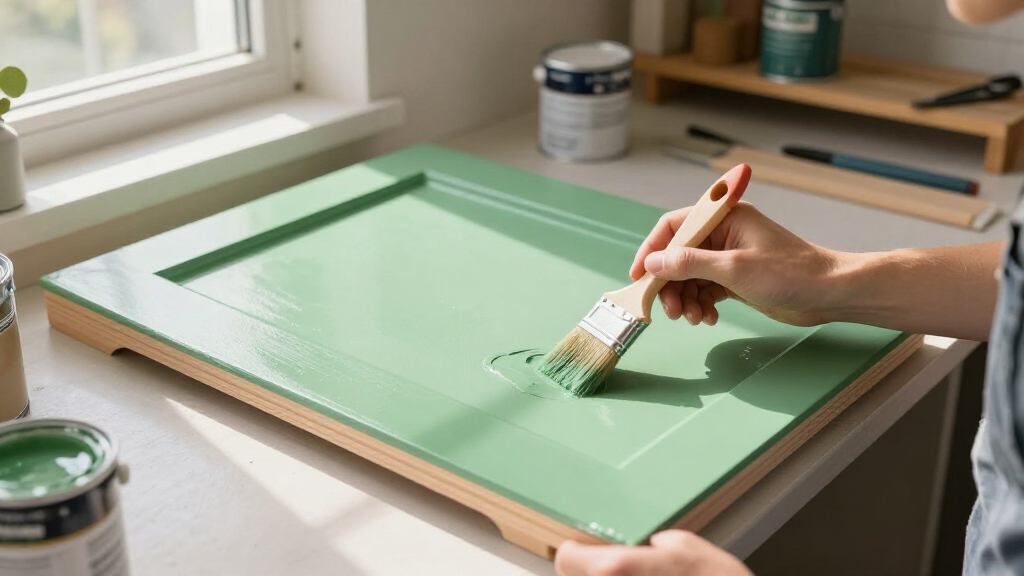

The best green cabinet paint for most kitchens in 2026 is the ALL-IN-ONE Paint by Heirloom Traditions in Trinity, a cabinet-rated quart that skips sanding and priming while still curing to a scrub-resistant finish. If budget drives the decision, Rust-Oleum Painter’s Touch in Satin Hunt Club Green covers a full kitchen for a fraction of the cost of cabinet-specific lines, and Bathworks Heirloom Olive is the pro-grade upgrade for heavy-use spaces. The real tradeoff in this category sits between convenience formulas that forgive skipped prep and traditional paints that reward careful prep with a harder, longer-lasting film. Shade matters just as much: sage and celadon read calm and airy, while forest and hunter tones commit to a bold, moody look. Keep reading for the full ranking, what separated each pick, and which can belongs on your cabinets.

Get tools and workshop supplies delivered free — and shop member deals
- Fast, free delivery on millions of items
- Access to Prime Big Deal Days deals on October 6–7
- Prime Video, Amazon Music and more included
Complete the kit


Key Takeaways
- All-in-one formulas owned the top of the ranking. Heirloom Traditions Trinity and Beyond Paint Forest Green both skip sanding and priming, saving a full weekend of prep — but only Heirloom Traditions pairs that convenience with a true quart size suited to a whole kitchen.
- The price spread is steep and honest. Rust-Oleum Painter’s Touch covers a kitchen for a fraction of what cabinet-specific lines charge, while pro-grade Bathworks Heirloom Olive costs several times more per quart and buys a harder, scrub-rated film for heavy-use kitchens.
- Cabinet kits proved their worth for first-timers. Nuvo Plus Celadon Cove, Giani Nuvo Olde Sage, and Rust-Oleum Cabinet Transformations bundle the deglossers and topcoats beginners forget to buy, which justifies their higher per-ounce cost on a first cabinet job.
- Shade separated the field more than brand did. Muted olives and sages like Heirloom Olive and Olde Sage suit low-light, resale-minded kitchens, while deep tones like Forbidden Forest and Hunt Club Green demand strong lighting to avoid closing the room in.
- Small cans are accent solutions, not kitchen solutions. The 8 oz Chalky Chicks Shamrock and the 16 oz Furniture Paint Kit in Evergreens are ideal for a vanity or island, but a full cabinet run would require four or five of them at a punishing per-ounce price.


| green cabinet paint | Finish | Color | Surfaces | Volume |
|---|---|---|---|---|
| Chalky Chicks All-in-One Chalk | Matte | Shamrock (Dark Green) | Wood, metal, cement | 8 Fl Oz |
| Rust-Oleum Tate Green Chalked | Ultra matte | Tate Green | Wood, metal, ceramic, canvas | 30 oz |
| Furniture Paint Kit 16oz with | Matte | Evergreens | Indoor and outdoor wood | 16 oz |
| Nuvo Plus Cabinet Paint Kit | Satin | Celadon Cove | Wood, laminate, MDF, metal | — |
| Beyond Paint All-in-One Refini | Matte | Forest Green | Wood, metal, plastic, tile | — |
| Rust-Oleum Painter’s Touch Lat | Satin | Hunt Club Green | Wood, metal, plaster, masonry, ceramic | 1 quart |
| Majic Paints Interior/Exterior | Satin | Olive Green | Wood, metal, brick, drywall, glass, steel, tile, vinyl, aluminum, plastics, copper, masonry | 2 quarts |
| Rust-Oleum Advanced Dry Door & | Satin | Vermont Green | Metal, wood, fiberglass | 1 quart |
| DWIL Water Based Kitchen Cabin | Semi-gloss | Olive Green | Wood, cabinets, furniture | 32 oz |
| Bathworks Kitchen Cabinet Pain | Satin | Heirloom Olive | Wood, laminate, MDF, melamine, metal, ceramic tile, fiberglass | 1 quart |
| Rust-Oleum Cabinet Transformat | Satin | Forbidden Forest | Wood, laminate, metal, melamine | — |
| ALL-IN-ONE Paint by Heirloom T | Velvet sheen (low luster) | Trinity (Green) | Wood, metal, glass, tile, cabinets, walls, furniture | — |
| Giani Nuvo Cabinet Paint | Satin | Olde Sage | — | — |
More Details on Our Top Picks
Chalky Chicks All-in-One Chalk Paint, 8 Fl Oz, Shamrock (Dark Green)
Not every cabinet project starts with a full kitchen. Chalky Chicks’ Shamrock is a rich, dark green all-in-one chalk paint sold in an 8-ounce jar, which makes it my pick for small-scale work: a single vanity, a pair of nightstands, or one thrifted cabinet door you want to trial a color on. Like the bigger names here, it skips sanding and priming, and the low odor suits indoor use. Where it falls short next to Rust-Oleum’s Tate Green Chalked is simple math — that can holds nearly four times the paint for similar money, so whole-kitchen buyers should look there. Coverage can also take multiple coats on slick surfaces, and shade choices in this line run narrow. For a first experiment with green cabinetry, the small jar keeps waste and commitment low.
Pros:- All-in-one formula needs no sanding or priming
- Low odor and quick drying for indoor projects
- Deep Shamrock shade suits moody, traditional kitchens
- Small jar limits waste on test pieces and crafts
Cons:- Poor value per ounce compared with quart-size options
- Can require multiple coats for full coverage on some surfaces
Best for: DIYers testing a dark green on one vanity, nightstand, or accent cabinet before committing to a full kitchen
Not ideal for: Whole-kitchen cabinet jobs — at 8 ounces you’d need several jars, and the cost per ounce climbs fast
- Volume:8 Fl Oz
- Finish:Matte
- Color:Shamrock (Dark Green)
- Formula:All-in-one chalk paint
- Surfaces:Wood, metal, cement
- Prep Required:No sanding or priming
- Odor:Low
- Origin:Made in USA
Our verdict“Buy this if you want to try a dark green cabinet or two without investing in a full-size can.”
Rust-Oleum Tate Green Chalked All-in-One Ultra Matte Paint, 30 OZ
If price per ounce drives your decision, this is where I land. Rust-Oleum’s Tate Green Chalked gives you 30 ounces of ultra-matte paint with one-coat coverage and a 30-minute dry time, which is why it beats the tiny Chalky Chicks jar for anything bigger than a side table and undercuts the Nuvo Plus kit by a wide margin. The velvety finish looks high-end on cabinet doors, and cleanup is just soap and water. The tradeoff is durability: a raw chalked surface scuffs, so cabinets that see daily abuse will want a separate protective topcoat — an extra step the cabinet-specific kits build in. Adhesion is also strongest on wood, metal, and ceramic, so glossy laminate may need prep the label downplays.
Pros:- Excellent volume-to-price ratio at 30 ounces
- One-coat coverage dries to the touch in 30 minutes
- Velvety ultra-matte finish reads designer-grade
- Soap-and-water cleanup, friendly for beginners
Cons:- Needs a separate topcoat for high-traffic durability
- Adhesion on slick laminate is less reliable
Best for: Budget-minded DIYers painting a full set of wood cabinets who want one-coat speed and a trendy matte look
Not ideal for: Households that are hard on cabinets — without an added topcoat, the chalked finish marks more easily than satin cabinet paints
- Color:Tate Green
- Finish:Ultra matte
- Volume:30 oz
- Dry Time:30 minutes to touch
- Coverage:One coat
- Surfaces:Wood, metal, ceramic, canvas
- Cleanup:Soap and water
Our verdict“The smart buy when you want maximum matte green coverage per dollar and don’t mind sealing it yourself.”
Furniture Paint Kit 16oz with Tools, Evergreens
This kit is the gentlest on-ramp in the lineup. The 16-ounce Evergreens kit bundles application tools with a water-based, ultra-low-VOC paint, so a first-timer can open the box and start on a cabinet door the same afternoon — no sanding, no priming, no separate supply run. That convenience is narrower than it looks, though. Unlike Beyond Paint’s Forest Green, which handles metal, plastic, and tile, this formula sticks to wood only, and it demands a seven-day cure before reaching full hardness — the Nuvo Plus kit is the better pick if you need a whole kitchen done fast. Expect two or three coats for even color. For a dresser, a bathroom vanity, or a couple of cabinet doors, the included tools and low odor flatten the learning curve almost completely.
Pros:- Tools included, so no extra purchases to start
- Ultra-low VOC, low-odor formula suits occupied homes
- No sanding or priming on wood surfaces
- Rated for indoor and outdoor wood alike
Cons:- Wood-only formula excludes laminate, metal, and tile
- Full durability takes a 7-day cure
- Multiple coats often needed for even coverage
Best for: First-time painters tackling a small wood project who want every tool in one box
Not ideal for: Anyone painting laminate, metal, or tile — the formula is wood-only, and the 7-day cure frustrates tight timelines
- Volume:16 oz
- Finish:Matte
- Color:Evergreens
- Formula:Water-based, ultra-low VOC
- Odor:Low
- Surfaces:Indoor and outdoor wood
- Dry Time:30 min touch, 2 hr recoat, 7-day cure
- Includes:Application tools
Our verdict“The friendliest first kit for small wooden cabinet projects, as long as you can wait a week for full hardness.”
Nuvo Plus Cabinet Paint Kit, Celadon Cove
Cabinets are a different beast from furniture: grease, steam, constant handling. The Nuvo Plus Cabinet Paint Kit earns my top slot because it’s engineered for exactly that. The water-based acrylic paint-and-primer bonds to wood, laminate, MDF, and metal, dries to a scrubbable satin finish, and one kit covers about 100 square feet — roughly 40 linear feet of cabinetry — with rollers and brushes in the box. Against Rust-Oleum’s Tate Green, the matte budget pick, Nuvo’s satin sheen wipes clean far more easily, which matters around a stove. The tradeoffs: Celadon Cove is a soft, pale green, so dark cabinets may need extra coats, and big kitchens can outgrow a single kit. It also refuses to moonlight — countertops and floors are off the menu, where Beyond Paint would step in.
Pros:- Purpose-built for cabinets, including laminate and MDF
- Satin finish wipes clean in high-traffic kitchens
- Paint-and-primer formula with tools included
- Ultra-low VOC and odorless for indoor use
Cons:- Dark cabinets may need extra coats under the pale Celadon shade
- One kit tops out around 100 square feet
Best for: Homeowners repainting a full kitchen of wood, laminate, or MDF cabinets who want a complete, cabinet-specific system
Not ideal for: Matte-finish purists or multi-surface renovators — it’s satin only and strictly for cabinets and furniture
- Color:Celadon Cove
- Finish:Satin
- Type:Water-based acrylic paint and primer
- Coverage:100 sq ft (40 linear ft)
- Application:Brush and roll-on
- Surfaces:Wood, laminate, MDF, metal
- VOC:Ultra low, odorless
- Includes:Application tools
Our verdict“My top recommendation for a real kitchen cabinet job done in a weekend with minimal fumes.”
Beyond Paint All-in-One Refinishing Paint, 1 Pint, Forest Green
Some projects refuse to stay in their lane — cabinet boxes today, countertop and back door tomorrow. Beyond Paint’s Forest Green is the one jar here that follows you across all of it: wood, metal, plastic, and tile, indoors or out, with no sanding, priming, or stripping. That range beats the Furniture Paint Kit’s wood-only formula and even the cabinet-tuned Nuvo Plus. The catch is capacity: a single pint covers small projects well but forces bigger kitchens into multiple purchases at a stiff per-ounce price. The finish also dries matte with a slightly textured feel — character some love on farmhouse pieces, but not the factory-smooth look of a dedicated cabinet kit. For mixed-material makeovers and outdoor pieces, nothing else on this list keeps up.
Pros:- Bonds to wood, metal, plastic, and tile without prep
- Weatherproof finish rated for indoor and outdoor use
- No sanding, priming, or stripping required
- Low-VOC, quick-drying, and made in the USA
Cons:- Pint size means multiple jars for a full kitchen
- Slightly textured matte finish, not glass-smooth
Best for: DIYers refinishing mixed-material projects — cabinets plus counters, trim, or outdoor pieces — in one deep green
Not ideal for: Full-kitchen repaints on a budget — a pint goes fast, and the slightly textured matte finish won’t please smooth-finish seekers
- Color:Forest Green
- Finish:Matte
- Size:1 pint
- Type:All-surface water-based acrylic
- Surfaces:Wood, metal, plastic, tile
- Uses:Furniture, cabinets, countertops, doors, trim, floors
- Prep Required:No sanding, priming, or stripping
- VOC:Low
- Origin:Made in USA
Our verdict“Choose this when your green makeover spans several surfaces and you’d rather buy one product than three.”
Rust-Oleum Painter’s Touch Latex Brush-On Paint, Satin Hunt Club Green
This option stands out for one simple reason: it delivers a smooth satin finish at one of the lowest prices in this lineup. The 30-minute dry time means a cabinet door can be recoated the same afternoon, which neither the DWIL nor the Bathworks paint can match on speed. Hunt Club Green is a deep, classic green that reads more traditional than the olives from Majic and Bathworks, so it suits older kitchens well. The tradeoff is prep: Rust-Oleum is upfront that sanding and degreasing are required, so this is not a grab-and-go paint like the Majic. I’d also note the quart-only sizing, which is fine for a vanity but tight for a full kitchen. For the money, though, the chip- and fade-resistant finish is hard to beat.
Pros:- Dries to the touch in about 30 minutes, so same-day recoating is realistic
- Excellent hide that covers old finishes with fewer coats
- Chip- and fade-resistant satin holds up on wood, metal, and masonry
- Deep Hunt Club Green reads classic rather than trendy
Cons:- Requires sanding and degreasing first — no prep shortcuts
- Sold only in quarts, so a full kitchen may need multiple cans
- Not cabinet-specific, so it lacks the scrub-rated toughness of dedicated cabinet formulas
Best for: Budget-conscious DIYers repainting a vanity, island, or small kitchen who don’t mind sanding before they start
Not ideal for: Anyone set on a no-prep, paint-and-go project, or large kitchens that will burn through more than a quart
- Color:Hunt Club Green
- Finish:Satin
- Base:Water-based acrylic latex
- Volume:1 quart
- Coverage:Up to 120 sq ft
- Dry time:30 minutes
- Surfaces:Wood, metal, plaster, masonry, ceramic
- Use:Interior and exterior
- Resistance:Chip and fade resistant
Our verdict“If you want the lowest-cost route to a durable green cabinet finish and don’t mind sanding, this is the can to buy.”
Majic Paints Interior/Exterior Satin Paint, Olive Green
What earns Majic its place here is the combination of two full quarts and a no-sanding, no-priming formula — a pairing none of the other picks offers. Where the Bathworks quart demands cleaning, scuffing, and priming before it bonds, this paint goes straight onto wood, metal, or even tile, which cuts a weekend cabinet job down considerably. The Olive Green is a softer, earthier shade than Rust-Oleum’s Hunt Club Green, better for farmhouse or muted schemes. The catch is coverage: expect multiple coats for a solid result, so some of that generous volume gets spent. There’s also little published data on dry time or outdoor durability, which makes it a leap of faith compared with the better-documented Rust-Oleum options. I see it as the practical choice for big, low-prep projects.
Pros:- Two quarts per purchase covers large projects without reordering
- Applies with no sanding or priming on most surfaces
- Works on an unusually wide surface list: wood, metal, glass, tile, vinyl, plastics, masonry
- Strong color retention keeps the olive tone from washing out
Cons:- Often needs multiple coats for full, even coverage
- No published dry time, so project scheduling is guesswork
- Outdoor durability claims are thinly documented
Best for: DIYers tackling a full kitchen or several furniture pieces who want to skip sanding and priming entirely
Not ideal for: Painters who need a documented dry time to plan around, or anyone who wants proven long-term outdoor durability data
- Color:Olive Green
- Finish:Satin
- Volume:2 quarts
- Prep required:None — no sanding or priming
- Surfaces:Wood, metal, brick, drywall, glass, steel, tile, vinyl, aluminum, plastics, copper, masonry
- Use:Interior and exterior
- Feature:Superior color retention
Our verdict“Buy the Majic if your project is big, your patience for prep is small, and you can live with an extra coat or two.”
Rust-Oleum Advanced Dry Door & Trim Paint, Satin Vermont Green
Don’t let the name fool you — this paint earns a spot because cabinet doors are still doors, and a formula built to resist fingerprints, scuffs, and chips on trim handles cabinet fronts well. Its 45-minute dry time is the fastest recoat in this roundup after the Painter’s Touch, and the water-based formula keeps odor low enough to work indoors comfortably. Compared with the DWIL semi-gloss, the satin Vermont Green is a touch subtler and hides brush marks more forgivingly. The limits are real, though: it’s rated only for metal, wood, and fiberglass, so laminate or melamine cabinets are out, and six pre-mixed colors mean you’re committed to this one green. If your cabinets are solid wood and you want trim-grade toughness, it’s a smart buy.
Pros:- Dries in about 45 minutes, so recoats happen the same day
- Chip-resistant formula built for high-touch doors and trim
- Water-based with low odor, comfortable for indoor work
- Satin Vermont Green hides brush marks better than a semi-gloss
Cons:- Rated only for metal, wood, and fiberglass — laminate is out
- Satin is the only finish option
- Just six pre-mixed colors, with no custom tinting
Best for: Homeowners painting solid wood or metal cabinet doors who want trim-grade toughness with a fast turnaround
Not ideal for: Anyone with laminate, melamine, or MDF cabinetry — the surface rating simply doesn’t cover those materials
- Type:Door & trim paint
- Color:Vermont Green
- Finish:Satin
- Volume:1 quart
- Dry time:45 minutes
- Base:Water-based, low odor
- Surfaces:Metal, wood, fiberglass
- Use:Interior and exterior
- Color range:6 pre-mixed colors
Our verdict“Choose this for solid wood or metal cabinet doors when you want a tough, fast-drying finish and Vermont Green happens to be your color.”
DWIL Water Based Kitchen Cabinet Paint, Olive Green Semi-Gloss
DWIL makes the most sense for a first cabinet project. The kit includes application tools in the box, the water-based formula is genuinely low odor, and the semi-gloss finish wipes clean — three things that lower the barrier for someone who’s never painted cabinetry. Coverage up to 160 square feet edges out the Rust-Oleum Painter’s Touch quart on paper, and the Olive Green is close in spirit to the Majic shade but in a shinier, more scrubbable finish. Tradeoffs: the two-hour dry time is the slowest here, so plan for a full day between coats, and the no-primer promise only holds on properly prepped surfaces — glossy factory finishes still need scuffing. It’s also limited to wood and furniture, unlike the more versatile Bathworks. For a small kitchen done over a weekend, it’s the gentlest learning curve.
Pros:- Application tools included, so there’s nothing extra to buy
- Low-odor, water-based formula suits occupied kitchens
- Semi-gloss finish resists stains and scratches and wipes clean
- Covers up to 160 sq ft, enough for an average kitchen
Cons:- Two-hour dry time is the slowest in this lineup
- No-primer claim only holds on properly prepped surfaces
- Wood and furniture only — laminate and metal are out
Best for: First-time cabinet painters who want paint, tools, and a low-odor formula in one box
Not ideal for: Kitchens with laminate or metal cabinets — it’s formulated for wood and furniture only — or anyone needing same-day recoats
- Color:Olive Green
- Finish:Semi-gloss
- Volume:32 oz
- Coverage:Up to 160 sq ft
- Dry time:Approximately 2 hours
- Odor:Low
- Base:Water-based
- Surfaces:Wood, cabinets, furniture
- Extras:Application tools included
Our verdict“The right first cabinet paint: forgiving, low odor, and complete with tools, as long as your cabinets are wood.”
Bathworks Kitchen Cabinet Paint, Satin, Heirloom Olive
Bathworks is the pick when durability outranks convenience. Its pro-grade satin formula is built to survive repeated scrubbing, and it bonds to laminate, MDF, and melamine — surfaces that rule out the Rust-Oleum Door & Trim entirely. Under 50 g/L VOCs keeps the smell manageable despite the tougher resin, which is rare for a coating this hard. The honest tradeoff is labor: cleaning, scuffing, and priming are required, so it’s the most prep-heavy option here, and skipping steps risks peeling. That makes it the opposite of the no-prep Majic approach. At a quart per purchase it’s also sized for one kitchen at a time. For a busy family kitchen where cabinets get wiped down daily, I’d spend the extra prep time and take the harder finish.
Pros:- Pro-grade, scrub-resistant satin survives daily wipe-downs
- Bonds to laminate, MDF, melamine, metal, and even ceramic tile
- Low-VOC (under 50 g/L) and low odor despite the hard finish
- Fast-drying once applied
Cons:- Requires cleaning, scuffing, and priming — the most prep in this roundup
- Skimp on surface prep and the coating can peel
- Quart sizing covers roughly one kitchen at a time
Best for: Families with high-traffic kitchens who’ll invest prep time for a scrub-proof finish on wood, laminate, or MDF cabinets
Not ideal for: Anyone hoping to skip sanding and priming — this formula demands full prep, and shortcuts can lead to peeling
- Color:Heirloom Olive
- Finish:Satin
- Volume:1 quart
- Grade:Professional
- VOC:Under 50 g/L
- Surfaces:Wood, laminate, MDF, melamine, metal, ceramic tile, fiberglass
- Prep required:Cleaning, scuffing, and priming
- Features:Scrub-resistant, low odor, fast drying
Our verdict“Worth the extra prep work if your priority is a cabinet finish that survives years of scrubbing in a busy kitchen.”
Rust-Oleum Cabinet Transformations Complete Coating Kit, Quart, Satin Forbidden Forest
This kit earns the top spot because it bundles everything the job actually needs — cleaner/degreaser, bond coat, and protective top coat — instead of leaving you to guess at prep supplies. Where the Heirloom Traditions ALL-IN-ONE squeezes primer and top coat into a single can, Rust-Oleum separates the steps, and I’d argue that’s why its stain- and scratch-resistant satin finish holds up better on high-traffic cabinet doors. Coverage of up to 100 sq ft doubles what the Giani Nuvo quart manages, so most kitchens get done with one kit. The tradeoff is patience: a full 24-hour cure before cabinets go back into service, plus more total steps than a one-can paint. Forbidden Forest is also a deep, dramatic green — a bold choice, not a subtle one.
Pros:- Complete kit includes cleaner/degreaser, bond coat, and protective top coat
- Covers up to 100 sq ft — enough for most full kitchens
- Stain- and scratch-resistant satin finish stands up to daily cabinet use
- Bonds to wood, laminate, metal, or melamine with no sanding or priming
Cons:- Needs a full 24 hours to cure before cabinets return to service
- Multi-step process takes longer than one-can alternatives
- Forbidden Forest is a very dark green that can visually shrink small or dim kitchens
Best for: Homeowners redoing a full kitchen of worn wood, laminate, or melamine cabinets who want a durable, long-term finish
Not ideal for: Impatient DIYers or single-vanity projects — the multi-step process and 24-hour cure are overkill for small jobs
- Color:Forbidden Forest
- Size:Quart
- Finish:Satin
- Coverage:Up to 100 sq ft
- Base:Water-based
- Kit contents:Cleaner/degreaser, bond coat, protective top coat
- Surfaces:Wood, laminate, metal, melamine
- Prep required:No sanding or priming
- Cure time:24 hours
Our verdict“The kit to buy when you want a full kitchen done once and done right, and you can spare the cure time.”
ALL-IN-ONE Paint by Heirloom Traditions, Trinity (Green), Quart
For a first cabinet project, this is the can I’d hand someone. Primer and top coat are built in, and there’s no sanding required, so the prep list shrinks to cleaning and taping. Compared with the Rust-Oleum Cabinet Transformations kit, you give up the separate degreaser and bonding steps — which keeps things simple but puts more pressure on how well you clean the surface first. The low-luster velvet sheen reads softer and more modern than a typical satin, and it works on wood, metal, glass, and tile, so leftovers aren’t wasted. The catch: adhesion can vary across tricky materials, and Trinity’s on-screen swatch isn’t a perfect match for the dried color, so the included color card matters more than your monitor.
Pros:- No sanding, priming, or separate top coat required
- Bonds to wood, metal, glass, tile, cabinets, walls, and furniture
- Velvet sheen gives a modern, low-luster look
- Included color card helps confirm the real shade before committing
Cons:- Results and adhesion can vary across different materials
- Digital swatches misrepresent the dried color
- One-can protection is lighter than a dedicated, separately applied top coat
Best for: First-time DIYers who want to skip sanding and priming and finish a cabinet project in a weekend with one can
Not ideal for: Buyers matching a precise shade sight-unseen, or anyone coating slick, unusual surfaces where adhesion may be unpredictable
- Color:Trinity (Green)
- Size:Quart
- Finish:Velvet sheen (low luster)
- Use:Interior / exterior
- Primer:Built in
- Top coat:Built in
- Sanding required:No
- Surfaces:Wood, metal, glass, tile, cabinets, walls, furniture
Our verdict“The simplest route to green cabinets for first-timers willing to trade a bit of durability for a one-can job.”
Giani Nuvo Cabinet Paint, Olde Sage (Quart)
Olde Sage is the quietest green in this lineup — a muted, gray-leaning sage that suits farmhouse and cottage kitchens better than the deep Forbidden Forest in the Rust-Oleum kit. The water-based acrylic formula is low-odor and low-VOC, which makes it a sensible pick for occupied homes where a lingering paint smell isn’t acceptable. The limitation is scale: roughly 50 sq ft per can, half of what the Rust-Oleum Transformations kit covers, so a full kitchen may need two cans. It also asks for proper surface prep — unlike the Heirloom Traditions ALL-IN-ONE, there’s no built-in primer to forgive skipped work. For a bathroom vanity, a small galley, or a single bank of cabinets, though, it’s the right-sized can.
Pros:- Low-odor, low-VOC formula is comfortable for indoor use around family
- Muted Olde Sage shade fits farmhouse and cottage styles
- Water-based acrylic applies easily and cleans up simply
- Satin finish wipes clean more readily than flat cabinet paints
Cons:- Covers only about 50 sq ft per can, so full kitchens need multiple cans
- No built-in primer — skimping on prep shows in the final finish
- Soft sage reads gray in low light, disappointing buyers expecting a brighter green
Best for: Renters and homeowners refreshing a vanity, galley kitchen, or single bank of cabinets who want a soft sage without heavy fumes
Not ideal for: Anyone painting a full large kitchen — at roughly 50 sq ft per can the cost climbs fast, and surfaces still demand proper prep
- Color:Olde Sage
- Finish:Satin
- Size:31 oz (quart)
- Coverage:Approx. 50 sq ft per can
- Paint type:Water-based acrylic
- Application:Cabinets
- VOC / odor:Low-VOC, low odor
Our verdict“The right-sized, low-fume pick for a small vanity or galley refresh in a soft sage — skip it for full kitchens.”
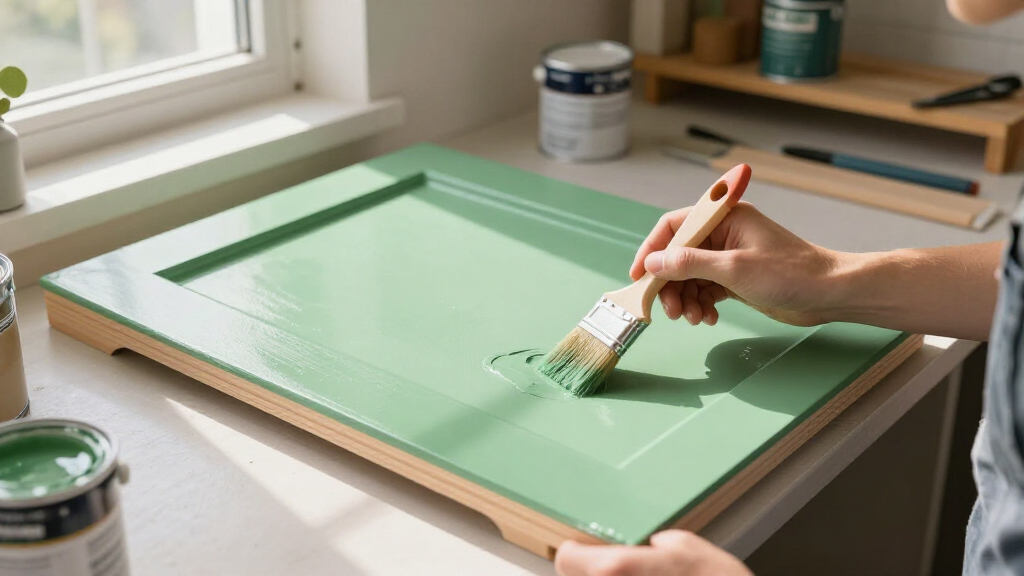
How We Picked
I ranked these 13 paints on the factors that actually decide a cabinet project: how much prep each formula demands, how the cured finish holds up to scrubbing, grease, and daily door slams, coverage per dollar, and how forgiving the paint is for someone who has never touched cabinetry. Because green is a commitment color, I also weighed shade range and undertone — a line offering one muddy olive scores lower for this roundup than one with a true sage or a deep, clean forest.
That weighting explains the order. Most people tackling cabinets are weekend DIYers, so all-in-one formulas that skip sanding and priming earned the highest spots, but only where the finish still cures hard enough for kitchen duty. Cabinet-specific kits gained ground for bundling the deglossers and topcoats a beginner would otherwise forget. Budget quarts were ranked on honest value rather than sticker price alone, and small cans were judged as accent and vanity options — never penalized for size, but never recommended as whole-kitchen solutions either.
| green cabinet paint | Finish |
|---|---|
| Chalky Chicks All-in-One Chalk | Matte |
| Rust-Oleum Tate Green Chalked | Ultra matte |
| Furniture Paint Kit 16oz with | Matte |
| Nuvo Plus Cabinet Paint Kit | Satin |
| Beyond Paint All-in-One Refini | Matte |
| Rust-Oleum Painter’s Touch Lat | Satin |
| Majic Paints Interior/Exterior | Satin |
| Rust-Oleum Advanced Dry Door & | Satin |
| DWIL Water Based Kitchen Cabin | Semi-gloss |
| Bathworks Kitchen Cabinet Pain | Satin |
| Rust-Oleum Cabinet Transformat | Satin |
| ALL-IN-ONE Paint by Heirloom T | Velvet sheen (low luster) |
| Giani Nuvo Cabinet Paint | Satin |
Factors to Consider When Choosing Best Green Cabinet Paint
Every pick in this roundup can turn cabinets green; what separates a crisp, lasting finish from a peeling, blotchy one is everything around the can. Prep demands, sheen, undertone, coverage math, and kit-versus-quart economics decide which paint fits your kitchen and your patience level. These are the factors I weighed hardest, along with the mistakes that sink most first-time cabinet jobs.
Match the Formula to Your Prep Tolerance
The biggest dividing line in this category is how much prep each paint demands. All-in-one formulas advertise no sanding and no priming, and on previously finished wood in decent shape they mostly deliver on that promise. Traditional latex quarts cost far less but expect a sanded, primed surface to reach their full durability. The most common mistake at this stage is skipping the degreasing step — kitchen cabinets carry years of cooking oil, and no paint bonds to grease no matter what the label says. Glossy laminate and thermofoil are the other trap, since even bonding formulas can fail there without scuff sanding. Be honest about your weekend: if you will genuinely do the prep work, a traditional paint buys a harder film for less money. If you already know you will cut corners, pay more for a bonding formula instead of hoping a cheap can forgives it.
Pick a Sheen That Hides Wear, Not Just Photographs Well
Green looks rich in a flat matte photo, but kitchens punish flat finishes. Matte and chalk-style paints absorb stains and show every fingerprint near handles, which is why most of them need a separate wax or polycrylic topcoat to survive next to a sink. Satin is the practical floor for cabinets — it wipes clean, reflects enough light to keep deep greens from going dead, and forgives minor brush texture. Semi-gloss goes further on scrubbability and suits a trim-style look, though it broadcasts every surface flaw and roller mark. A useful rule: the deeper your green, the more light a satin or semi-gloss sheen returns to the room. Reserve true matte for low-touch pieces like a hutch or a powder-room vanity, or commit to the extra sealing step from day one.
Choose Your Green for the Light Your Kitchen Actually Gets
Undertone decides whether a green cabinet reads calm or swampy. Sages and celadons carry gray or blue undertones that stay quiet in dim, north-facing kitchens and pair easily with stainless appliances. Olives lean yellow-brown and flatter warm woods, brass hardware, and creamy counters. Deep forest and hunter tones need abundant natural light or strong under-cabinet lighting; in a dark galley they can shrink the room fast. Paint a poster board with two coats and move it around the kitchen for two full days before committing — green shifts more between morning and evening light than almost any other color. If you are painting with resale in mind, muted mid-tones in the sage-to-olive band are the safer bet, because buyers read them as neutral-adjacent rather than as a bold personal statement.
Do the Coverage Math Before You Buy
A typical kitchen has 20 to 30 cabinet doors and drawer fronts, and two coats are non-negotiable with a saturated color like green. A quart generally covers 100 to 150 square feet per coat, which handles a small-to-average kitchen exactly once — so most full kitchens need two quarts, and dark greens over light oak may push toward a third. This is where small cans mislead: an 8-ounce jar that looks like a bargain would need to be bought four or five times over for one kitchen, at a much higher per-ounce price. Kits often win the math despite a higher sticker, because they bundle the deglosser, bond coat, and topcoat you would otherwise add to a bare quart. Compare cost per finished project, not cost per can. Buying 10 percent more than your calculation is cheap insurance against a discontinued shade or a batch tint that does not quite match.
Know When a Kit Beats a Bare Can
Cabinet kits exist because the failure points in a cabinet job are usually the steps around the paint, not the paint itself. A complete kit bundles deglosser, bonding coat, protective topcoat, and sometimes tools, matched so the layers cure together without compatibility surprises. For a first-timer, that removes the riskiest guesswork: which primer grips a factory finish, and which topcoat will not yellow over green. The tradeoff is flexibility — kit shades are fixed, sheen choices are narrow, and the per-ounce price runs well above a quart of latex. Experienced painters who already own primer and a preferred topcoat will rarely get their money’s worth from a kit. A middle path works too: buy a bare quart of a proven bonding paint and add only the topcoat, which keeps costs down while still protecting a satin finish near the stove.
Frequently Asked Questions
Do I really not have to sand before using an all-in-one green cabinet paint?
Mostly yes, with two non-negotiable exceptions. All-in-one bonding formulas grip previously finished wood without sanding, but you still have to clean and degrease every surface — kitchen cabinets carry invisible cooking oil that defeats any paint. The first exception is high-gloss or laminate cabinetry, which needs at least a scuff sanding or a liquid deglosser for reliable adhesion. The second is a damaged or flaking existing finish, where loose material must come off before anything new goes on. Skipping prep entirely is the single most common reason green cabinet jobs peel within a year, and darker greens make peeling more visible than pale colors do.
Which shade of green is safest for a small or dark kitchen?
Stay in the sage-to-celadon band. Lighter, gray-leaning greens reflect more light and read as near-neutral, so the room keeps its sense of space. Deep forest and hunter tones absorb light and can make a windowless galley feel closed in, especially in a matte finish that reflects nothing. If your heart is set on a dark green, limit it to the lower cabinets or an island and keep the uppers light — a layout trick that keeps the drama without the cave effect. Whatever you choose, paint a large sample board and watch it for two full days, because green swings harder between daylight and warm evening bulbs than most colors, and a shade that looks fresh at noon can turn murky by dinner.
How much green paint do I need for a full kitchen of cabinets?
Count doors and drawer fronts first; most kitchens land between 20 and 30. Each piece typically needs two coats on both faces, and a quart covers roughly 100 to 150 square feet per coat, so one quart rarely finishes a whole kitchen. Plan on two quarts for an average kitchen, and add a third if you are covering light oak or white with a deep green, since saturated dark colors often need an extra pass for even depth. Small 8- to 16-ounce jars are sized for vanities, islands, or accent pieces, and buying enough of them for a full kitchen costs more per ounce than stepping up to quarts. Kits sized for a standard kitchen are the exception, since their spread rate is calculated around thinner bond coats.
Is chalk-style green paint durable enough for kitchen cabinets?
Only with a topcoat, and even then with caveats. Chalk-style paints cure to a soft, porous matte film that scuffs and stains easily, which is why they shine on furniture and low-touch pieces. On cabinets — especially the doors around the sink, trash pull-out, and stove — an unsealed chalk finish will show wear within months. Sealing with wax or a water-based polycrylic fixes most of the problem, but it adds a step and slightly deepens the color, which matters when you have picked a precise green. If you love the ultra-matte chalk look on high-traffic cabinets, choose a chalked formula with a built-in sealer or plan the topcoat from day one. Otherwise a satin cabinet paint gives you a similar softness of color with far less maintenance.
Should I brush, roll, or spray green cabinet paint?
For most DIYers, a foam roller on flat panels plus an angled brush for profiles gives the best balance of finish quality and effort. Brushing alone leaves visible marks in deep greens, because dark saturated colors show lap lines more than pale ones, so look for a self-leveling formula if you plan to brush the whole job. Rolling with a high-density foam sleeve lays paint flatter and faster, though the recesses of shaker doors still need a brush. Spraying produces the factory-smooth result everyone wants, but it demands masking the entire kitchen, thinning know-how, and equipment rental — a realistic step up only for confident painters. Whichever method you pick, remove the doors and hardware and paint horizontally; gravity is the cheapest finishing tool you have.
Conclusion
After lining up all 13, ALL-IN-ONE Paint by Heirloom Traditions in Trinity is my best overall pick for most kitchens — it skips sanding and priming, cures hard enough for daily cabinet duty, and comes in a quart that actually covers a real project. If the budget is tight, Rust-Oleum Painter’s Touch in Satin Hunt Club Green is the best value: do the prep properly and the finish punches well above its price. For a premium, pro-grade film in a high-traffic kitchen, Bathworks Heirloom Olive earns its cost with a harder, scrub-ready cure. Beginners should start with a kit — Nuvo Plus in Celadon Cove bundles every step of a first cabinet job, while the Furniture Paint Kit in Evergreens adds tools for vanities and smaller pieces. And if you want the full moody makeover in one box, Rust-Oleum Cabinet Transformations in Forbidden Forest packages the complete system for going dark. Match the can to your prep tolerance, your light, and your patience, and any pick on this list will get the green right.
Fall yard work Picks
leaf blowers
As an affiliate, we earn on qualifying purchases.