

Benchtop wood planers help flatten stock to a consistent thickness, but the right choice depends on your board width, finish expectations, and how often you plane. I’d start with the DEWALT DW735X for its two-speed feed and broad capacity, consider the WEN PL1326 if a spiral cutterhead is your priority, and look at the WEN PL1252 for a simpler 12.5-inch option. Across this group, the main tradeoffs are cutterhead finish and maintenance, feed flexibility, and the space and setup a larger machine demands. Some models emphasize familiar two-knife designs, while others use multiple cutter inserts to reduce tear-out and simplify blade changes. Read on for how the 13 options compare and which one best fits your work.

Get business pricing on tools and workshop supplies
- Business-only prices and quantity discounts
- Tax-exempt purchasing
- Multiple users, one account, clear invoices
Complete the kit


Key Takeaways
- The DW735X stands apart for feed flexibility: its two-speed design lets buyers choose between faster stock removal and a slower finish pass.
- Spiral and helical cutterheads are the main alternative to knives: the WEN PL1326, Cutech 40700H, and FindBuyTool model suit buyers prioritizing quieter cutting and replaceable inserts, while their cutterhead designs differ from conventional two-blade machines.
- Thirteen-inch capacity is common in this lineup: the WEN PL1252 and DEWALT DW734 are narrower at 12.5 inches, so measure your widest recurring boards before choosing.
- Two-knife models remain practical for straightforward work: the WEN PL1252 and DEWALT DW734 offer simpler cutterhead formats, though knives need attention when edge quality declines.
- Brand and model names alone do not settle the choice: the VEVOR lineup includes two-speed, two-blade, and standard versions, so buyers should match the exact configuration to their needs.
| WOODERS 13-Inch Benchtop Thickness Planer, 15A, 2000W |  | Best for Blade Spares | Planing width: 13 in (330 mm) | Planing height range: 1/4–6.3 in (6–160 mm) | Motor: 15 A, 2000 W, all-copper | VIEW LATEST PRICE | See Our Full Breakdown |
| WOODSTARTER 13-Inch Benchtop Wood Planer with 3 HSS Blades |  | Best for Three-Blade Cutting | Maximum planing width: 13 in | Stock thickness: Description lists 6-3/16 in maximum and 1/4 in minimum | Motor power: 2000 W | VIEW LATEST PRICE | See Our Full Breakdown |
| VEVOR 13-Inch Two-Speed Benchtop Thickness Planer |  | Best for Two Feed Speeds | Planing width: 13 in | Maximum board thickness: 6 in | Table support length: 35 in with extensions | VIEW LATEST PRICE | See Our Full Breakdown |
| VEVOR 13-Inch Two-Blade Benchtop Thickness Planer |  | Best for Steady Board Feeding | Planing width: 13 in | Worktable dimensions: 13 in wide × 6 in high × 28.2 in long | Motor power: 1800 W | VIEW LATEST PRICE | See Our Full Breakdown |
| WEN PL1252 12.5-Inch Two-Blade Benchtop Thickness Planer |  | Best for Reversible Blades | Model: PL1252 | Motor: 15 amps | Maximum board width: 12.5 in | VIEW LATEST PRICE | See Our Full Breakdown |
| VEVOR 13-Inch Benchtop Thickness Planer |  | Best for Space-Conscious Shops | Motor current: 15A | Listed motor power: 1800W | Blade speed: 8000 rpm | VIEW LATEST PRICE | See Our Full Breakdown |
| WEN PL1326 13-Inch Spiral Benchtop Thickness Planer |  | Best for Smoother Cuts | Cutterhead: Spiral, with 26 staggered and rotatable HSS blades | Motor: 15 amps | Cutterhead speed: 10,000 RPM | VIEW LATEST PRICE | See Our Full Breakdown |
| DEWALT 13-Inch Thickness Planer, 15 Amp, Two-Speed (DW735X) |  | Best for Adjustable Finish and Feed | Planing width: 13 inches | Motor: 15 amp | Motor speed: 20,000 rpm | VIEW LATEST PRICE | See Our Full Breakdown |
| CRAFTSMAN 15-Amp Benchtop Planer with Two-Knife Solid Steel Cutter Head (CMEW320) |  | Best for Straightforward Knife Changes | Motor: 15 amp | Type: Benchtop planer | Cutterhead: Two-knife, solid steel | VIEW LATEST PRICE | See Our Full Breakdown |
| DEWALT DW734 12-1/2-Inch Benchtop Planer |  | Best for Long Workpiece Support | Model: DW734 | Power: 15 amp, corded | Maximum planing width: 12-1/2 inches | VIEW LATEST PRICE | See Our Full Breakdown |
| Triton TPT125 High-Performance Benchtop Planer, 12.5-Inch Cutting Width | 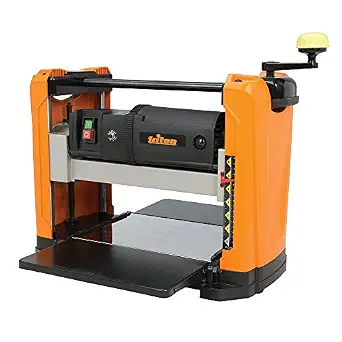 | Best for Table Support and Adjustability | Model: TPT125 | Cutting width: 12.5 inches (317 mm) | Cutter height range: 1/8 to 5.9 inches | VIEW LATEST PRICE | See Our Full Breakdown |
| Cutech 40700H 12½-Inch Spiral Cutterhead Benchtop Planer |  | Best for Quieter Spiral-Cutterhead Planing | Model: 40700H | Planing width: 12½ inches | Cutterhead: Six-row spiral | VIEW LATEST PRICE | See Our Full Breakdown |
| FindBuyTool 13-Inch Benchtop Thickness Planer with Helical Cutterhead |  | Best for Repeatable 13-Inch Thicknessing | Planing width: 13 inches | Maximum planing depth: 1/8 inch | Motor: 120V, 15A | VIEW LATEST PRICE | See Our Full Breakdown |
More Details on Our Top Picks
WOODERS 13-Inch Benchtop Thickness Planer, 15A, 2000W
The WOODERS pairs a 13-inch capacity with a stated 15-amp, 2000-watt copper motor, making it a fit for shops that regularly flatten wider boards. Its dual-edge HSS blades come with two extra blades, a practical buffer for a small shop that wants replacements on hand. Compared with the three-blade WOODSTARTER, this model lists fewer cutting edges in its cutterhead, but gives more detail about included spare blades and adds a lifting handle. Overload protection and a vacuum-ready dust port address two everyday shop concerns. The tradeoff is its heavy-duty benchtop footprint: buyers will need a stable stand and room to support stock. Choose it for wide-board capacity and blade запас; skip it if workspace is tight.
Pros:- 13-inch planing width accommodates wider boards
- Includes two extra dual-edge HSS blades
- Overload protection helps protect the motor
- Dust port connects to a vacuum system
Cons:- Heavy-duty benchtop design calls for substantial workspace
- Two-blade cutterhead offers fewer blades than the WOODSTARTER’s three-blade design
Best for: Small-shop woodworkers who plane wide boards and want spare blades included for future changes
Not ideal for: Woodworkers with a crowded bench or no room for a substantial planer and stock support
- Planing width:13 in (330 mm)
- Planing height range:1/4–6.3 in (6–160 mm)
- Motor:15 A, 2000 W, all-copper
- Cutterhead speed:10,000 RPM
- Blades:Dual-edge HSS; includes 2 extra blades
- Dust collection:Dust port for vacuum connection
- Protection:Overload protection
Our verdict“Pick the WOODERS if wide-board capacity and included spare blades matter more than a compact footprint.”
WOODSTARTER 13-Inch Benchtop Wood Planer with 3 HSS Blades
The WOODSTARTER’s three-blade HSS cutterhead is its clearest distinction: compared with the two-blade WOODERS and VEVOR Two-Blade planer, it uses an extra blade in the cutting head. Its 13-inch width and listed 21 ft/min feed rate suit users who want a broad capacity and steady stock movement in one machine. A multi-size dust port accepts several hose diameters, which can simplify connection to an existing shop vacuum setup. Overload and overheat protection add safeguards during demanding work. The listed maximum thickness is inconsistent between the title and description, so I would verify the usable opening before buying for unusually thick stock. It also includes a blade but does not list spare blades, unlike the WOODERS. This is a stronger match for buyers prioritizing the cutterhead configuration over bundled replacements.
Pros:- Three HSS blades in the cutterhead
- 13-inch maximum planing width
- Multi-size dust port fits several hose diameters
- Overload and overheat protection
Cons:- Maximum stock thickness is listed inconsistently as 6-1/4 and 6-3/16 inches
- No spare blades are listed among the included components
Best for: Woodworkers seeking a 13-inch planer with a three-blade cutterhead and flexible dust-hose connections
Not ideal for: Buyers who need a confirmed maximum thickness above 6 inches or want spare blades in the box
- Maximum planing width:13 in
- Stock thickness:Description lists 6-3/16 in maximum and 1/4 in minimum
- Motor power:2000 W
- Speed:10,000 RPM
- Blades:3 HSS blades
- Feed rate:21 ft/min
- Maximum cut per pass:1/8 in
- Worktable length:29 in
- Dust port sizes:1-2/5 in, 2-1/2 in, and 4 in
Our verdict“Choose the WOODSTARTER for its three-blade head and flexible dust hookup, after confirming its thickness capacity.”
VEVOR 13-Inch Two-Speed Benchtop Thickness Planer
Two feed speeds give this VEVOR a useful choice that the single-speed VEVOR Two-Blade and WOODERS do not list: 24 ft/min for faster work and 15 ft/min for a slower pass. That makes it the more adaptable pick for users switching between stock removal and finish-oriented planing. Its three-knife cutterhead and 35 inches of table support with extensions also suit longer boards, while the other two VEVOR models list simpler worktable details. The 13-inch width and 6-inch capacity keep it in the same broad-stock class as the WOODERS. The tradeoffs are a higher stated motor speed of 23,500 rpm and a 20 A over-current protection rating; buyers should check compatibility with their shop setup. Choose it when feed-rate flexibility and extended support outweigh a straightforward single-speed design.
Pros:- Two feed speeds support different planing priorities
- Three-knife cutterhead
- Table extensions provide 35 inches of support
- 20 A over-current protection and vacuum port
Cons:- More setup choices than a single-speed planer
- Feed speed and motor speed figures should be checked against the buyer’s intended shop setup
Best for: Woodworkers who routinely switch between faster stock removal and slower planing passes on longer boards
Not ideal for: Buyers seeking a simple single-speed setup or who cannot accommodate the planer and its extended support tables
- Planing width:13 in
- Maximum board thickness:6 in
- Table support length:35 in with extensions
- Cutterhead:Three-knife, quick-change solid steel
- Feed speeds:24 ft/min and 15 ft/min
- Motor power:2000 W
- Motor speed:23,500 rpm
- Over-current protection:20 A
- Dust collection:Vacuum port
Our verdict“Pick this VEVOR when variable feed speeds and long-board support are more useful than the simpler setup of the single-speed alternatives.”
VEVOR 13-Inch Two-Blade Benchtop Thickness Planer
Dual rollers are the defining feature here: they help feed stock steadily, which can make this VEVOR appealing to woodworkers who value consistent board movement. Its 13-inch worktable is longer than the 12.5-inch maximum width of the WEN PL1252, giving it a little more width for broad stock. The 1800 W motor and two HSS blades make for a simpler specification set than the three-knife, two-speed VEVOR, which offers more feed-rate flexibility. Depth adjustment in 1/8-inch increments gives a clear step size for setting cuts. The tradeoff is single-speed operation, so it cannot shift feed rates for different tasks like the two-speed VEVOR. Its maximum planing height is listed as 6 inches. This pick suits buyers who want roller-fed stock and broad capacity without prioritizing variable speed.
Pros:- Dual rollers support steady board feeding
- 13-inch planing width
- Depth adjusts in 1/8-inch increments
- Dust port accepts 2-inch and 4-inch hoses
Cons:- Single-speed operation lacks the flexibility of the two-speed VEVOR
- Maximum planing height is 6 inches
Best for: Hobbyist woodworkers handling wide stock who value dual-roller feeding and a straightforward single-speed machine
Not ideal for: Users who want to adjust feed speed for different finishes or need capacity beyond 6 inches in height
- Planing width:13 in
- Worktable dimensions:13 in wide × 6 in high × 28.2 in long
- Motor power:1800 W
- Motor speed:Up to 16,000 CPM
- Blades:Two HSS blades
- Feed system:Dual rollers
- Depth adjustment:1/8-inch increments
- Dust hose compatibility:2-inch and 4-inch hoses
Our verdict“Choose this VEVOR for steady roller feeding and 13-inch capacity if one feed speed meets your needs.”
WEN PL1252 12.5-Inch Two-Blade Benchtop Thickness Planer
The WEN PL1252 is the narrower choice in this group, with a 12.5-inch capacity compared with the 13-inch WOODERS and both VEVOR models. That small difference can matter when a project calls for boards near the width limit, but most buyers should compare it against the rest of the specification: a 15-amp motor, 26 ft/min feed rate, and reversible SK5 blades. Reversibility gives owners another cutting edge before replacing the blades. Its stated 20,000 cuts per minute and up-to-1/8-inch depth per pass suit routine dimensioning work. Unlike the VEVOR two-speed model, the WEN lists one feed rate, and its supplied data does not specify a dust port or table extensions. It makes sense for buyers who value the known blade type and simpler capacity needs over wider stock handling.
Pros:- Reversible 12.5-inch SK5 blades provide a second cutting edge
- 15-amp motor
- 26 ft/min feed rate
- Cuts up to 1/8 inch per pass
Cons:- Narrower capacity than the 13-inch models in this batch
- Only one feed rate is listed
- Provided product data does not specify dust collection details
Best for: Home-shop woodworkers processing stock up to 12.5 inches wide who want reversible blades and a stated feed rate
Not ideal for: Buyers who regularly plane boards wider than 12.5 inches or need documented variable feed speeds and dust-port details
- Model:PL1252
- Motor:15 amps
- Maximum board width:12.5 in
- Maximum board thickness:6 in
- Cut rate:20,000 cuts per minute
- Feed rate:26 ft/min
- Maximum cutting depth per pass:1/8 in
- Blades:Two reversible 12.5-inch SK5 blades (model BP122K)
Our verdict“Choose the WEN PL1252 for reversible SK5 blades and a 26 ft/min feed rate if 12.5-inch capacity is enough.”
VEVOR 13-Inch Benchtop Thickness Planer
The foldable extension plates and detachable stand give this VEVOR a practical advantage for workshops that need to clear bench space after planing. Its 13-inch capacity matches the WEN PL1326 and DEWALT DW735X, while return rollers help move boards through the machine without as much manual handling. The tradeoff is a more basic cutting setup: it uses two double-sided HSS blades, unlike the WEN’s 26-blade spiral cutterhead, and the supplied data does not specify a finish-focused feed option like the DW735X’s two speeds. The motor is listed as both 1800W and 2000W in the product data, so I would rely on the stated 15A rating instead of treating either wattage as definitive. Dust collection hardware is not included.
Pros:- 13-inch cutting width handles broad workpieces
- Foldable extension plates and detachable stand help reclaim shop space
- Automatic feed and return rollers ease board handling
- Power-off protection and over-current protection are listed
Cons:- Two HSS blades offer a more conventional cutter setup than the WEN PL1326’s spiral head
- Supplied data gives conflicting 1800W and 2000W motor figures
- Dust collection equipment is not listed among the included components
Best for: Woodworkers with limited floor or bench space who want a 13-inch planer with a detachable stand and fold-away support plates.
Not ideal for: Buyers prioritizing a spiral cutterhead finish or a clearly documented two-speed feed system; the WEN PL1326 and DEWALT DW735X offer more specific cutting features.
- Motor current:15A
- Listed motor power:1800W
- Blade speed:8000 rpm
- Feeding speed:6 m/min (236 in/min)
- Maximum cutting width:13 in (330 mm)
- Cutting thickness:0.2–6.3 in (6–160 mm)
- Blades:2 double-sided HSS blades
- Dust exhaust connection:1.8 in (45 mm) inner diameter; 2 in (50 mm) outer diameter
Our verdict“Choose this VEVOR if compact storage and 13-inch capacity matter more to you than a spiral cutterhead or multiple feed speeds.”
WEN PL1326 13-Inch Spiral Benchtop Thickness Planer
The 26 staggered, rotatable HSS blades set the WEN PL1326 apart from the two-knife VEVOR and CRAFTSMAN models: smaller cutting edges can make this a better fit for woodworkers seeking a smoother planed surface across hardwoods and softwoods. Its 13-inch capacity also matches the DEWALT DW735X, though the DEWALT adds two feed speeds for choosing between faster work and a finer cut. Here, the stated 26 feet-per-minute feed rate and 1/8-inch maximum cut per pass define a more straightforward pace. A cast-iron base, adjustable tables, depth stop, and material-removal gauge help with support and repeatable settings. You still need a dust collection setup, and boards wider than 13 inches belong on a different machine.
Pros:- 26 rotatable HSS blades form a spiral cutterhead
- 13-inch width and 6-inch thickness capacity cover many shop projects
- Material-removal gauge and depth stop support controlled settings
- Height-adjustable tables help support workpieces
Cons:- Requires a dust collection setup to manage chips and sawdust
- Single listed feed rate offers less speed choice than the DEWALT DW735X
- 13-inch maximum width limits oversized stock
Best for: Woodworkers who plane hardwood and want a spiral cutterhead with a material-removal gauge for controlled, smoother cuts.
Not ideal for: Shops that need to plane stock wider than 13 inches or want multiple feed speeds; the DEWALT DW735X offers two.
- Cutterhead:Spiral, with 26 staggered and rotatable HSS blades
- Motor:15 amps
- Cutterhead speed:10,000 RPM
- Feed rate:26 feet per minute
- Maximum board width:13 inches
- Maximum board thickness:6 inches
- Maximum depth of cut per pass:1/8 inch
- Base:Cast iron
Our verdict“Pick the WEN PL1326 if a spiral cutterhead and controlled material removal matter more than adjustable feed speeds.”
DEWALT 13-Inch Thickness Planer, 15 Amp, Two-Speed (DW735X)
The two-speed gearbox is the DW735X’s clearest edge over the WEN PL1326: its 96 and 179 cuts-per-inch settings let you trade feed pace for a finer cut without changing machines. A three-knife cutterhead and fan-assisted chip ejection further suit a busy shop that wants efficient cutting and active chip clearing. At 13 inches wide, it shares the WEN and VEVOR’s capacity, but its height-adjustable comparison points are less about compact storage and more about controlled output. The package includes infeed and outfeed tables plus an extra knife set, which is useful for keeping the planer working when knives need replacement. Its tradeoffs are a conventional knife cutterhead rather than a spiral design, and the supplied information does not give a maximum board thickness.
Pros:- Two feed speeds provide 96 or 179 cuts per inch
- Three-knife cutterhead is designed for efficient cutting and longer knife life
- Fan-assisted chip ejection clears chips from the cutterhead
- Includes infeed and outfeed tables and an extra knife set
Cons:- Uses a three-knife cutterhead rather than the WEN PL1326’s spiral head
- Supplied specifications do not state maximum board thickness
Best for: Frequent users who want to choose between a faster feed and a finer cut on boards up to 13 inches wide.
Not ideal for: Buyers set on a spiral cutterhead or those who need a stated maximum board thickness before choosing; the WEN PL1326 lists both spiral blades and a 6-inch capacity.
- Planing width:13 inches
- Motor:15 amp
- Motor speed:20,000 rpm
- Cutterhead speed:10,000 rpm
- Cutterhead knives:Three
- Feed speeds:Two
- Cuts per inch:96 or 179
- Warranty:3-year limited
Our verdict“Choose the DW735X if you value selectable feed speed and included support tables over a spiral cutterhead.”
CRAFTSMAN 15-Amp Benchtop Planer with Two-Knife Solid Steel Cutter Head (CMEW320)
The CRAFTSMAN CMEW320 is a straightforward choice for buyers who prefer reversible, double-edged knives and a familiar two-knife cutterhead. That setup contrasts with the WEN PL1326’s 26-blade spiral head and the DEWALT DW735X’s three knives and two feed speeds: the CRAFTSMAN keeps its feature set simpler, while its ball-bearing-mounted solid steel cutterhead is intended to run smoothly. A vacuum port gives it a defined route for dust collection, unlike the VEVOR planer, whose listed package does not include dust collection equipment. The available product data leaves important fit questions unanswered, including maximum board width, feed rate, and table setup. I’d treat it as a basic planer for buyers who value reversible knives, while those comparing capacity or finish controls should favor models with fuller specifications.
Pros:- 15-amp motor is specified for hard and soft wood
- Reversible, double-edged high-carbon steel knives provide two cutting edges
- Solid steel cutterhead is mounted on ball bearings
- Vacuum port supports dust collection
Cons:- Supplied data does not state maximum planing width or thickness
- Two-knife cutterhead lacks the WEN PL1326’s spiral blade arrangement
- No feed-rate or cut-depth figures are provided for comparing work pace
Best for: Hobbyist woodworkers who want a basic two-knife planer with reversible blades and a vacuum port for dust collection.
Not ideal for: Buyers who need a confirmed cutting width, feed rate, or depth capacity; those specifications are not provided for this model.
- Motor:15 amp
- Type:Benchtop planer
- Cutterhead:Two-knife, solid steel
- Knife material:High-carbon steel
- Knife design:Double-edged, reversible
- Cutterhead mounting:Ball bearings
- Dust collection:Vacuum port
Our verdict“Consider the CMEW320 if reversible knives and a vacuum port are your priorities and its unstated capacity fits your needs.”
DEWALT DW734 12-1/2-Inch Benchtop Planer
The DW734’s 33-1/2-inch material support length makes it a compelling fit for planing longer boards, with long infeed and outfeed tables helping keep stock supported as it passes through. Its four-column carriage lock is designed to reduce snipe, a useful complement to the material-removal gauge and turret depth stop for repeatable thickness settings. Compared with the 13-inch DEWALT DW735X, this model gives up half an inch of planing width and has one listed cut setting of 96 cuts per inch rather than two feed-speed choices. It still offers a three-knife head and reversible disposable knives, but those knives need replacement when worn. I’d favor the DW734 for board support and simple depth control over broader capacity or selectable feed speed.
Pros:- 33-1/2-inch material support length aids handling of long boards
- Four-column carriage lock is designed to reduce snipe
- Turret depth stop and material-removal gauge support repeatable settings
- Three-knife cutterhead provides 96 cuts per inch
Cons:- 12-1/2-inch capacity is narrower than the DW735X’s 13 inches
- Only one cuts-per-inch setting is specified
- Disposable knives need replacement when worn
Best for: Woodworkers who frequently plane long boards and want extended table support, repeatable depth settings, and a carriage lock.
Not ideal for: Buyers who regularly work with stock wider than 12-1/2 inches or want two feed speeds; the DW735X handles 13-inch boards and offers two.
- Model:DW734
- Power:15 amp, corded
- Maximum planing width:12-1/2 inches
- Cutterhead:Three knives
- Motor speed:20,000 RPM
- Cutterhead speed:10,000 RPM
- Cuts per inch:96
- Material support length:33-1/2 inches
Our verdict“Choose the DW734 if long-board support and repeatable depth control matter more than a wider capacity or selectable feed speeds.”
Triton TPT125 High-Performance Benchtop Planer, 12.5-Inch Cutting Width
The Triton TPT125 suits woodworkers who want a 12.5-inch capacity with useful support for longer boards. Its large infeed and outfeed tables help steady a workpiece as it enters and exits, while 1/16-inch depth adjustments give the operator a clear way to make controlled passes. The 17,500 cuts-per-minute rate is designed to produce a smooth finish. Compared with the Cutech 40700H, the Triton uses a conventional cutterhead setup in the supplied description, while the Cutech specifies a spiral head intended to reduce noise and improve finish quality. The Triton’s four-post design, circuit breaker, and reversible dust chute add practical features, but its width tops out at 12.5 inches and the provided details do not specify motor power or operating noise. Choose it for table support and straightforward adjustment; skip it if spiral-cut performance is your priority.
Pros:- Large infeed and outfeed tables support longer workpieces
- Depth adjusts in 1/16-inch increments
- Four-post design supports stable cutter movement
- Reversible dust chute and circuit breaker add practical flexibility
Cons:- Maximum cutting width is 12.5 inches
- Provided product details do not specify motor power or noise level
Best for: Woodworkers planing longer boards who value large support tables and incremental depth settings.
Not ideal for: Buyers who need a spiral cutterhead or capacity beyond 12.5 inches.
- Model:TPT125
- Cutting width:12.5 inches (317 mm)
- Cutter height range:1/8 to 5.9 inches
- Cut rate:17,500 cuts per minute
- Depth adjustment:1/16-inch increments (1.6 mm)
- Design:Four-post column
- Dust chute:Mounts on either side
Our verdict“Pick the Triton for supported, adjustable planing of boards up to 12.5 inches wide, and choose the Cutech 40700H if its spiral cutterhead is the deciding feature.”
Cutech 40700H 12½-Inch Spiral Cutterhead Benchtop Planer
The Cutech 40700H is the clearest fit here for buyers who prioritize a spiral cutterhead. Its six rows of two-sided tungsten carbide inserts are designed to produce smooth cuts with less noise than a conventional cutterhead, and the insert design is intended to resist skewing. A four-lead-screw system and patented coupling aim to reduce snipe, which can help when consistent board ends matter. Compared with the Triton TPT125, the Cutech emphasizes cutterhead performance and snipe control, while the Triton supplies large infeed and outfeed tables plus 1/16-inch depth adjustments. The Cutech also includes a depth-of-cut indicator and board return rollers for easier repeated passes. Its tradeoffs are a single speed and limited published specifications: the supplied details omit power, dimensions, and weight, making workspace and capacity planning harder.
Pros:- Six-row spiral cutterhead is designed for smooth cuts and reduced noise
- Two-sided tungsten carbide inserts are designed to resist skewing
- Four lead screws and patented coupling aim to minimize snipe
- Depth indicator and board return rollers support repeat work
Cons:- Single-speed operation offers no feed-rate choice
- Provided product details omit dimensions, weight, and power specifications
Best for: Woodworkers who want a spiral cutterhead, reduced operating noise, and built-in snipe control for routine board thicknessing.
Not ideal for: Buyers who need variable feed speeds or detailed power and footprint specifications before choosing a planer.
- Model:40700H
- Planing width:12½ inches
- Cutterhead:Six-row spiral
- Inserts:Two-sided tungsten carbide
- Speed:Single speed
- Snipe minimization:Four lead screws and patented coupling design
- Additional features:Depth-of-cut indicator and board return rollers
Our verdict“Choose the Cutech if spiral cutting and snipe control matter more than speed options or a fully specified machine footprint.”
FindBuyTool 13-Inch Benchtop Thickness Planer with Helical Cutterhead
The FindBuyTool gives buyers the widest stated capacity in this group at 13 inches, paired with a four-row helical cutterhead and 40 carbide inserts designed for smooth cuts on softwood and hardwood. Its eight-position depth stop helps return to set thicknesses across repeat jobs, while the listed tolerance of less than 0.1 mm signals a focus on consistent output. Compared with the Triton TPT125, it offers a half-inch more width and a defined motor, feed rate, and depth-stop system; the Triton instead lists large support tables and finer incremental depth adjustment. FindBuyTool’s stated maximum planing depth is 1/8 inch, and its manufacturer recommends shallow cuts and small batches to avoid overloading. That guidance makes this a better fit for controlled passes than aggressive stock removal, even with its dust collection system.
Pros:- 13-inch planing width exceeds the Triton TPT125’s 12.5-inch capacity
- Helical cutterhead with 40 carbide inserts is designed for smooth cuts
- Eight-position depth stop supports repeat thickness settings
- Dust collection system is designed for chip removal
Cons:- Maximum planing depth is limited to 1/8 inch
- Manufacturer recommends shallow cuts and small batches to avoid overloading
Best for: Woodworkers thicknessing boards up to 13 inches wide who value repeatable settings and controlled shallow passes.
Not ideal for: Users who regularly need deeper cuts or expect to remove a lot of material in large batches.
- Planing width:13 inches
- Maximum planing depth:1/8 inch
- Motor:120V, 15A
- Motor speed:20,000 RPM
- Feed rate:27.5 FPM
- Cutterhead:Four-row helical cutterhead with 40 tungsten carbide inserts
- Depth stop:8 positions
- Thickness tolerance:Less than 0.1 mm
Our verdict“Choose the FindBuyTool for repeatable 13-inch capacity and controlled passes, but look elsewhere if your work depends on deeper cuts or high-volume stock removal.”

How We Picked
I compared these planers on the factors that change day-to-day shop use: stated cutting width, cutterhead style, feed-speed options, motor and knife configuration, and the maintenance each design implies. Capacity matters when a project calls for wider stock, while feed control affects how easily a buyer can balance throughput against finish quality. Cutterhead style shapes both surface results and upkeep: conventional knives are familiar and direct, while spiral or helical designs use multiple inserts. I also weighed usability and versatility, including whether a model offers more than one feed rate and whether its configuration fits a small shop.
The ranking gives the most weight to a useful balance of capacity, control, and cutterhead capability, then recognizes machines that make a stronger case for a particular buyer. That puts the DEWALT DW735X high for its two-speed flexibility and 13-inch width, while spiral and helical models earn attention for buyers who put finish and insert-based maintenance first. The narrower DEWALT DW734 and WEN PL1252 remain relevant where 12.5-inch capacity is enough. Models with similar names are judged by their stated configuration, since a two-speed version answers a different need than a basic or two-blade version.
Factors to Consider When Choosing Benchtop Wood Planers
Before choosing a planer, I’d work backward from the lumber and projects that actually pass through your shop. Width, cutterhead design, and feed behavior shape the purchase more than a long feature list does. These factors help narrow the field without relying on model labels alone.
Match Capacity to Your Stock
Measure the widest boards you expect to plane regularly, then compare that number with the machine’s stated cutting width. A 13-inch planer gives a little more room than a 12.5-inch model, but that difference matters only when your material approaches the smaller limit. A planer’s width also does not tell you how long or heavy a board it can support comfortably. Check the infeed and outfeed space available in your shop, since long stock needs room beyond the machine itself. Buyers sometimes choose extra capacity they rarely use while overlooking whether they can feed their typical boards safely. If wider material is occasional, consider whether another milling method or a local shop can handle those exceptions.
Choose a Cutterhead for Your Finish and Maintenance
Conventional two-knife cutterheads keep the cutting system straightforward, but their knives need sharpening or replacement and careful alignment affects the result. Spiral and helical heads use multiple small inserts, which can make localized damage easier to address by rotating or replacing an insert. They may also reduce the severity of tear-out on figured grain, though technique and wood species still matter. Do not assume that a cutterhead label guarantees a flawless surface; sharpness, feed rate, and grain direction all play a role. Before buying, check whether replacement knives or inserts are easy to source and what tools their service requires. That ongoing parts question can matter more than the initial appeal of a cutterhead style.
Think About Feed Speed and Your Work Rhythm
A single feed rate keeps operation simple and suits buyers who process modest amounts of ordinary stock. Two-speed models give more control over the tradeoff between faster material removal and a finer finish pass. That flexibility can save time when a project moves from rough sizing to final dimensioning, but it adds another choice to manage. Regardless of speed options, removing less material per pass often helps reduce strain and surface problems. A common mistake is to expect a slower feed to compensate for dull knives or poor grain orientation. Pick the feed arrangement that supports your actual workflow, rather than treating more settings as automatically better.
Plan for Dust, Noise, and Physical Setup
A planer produces chips quickly, so dust collection and chip evacuation should be part of the setup plan from the start. Confirm what dust port or collection arrangement the selected model supports, then check compatibility with the collector or shop vacuum you already own. These machines also produce substantial noise, making hearing protection and considerate run times part of normal use. Their weight can make a planer feel stable in operation but awkward to move or store. Measure the bench, clearance, and path from storage before buying, including space for long boards at both ends. A compact footprint on paper does not account for the room needed to work safely.
Budget for Blades, Inserts, and Downtime
The purchase decision includes the wear parts that keep a planer cutting cleanly. Compare the cost and availability of replacement knives or cutter inserts, and find out whether the maker offers clear service instructions. Knives may need attention across their full edge, while insert systems can let you rotate a damaged cutting edge; each approach has different upkeep. Keep spare parts on hand if a project schedule cannot tolerate waiting for delivery. Buyers often focus on motor power and overlook the time needed to change or reset cutting parts. A machine that fits your maintenance habits can be a better shop choice than one with a more appealing headline specification.
Frequently Asked Questions
Is a 13-inch planer meaningfully better than a 12.5-inch model?
It is better only if that extra half-inch helps with stock you use. Check the width of your most common boards and any panels you plan to process, then leave some margin for variation. If your work stays comfortably within 12.5 inches, the DEWALT DW734 or WEN PL1252 may fit without sacrificing a capability you need. Wider capacity can also bring a larger machine that needs more bench and feed space. Treat the stated width as a practical limit, not a reason on its own to buy up.
Should I choose a spiral or helical cutterhead over two knives?
Choose an insert-based head if you value addressing a chipped cutting edge locally and want a design aimed at reducing tear-out. The WEN PL1326, Cutech 40700H, and FindBuyTool model use spiral or helical configurations, while the WEN PL1252 and DEWALT DW734 use two-blade designs. Results still depend on wood grain, sharpness, and how much material you remove per pass. Also compare the availability and replacement cost of inserts with the process for servicing full knives. The better match is the one whose upkeep and finish behavior suit your regular stock.
Do I need a two-speed planer if I mostly work on weekends?
Not necessarily. A two-speed model such as the DEWALT DW735X or VEVOR two-speed version offers a choice between faster feeding and a slower finish pass, which can help with varied workloads. For occasional projects with predictable stock, a single-speed machine may be easier to operate and sufficient for the job. You can also improve finish by taking lighter passes and paying attention to grain direction. Think about whether changing feed speed would solve a recurring problem in your work. If not, that feature may add less practical value than cutterhead maintenance or a better-fitting capacity.
What should I check before putting a benchtop planer in a small shop?
Measure more than the planer body: allow room for long boards to enter and exit, and reserve space for chip collection. Confirm the machine’s weight and decide whether it will stay on a bench or need to move into storage. Check power requirements and the location of outlets before arranging the work area. Planer noise and chip volume can affect where and when you use it, especially in a shared space. A setup that is easy to access and clean is more useful than one that barely fits on the bench.
How do I choose between the several VEVOR and WEN options in this group?
Compare the exact model configuration rather than the brand name. The VEVOR choices include a two-speed version, a two-blade version, and a standard 13-inch planer, so confirm which feed and cutterhead features the listing specifies. WEN’s PL1252 is a 12.5-inch two-blade model, while the PL1326 is a 13-inch spiral planer. Match the width to your stock, then decide whether feed options or insert-based upkeep matters more to you. Verify included parts and replacement blade or insert details for the specific model before purchase.
Conclusion
I’d choose the DEWALT DW735X as the best overall for buyers who want 13-inch capacity and two feed speeds in one machine. For a more finish-focused cutterhead, the WEN PL1326 is my spiral-head pick, while the DEWALT DW734 and WEN PL1252 make sense for buyers whose stock fits within 12.5 inches and who prefer a two-knife design. The lineup does not establish a universal best-value choice from specifications alone, so I’d compare each model’s included equipment and replacement parts before deciding. Beginners should favor a straightforward configuration that fits their board width and leaves room for dust collection; frequent users should prioritize feed flexibility and manageable cutterhead upkeep. For a specific need, select the matching VEVOR configuration only after confirming whether you want two speeds, two blades, or the standard setup.
Halloween Picks
halloween
As an affiliate, we earn on qualifying purchases.