Choosing between cabinet, contractor, and hybrid table saws can save you over $1,000 while matching your projects’ needs. If you prioritize precision, stability, and heavy-duty work, a cabinet saw is worth the investment. For a balance of power and portability, a hybrid provides versatility at a lower cost. If mobility and affordability matter most, a contractor saw might do the trick. Keep exploring to find the perfect fit for your workspace and budget.
Key Takeaways
- Cabinet saws offer the highest precision and durability, ideal for demanding professional projects, justifying their higher cost.
- Contractor saws provide a good balance of power, portability, and affordability for general woodworking needs.
- Hybrid saws combine features of both, delivering versatility and safety at a lower price point than cabinet models.
- Choosing a hybrid or contractor saw over a cabinet saw can save you around $1,000 without significantly compromising performance for most tasks.
- Consider your workspace, project complexity, and budget to select the most cost-effective saw that meets your needs.

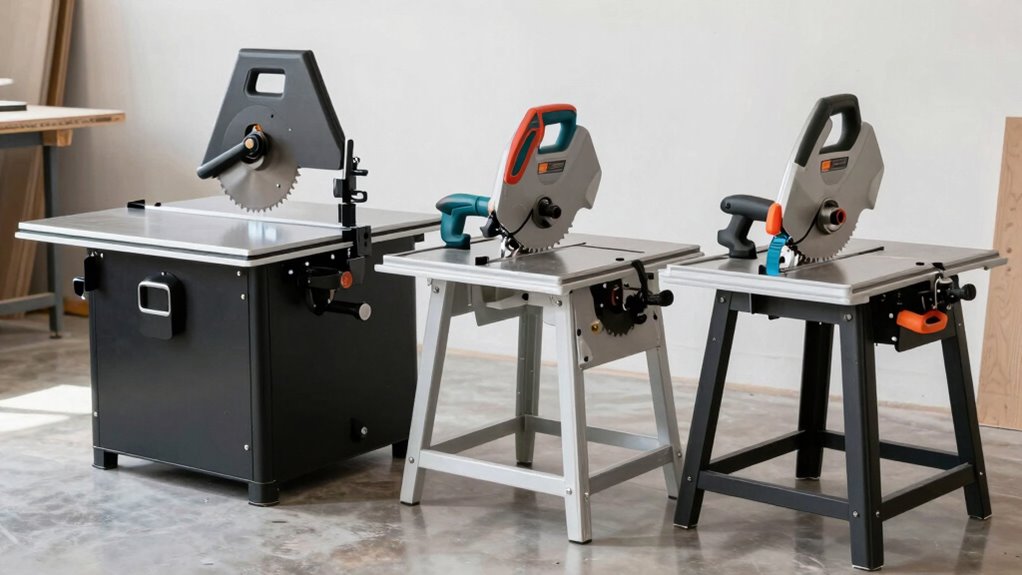
When choosing a table saw, understanding the differences between cabinet, contractor, and hybrid models is essential to finding the right tool for your needs. Your decision hinges on factors like blade precision and motor power, which directly impact performance and durability. Cabinet saws are built for precision and power, featuring large, heavy-duty blades that cut with minimal wobble. They typically have more robust motors—often exceeding 3 horsepower—allowing you to handle demanding cuts with ease. The blade precision on these models is exceptional, providing consistently accurate results suitable for professional woodworking or fine craftsmanship. However, this comes with a higher price tag and heavier weight, making cabinet saws less portable but ideal for dedicated workshop settings where stability and exactness matter most. Additionally, their design minimizes vibrations, further enhancing cut accuracy and surface finish quality.
Cabinet saws prioritize precision, power, and stability, making them ideal for professional woodworking and demanding projects.
Contractor saws, on the other hand, are designed to balance power and portability. They usually sport motors between 1.75 to 2.5 horsepower, delivering enough torque for most hobbyist or semi-professional tasks. While their blades may not match the absolute precision of cabinet saws, they still provide good accuracy for general woodworking projects. The key advantage here is mobility; contractor saws are lighter and easier to move around, making them suitable if you need flexibility or have a smaller workspace. Keep in mind, though, that some models may sacrifice a little blade stability for portability, so if you’re doing very fine or repetitive cuts, you might notice slight deviations compared to heavier, more rigid cabinet models.
Hybrid saws combine features of both, offering a good middle ground. They usually have more powerful motors—around 1.75 to 3 horsepower—close to cabinet saws, ensuring ample blade torque for precise cuts. Their blade precision is generally high enough for most serious hobbyists and small professional workshops. Hybrids often include enclosed cabinet components for dust collection and noise reduction, adding to user comfort without sacrificing too much portability. They’re perfect if you want a versatile saw that can handle detailed work and tougher cuts, but don’t want the hefty size and cost of a full cabinet saw. Moreover, many hybrid models incorporate high-quality safety features, making them safer for user operation while maintaining precision.
Ultimately, your choice depends on your workspace, budget, and the level of detail your projects require. If you prioritize blade precision and motor power for serious, high-volume work, a cabinet saw might be worth the investment—even if it costs more upfront. If you need a flexible, budget-friendly option that still offers decent performance, a contractor or hybrid model could save you a significant amount of money while meeting most of your woodworking needs.
Frequently Asked Questions
Which Saw Type Is Best for Small Hobby Projects?
For small hobby projects, a contractor or hybrid saw works best due to their portable versatility and affordability. They’re easier to move around your workspace and fit within your budget considerations. While cabinet saws offer precision, they’re often too bulky and expensive for hobbyists. Choose a contractor or hybrid saw to get the right balance of functionality and cost, making your projects enjoyable without overspending.
How Does Dust Collection Differ Among the Saw Types?
Dust collection efficiency varies markedly among saw types, with cabinet saws leading at around 80%. They typically feature built-in dust extraction methods, offering superior dust management. Contractor and hybrid saws often have less effective systems, averaging 50-60%. You’ll notice cleaner air and less cleanup with cabinet saws, especially during long projects. Choosing a saw with better dust extraction methods can improve your workspace safety and overall experience.
Can Hybrid Saws Handle Professional Woodworking?
Yes, hybrid saws can handle professional woodworking, especially if they feature a professional grade build and advanced safety features. They combine the power and accuracy needed for demanding projects with safety enhancements like riving knives and blade guards. While they may not match high-end cabinet saws in capacity, hybrids are a solid choice for serious hobbyists and semi-professionals seeking performance, safety, and value in one machine.
What Maintenance Is Required for Each Saw Type?
You need to regularly check blade longevity and keep the saw well-lubricated. For cabinet saws, lubricate the arbor and gears to prevent rust and guarantee smooth operation, while contractor saws require less maintenance but still need periodic lubrication of moving parts. Hybrid saws demand similar upkeep, focusing on blade sharpness and lubrication of critical components. Routine maintenance extends saw life and keeps your cuts precise.
Are Replacement Parts More Available for Cabinet or Contractor Saws?
Like a well-stocked toolbox, parts availability favors contractor saws, making repairs easier and faster. You’ll find replacement parts more readily accessible for contractor models, simplifying ongoing maintenance. Cabinet saws, akin to rare gems, often have limited parts availability, which can complicate repairs. If quick repairs matter to you, contractor saws are your best bet, offering greater ease of repair and a smoother woodworking experience.
Conclusion
Choosing between cabinet, contractor, and hybrid table saws isn’t just about price—it’s about your needs. A cabinet saw offers power and precision like a luxury car, but costs a fortune. A contractor saw balances performance and affordability, like a reliable sedan. The hybrid combines both worlds, saving you a grand without sacrificing quality. So, whether you chase perfection or practicality, your ideal saw is the one that fits your project and budget perfectly—saving you money and hassle along the way.