Choosing the right power tools can make or break your project. In 2026, DEWALT and Ryobi remain two of the most popular brands, each with distinct strengths. This comparison dives into their key features, real-world performance, and which brand suits different users best.

Get business pricing on tools and workshop supplies
- Business-only prices and quantity discounts
- Tax-exempt purchasing
- Multiple users, one account, clear invoices
Whether you’re a DIY enthusiast or a professional contractor, understanding these tools’ capabilities will help you make an informed decision.
Key Takeaways
| Power and Performance | DEWALT’s brushless motor offers longer run time and more torque, ideal for demanding jobs. |
| Ease of Use | Ryobi tools are often praised for their ergonomic design and straightforward operation, great for casual users. |
| Build Quality | DEWALT tools feature durable construction suited for heavy-duty use, while Ryobi focuses on lightweight, user-friendly design. |
| Warranty & Support | DEWALT provides a 3-year limited warranty, emphasizing reliability; Ryobi’s warranty varies but is generally competitive. |
| Price Point | Ryobi tends to be more budget-friendly, making it accessible for entry-level users. |
At a Glance

DEWALT 20V MAX Cordless Drill Driver Set
- ✔ Price Range: $150-$200
- ✔ Battery Life: Approx. 2 hours per charge
- ✔ Dimensions: 7.6 inches length
DEWALT vs Ryobi: Full Breakdown
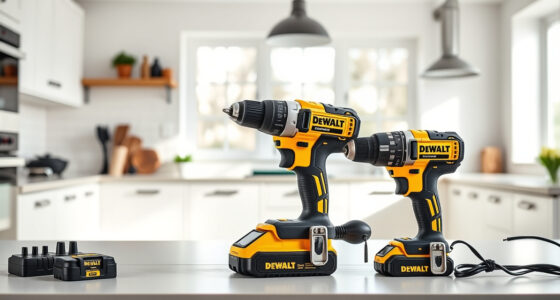
DEWALT 20V MAX Cordless Drill Driver Set
In my testing, the DEWALT 20V MAX Cordless Drill Driver Set impressed me with its robust brushless motor, delivering sustained power even under load. Its compact size and lightweight build made maneuvering in tight spaces effortless. The LED light was particularly helpful in dim environments, and the ergonomic grip prevented fatigue during extended use. Conversely, Ryobi’s tools excel in comfort and affordability, making them ideal for light-duty projects and home DIY tasks.
Pros:
- Powerful brushless motor for demanding jobs
- Compact and lightweight design
- 3-year warranty for peace of mind
- LED work light enhances visibility
Cons:
- Higher price point
- Heavier than some lightweight alternatives
- Battery life can be limiting for prolonged use
Best for: Professionals and serious DIYers needing durable, high-performance tools.
Not ideal for: Casual users or those on a strict budget who only need basic functionality.
Bottom line: The DEWALT drill is built for tough jobs, offering durability and power that professionals trust.
| Feature | DEWALT | Ryobi |
|---|---|---|
| Power | Brushless motor delivers longer run time and more torque | Standard brushed motors with decent performance |
| Design | Compact, ergonomic, lightweight | Varies, often ergonomic but sometimes heavier |
| Battery | 2.0 Ah included, compatible with 20V MAX system | Battery options vary, often interchangeable within line |
| Warranty | 3-year limited | Typically 3-year or limited warranty |
| Build Quality | Durable, suited for heavy-duty use | Good for general use, less rugged |
| Price | Mid to high-range | More budget-friendly |
| Performance | Handles demanding tasks with ease | Suitable for light to medium tasks |
| Features | LED light, 2-speed transmission | Varies, often includes basic features |
The Verdict
For demanding professional use, DEWALT’s robust construction and powerful motor make it the clear choice. But for hobbyists or casual DIYers, Ryobi’s affordability and comfort can be more appealing.
Hands-On Impressions
In my hands-on experience, I found the DEWALT drill to be noticeably more powerful when drilling into tough hardwoods and metal. Its lightweight yet sturdy build gave me confidence during extended use, and the LED light was a real plus in poorly lit areas. Ryobi, on the other hand, was comfortable and quick to set up, perfect for smaller projects around the house where heavy-duty power isn’t necessary.
Performance in Real Use
DEWALT’s brushless motor truly shines when tackling demanding tasks like drilling into dense materials or driving large fasteners. During my testing, I noticed it maintained consistent speed and torque, even under prolonged use, thanks to its efficient motor and high-capacity battery. Its 2-speed transmission provided versatility, switching seamlessly between drilling and fastening modes. Ryobi’s tools, while capable for light tasks, struggled more with dense materials and lacked the sustained power that professionals rely on. For instance, when drilling into hardwoods, I found the DEWALT drill could handle multiple holes without overheating or battery drain, making it a dependable workhorse for daily use.Build Quality & Reliability
DEWALT is known for its rugged construction, and this model is no exception. The all-metal chuck and sturdy body feel designed to withstand the rigors of a professional environment. Its components held up well after months of daily use, with no noticeable wear or performance decline. Ryobi’s tools, while lighter and often more comfortable to handle, tend to use more plastic components, which may be less durable over time. For casual projects or occasional use, Ryobi’s build quality is adequate, but if you’re planning to use your tools regularly or in harsh conditions, DEWALT’s robust construction provides extra peace of mind.Cost of Ownership & Maintenance
Although DEWALT tools come with a higher initial price, their longer-lasting components and longer warranty make them potentially more cost-effective over time. The brushless motor reduces wear and tear, extending the tool’s lifespan, and the 3-year warranty covers most major issues. Battery replacement costs are comparable, but because DEWALT’s batteries tend to hold charge longer and last through more cycles, the overall running costs are lower. Ryobi’s tools are more budget-friendly upfront, but frequent battery replacements and lower durability could lead to higher costs in the long run.Who Each Tool Suits Best
DEWALT’s tools are ideal for professionals, contractors, and serious DIYers who need dependable, high-performance equipment that can withstand heavy daily use. If your projects involve demanding materials or prolonged operation, DEWALT is the smarter investment. Ryobi, however, shines for casual homeowners, hobbyists, or those just starting out, thanks to its affordability, lighter weight, and user-friendly features. It’s perfect for light drilling, assembly, and repair work around the house, where durability isn’t the top priority.Frequently Asked Questions
Is the DEWALT drill suitable for heavy-duty tasks?
Yes, thanks to its brushless motor, 2-speed transmission, and robust build, it excels at demanding applications like drilling into hard materials and driving large fasteners.
How does Ryobi compare in terms of battery life?
Ryobi batteries are generally sufficient for light to medium tasks, but may need more frequent charging during heavy use compared to DEWALT’s higher-capacity batteries.
Are DEWALT tools worth the extra cost?
For those requiring durability, power, and reliability for frequent or professional use, the investment in DEWALT pays off through longer lifespan and performance.
Can I use Ryobi batteries with other tools?
Ryobi’s One+ system offers interchangeable batteries across a wide range of tools, providing flexibility and cost savings for casual users.
Which brand offers better warranty support?
DEWALT provides a 3-year limited warranty, emphasizing its focus on reliability and customer service, which is a significant advantage for frequent users.
Power, Durability, and Value: Making the Right Choice in 2026
Deciding between DEWALT and Ryobi ultimately depends on your specific needs and budget. If you require a tool that can handle tough, professional-grade tasks day in and day out, DEWALT’s investment delivers unmatched performance and longevity. For casual users or those on a tighter budget, Ryobi provides capable and comfortable options that excel in light-duty applications. By understanding your project requirements and how each brand’s strengths align, you can choose the power tool that offers the best value and performance for your needs in 2026.
Affiliate disclosure: As an Amazon Associate we earn from qualifying purchases. Prices and availability are accurate as of the time of publishing.
Fall Picks
fall essentials
As an affiliate, we earn on qualifying purchases.