To sharpen your saw effectively, use the right file that matches your teeth’s thickness, and keep it at a consistent angle—around 15 to 20 degrees for crosscut teeth. Guides can help maintain uniform angles and shape across all teeth. Before filing, check and adjust the tooth set to prevent binding. Proper technique and attention to tooth geometry restore sharpness and efficiency. Keep going, and you’ll uncover expert tips to master each step.
Key Takeaways
- Use a fine, matching file and maintain a consistent angle (15-20 degrees) for effective sharpening.
- Check and correct the tooth set before filing to prevent binding and ensure efficient cutting.
- Employ guides to maintain uniform tooth shape, angle, and proper tooth geometry during filing.
- Regularly inspect teeth to avoid over-filing, preserving tooth strength and cutting performance.
- Preserve the original tooth bevel—chisel or flat grind—for optimal cutting geometry and saw efficiency.

Have you ever struggled with a dull saw that makes cutting slow and exhausting? If so, you know how frustrating it can be to wrestle through a project when your saw isn’t performing properly. The good news is that many issues stem from dull or improperly sharpened teeth, and fixing this can dramatically improve your cutting efficiency. One key aspect of maintaining a sharp saw involves understanding the tooth set—how the teeth are bent outward to create clearance for the blade. An uneven or inadequate tooth set causes binding, rough cuts, and increased effort. When you’re sharpening your saw, it’s essential to check the tooth set first. If the teeth are bent too far or not enough, you need to carefully adjust them using a saw set tool before proceeding with filing. Proper tooth set ensures the saw cuts smoothly and prevents the blade from binding in the cut.
Filing techniques are vital in restoring your saw’s cutting ability. Once you’ve checked or adjusted the tooth set, you’ll want to focus on filing the teeth to the correct shape and sharpness. You typically use a fine saw file, matching the file’s width to the tooth’s thickness. To achieve a professional edge, you should hold the file at the same angle as the tooth’s existing bevel—usually around 15 to 20 degrees for crosscut teeth. As you file, make smooth, consistent strokes, ensuring each tooth is sharpened uniformly. It’s important to maintain the original tooth shape, whether it’s a chisel or a flat grind, to keep the saw’s cutting geometry intact. Regularly inspect your progress by checking the tooth’s sharpness and shape, avoiding over-filing, which can weaken the teeth or alter the tooth geometry negatively.
saw sharpening file set
As an affiliate, we earn on qualifying purchases.
As an affiliate, we earn on qualifying purchases.
Frequently Asked Questions
How Often Should I Sharpen My Saw Blades?
You should sharpen your saw blades whenever you notice a decline in cutting performance, typically every few projects or after about 20-30 hours of use. Following sharpening frequency guidelines helps extend your saw blade lifespan and maintains peak cutting efficiency. Regularly inspect the teeth for dullness, chips, or uneven wear, and sharpen promptly to avoid damaging the blade or compromising your work quality.
Can I Sharpen a Chainsaw Blade at Home?
Yes, you can sharpen a chainsaw blade at home, but treat it like tending a fierce beast—precision is key. Use the right sharpening tools comparison to guarantee you’re not just grinding blindly. For ideal chainsaw blade maintenance, invest in a good file or guide. With patience and the right technique, you’ll keep your saw roaring like a well-oiled machine, saving money and extending its life.
What Are the Signs My Saw Needs Sharpening?
You’ll notice your saw needs sharpening when it struggles to cut smoothly, leaves rough or uneven cuts, or requires more effort to push through wood. Dull blades reduce saw blade durability and can strain your motor. Using proper sharpening techniques restores your blade’s sharpness, improving performance and safety. Pay attention to signs like increased vibration or burning smell, and sharpen your saw promptly to maintain efficiency and prolong its lifespan.
Is It Better to Sharpen or Replace a Dull Saw?
Jumping into the debate, you’d prefer to sharpen your saw rather than replace it, as it extends saw blade longevity and saves on sharpening costs. Resharpening keeps your saw cutting smoothly, just like a trusty sidekick. Replacing might seem easier, but it’s often more expensive and wastes resources. If your saw still has good tooth geometry and isn’t overly worn, sharpening is the smarter, cost-effective choice to keep your projects on track.
What Safety Precautions Should I Take When Sharpening?
When sharpening a saw, you should always wear personal protective equipment like safety glasses and gloves to safeguard your eyes and hands. Handle the files and tools carefully to prevent slips and injuries. Keep your workspace clean and well-lit, and work on a stable surface. Follow safe handling procedures, stay focused, and avoid distractions. These precautions help guarantee your safety and make the sharpening process more effective.
saw tooth guide for sharpening
As an affiliate, we earn on qualifying purchases.
As an affiliate, we earn on qualifying purchases.
Conclusion
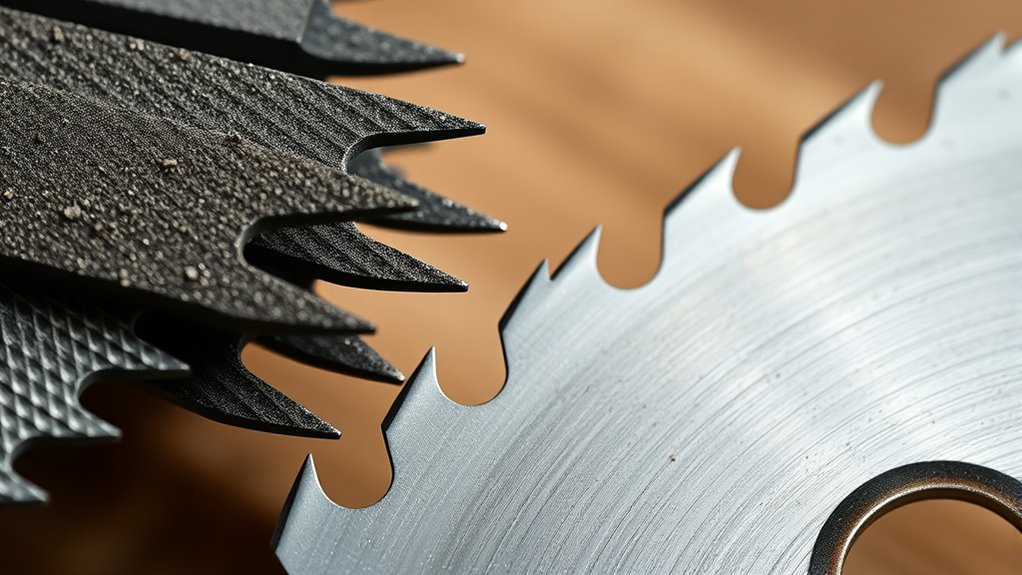
Now you see how proper saw sharpening transforms a dull blade into a precise, gleaming tool. Like a well-tuned musical instrument, a sharpened saw sings through wood with ease, contrasting the jagged, inefficient teeth of an unsharpened one. With files, guides, and attention to tooth geometry, you turn frustration into satisfaction. Sharpening isn’t just maintenance — it’s giving new life to your saw, making every cut smooth and effortless, just as it should be.
professional saw file
As an affiliate, we earn on qualifying purchases.
As an affiliate, we earn on qualifying purchases.
saw tooth set adjustment tool
As an affiliate, we earn on qualifying purchases.
As an affiliate, we earn on qualifying purchases.