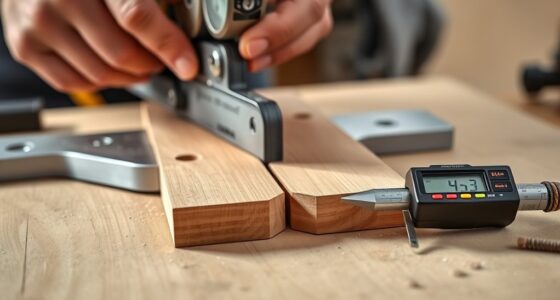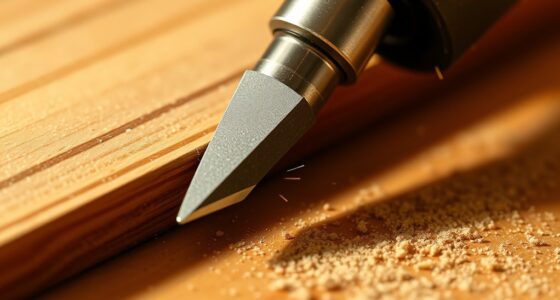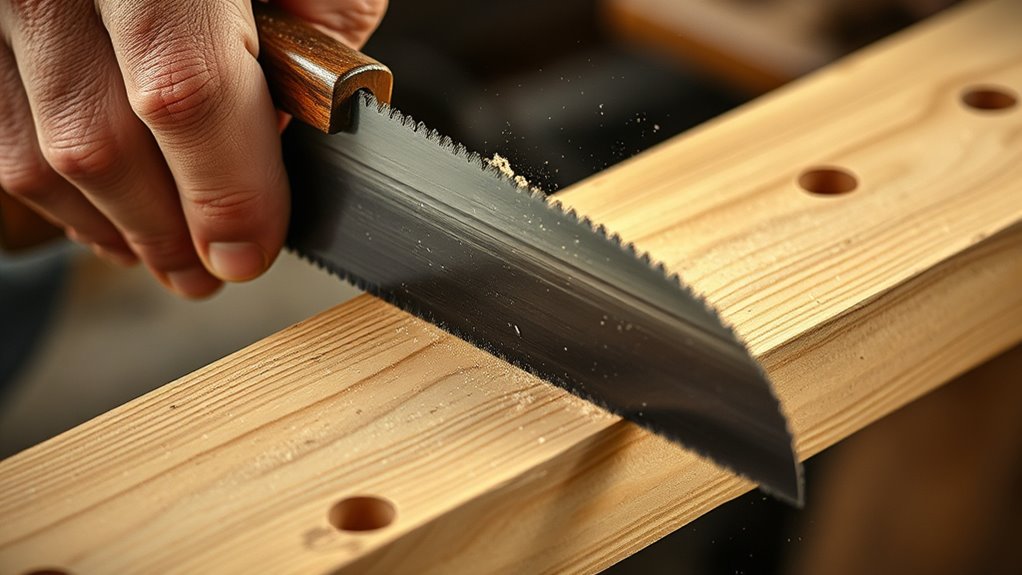
To master hand saw fundamentals, start by positioning your saw at the right angle and making a light scoring line to keep your cut straight. Keep your blade aligned with the mark and apply steady, even pressure, adjusting as needed to maintain tracking. As you near the end, slow down, support your work, and finish smoothly. For more tips to improve your technique, continue exploring key steps to achieve clean, safe cuts.
Key Takeaways
- Begin cutting by establishing a light score line and positioning the saw at a proper angle for control.
- Maintain steady, even pressure, and focus on keeping the blade aligned with the marked line throughout the cut.
- Use appropriate sharpening tools regularly to keep the saw blade sharp, ensuring cleaner, easier cuts.
- Reduce saw speed slightly near the end of the cut and support the wood to prevent splintering.
- Wear safety gear, such as eye protection and gloves, and keep the workspace clear to ensure safe, precise cutting.
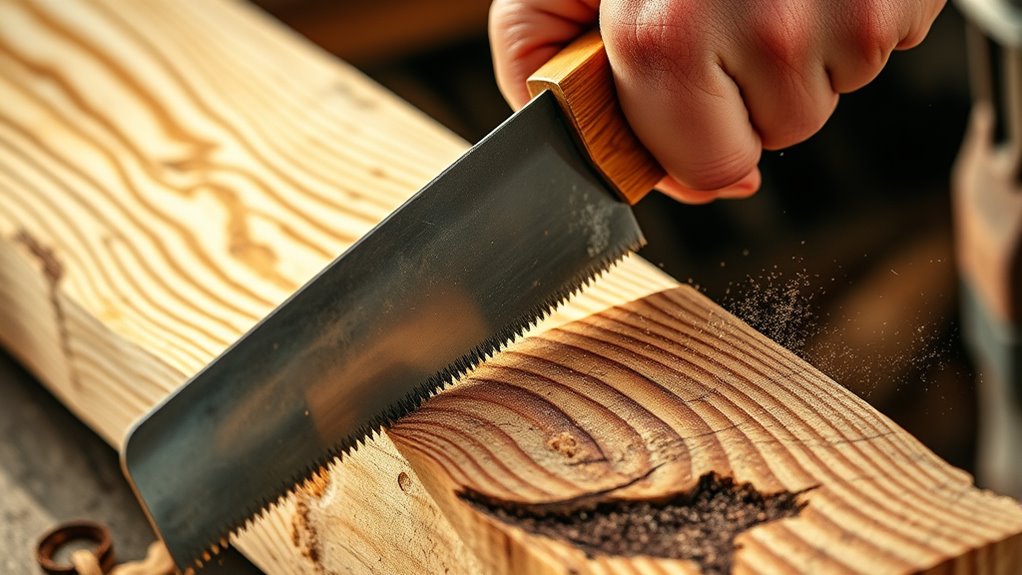
A hand saw is an indispensable tool for anyone tackling woodworking projects, whether you’re a beginner or a seasoned craftsman. To guarantee your cuts are clean and precise, you need to pay attention to the condition of your saw blade. Blade sharpening is a critical step in maintaining your saw’s performance. A dull blade makes cutting more difficult, requiring more effort and increasing the risk of slipping or losing control. Regularly inspect your blade for dullness or damage, and sharpen it properly using the right tools. Proper blade sharpening not only improves cut quality but also extends the life of your saw. When sharpening, follow safety precautions carefully: wear protective gloves and eye protection, work in a well-ventilated area, and guarantee the saw is unplugged or the blade is secured. Keeping your blade sharp is fundamental, but equally important is understanding how to start your cut correctly. Position the saw at the right angle, typically around 45 degrees for most crosscuts, and establish a steady, controlled motion to initiate the cut. Starting with a light, deliberate score line helps keep the saw on track, preventing wandering and ensuring your cut stays true to your marked line. Tracking the cut properly is essential for accuracy. As you saw, focus on keeping the blade aligned with your marked line, applying even pressure, and maintaining a consistent pace. If the saw begins to drift, pause, evaluate your grip and angle, and make adjustments. This steady tracking helps you avoid jagged edges or uneven cuts. When approaching the finish of your cut, reduce your speed slightly, and support the wood to prevent splintering or chipping. A clean finish requires patience and control, especially during the final strokes. Remember, safety precautions are never optional. Always wear eye protection to shield against flying debris, and gloves if you’re comfortable using them — just be cautious not to get caught in the blade. Keep your workspace clear of obstructions and ensure your hand saw is stored properly when not in use to prevent accidents. Regularly checking your saw’s condition, sharpening the blade when needed, and adhering to safety precautions will keep your woodworking safe and effective. Additionally, understanding project planning can help you choose the right type of saw and technique for each task, enhancing your overall woodworking success. With practice, you’ll develop a steady hand and an intuitive sense of how to start, track, and finish your cuts smoothly. Mastering these fundamentals ensures your projects come out precisely as planned, and your hand saw remains a reliable, efficient tool in your workshop.

Hand Saw Sharpening Tool Feather Shaped Taper Files Tool Sharpener for Professionals File for Hand Saws Pruning Mill Taper
You will receive 1 pcs of grinding rasp. Overall length of hand saw sharpening files 260mm, handle length…
As an affiliate, we earn on qualifying purchases.
As an affiliate, we earn on qualifying purchases.
Frequently Asked Questions
What Types of Hand Saws Are Best for Beginners?
If you’re a beginner, you should start with a crosscut or rip saw, as they have simple saw blade types that are easy to control. These beginner saws offer straightforward handling and good precision, making them ideal for learning basic cutting skills. Look for models with comfortable grips and moderate teeth per inch (TPI). This way, you’ll develop confidence and improve your technique before moving on to more specialized saws.
How Do I Choose the Right Saw Blade for My Project?
Think of choosing a saw blade like picking the right key for a lock; it needs to fit perfectly. You should consider saw blade materials—carbon steel or tungsten for durability—and blade size, depending on your project’s thickness. Smaller blades work for intricate cuts, while larger ones handle heavy-duty tasks. Match your saw blade’s material and size to your project, ensuring smooth, precise cuts every time.
What Safety Gear Should I Wear When Using a Hand Saw?
When using a hand saw, you should wear protective gloves to prevent cuts and eye protection to shield your eyes from flying debris. Make sure your gloves fit well so they don’t hinder your grip or control. Always wear safety glasses or goggles, especially when cutting through tough or splintered wood. Staying protected guarantees you work safely and reduces the risk of injury during your sawing tasks.
How Can I Maintain and Sharpen My Hand Saw Effectively?
You can keep your hand saw in top shape by regularly inspecting the saw blade for dullness or damage. Use proper saw blade maintenance by cleaning it after each use and applying a honing guide. Sharpen your saw with specific techniques like filing the teeth at the correct angle and maintaining uniformity. These sharpening techniques guarantee smooth cuts, prolonging your saw’s lifespan and making your woodworking projects much easier and safer.
What Common Mistakes Should I Avoid When Starting a Cut?
When starting a cut, avoid misaligned saws by ensuring proper saw alignment and a steady starting position. Don’t force the saw into the material; instead, let the teeth bite naturally. Keep your hand steady and start with a few gentle strokes to establish the cut. Avoid over-leaning or twisting the saw, which can lead to crooked cuts. Focus on maintaining control from the beginning for a precise, clean cut.

Frocopo Hand Saw Woodworking Tools, 6-Inch Pull Saw, Flexible Double-Edge Blade 17/11 TPI, Japanese Flush Cut for DIY Craft, Non-Slip Wood Handle, Sharp & Lightweight for Woodworking and Garden Trim
Craftsman's Essential Hand Saw: Frocopo hand saw offers precision and durability, making it the ideal choice for craftsmen….
As an affiliate, we earn on qualifying purchases.
As an affiliate, we earn on qualifying purchases.
Conclusion
Mastering hand saw fundamentals isn’t just about technique; it’s about understanding how your tool interacts with wood. Some believe that perfect tracking depends solely on saw alignment, but practice shows your grip and pressure matter just as much. By focusing on smooth starts, steady tracking, and clean finishes, you’ll improve faster. So, trust your instincts, experiment, and remember—every cut teaches you something new. With patience, you’ll turn rough lumber into precise, beautiful work.
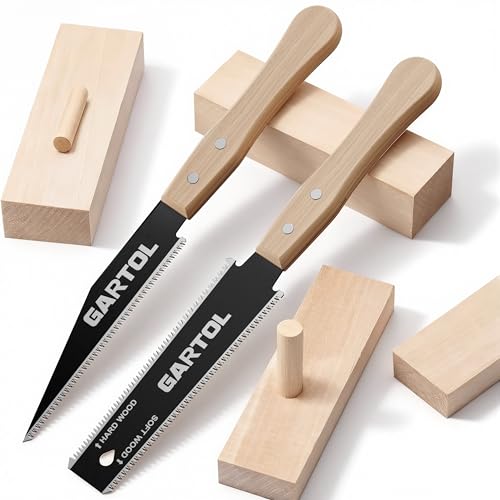
GARTOL Hand Saw for Wood Cutting, 2-Piece Japanese Pull Saw with 6-Inch Flush Cut & Double-Edged SK5 Flexible Blade & Wooden Handle, Precision Woodworking Tools for DIY, Crafting, Carpentry, Trim Work
Precision Woodworking Tools: This 2-piece Japanese hand saw set includes a 6-inch flush cut saw and a double-edged…
As an affiliate, we earn on qualifying purchases.
As an affiliate, we earn on qualifying purchases.
sawing safety gear set
As an affiliate, we earn on qualifying purchases.
As an affiliate, we earn on qualifying purchases.