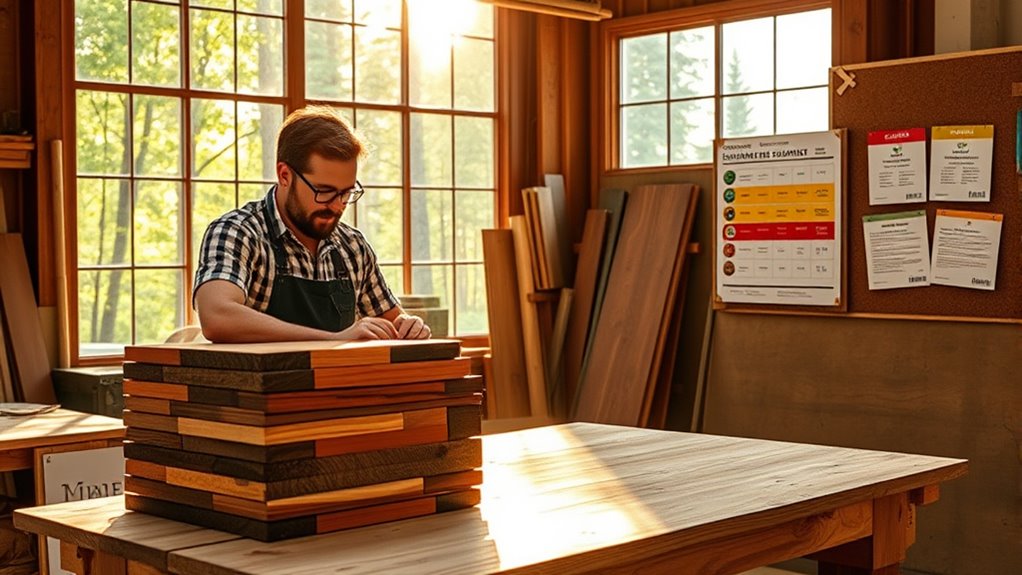

By choosing locally sourced lumber, you support sustainable forestry, reduce transportation emissions, and promote healthier ecosystems. Pairing this with carbon offsets helps balance your project’s carbon footprint by investing in renewable energy or emission reduction projects. This combined approach lowers environmental impact, strengthens local economies, and demonstrates responsible building habits. If you keep exploring, you’ll uncover how these sustainable choices contribute to a healthier planet and resilient communities.
Key Takeaways
- Opt for locally sourced lumber certified by FSC or PEFC to ensure responsible forestry and environmental sustainability.
- Incorporate carbon offsets to compensate for construction emissions and support renewable energy projects.
- Prioritize suppliers committed to sustainable forestry practices to promote forest regeneration and biodiversity.
- Combine local sourcing with carbon offsets to reduce transportation emissions and overall environmental impact.
- Support community resilience and eco-friendly building by choosing sustainable materials and investing in environmental initiatives.
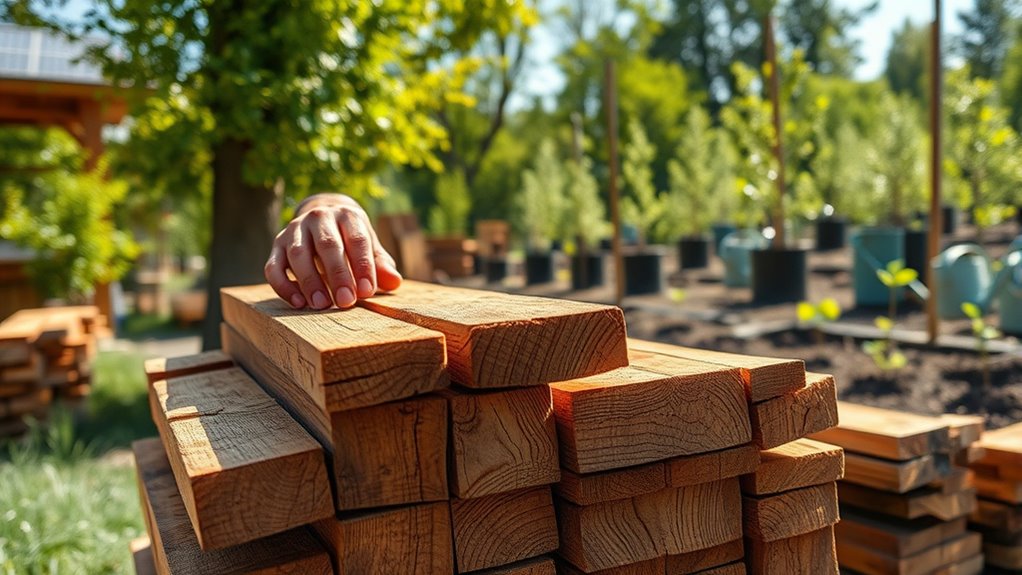
When you choose locally sourced lumber and carbon offsets, you make a direct impact on your community and the environment. Opting for locally sourced lumber supports sustainable forestry practices, ensuring that the forests are managed responsibly and replanted after harvest. This approach helps prevent deforestation, maintains biodiversity, and promotes healthier ecosystems. By prioritizing wood from nearby sources, you reduce the carbon footprint associated with transportation, which can markedly lower greenhouse gas emissions. This choice aligns with your commitment to environmental stewardship and helps foster resilient local economies.
Sustainable forestry isn’t just about preserving trees; it’s about creating a balance between resource use and conservation. When you select lumber from sustainably managed forests, you’re encouraging practices that prioritize the long-term health of the land. These forests often follow certification standards, such as FSC or PEFC, which verify responsible harvesting methods. This guarantees that your building or project isn’t contributing to environmental degradation. Additionally, sustainable forestry promotes the regeneration of forests and reduces waste, making your project more eco-friendly overall. Forest management practices play a crucial role in ensuring the health and longevity of these ecosystems.
Complementing this, choosing carbon offsets further reduces your environmental impact. Carbon offsets allow you to compensate for the emissions generated during construction or other activities by investing in projects that remove or reduce an equivalent amount of CO2 from the atmosphere. These projects often include renewable energy sources such as wind, solar, or hydroelectric power. By supporting renewable energy sources, you’re helping transition away from fossil fuels, which are major contributors to climate change. This proactive approach demonstrates a holistic commitment to sustainability, addressing both the immediate and broader environmental effects of your choices.
When you combine the use of locally sourced lumber with investing in carbon offsets, you’re actively participating in a movement toward more sustainable building practices. You’re reducing reliance on non-renewable resources, supporting renewable energy initiatives, and helping preserve natural landscapes. Your decisions set a positive example for others, showing that environmentally conscious choices can be integrated seamlessly into everyday projects. Over time, this contributes to a shift in industry standards, encouraging more builders and homeowners to prioritize sustainability.
Ultimately, your decision to focus on sustainable forestry and renewable energy sources through local sourcing and offsets helps combat climate change while strengthening your community. You’re not just constructing a building; you’re building a legacy rooted in responsibility, resilience, and respect for the planet. Each step you take toward greener choices amplifies the positive impact, fostering a healthier environment for future generations.
Frequently Asked Questions
How Do Local Lumber Sources Impact Overall Project Costs?
Choosing local lumber sources generally reduces your overall project costs because it offers a more favorable cost comparison and minimizes transportation expenses. When you source locally, you cut down on supply chain delays and shipping fees, making your project more efficient. Plus, supporting nearby suppliers can lead to better prices and quicker deliveries, helping you stay within budget while contributing to a sustainable, community-focused supply chain.
What Certifications Verify the Sustainability of Local Lumber?
You can verify the sustainability of local lumber through wood certifications like FSC (Forest Stewardship Council) and PEFC (Programme for the Endorsement of Forest Certification). These certifications provide sustainability verification, guaranteeing the wood comes from responsibly managed forests. By choosing certified lumber, you support eco-friendly practices, reduce environmental impact, and ensure your project aligns with sustainability standards. Always look for these labels to confirm your lumber’s eco-credentials.
Are There Regional Differences in Carbon Offset Programs?
Yes, there are regional variations in carbon offset programs. You’ll find that program effectiveness varies based on local policies, available technology, and community engagement. Some regions prioritize renewable energy projects, while others focus on reforestation or methane capture. Understanding these differences helps you select offsets that align with regional strengths and guarantee your efforts genuinely reduce carbon footprints effectively. Always research local program credibility for the best impact.
How Can I Measure the Effectiveness of Carbon Offsets?
To gauge the effectiveness of carbon offsets, you should compare your carbon footprint before and after offsetting. Look for verified offset projects with third-party offset verification to guarantee real impact. Track the amount of CO2 each project sequesters or reduces, and confirm that the offsets are additional and permanent. Regularly review your offsets’ performance to ensure they continue to meet your climate goals.
What Are the Long-Term Environmental Benefits of Choosing Local Materials?
Ironically, choosing local materials actually benefits the environment more in the long run. By relying on local supply, you reduce transportation emissions, minimizing your environmental impact. This decision helps preserve nearby ecosystems, supports local economies, and encourages sustainable practices. Over time, these choices foster healthier communities and ecosystems, proving that small, local actions can have significant, lasting environmental benefits—making your project both eco-friendly and resilient for the future.
Conclusion
By choosing locally sourced lumber and carbon offsets, you’re not just making a sustainable choice—you’re connecting with your community and the environment in a meaningful way. It’s a small act that aligns with your values and boosts local economies, often when you least expect it. Every time you make mindful decisions, you’re part of a larger movement toward a healthier planet and stronger communities. Sometimes, the most impactful changes happen when you least realize they’re happening.