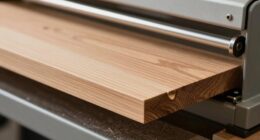
To prevent cracks and warping in wooden structures during seasonal changes, you should control indoor humidity levels consistently between 40% and 60%. Use humidifiers during dry seasons and dehumidifiers in humid months to maintain this balance. Guarantee your home has proper moisture barriers and good ventilation to minimize fluctuations. Regularly monitor humidity with a hygrometer. Maintaining stable moisture levels helps protect your wood from damage—keep going to learn more about effective strategies.
Key Takeaways
- Maintain indoor humidity between 40-60% using humidifiers or dehumidifiers based on seasonal needs.
- Install and seal moisture barriers on floors, walls, and foundations to prevent excess moisture ingress.
- Ensure proper ventilation to promote airflow and regulate humidity levels throughout the year.
- Regularly monitor indoor humidity with hygrometers to detect and address fluctuations promptly.
- Adjust humidity control methods seasonally to counteract dry winters and humid summers, preventing wood damage.

As seasons change, managing indoor humidity becomes essential to maintaining a comfortable and healthy environment. Fluctuations in moisture levels can lead to significant issues with your wooden structures and furnishings. One common problem is wood expansion and contraction, which can cause cracks, warping, and even structural damage if left unchecked. To prevent this, you need to understand how moisture interacts with wood and what steps you can take to protect your home.
Managing indoor humidity is vital to prevent wood warping, cracking, and structural damage.
When indoor humidity rises, wood absorbs moisture and swells. Conversely, during dry seasons, wood releases moisture and shrinks. This constant movement stresses the material, leading to cracks and warping over time. To combat this, installing moisture barriers can be highly effective. These barriers act as a shield, preventing excess moisture from penetrating wood surfaces and helping to stabilize humidity levels around sensitive structures. Using moisture barriers on floors, walls, and around wooden furniture creates a more controlled environment, reducing the risk of expansion and contraction.
You should also pay attention to your home’s ventilation. Proper airflow helps regulate humidity and prevents excess moisture buildup, especially during humid seasons. Dehumidifiers are another useful tool, particularly in basements and areas prone to dampness. They work by pulling moisture out of the air, maintaining a steady humidity level that minimizes wood movement. When installing moisture barriers, make sure they are properly sealed and continuous, especially in vulnerable areas like crawl spaces and around foundation walls, where moisture tends to seep in. Additionally, monitoring indoor humidity regularly with a hygrometer helps maintain optimal moisture levels and prevents unexpected fluctuations that could harm your wooden features.
It’s equally important to monitor indoor humidity regularly using a hygrometer. Ideally, keep humidity levels between 40% and 60%. If levels fluctuate outside this range, take immediate action. During winter, when indoor air tends to be dry, consider using humidifiers to add moisture back into the air, preventing wood from shrinking and cracking. During humid months, dehumidifiers and moisture barriers become your best allies in keeping moisture levels in check.
Prevention is always better than repair. By controlling indoor humidity with effective moisture barriers and proper ventilation, you reduce the chances of wood expansion and contraction. This not only preserves the integrity of your wooden floors, doors, and furniture but also saves you money on repairs down the line. Remember, seasonal changes can be unpredictable, so staying proactive with humidity management ensures your home remains stable, comfortable, and free from the damage caused by moisture-related wood issues.
Frequently Asked Questions
How Do Indoor Plants Affect Humidity Levels?
Indoor plants increase humidity levels through plant transpiration, releasing moisture into the air. When soil moisture is high, plants transpire more, raising the overall humidity in your space. This added moisture can help prevent cracks and warping caused by dry air. To optimize this effect, keep your plants well-watered, especially during dry seasons, and place them strategically around your home to maintain a comfortable, balanced humidity level.
What Are the Best Materials for Humidity Regulation?
Imagine a dry desert meeting a lush rainforest—your home needs that balance. For humidity regulation, choose materials like moisture-absorbing crystals, silica gel packets, or specialized dehumidifier selection options. These materials draw excess moisture, preventing cracks and warping. Use dehumidifiers with adjustable settings for peak control. Combining these materials ensures your space stays comfortable, protects your belongings, and maintains a balanced environment despite seasonal changes.
Can Humidity Control Prevent Pest Infestations?
Yes, humidity control can help prevent pest infestations by maintaining ideal moisture levels. Proper humidity management makes your environment less attractive to pests like mold, termites, and insects that thrive in damp conditions. By controlling humidity, you create an inhospitable space for pests, reducing the risk of infestation. Regular monitoring and adjusting humidity levels are crucial steps in pest prevention, keeping your home or storage area safer and pest-free.
How Do HVAC Systems Influence Seasonal Humidity?
Your HVAC system influences seasonal humidity by adjusting indoor moisture levels. To optimize this, you need to regularly perform humidifier maintenance to prevent excess humidity, which can cause warping and cracks, and ensure proper dehumidifier placement to remove excess moisture during humid seasons. This balance keeps your home comfortable and prevents damage, especially as outdoor conditions change. Properly managing your HVAC’s humidity control helps protect your home year-round.
Are There Eco-Friendly Humidity Control Options?
You’ll be glad to know eco-friendly alternatives exist for humidity control. Did you know that natural humidity solutions, like houseplants or passive ventilation, can reduce energy use by up to 30%? These options help regulate moisture without harmful chemicals. Using eco-friendly alternatives not only protects the environment but also keeps your home comfortable year-round. Embrace natural humidity solutions for a healthier, more sustainable living space.
Conclusion
By maintaining proper humidity levels year-round, you can prevent cracks and warping in your belongings. Remember, a stitch in time saves nine—addressing seasonal fluctuations early keeps your items safe and lasting longer. Don’t wait until damage appears; control the moisture now and protect your possessions from nature’s changing whims. Staying proactive makes all the difference, so keep an eye on humidity and enjoy peace of mind no matter the season.