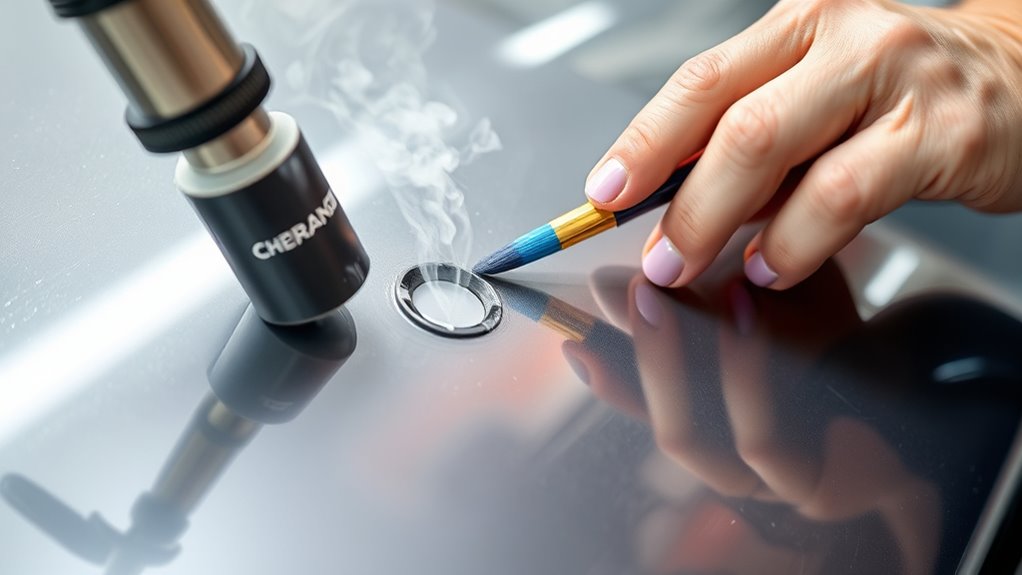

To repair small scratches and dents, start by cleaning the area thoroughly, then use steam carefully to soften the metal, making it easier to reshape or reduce dents. For scratches, lightly sand the area and apply matching touch-up paint, blending it smoothly with a polishing compound afterward. If you want to learn more about combining steam and color touch-ups effectively, keep exploring the options available for simple, DIY vehicle repairs.
Key Takeaways
- Use steam to soften the metal and paint around small dents and scratches for easier repair.
- Carefully direct steam onto the affected area, avoiding excessive heat that can damage the paint.
- Match the touch-up paint color precisely to ensure seamless blending after repairs.
- Lightly sand scratched areas before applying paint to promote adhesion and smoothness.
- Combine steam treatment with gentle dent pulling or touch-up painting for optimal results.

Scratches and dents can quickly diminish the appearance of your vehicle, but fixing them doesn’t have to be complicated or costly. When dealing with small scratches and dents, understanding simple repair techniques can save you time and money. Two effective methods to contemplate are paint touch ups and dent pulling techniques. These approaches allow you to restore your car’s look without needing professional help, especially if the damage is minor.
Paint touch ups are straightforward and ideal for small scratches that haven’t penetrated the clear coat or paint layer deeply. To start, clean the affected area thoroughly with soap and water, then dry it completely. Lightly sand the scratch with fine-grit sandpaper to smooth out rough edges. Using a matching touch-up paint, carefully apply it with a small brush or applicator, making sure to stay within the scratch’s boundaries. Once the paint dries, you can use a polishing compound to blend the touch-up with the surrounding paint, creating a seamless finish. This process is cost-effective and can considerably improve your vehicle’s appearance when executed with precision.
When it comes to dents, dent pulling techniques are your best option. For small, shallow dents, you might try using a plunger or a specialized dent removal kit. These kits include glue guns, pulling tabs, and other tools designed for dent removal. To use them, clean the dented area and attach the pulling tab with hot glue. Once the glue cools, gently pull on the tab to lift the dent outward. Apply steady, even force to avoid causing additional damage. If the dent is stubborn, repeating this process or using a combination of heat and cold treatments can help loosen the dent’s grip on the metal. For more severe dents, however, professional repair might be necessary. But for minor ones, these dent pulling techniques can produce impressive results without needing to visit a body shop.
In some cases, steam can be a surprisingly effective tool when repairing small dents. Applying steam can soften the metal slightly, making it more malleable and easier to manipulate back into shape. Carefully directing steam onto the dent can help loosen any tension and make the metal more responsive to gentle pressure or pulling techniques. Just be cautious not to overdo it, as excessive heat or moisture could cause further damage or paint issues. Additionally, understanding the importance of a digital-friendly environment at home can facilitate more efficient repairs and maintenance, especially when using electronic tools or apps designed for vehicle care.

Carfidant Scratch Repair and Swirl Remover – Car Paint Scratch Remover & Restorer Kit with Buffer Pad – Polishing & Waxing Kits – Compound for Vehicles Paint Repair – 8.4 fl. Oz.
EASY SCRATCH and SWIRL REPAIR – If your car has light scratches, swirls, or other marks – you…
As an affiliate, we earn on qualifying purchases.
As an affiliate, we earn on qualifying purchases.
Frequently Asked Questions
Can Steam Repair Deep or Large Scratches Effectively?
No, steam isn’t effective for repairing deep or large scratches because heat application can’t properly address significant damage. Steam works best for minor scratches by softening paint and improving adhesion, but deep dents require more extensive repairs like filling or repainting. Using steam on larger scratches may worsen the damage or cause paint to peel, so it’s better to seek professional help for deep or extensive scratches to guarantee proper repair and paint adhesion.
What Types of Paints or Colors Work Best for Touch-Ups?
You’ll want to choose high-quality, precision-matched paints for perfect touch-ups. Opt for automotive touch-up paints with exact color matching, usually available in spray cans or small bottles, to guarantee seamless blending. These paints are formulated for durability and color consistency. Use touch-up techniques like fine brushes or applicators to blend edges smoothly. This way, your repair will look so flawless, it’ll be like the scratch was never there—an almost magical transformation!
How Long Should I Wait After Steaming Before Applying Color?
You should wait about 10 to 15 minutes after steaming before applying color. This drying time guarantees the surface is just tacky enough for good paint adhesion. If you wait too long, the surface might dry completely, making the paint harder to stick. Keep the area slightly moist and test a small spot first to confirm the surface’s readiness, ensuring a smooth, durable touch-up.
Are There Any Risks of Damaging the Paint With Steam?
Think of steam as a gentle whisper to your car’s surface—you won’t hear damage if you’re careful. However, if your paint isn’t compatible or if you apply too much steam, you risk damage. Always check paint compatibility and maintain steam safety by not overheating or staying too long. When used correctly, steam can be a safe, effective tool to soften dents and scratches without harming your car’s finish.
Can This Method Be Used on All Types of Vehicle Finishes?
This method isn’t suitable for all vehicle coatings. You should check the specific surface preparation instructions for your car’s finish, as some coatings may be sensitive to heat or moisture. Using steam on incompatible surfaces can cause damage or discoloration. Always test a small area first, and consult your vehicle’s manufacturer guidelines to verify you won’t harm the paint or finish before applying this technique.
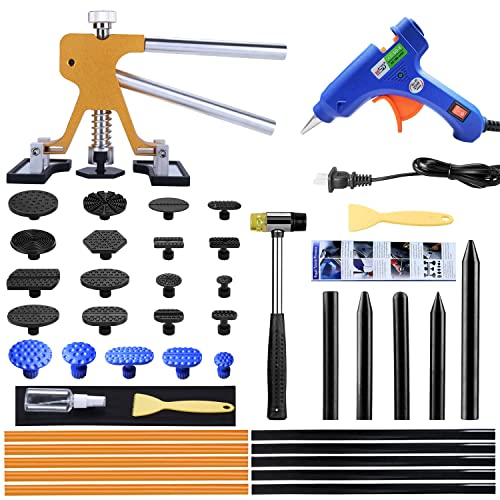
Gliston Auto Dent Puller Kit – Adjustable Golden Dent Remover Tools Paintless Dent Repair Kit Dent Lifter Puller for Car Large & Small Ding Hail Dent Removal
SPECIAL DESIGNT: This new design dent puller kit special in adjustable the width and height with the golden…
As an affiliate, we earn on qualifying purchases.
As an affiliate, we earn on qualifying purchases.
Conclusion
By using steam and color, you transform minor scratches and dents from imperfections into almost invisible details. It’s fascinating how such simple tools can make your car look brand new, turning frustration into pride. Just like a painter’s brush, these techniques bring life back to your vehicle, proving that small repairs can make a big difference. So next time your car shows a flaw, remember—steam and color are your secret weapons for a flawless finish.

White Car Paint Touch Up Pen, Color Accurate Touch Up Paint for Cars, Professional Automotive Scratch Repair, Lasting Auto Scratch Remover, Fast Dry, Easy to Use, Safe and Washable, Versatile Use
Effective Car Scratch Remover – Our white car paint touch up pen, made with premium materials and advanced…
As an affiliate, we earn on qualifying purchases.
As an affiliate, we earn on qualifying purchases.

97pcs Dent Puller Kit, Car Dent Puller for Dent Removal, Paintless Dent Removal Kit with Golden Lifter, Bridge Puller, Slide Hammer T-Bar, Dent Remover Tool for Car Refrigerator Door Ding Repair
PAINTLESS DENT REPAIR KIT – Our car dent repair kit is a comprehensive kit. The bottom of the…
As an affiliate, we earn on qualifying purchases.
As an affiliate, we earn on qualifying purchases.