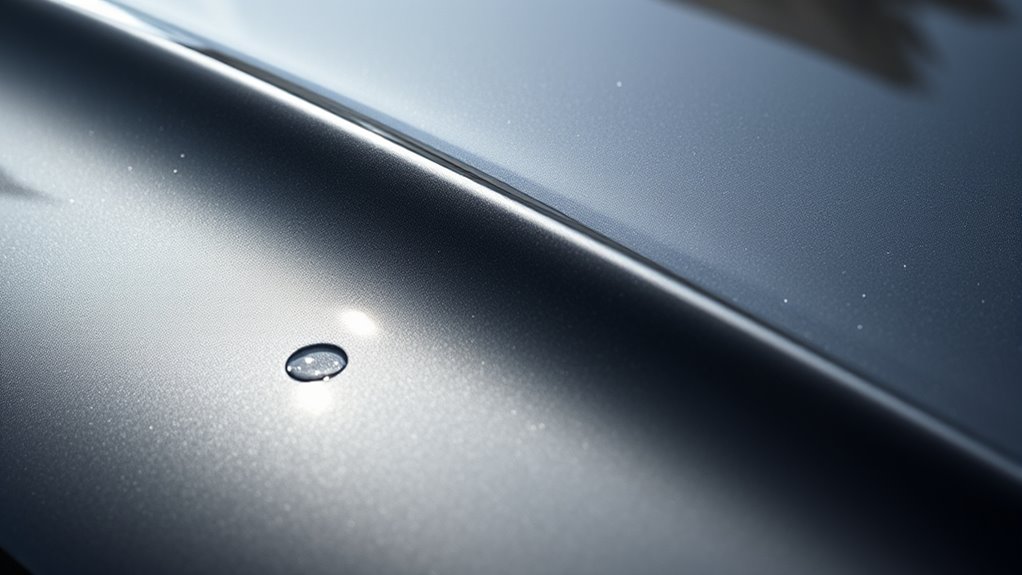

To remove water spots and haze from your vehicle’s finish, start with a thorough wash to remove loose debris. For light spots, use a fine polish with a soft pad to gently buff away the blemishes, but for stubborn spots, consider professional paint correction techniques. Apply a quality sealant afterward to protect the surface. If you’re still seeing haze or spots, there are advanced methods worth exploring. Continue with these steps to learn more about achieving a pristine, glossy finish.
Key Takeaways
- Assess water spots to determine if they are light mineral deposits or stubborn blemishes needing advanced correction.
- Use appropriate polishing compounds and techniques, such as dual-action polishing, to gently buff away spots and haze.
- For severe spots or haze, perform multiple polishing steps and consider paint correction to restore clarity.
- Apply a quality wax or sealant after correction to protect the finish from future water spots and haze formation.
- Maintain proper washing, drying, and environmental practices to prevent reoccurrence and preserve the corrected surface.
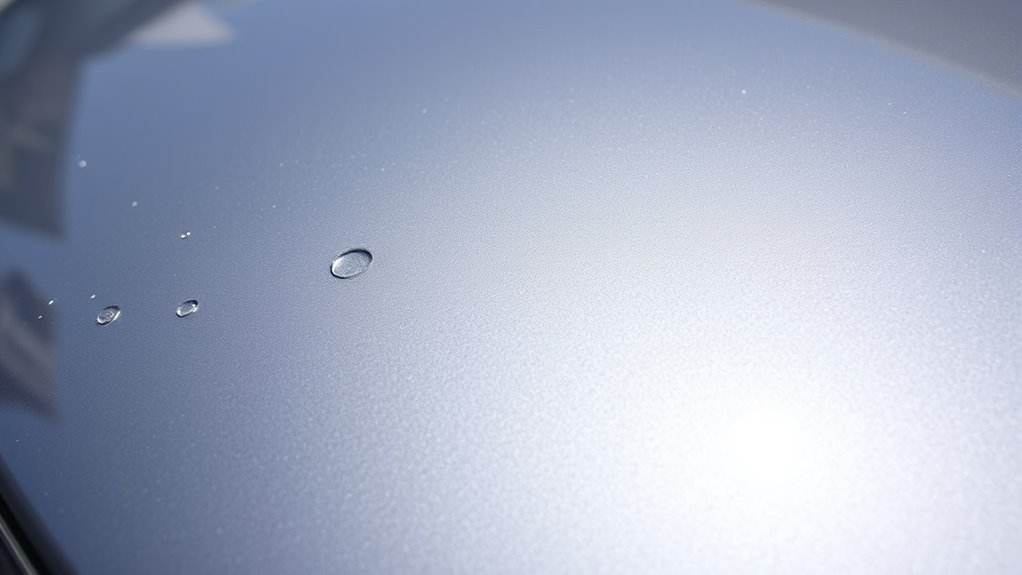
Water spots and haze can quickly diminish the shine of your vehicle’s finish if not addressed promptly. These blemishes not only mar the appearance but can also cause long-term damage if left untreated. To restore your car’s pristine look, understanding how to remove water spots and haze is essential. The first step involves assessing the severity of the spots and haze. Light mineral deposits may be treatable with simple washing, but stubborn spots often require more advanced techniques like paint correction to fully eliminate the blemishes.
Paint correction is a critical process when dealing with persistent water spots and haze. It involves carefully removing a thin layer of clear coat to eliminate surface imperfections, revealing the fresh, smooth paint underneath. This process requires skill and the right tools, so it’s often best left to experienced detailers. Using specialized polishing compounds, you can gently buff away the water spots, restoring clarity and gloss. It’s important to follow proper detailing techniques, such as working in small sections and using a dual-action polisher, to avoid damaging the paint.
Before starting paint correction, thoroughly wash your vehicle to remove dirt and debris that could scratch the surface during buffing. Once clean, inspect the affected areas closely to determine the level of correction needed. For light haze, a fine polish applied with a soft pad may suffice. More severe water spots might require a more aggressive compound and multiple polishing steps. Always follow up with a quality wax or sealant to protect your finish and enhance the results.
Proper detailing techniques are essential for successful water spot removal. Keep your workspace clean, work in well-lit conditions, and use the correct pad and polish for your paint type. When buffing, avoid applying excessive pressure, which can cause swirl marks or remove too much clear coat. Patience is key; take your time to ensure even coverage and thorough correction. Afterward, regularly maintain your vehicle with gentle washes and proper drying methods to prevent new water spots from forming.
Additionally, understanding the influence of environmental factors, such as climate control conditions and water quality, can help you implement preventive measures to minimize future blemishes and haze.
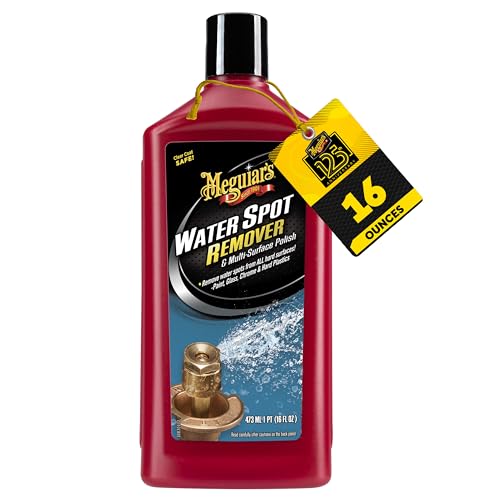
Meguiar's Water Spot Remover, Heavy Duty Water Spot Remover for Cars, Remove Water Stains and Polish Glossy Paint with a Versatile Clear Coat Safe Formula, 16 oz
NO MORE WATER SPOTS: This car water spot remover by Meguiar’s works quickly to remove stubborn, unsightly water…
As an affiliate, we earn on qualifying purchases.
As an affiliate, we earn on qualifying purchases.
Frequently Asked Questions
Can Water Spots Damage My Car’s Paint Permanently?
Yes, water spots can damage your car’s paint permanently if left untreated. Water mineralization leaves mineral deposits that can etch into the clear coat, causing permanent stains. To prevent this, make certain you have proper paint protection and regularly wash your car. Removing water spots promptly helps avoid mineral buildup, maintaining your paint’s integrity and shine. Regular maintenance and protective coatings are your best defenses against lasting damage.
How Often Should I Remove Water Spots to Prevent Haze?
Think of your car’s finish as a delicate jewel that needs constant care. You should remove water spots as part of your regular maintenance, ideally every few weeks or after heavy rain or sprinklers. This proactive approach, a form of preventative measures, helps prevent haze buildup. Regular cleaning and timely removal protect your paint, ensuring your car stays shiny and spotless, just like a well-tended treasure.
Are Homemade Remedies Effective for Stubborn Water Spots?
Homemade remedies can be effective for stubborn water spots, especially if you catch them early. DIY solutions like vinegar or baking soda paste often work well, but their effectiveness depends on the severity of the spots. For tougher stains, you might need to try stronger commercial products or professional polishing. Always test homemade remedies on a small, inconspicuous area first to avoid damage and guarantee they won’t harm your finish.
What Safety Precautions Are Necessary During the Cleaning Process?
A stitch in time saves nine, so always prioritize safety when cleaning. You should wear protective gear like gloves and goggles to shield your skin and eyes. Guarantee proper ventilation precautions by opening windows or using fans to avoid inhaling fumes from cleaning agents. Keep the workspace clear of clutter to prevent accidents. By taking these steps, you protect yourself and make the process safer and more effective.
Will Removing Water Spots Affect My Car’s Warranty?
Removing water spots through proper water stain removal typically won’t affect your car’s warranty if done correctly. However, using harsh chemicals or abrasive techniques can potentially damage your paint and might void your warranty. Always follow manufacturer guidelines or consult a professional for water stain removal. This guarantees you protect your car’s finish without risking warranty issues, keeping your vehicle in top condition.
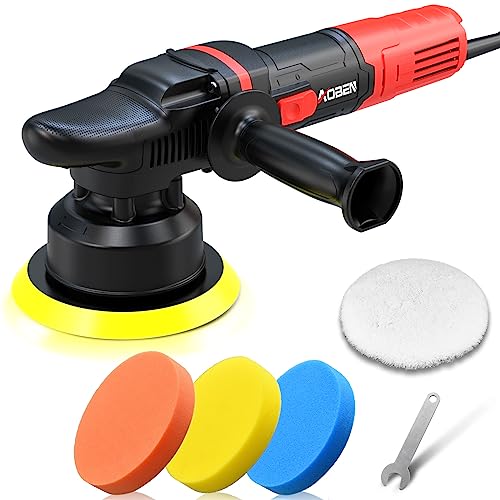
AOBEN Car Buffer Polisher,6 inch Dual Action Polisher,Random Buffer Polisher kit with 6 Variable Speed 1000-4500rpm,Detachable Handle,4 Buffing Pads for Car detailing Polishing and Waxing
🚗【6 SPEED ELECTRIC BUFFER 】120V,60Hz ,700W,6-Inch polisher; dual action Random orbital copper motion for optimal movement to achieve…
As an affiliate, we earn on qualifying purchases.
As an affiliate, we earn on qualifying purchases.
Conclusion
Now that you’ve learned how to remove water spots and haze from your finish, you’re almost there. But just when you think the job’s done, a subtle mark or lingering haze might surprise you. Will your next step reveal a flawless shine or a hidden flaw? Keep your tools ready, stay attentive, and don’t rush. Because the final reveal holds the true reward—your perfectly restored finish, waiting to impress at the very last moment.

Chemical Guys C4 & P4 Clear Cut Correction Compound and Precision Paint Perfection Polish Combo – Removes Scratches, Swirls, Towel Marks, and Etching, Restores Gloss, Polishing Kit – 2 x 16 oz
C4 & P4 PAINT CORRECTION COMBO (GAP40016) – Complete 2-step Chemical Guys polishing kit includes C4 Clear Cut…
As an affiliate, we earn on qualifying purchases.
As an affiliate, we earn on qualifying purchases.
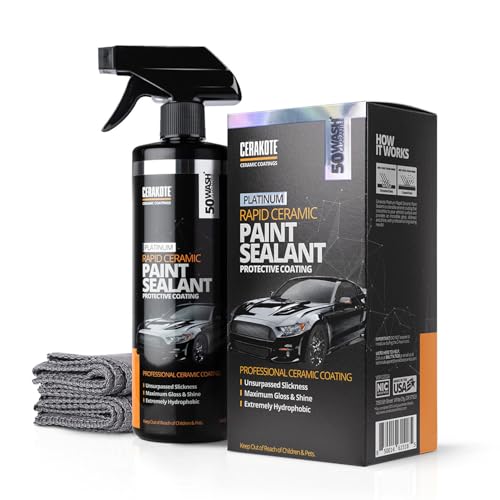
CERAKOTE® Platinum Rapid Ceramic Paint Sealant Spray – 14 oz. – 50 Wash Rating – Maximum Gloss & Shine – Extremely Hydrophobic – Unmatched Slickness – Ceramic Spray Coating
Industry Leading 50 Wash Rating – We’ve taken our top performing paint sealant and made it even better….
As an affiliate, we earn on qualifying purchases.
As an affiliate, we earn on qualifying purchases.