To remove sticky residue from finished surfaces, start by identifying the surface type and testing gentle cleaning methods on a hidden spot. For lighter residues, use oils like mineral or baby oil to soften the adhesive, then wipe with a soft cloth. For tougher deposits, apply rubbing alcohol or acetone cautiously, and gently scrape with a plastic card. Always clean and dry the surface afterward. If you want to explore more tips, you’ll find helpful details below.
Key Takeaways
- Identify the surface type and test cleaning methods on small, hidden areas first.
- Use gentle oils like mineral or baby oil to soften and loosen adhesive residues.
- Apply rubbing alcohol or acetone-based nail polish remover carefully, testing first to avoid surface damage.
- For stubborn residues, gently scrape with a plastic card, avoiding metal tools to prevent scratches.
- Finish by cleaning with a damp cloth, then thoroughly dry to preserve surface integrity.
Ever wonder how to effortlessly remove sticky residue left behind by labels, tape, or stickers? If so, you’re not alone. Sticky residues can be stubborn and frustrating, especially when they cling to finished surfaces like glass, painted walls, or wood furniture. The key to successful residue cleaning lies in understanding effective adhesive removal techniques that won’t damage your surfaces. The good news is that you can often tackle these messes with simple household items and a bit of patience.
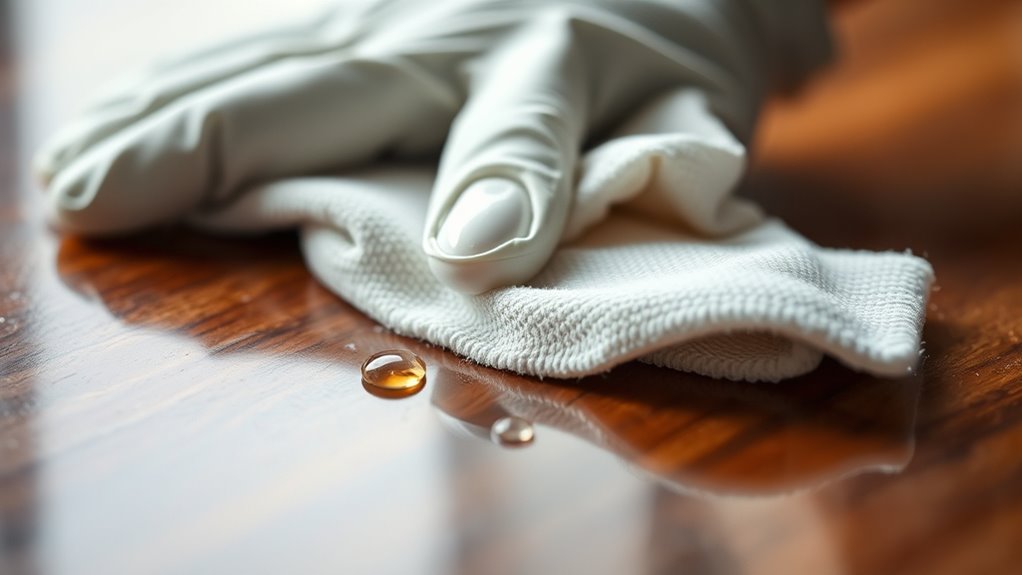
Start by evaluating the type of surface you’re working with. For most finished surfaces, gentle methods are safest to prevent scratches or discoloration. One popular approach involves using oil-based products like mineral oil, baby oil, or even cooking oils such as olive or coconut oil. These oils work by breaking down the adhesive bonds, allowing you to lift the residue easily. To do this, apply a small amount of oil directly onto the sticky area, letting it sit for a few minutes. Once the adhesive softens, gently rub with a soft cloth or a non-abrasive sponge. This process simplifies residue cleaning and often leaves the surface spotless without harsh scrubbing.
Use oil-based products like mineral, baby, or cooking oils to gently remove sticky residues from finished surfaces.
If oils aren’t your preferred method, rubbing alcohol or acetone-based nail polish remover can also do the trick. Dampen a cloth with these solutions and gently dab onto the sticky area. Be cautious, though, since some finishes might react negatively to these chemicals. Always test on a small, inconspicuous spot first. After the adhesive loosens, wipe the area clean with a damp cloth and dry it thoroughly. This ensures no residue remains from the cleaning agents, maintaining the integrity of your surface.
For tougher residues, a mixture of warm water and a few drops of dish soap can sometimes suffice. Apply the soapy water with a soft cloth, gently scrubbing the area. If the residue persists, you might need to use a plastic scraper or an old credit card to lift it carefully. Avoid metal tools, as they risk scratching or gouging finished surfaces. Patience is key; work slowly and avoid aggressive scrubbing, which can damage delicate finishes. Additionally, understanding the types of finishes on your surfaces can help you choose the most appropriate cleaning method.
In all cases, always finish by wiping the surface with a clean, damp cloth to remove any leftover cleaning agents. Then, dry with a soft towel to prevent water spots or streaks. With these techniques, you’ll find adhesive removal and residue cleaning become manageable tasks. The right approach not only removes sticky residues efficiently but also preserves the beauty of your finished surfaces. So next time you encounter a stubborn sticker or tape mark, remember that a little effort and the right method can make residue cleaning quick and safe.

Goo Gone Adhesive Remover Spray Gel – Safe Glue and Sticker Remover for Labels, Tape Residue, Grease, Tar, Gum, Crayons, Candle Wax, Tree Sap, & Makeup on Hard Surfaces, Carpets, and Fabrics, 12 oz
Goo Gone Spray Gel: Effectively removes sticky messes including labels, tape residue, pen, markers, decals, tar, grease, gum,…
As an affiliate, we earn on qualifying purchases.
As an affiliate, we earn on qualifying purchases.
Frequently Asked Questions
Can I Use Household Products to Prevent Future Residue?
Yes, you can use household solutions to prevent future residue. Simple solutions like vinegar and water act as chemical alternatives that effectively clean surfaces without harsh chemicals. Regularly wiping down surfaces with these natural options helps keep sticky residue at bay. Just avoid abrasive cleaners that might damage the finish. By incorporating these household solutions into your routine, you guarantee your surfaces stay clean and residue-free longer.
Will Cleaning Damage the Finish of My Surfaces?
You might think cleaning damages the finish, but gentle methods actually preserve it. If you’re concerned about chemical sensitivity, opt for mild, non-abrasive cleaners. Avoid harsh chemicals that can strip or dull the surface, and always test a small area first. Proper cleaning techniques, using appropriate products, help maintain your finish’s quality and appearance, ensuring you can clean without risking damage. So, cleaning doesn’t have to harm your surfaces if you’re careful.
How Long Should I Wait Before Reapplying a Protective Coating?
You should wait at least 24 to 48 hours before reapplying protective coatings, ensuring the surface is fully dry and properly prepared. Proper surface preparation, including cleaning and removing any residue, is essential for the coating to adhere well. Rushing the process may compromise the finish’s durability. Always follow the manufacturer’s recommendations for drying times and surface prep instructions to achieve the best results and long-lasting protection.
Are There Eco-Friendly Options for Residue Removal?
Yes, you can find eco-friendly options for residue removal. Biodegradable solvents are a great choice since they break down naturally and are less harmful to the environment. Natural remedies like vinegar, baking soda, or lemon juice also work effectively without introducing chemicals. You simply apply these solutions, wait a few minutes, then gently wipe away the residue. These options keep your surfaces clean while respecting the planet.
What Safety Precautions Should I Take During Cleaning?
Think of safety as your shield, like a knight’s armor. You should wear protective gloves to prevent skin irritation and make sure good ventilation to avoid inhaling fumes. Keep the area well-ventilated, open windows, or use fans. Avoid mixing chemicals, and read labels carefully. These precautions protect you from potential hazards, making your cleaning process safe and effective. Stay cautious, and your surfaces will thank you.

3M Industrial Cleaner and Degreaser, Citrus Base, Net Wt 18.5 oz, Removes Sticky Residue, Dirt, Grease, Grime, Tar, Oil and Ink in Seconds, Non-Corrosive
EFFECTIVE CLEANING PERFORMANCE: Helps dissolve and remove dirt, heavy oils, grease, silicone, tar, wax, marker, graffiti, stickers, labels,…
As an affiliate, we earn on qualifying purchases.
As an affiliate, we earn on qualifying purchases.
Conclusion
Removing sticky residue from finished surfaces can be quick and easy with the right approach. Did you know that over 60% of homeowners have struggled with stubborn residue at some point? By using simple household items like vinegar or rubbing alcohol, you can restore your surfaces without harsh chemicals. Stay patient and gentle, and you’ll have your surfaces looking brand new in no time. Remember, a little effort goes a long way in keeping your home clean and beautiful.

EHDIS 1.5" Plastic Razor Scraper with 10pcs Double Edged Plastic Blades for Removing Labels Stickers Decals on Glass Windows
1 Razor Scraper with 10 Double Edged Plastic Blades
As an affiliate, we earn on qualifying purchases.
As an affiliate, we earn on qualifying purchases.

Cutex Nourishing Nail Polish Remover, Leaves Fingernails & Toenails Looking Healthy, Contains Vitamin E, 6.7 fl oz
Formulated with Vitamin E and blend of flaxseed and perilla oil
As an affiliate, we earn on qualifying purchases.
As an affiliate, we earn on qualifying purchases.