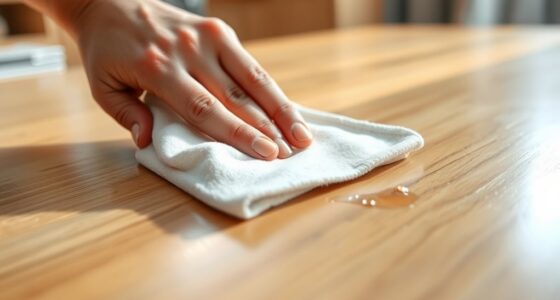
When dusting your wood furniture, opt for microfiber cloths because they trap dust effectively and won’t scratch surfaces. Use slightly dampened cloths rather than dry ones, as this helps catch allergens and dirt without dispersing dust into the air. Avoid harsh polishes or products with high VOCs, sticking to mild, pH-balanced cleaners or water for routine cleaning. For more tips on choosing the right tools and solutions, continue exploring how to keep your furniture in top condition.
Key Takeaways
- Use microfiber cloths for effective dust trapping and gentle cleaning of wood surfaces.
- Opt for mild, pH-balanced cleaners or water to avoid damaging the furniture finish.
- Avoid heavy, greasy polishes that can attract dust and leave residues.
- Regularly wash and store cloths properly to prevent mold and bacteria buildup.
- Incorporate dusting in a downward motion from top to bottom for thorough, allergen-reducing cleaning.

Have you ever wondered if you’re dusting your wood furniture correctly? Many people overlook the nuances of proper dusting, but doing it right can make a big difference in maintaining your furniture’s beauty and your health. One key aspect is choosing the right cloths and cleaning solutions. The quality of your materials directly impacts the effectiveness of your dusting technique and can influence allergy prevention. Using the wrong cloth can spread dust and allergens rather than remove them, so selecting appropriate tools is essential. Microfiber cloths are often the best choice because they trap dust particles effectively without the need for harsh chemicals. They’re gentle on the wood surface and can be washed and reused, making them an eco-friendly option. When it comes to cleaning solutions, avoid heavy or greasy polishes that may leave residue or attract more dust over time. Instead, opt for a mild, pH-balanced cleaner or simply use water for routine dusting. For deeper cleaning or polishing, consider products specifically designed for wood furniture that contain minimal volatile organic compounds (VOCs), which can contribute to indoor air pollution and trigger allergies. Speaking of allergies, dusting techniques play a critical role in allergy prevention. Regularly removing dust and allergens from your furniture reduces airborne particles that can provoke sneezing, congestion, or asthma symptoms. To optimize allergy prevention, always dust in a downward motion, starting from the top and working your way down. This prevents dust from settling back onto cleaned areas. Using a slightly damp microfiber cloth can also help trap allergens without dispersing them into the air. Avoid dry dusting with rough or fibrous materials, as these can release more allergens and even scratch the wood surface. When finished, make sure to wash your cloths thoroughly to remove accumulated dust and allergens. Proper storage of cleaning cloths is essential—keep them in a clean, dry place to prevent mold or bacteria growth. Incorporating these polishing techniques and choosing the right cleaning solutions not only preserves the wood’s finish but also creates a healthier indoor environment. By dusting thoughtfully and regularly, you reduce allergen buildup and extend the life of your furniture. Remember, consistency is key to maintaining a dust-free and allergen-minimized space. When you use the right tools and techniques, dusting becomes a simple, effective way to care for your wood furniture while promoting better indoor air quality.
Frequently Asked Questions
How Often Should I Dust My Wood Furniture?
You should dust your wood furniture weekly to keep it looking pristine and prevent dust buildup. Regular dusting is part of seasonal maintenance, helping you stay on top of cleaning routines. It also aids allergy prevention by reducing dust mites and allergens. Use a soft cloth and gentle cleaning solutions, and don’t forget to dust more often if you or your family suffer from allergies. Consistent care keeps your furniture beautiful and your home healthier.
Can I Use Homemade Cleaning Solutions Safely?
Yes, you can use homemade cleaning solutions safely if you choose the right ingredients. Mix mild dish soap with water or create a vinegar and water solution for cleaning. Always test a small area first to guarantee no damage occurs. By following proper cleaning safety tips and avoiding harsh chemicals, you can effectively clean your wood furniture while protecting its finish and maintaining its beauty.
What Types of Cloths Are Best for Dusting?
You should use microfiber cloths or feather dusters for dusting wood furniture. Microfiber cloths are excellent because they trap dust effectively without scratching the surface, and they’re reusable and easy to clean. Feather dusters are also good for delicate or intricate areas, gently removing dust without spreading it around. Avoid rough or abrasive cloths that could damage your furniture’s finish. Always dust lightly and in the direction of the grain for best results.
Is It Necessary to Polish After Dusting?
You might wonder if polishing after dusting is necessary. The truth is, dusting removes surface dirt, but polishing adds a protective shine and enhances the wood’s beauty. Dusting vs. polishing serve different purposes—dusting keeps the surface clean, while polishing maintains its luster and guards against damage. So, while not always essential, polishing can elevate your furniture’s appearance and longevity, making it a worthwhile step after dusting.
How Do I Remove Stubborn Dirt Without Damaging the Finish?
To remove stubborn dirt without damaging the finish, start by gently applying a mixture of mild soap and water using a soft cloth. Use dirt removal techniques like light scrubbing or applying a slightly damp cloth to lift grime carefully. Always follow damage prevention methods by testing on a hidden spot first and avoiding harsh chemicals. This approach guarantees effective cleaning while protecting your wood furniture’s delicate surface.
Conclusion
Now that you know how to choose the right cloths and cleaning solutions, dusting your wood furniture becomes a simple, satisfying task. Imagine running your hand over the smooth surface, free of dust and grime, the gentle scent of lemon or cedar lingering in the air. With each careful swipe, your furniture gleams like new, inviting you to relax and enjoy its beauty. Keep up this routine, and your wood pieces will remain radiant and timeless.