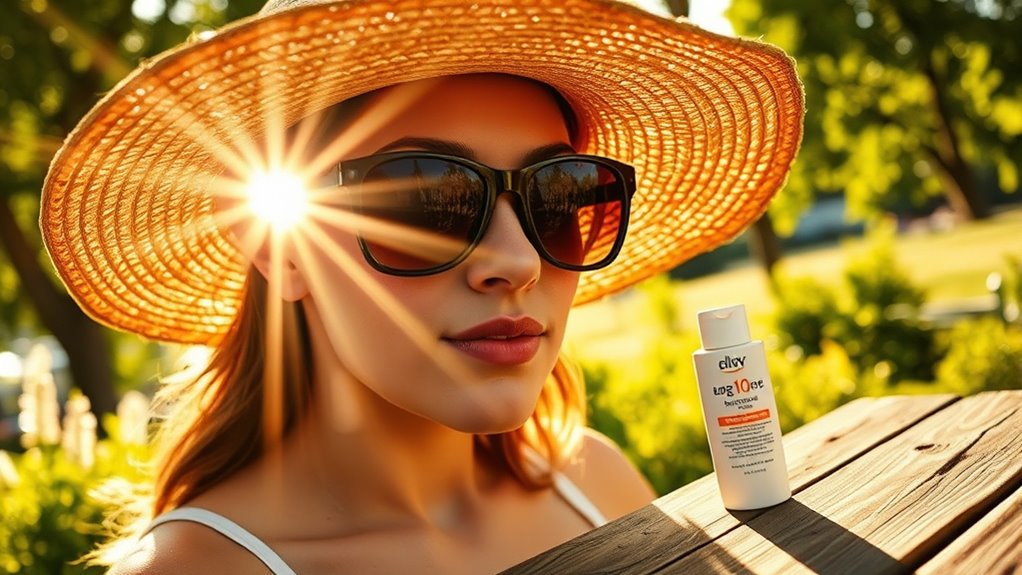

To prevent sunlight fading, you should combine multiple UV protection strategies. Wear broad-spectrum sunscreens and reapply often, especially after sweating or swimming. Opt for UV-resistant clothing with UPF ratings and consider protective coatings on fabrics or accessories. Seek shade during peak hours and wear UV-blocking sunglasses and wide-brimmed hats. Remember, reflected rays can cause damage even in shaded areas. Stick with these tactics to keep your skin safe—there’s more to explore for complete protection.
Key Takeaways
- Reapply sunscreen regularly to maintain UV protection as it can wear off over time.
- Use UPF-rated clothing and protective coatings to enhance UV resistance of fabrics and surfaces.
- Seek shade during peak sunlight hours (10 a.m. to 4 p.m.) to minimize UV exposure.
- Wear UV-blocking sunglasses and wide-brimmed hats for added physical barriers against sunlight.
- Be aware of reflected UV rays from surfaces like water, sand, and pavement, even in shaded areas.

Protecting your skin from the harmful effects of ultraviolet (UV) rays is essential for maintaining overall health and preventing skin damage. Sunlight contains UV radiation that can cause premature aging, sunburns, and increase your risk of skin cancer. To combat these effects, you need effective UV protection strategies. One of the most effective methods involves applying products with UV absorbing ingredients, which help block or absorb harmful rays before they penetrate your skin. These ingredients, found in sunscreens and skincare products, work by forming a barrier that reduces UV transmission. It’s important to choose broad-spectrum sunscreens that shield you from both UVA and UVB rays, ensuring exhaustive protection.
In addition to topical solutions, protective coatings can play a significant role in shielding your skin and belongings from UV damage. Protective coatings are specially formulated layers that can be applied to surfaces, including fabrics, accessories, and even building materials, to reflect or absorb UV rays. For your skin, clothing treated with UV protective coatings can act as an additional shield, especially when you’re outdoors for extended periods. These coatings are designed to enhance the fabric’s natural UV resistance, making them a practical way to reduce UV exposure without relying solely on sunscreen. When choosing clothing or accessories, look for those labeled with UPF (Ultraviolet Protection Factor) ratings, indicating they have been treated with protective coatings to block UV radiation effectively.
To maximize your UV protection, combine multiple strategies. Regularly reapply your sunscreen, especially after sweating or swimming, since UV absorbing compounds can degrade over time. Wearing protective clothing, wide-brimmed hats, and UV-blocking sunglasses further reduces your skin’s exposure. Seek shade during peak sunlight hours, typically from 10 a.m. to 4 p.m., when UV rays are strongest. Remember that UV rays can reflect off surfaces like water, sand, and pavement, so even if you’re in the shade, your skin might still be exposed. Additionally, understanding sunlight exposure can help you better time your outdoor activities and minimize risk. Consequently, layering your protection with UV absorbing products, protective coatings, and physical barriers is the most effective way to prevent sunlight fading and skin damage.

Neutrogena Ultra Sheer Dry-Touch Sunscreen Lotion SPF 70, Broad Spectrum, Water Resistant 80 Min, Oil-Free, Oxybenzone-Free, Non-Comedogenic, Matte Finish, Body Sunscreen, Travel Size 3 Fl Oz
SPF 70 broad spectrum sunscreen lotion delivers high UVA/UVB protection for daily use; water resistant for up to…
As an affiliate, we earn on qualifying purchases.
As an affiliate, we earn on qualifying purchases.
Frequently Asked Questions
How Can I Tell if My Belongings Are Fading From Sunlight?
You can tell if your belongings are fading from sunlight by noticing color change or fabric discoloration over time. Check for areas that look duller or lighter than the original color, especially on surfaces exposed to direct sunlight. Regularly compare these items to their original appearance or store them in shaded areas. If you see these signs, it’s a clear indication that UV rays are causing fading, and you should consider protective measures.
Are There Natural or Eco-Friendly UV Protection Options Available?
Did you know that eco-friendly UV protection options are gaining popularity? You can use biodegradable fabrics treated with natural UV blockers or wear clothing made from tightly woven, organic materials. Additionally, plant-based sunscreens offer effective protection without harmful chemicals. These eco-friendly options help preserve your belongings and the environment while providing reliable UV shielding, making them excellent choices for sustainable sun protection.
How Often Should I Reapply UV Protectant Sprays on Fabrics?
You should reapply UV spray frequently, ideally every 2 to 4 weeks, to maintain fabric longevity. The UV spray frequency depends on how often the fabric is exposed to sunlight and wear. Regular reapplication guarantees your fabrics stay protected from UV rays, reducing fading and damage. Keep an eye on the product instructions for specific reapplication intervals, especially after washing or heavy use, to maximize protection.
Can UV Protection Treatments Be Used on Artwork or Antiques?
You shouldn’t use UV protection treatments directly on artwork or antiques without proper guidance. Restoration techniques and preservation methods for delicate items are specialized; applying generic UV protectants could cause damage or alter their value. Instead, consult a conservator or preservation expert who can recommend safe, appropriate methods to shield your treasures from sunlight, ensuring their longevity. Be cautious—preservation is a delicate process, and the wrong treatment can be irreversible.
What Are the Long-Term Effects of UV Exposure on Different Materials?
You’ll notice UV exposure causes material degradation and color fading over time, affecting fabrics, plastics, and paintings alike. Prolonged sunlight weakens fibers and breaks down chemical bonds, leading to brittleness or cracking. Colors fade as pigments break down, making objects look dull or worn. To protect your belongings, limit their exposure to sunlight, use UV filters, and store items in shaded areas, ensuring they stay vibrant and intact for years to come.

Toumett Women's UPF 50 Long Sleeve UV Sun Protection Safari Shirts Outdoor Quick Dry Fishing Hiking Travel Shirts(5071,White,S)
Breathable and Fast Dry:Enjoy the outdoors in style with our women's fishing shirt.The relaxed,casual fit maximizes comfort for…
As an affiliate, we earn on qualifying purchases.
As an affiliate, we earn on qualifying purchases.
Conclusion
Think of your belongings as a precious garden that needs protection from harsh sunlight. By implementing UV protection strategies like using sunscreen, UV-resistant coatings, and shade, you create a shield that keeps your treasures vibrant and safe. Don’t let the sun’s rays turn your careful investments into fading memories. With these simple steps, you’re planting seeds of preservation that will flourish over time, ensuring your world stays colorful and bright, no matter how fierce the sunlight gets.

Foliful 3 Pack Polarized Sports Sunglasses for Men, Mens Sunglasses Wrap Around UV400 Protection for Cycling Fishing Driving
UV Protection and Clear Vision: Utilizing advanced UV lens technology, these mens polarized sunglasses effectively block harmful UV…
As an affiliate, we earn on qualifying purchases.
As an affiliate, we earn on qualifying purchases.

EINSKEY Wide Brim Sun Hat, UPF 50+ UV Protection Waterproof Packable Bucket Hat for Men & Women, Fishing Hiking Beach Garden
One-Size-Fits-All Comfort: Features a rear elastic drawstring and adjustable chin strap, ensuring a perfect fit for both men…
As an affiliate, we earn on qualifying purchases.
As an affiliate, we earn on qualifying purchases.