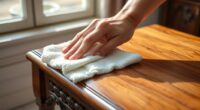
To handle pet damage like scratches, chewing, and stains, start by training your pet to avoid furniture and provide safe alternatives like chew toys. Use furniture covers and keep valuable items out of reach. Repair scratches by touching up with matching stain or marker, and clean stains promptly with pet-safe solutions. Consistent prevention, quick cleanup, and gentle redirection help maintain your home’s look. Keep going to discover more tips on balancing pet happiness with home care.
Key Takeaways
- Use furniture covers and keep valuables out of pets’ reach to prevent scratches and damage.
- Provide appropriate chew toys and redirect pets to reduce furniture chewing.
- Address stains immediately with pet-safe cleaning solutions to prevent odor and embedding.
- Repair scratches with matching touch-up markers or light sanding followed by staining for seamless results.
- Implement consistent training and positive reinforcement to minimize destructive behaviors over time.

Pets bring joy to your home, but they can also cause unexpected damage in the process. One of the most common issues pet owners face is dealing with scratches, chewing, and stains that can ruin furniture and decor. To protect your space, start with pet proofing tips that target areas prone to damage. For instance, keep valuable or easily scratched furniture out of your pet’s reach or use furniture covers that can be easily cleaned or replaced. Training your pet to avoid furniture or providing appropriate chew toys can also considerably reduce damage. If scratching has already taken a toll on your furniture, you’ll want to focus on repairing scratched surfaces quickly. Light scratches can often be minimized with a furniture touch-up marker or wax sticks matched to your furniture color. For deeper scratches, consider sanding the area lightly and applying a matching stain or finish to blend the damage seamlessly. Applying a protective sealant afterward can help prevent future scratches and make repairs last longer. Additionally, utilizing pet-friendly cleaning solutions can help maintain your furniture’s appearance without risking damage from harsh chemicals.
When it comes to chewing, providing suitable alternatives is essential. Invest in durable chew toys that can withstand your pet’s teeth, and encourage their use through positive reinforcement. If you catch your pet in the act of chewing on furniture or shoes, gently redirect their attention to the appropriate toy. Consistency is key here, as pets learn through repetition and positive reinforcement. For stains, prompt action can make a huge difference. Blot spills immediately with a clean cloth to absorb as much liquid as possible—avoid rubbing, which can spread the stain or embed it further. Use pet-safe cleaning solutions suitable for your flooring or upholstery to lift the stain without causing damage. For stubborn spots, a mixture of mild detergent and water or a specialized enzymatic cleaner can effectively break down pet stains and odors. Remember that the right cleaning methods can also help prevent lingering odors that might encourage pets to revisit the same spot.
Ultimately, dealing with pet damage requires a combination of prevention, prompt action, and repair. Implementing pet proofing tips keeps your furniture and belongings safe, while quick repairs help maintain their appearance and longevity. Remember, pets are part of your family, and a little proactive effort goes a long way in balancing their happiness with the integrity of your home. By staying attentive and using the right techniques for repairing scratched furniture, cleaning stains, and redirecting chewing behaviors, you create a harmonious environment where both your pets and your furniture can thrive.
Frequently Asked Questions
How Can I Prevent My Pet From Scratching Furniture?
To prevent your pet from scratching furniture, focus on furniture protection and scratching prevention. Provide your pet with designated scratching posts or pads to redirect their behavior. Use furniture covers or protective sprays to make your furniture less appealing. Regularly trim their nails to reduce damage, and reward them when they use their scratching posts. Consistent training and positive reinforcement will help protect your furniture from scratches effectively.
What Are the Safest Cleaning Products for Pet Stains?
For safe pet stain solutions, seek gentle, plant-based cleaners like vinegar, baking soda, or enzyme-based pet odor removal products. These safe stain cleaning solutions effectively eliminate odors and stains without harmful chemicals. You’ll find that natural ingredients neutralize nasty smells while protecting your pet’s health. Remember, always test a small area first to prevent damage, and opt for products specifically designed for pet safety, ensuring your home stays fresh and hazard-free.
How Do I Train My Pet to Avoid Chewing on Furniture?
You can train your pet to avoid chewing furniture by using positive reinforcement whenever they chew on appropriate toys. Redirect their attention with engaging, durable chew toys and praise them when they choose these over your furniture. Consistency is key—reward good behavior immediately and ignore or gently discourage unwanted chewing. Over time, your pet will learn that chewing on their toys earns rewards, helping prevent furniture damage.
Are There Natural Remedies to Deter Pets From Damaging Walls?
Like a shield protecting delicate fabric, natural deterrents and scent repellents can keep your pet away from walls. You might try spraying diluted vinegar or lemon juice, which animals dislike, directly on the areas. Some pets respond well to natural repellent sprays made from essential oils like citronella. These options are safe, effective, and eco-friendly, helping you prevent damage without harsh chemicals.
How Can I Repair Deep Scratches on Hardwood Floors?
To repair deep scratches on your hardwood floors, start with flooring repairs by cleaning the area thoroughly. Use a wood filler or putty that’s color-matched to your floor, pressing it into the scratch and smoothing it out. Once dry, sand lightly to blend with the surrounding surface. Finish with a matching stain or finish, then apply a protective coat. This scratch repair restores your floor’s appearance and protects it from further damage.
Conclusion
Remember, pet damage is like a storm you can weather with patience and love. Every scratch, chew mark, or stain is a sign of your pet’s world—sometimes wild, sometimes sweet. By understanding their needs and setting gentle boundaries, you can turn these mishaps into moments of growth. With time, your home will be a cozy harbor, where both you and your furry friend feel safe, loved, and ready to face any weather together.