TL;DR

Get business pricing on tools and workshop supplies
- Business-only prices and quantity discounts
- Tax-exempt purchasing
- Multiple users, one account, clear invoices
Ideal Home reports on “transition trees,” a decorating approach that adapts one small tree across autumn, Halloween, Christmas and New Year. Interior and trend experts quoted in the article say the approach can extend the use of seasonal decorations, though there is no evidence in the source that it is already a widespread trend.
Ideal Home has outlined how homeowners can adapt a single “transition tree” from autumn and Halloween decorations to Christmas and New Year lighting, presenting the idea as a way to keep seasonal decor in use for longer. The report includes advice from interior and trend experts, but describes the style as an emerging idea rather than a trend already established at scale.
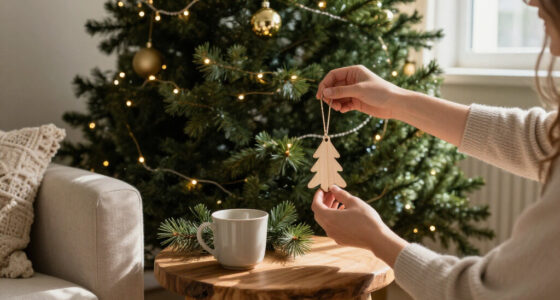
A transition tree can be an artificial Christmas tree set up early or a more understated twig tree. The basic idea is to change its decorations in stages rather than take it down or replace it as one holiday gives way to another. Ideal Home frames the approach around the gap between Halloween and the start of Christmas decorating, while also suggesting it can begin with autumn styling in September.
For an autumn or Halloween look, the article’s contributors suggest pine cones, dried foliage, faux berries and warm-coloured ribbons, as well as playful details such as toy spiders, cobwebs or small pumpkin decorations. Interior designer and trends forecaster Whinnie Williams also suggests making mini jack-o’-lanterns from dried satsuma skins, or covering baubles with white fabric to make ghost decorations.
As the season moves toward Christmas, the tree can gain fairy lights, metallic accents and richer jewel tones. Victoria Robinson, a trend expert at Hillarys, recommends deep reds such as burgundy paired with gold as colours that can work across autumn and winter. For New Year, Williams suggests removing baubles but keeping the lights, giving the tree a simpler look suited to a celebration.
One Tree Across Several Seasons
The idea offers readers a way to reuse seasonal decorations and avoid starting from scratch each time the calendar changes. It may also help make a small corner or window area feel seasonally relevant over several months, particularly as daylight decreases. Robinson told Ideal Home that keeping the same tree and evolving its decorations can create a focal point through the darker months.
The practical appeal depends on the household: some people may prefer distinct displays for each holiday, while others may value a flexible, lower-effort arrangement. The report does not quantify cost savings or environmental benefits, so those should not be assumed. Its significance is primarily as a decorating suggestion, not a formally measured change in consumer behaviour.
Products Worth Considering

eufy Security SoloCam E42 4-Camera Kit with HomeBase 3, 4K Solar Security Cameras

Philips Hue White and Color Ambiance Smart Retrofit Recessed LED Downlights, 5/6-Inch, 4-Pack

Philips Hue Festavia 65-Foot Smart LED String Lights, 250 Color-Changing Mini LEDs
As an affiliate, we earn on qualifying purchases.
From Halloween to Christmas
Seasonal decorating increasingly spans more than the weeks immediately around Christmas, according to the framing of Ideal Home’s report. It points to autumn and Halloween decorations, including wreaths and trees, as reasons some households begin decorating earlier. The transition tree is presented as a response to the interval after Halloween, when those decorations may feel out of place but a full Christmas display may seem premature.
Robinson said she expects adaptable pieces to become more popular as homeowners look for decor that can be styled in multiple ways. That is her forecast, not evidence of a measured market trend. The article also notes that Halloween trees have become more popular this year, but gives no figures or comparison period for that observation. It explicitly says transition trees are not yet established as a trend.
““Rather than decorating for Halloween and then starting again a few weeks later for Christmas, you can evolve the look of the same tree over time.””
— Victoria Robinson, trend expert at Hillarys, quoted by Ideal Home
How Widely the Idea Is Catching On
The source does not provide sales figures, survey results or other data showing how many households are using transition trees. It calls the approach a potential next step and reports Robinson’s expectation that it may gain popularity, while also saying the style is not yet trending. The claim that Halloween trees have increased in popularity is not accompanied by a timeframe, baseline or figures.
It is also unclear whether adapting a tree will save money in practice. The result depends on what decorations a household already owns, whether it uses a real or artificial tree, and how often it chooses to change the display. Ideal Home offers design recommendations rather than a cost or environmental assessment.
Seasonal Styling Through New Year
For households trying the idea, the next step is to choose a tree and a starting palette, then adjust the decorations as the season advances. The report’s suggested sequence is autumn foliage and warm colours, Halloween details, winter lights and richer Christmas ornaments, followed by a simpler light-only look for New Year. A twig tree can provide a subtler option for those who do not want a full Christmas tree in place early.
Whether transition trees become a more widely adopted decorating style remains to be seen. The source identifies no forthcoming industry announcement or study that would confirm that change; for now, it is an expert-backed decorating idea described in a home-design report.
Key Questions
What is a transition tree?
A transition tree is one tree restyled across several seasonal periods, such as autumn, Halloween, Christmas and New Year, rather than a separate display for each one.
When can you put one up?
Ideal Home’s report suggests starting in autumn, potentially from September, and changing the decorations as Halloween and Christmas approach. The timing is a personal choice, not a formal recommendation.
How can you decorate it for Halloween?
The report suggests using items such as toy spiders, webs and pumpkin details. Whinnie Williams also recommends homemade decorations, including faces drawn on dried satsuma skins and baubles wrapped in white fabric.
What makes the decorations work from autumn into winter?
Victoria Robinson recommends natural textures and warm colours, including pine cones, foliage, berries, velvet ribbons and amber-toned ornaments. Lights and metallic accents can be added as the season moves toward Christmas.
Is the transition tree already a major trend?
The source does not establish that it is. Ideal Home describes transition trees as an emerging idea and says they are not yet trending; it provides no market data to measure adoption.
Source: rss