
To straighten a warped board, start by identifying the inward bend and lightly moisten the concave side to relax the fibers. Gently apply controlled heat using a heat gun or low-setting iron while keeping the moisture in place. Clamp the board carefully, applying even pressure and tightening gradually to hold the shape. Let it dry slowly in a stable environment to lock in the straightness. More tips will help you master this process effectively.
Key Takeaways
- Assess the warp to determine the severity and identify the inward-bent side for targeted treatment.
- Lightly moisten the concave side to relax fibers and prepare for straightening.
- Apply gentle, even clamps across the warped area, tightening gradually to avoid stress or cracks.
- Use low heat (like a heat gun) combined with moisture to soften fibers and enhance pliability.
- Remove clamps carefully and allow the board to dry completely in a controlled environment to set the straightened shape.
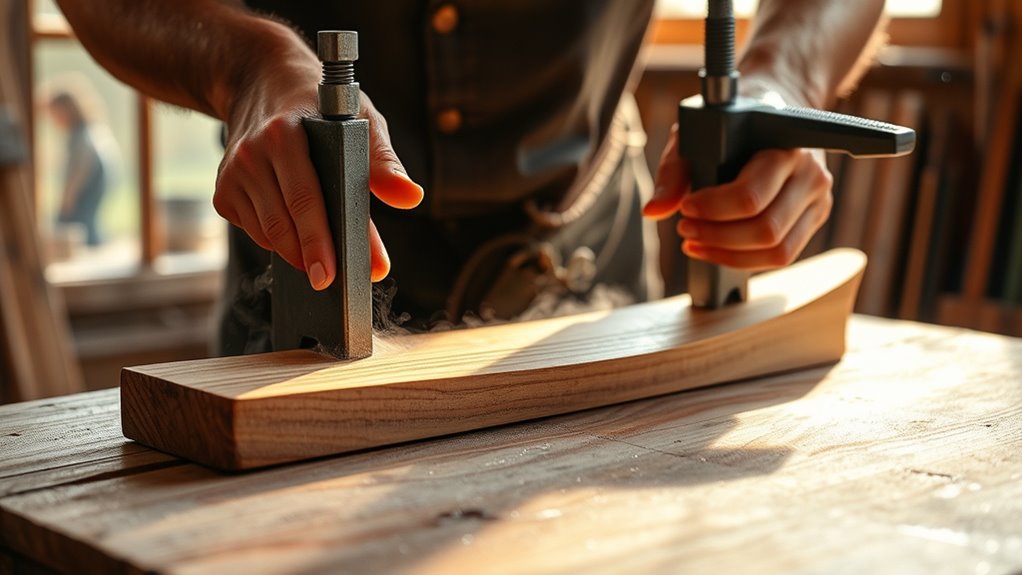
Have you ever faced a warped wooden board that’s throwing off your project? If so, you know how frustrating it can be to get a straight, stable piece. Warping often results from uneven wood moisture levels, causing the wood to bend or twist out of shape. To straighten it effectively, you need to understand how to manipulate those moisture levels and use proper clamping techniques.
First, assess the degree of warping. If the board is only slightly bent, applying moisture in specific areas can help relax the fibers. You can lightly spray or wipe the warped side with water, focusing on the concave side—that’s the side that’s bent inward. The goal is to increase the moisture content in that area, encouraging the fibers to swell and straighten out. Be cautious with this step; too much water can cause further damage, so apply it sparingly and evenly. After moistening, let the board sit for a short period, allowing the moisture to penetrate the wood fibers.
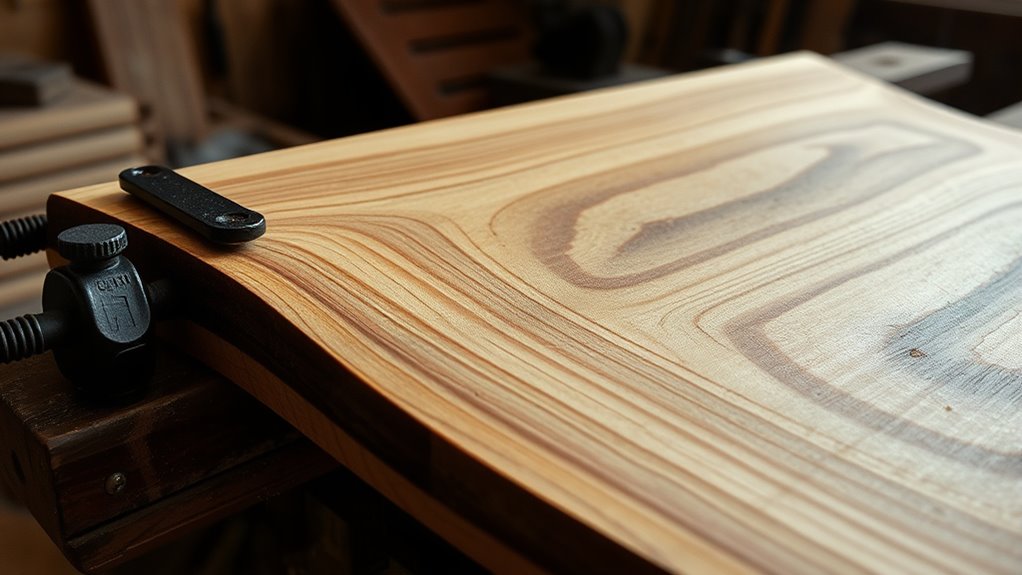
Once the wood has absorbed some moisture, it’s time to clamp it into shape. Proper clamping techniques are essential here. Place the board on a flat surface, and use clamps to apply gentle, even pressure across the warped area. You want to avoid over-tightening, which can cause new stresses or even cracking. Instead, work gradually, tightening the clamps incrementally to encourage the wood to return to its original shape. If the warp is severe, you might need multiple rounds of moistening and clamping. Between sessions, give the wood time to stabilize and dry slightly, which helps set the new, straightened shape. Incorporating controlled environment conditions during drying can also help prevent future warping issues.
In some cases, heat can assist the process. Carefully applying low heat—like from a heat gun or an iron set to a low setting—can make the wood more pliable, especially after moistening. Be sure to keep the heat moving and maintain a safe distance to prevent scorching. The combination of moisture and heat softens the fibers, making it easier to straighten the board with your clamps. Remember, patience is key. Rushing the process can lead to cracks or further warping.
Throughout this process, keep an eye on the wood moisture content. Too little moisture won’t be effective, and too much can cause damage. Once the board is straightened, remove the clamps slowly and allow it to dry completely in a controlled environment. This will help lock in the new shape and prevent future warping. With patience and the right techniques, you can restore your warped board to a usable, flat piece suitable for your project.

REALINN Wood Furniture Repair Kit- Set of 28 – Touch Up Markers, Fillers with Wood Putty – Repair Scratch, Cracks, Hole, Discoloration for Wooden Door, Floor, Table, Cabinet
KIT INCLUDES our most powerful wood repair compounds, so you can repair all levels of damage to wood…
As an affiliate, we earn on qualifying purchases.
As an affiliate, we earn on qualifying purchases.
Frequently Asked Questions
How Long Does It Take to Straighten a Warped Board Using Heat and Moisture?
It typically takes several hours to a day to straighten a warped board using heat and moisture, depending on the extent of the warp. You should monitor moisture levels carefully, ensuring they stay consistent, and apply gentle heat to avoid damage. Timing considerations are vital; check the board periodically to see if it’s straightening properly. Patience is key—rushing the process can cause further warping or cracks.
Can This Method Fix Severe Warping or Only Minor Bends?
A stitch in time saves nine, and this method can often fix only minor warping. For severe bends, you might need more advanced techniques. The heat and moisture absorption process works best when you carefully follow the wood grain, gradually loosening the warp. While you can sometimes improve serious warping, don’t expect perfect results—be patient and prepared to try multiple sessions for the best outcome.
Is There a Risk of Damaging the Wood During the Process?
Yes, there is a risk of damaging the wood during the process if you’re not careful. Excessive heat or moisture can weaken the wood’s structural integrity, leading to cracks or splits. To minimize wood damage, apply gentle heat and moisture, and avoid over-clamping. Keep a close eye on the process, and test the wood regularly to guarantee you’re restoring the board without compromising its strength.
What Types of Wood Respond Best to This Straightening Technique?
You’ll find that woods with straight, tight grain and moderate moisture content respond best to this straightening technique. Woods like oak, maple, and cherry are more forgiving because their grain resists splitting, and they absorb moisture evenly. Avoid woods with irregular grain or high moisture content, as they’re more prone to damage. Keep the moisture level balanced and apply heat carefully to help the wood straighten without risking cracks or splits.
Can This Method Be Used on Laminated or Engineered Wood?
This method isn’t suitable for laminated or engineered wood, which are delicate and can delaminate or crack easily. Laminated wood’s layers can separate when exposed to heat or moisture, making this approach risky. Engineered wood, with its glued layers, might warp further or weaken. You’re better off consulting a specialist for these materials, because trying to fix them with heat and moisture could cause irreparable damage—like a disaster waiting to happen!

4 Inch Bar Clamps for Woodworking, 5 Pcs Trigger Quick Grip Clamps, One Handed Ratchet Wood Working Clamp, Mini Small Bar Woodworking Clamps for Wood Gluing Crafts (4Inch)
Superb Material: The durable material provides a construction that won’t buckle or bend under pressure and repeated use,…
As an affiliate, we earn on qualifying purchases.
As an affiliate, we earn on qualifying purchases.
Conclusion
By applying heat, moisture, and proper clamping techniques, you can successfully straighten a warped board. Did you know that wood can expand up to 8% in moisture content? That means small changes can make a big difference in warping. With patience and the right approach, you’ll restore your board’s shape efficiently. Keep experimenting and learning—your woodworking projects will turn out even better than you imagined!

SEEKONE Heat Gun 1800W Heavy Duty Fast Heat Hot Air Gun Kit with 752℉&1112℉(400℃-600℃) Dual-Temperature Settings and 4 Nozzles with Overheat Protection for Crafts, Shrinking PVC, Stripping Paint
⏩【Warm Tips】When using the heat gun for the first time, there will be smoke and burning odour, which…
As an affiliate, we earn on qualifying purchases.
As an affiliate, we earn on qualifying purchases.

General Tools MMD4E Digital Moisture Meter, Water Leak Detector, Moisture Tester, Pin Type, Backlit LCD Display With Audible and Visual High-Medium-Low Moisture Content Alerts, Grays
HUMIDITY SENSOR: Our handy meter tool can quickly determine what level of remediation is needed to keep your…
As an affiliate, we earn on qualifying purchases.
As an affiliate, we earn on qualifying purchases.