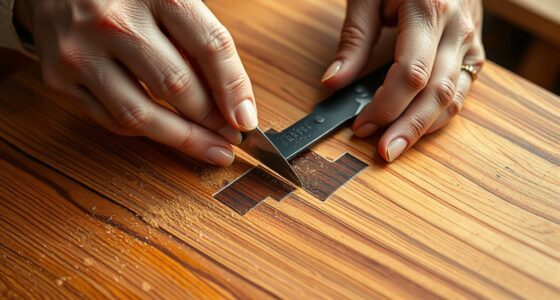

When filling knots and checks, epoxy offers strong adhesion and durability, making it great for deep repairs and moisture-rich areas, while wood filler is easier to handle and sands smoothly for surface-level fixes. Epoxy penetrates deeply and hardens into a solid bond, but can be more difficult to work with. Wood filler dries quickly and is ideal for small, shallow repairs. To guarantee your project looks flawless and lasts, understanding these differences is key—keep exploring to find out more.
Key Takeaways
- Epoxy provides stronger adhesion and durability, ideal for deep checks and knots, while wood filler is easier for surface-level repairs.
- Use epoxy for large, deep repairs or moisture-prone areas; choose wood filler for small knots and quick fixes.
- Epoxy fills checks thoroughly, hardens into a stable, seamless bond, and conforms to the wood grain.
- Wood filler is ready to use, easy to apply with a putty knife, and sands smoothly for surface-level repairs.
- Proper surface prep and filling technique are essential for long-lasting, crack-free repairs regardless of filler type.

Filling knots and checks is an essential step in achieving a smooth, professional-looking finish in woodworking or upholstery projects. Before you even start filling, it’s crucial to focus on surface preparation. Proper surface preparation involves cleaning the wood thoroughly, removing dust, oils, and debris that could interfere with adhesion. When you pay attention to grain enhancement, you’re ensuring that the fillers bond well with the wood fibers, creating a seamless surface that’s ready for finishing. Skipping this step can lead to filler failure, cracking, or an uneven appearance, which undermines the quality of your project.
Proper surface prep ensures filler bonds well and results in a smooth, professional finish.
As you choose between epoxy and wood filler, consider the nature of the knots and checks you’re filling. Epoxy provides excellent adhesion and durability, especially in areas prone to moisture or stress. Its grain enhancement properties help it penetrate deep into the wood, bonding securely with the surrounding fibers. This makes epoxy ideal for large or deep checks, or when you need a sturdy, long-lasting repair. On the other hand, wood fillers are generally easier to work with and sand, making them suitable for smaller knots or surface-level checks. They’re quick-drying and often come in colors that match various wood tones, which simplifies the finishing process.
When applying epoxy, you typically mix it with a hardener according to the manufacturer’s instructions. This mixture flows into the knots and checks, filling them completely. Because epoxy hardens into a solid, it’s especially good for repairs that require strength and stability. You should also consider the grain enhancement aspect: epoxy’s ability to conform to the wood’s natural grain helps it blend in seamlessly once sanded and finished. For surface preparation, ensure the area is roughened slightly with sandpaper to give the epoxy a better grip, but avoid over-sanding, which could weaken the surrounding wood. Additionally, understanding wood properties can help you choose the most suitable filler for your project.
Wood fillers are usually ready to use straight from the container. You can apply them with a putty knife, pressing the filler into the knot or check and smoothing it flush with the surface. Once dried, you’ll want to sand the filled area to match the surrounding grain, making sure to follow the grain’s direction for a smooth finish. Surface preparation with light sanding beforehand helps the filler adhere better and reduces the risk of cracking or shrinking later. The key to a flawless repair is working carefully to ensure the filler fills every check completely and is level with the surface, so no sanding or finishing surprises you down the line.
Frequently Asked Questions
Can Epoxy or Wood Filler Be Used Outdoors Effectively?
Yes, you can use epoxy or wood filler outdoors effectively. Epoxy offers excellent outdoor durability and UV resistance, making it ideal for protecting against weather and sun damage. Wood filler with added UV protection also works well, but make certain you choose a product labeled for exterior use. Properly applied and sealed, both options can withstand outdoor conditions, keeping your wood repairs durable and looking good over time.
How Long Does Each Filler Take to Fully Cure?
Epoxy generally takes about 24 to 72 hours to fully cure, depending on the temperature and humidity, with a longer drying time for larger pours. Wood filler usually dries faster, typically within 30 minutes to a few hours, but it’s best to wait at least 24 hours for full curing. Keep in mind that environmental conditions can influence the curing duration for both, so always follow the manufacturer’s recommendations.
Are There Color-Matching Options Available for Fillers?
Think of fillers like a painter’s palette—you can find color-matching options that blend seamlessly with your wood. Many epoxy and wood filler options come in pre-tinted shades, or you can custom-mix them for a perfect match. Just like mixing paints, choosing the right filler color helps your repair vanish, leaving a smooth, natural finish that’s virtually invisible. So, yes, color-matching options are widely available to suit your project needs.
Is Sanding Necessary After Applying Epoxy or Wood Filler?
Sanding is usually necessary after applying epoxy or wood filler to guarantee proper finish smoothing. You should let the filler fully cure first, then gently sand the surface to remove excess material and achieve a seamless look. This step helps blend the repair with surrounding wood, creating a professional appearance. Skipping sanding can result in an uneven surface, so it’s a vital part of the filling process for the best results.
Which Filler Is More Environmentally Friendly and Non-Toxic?
Choosing an eco-friendly option is like planting a seed for a healthier planet. Non-toxic formulations of wood filler are generally more environmentally friendly than epoxy, which often contains chemicals harmful to the environment. Look for fillers labeled “non-toxic” or “eco-friendly options” to reduce your impact. These fillers are safer for you and the environment, making them the better choice when you want to protect both your project and the planet.
Conclusion
When choosing between epoxy and wood filler, remember both options can effectively fill knots and checks. Some worry epoxy might be too hard or difficult to sand, but with proper application and patience, it becomes a reliable, durable solution. Don’t shy away from trying epoxy—its strength often outweighs the small extra effort. Ultimately, your project’s success depends on selecting the right material for your needs, so give both a shot and see what works best for you.