To prevent brush marks, use smooth, consistent strokes and avoid pressing too hard. Keep your brush loaded with the right amount of paint and work in manageable sections, maintaining a wet edge. Adding leveling agents or additives can help the paint flow better and self-smooth during application. Choosing quality brushes and working patiently also make a big difference. Want to discover more tips to achieve a flawless finish? Keep exploring!
Key Takeaways
- Use paint additives designed for smooth flow to reduce brush marks and enhance leveling.
- Apply gentle, consistent strokes with a steady hand to prevent streaks and ridges.
- Control brush pressure and avoid overloading to minimize visible brush strokes.
- Work in manageable sections with a wet edge to prevent drying and uneven textures.
- Select high-quality brushes suited for the type of paint to ensure even paint distribution.
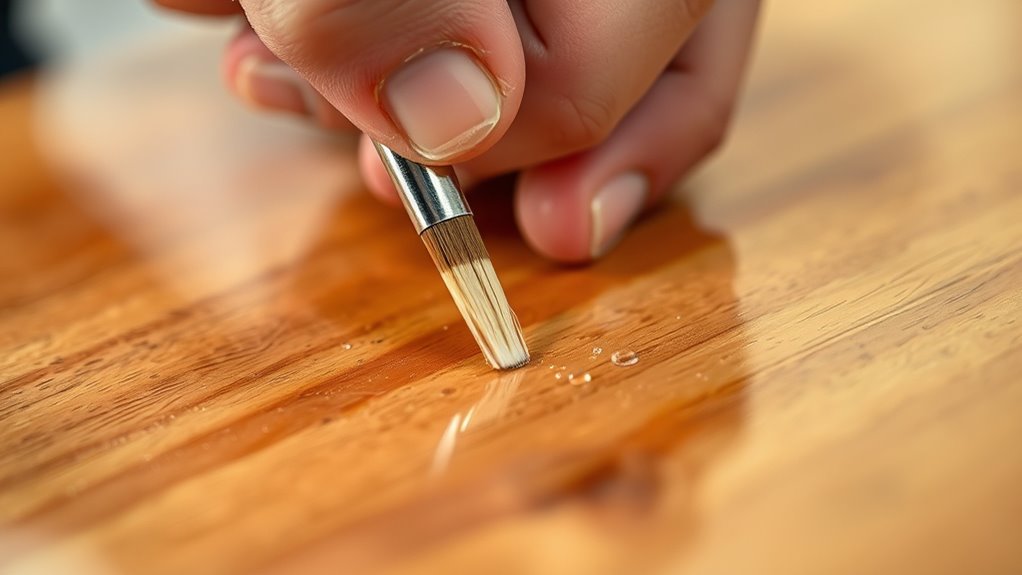
To achieve a smooth, professional-looking finish, preventing brush marks is essential during painting. One of the most effective ways to do this is by focusing on brush smoothing and paint leveling techniques. When you’re applying paint, it’s tempting to rush or press too hard on the brush, which often results in visible brush strokes. Instead, you should aim for gentle, consistent strokes that allow the paint to settle evenly. Brush smoothing involves controlling your brush’s pressure and movement, ensuring each stroke blends seamlessly into the last. This technique helps to eliminate ridges or streaks and promotes a more uniform surface. Additionally, paint leveling is vital because it allows the paint to self-smooth and fill in any minor imperfections, resulting in a flawless finish. To maximize paint leveling, avoid overloading your brush with too much paint, as excess paint can cause drips and uneven drying, making brush marks more prominent. Using additives like paint conditioners or leveling agents are designed to modify the paint’s viscosity, making it flow more smoothly across the surface. When you mix these additives into your paint, you reduce brush drag and enhance the paint’s ability to smooth out during application. This creates a more even distribution, minimizing brush marks and streaks. Be sure to follow the manufacturer’s instructions when adding these agents, as improper mixing can lead to undesirable effects like reduced adhesion or longer drying times. Another tip is to work with the right type of brush—preferably high-quality synthetic brushes for water-based paints or natural bristles for oil paints. These brushes tend to hold and distribute paint more evenly, aiding in brush smoothing and leveling. Proper timing and technique are crucial: work in manageable sections, maintaining a wet edge so the paint doesn’t dry before you have a chance to blend it smoothly. As you paint, keep a consistent speed and avoid pressing too hard, which can cause uneven application and visible brush marks. If you notice streaks forming, lightly go over the area with a clean, dry brush or a roller to even out the surface without disturbing the underlying layer. Remember, patience and proper technique are key—rushing the job often leads to uneven results. Incorporating paint additives that are formulated for smooth application can significantly help reduce brush marks and achieve a sleek, professional look. By combining careful brush smoothing, using the right additives, and maintaining a steady hand, you’ll considerably reduce the appearance of brush marks, giving your finished project a sleek, professional look.
Frequently Asked Questions
Can Specific Additives Completely Eliminate Brush Marks?
Additives can considerably improve additive effectiveness and help reduce brush marks, but they can’t completely eliminate them. To achieve the smoothest finish, you need to optimize your technique by proper brush selection, consistent brushing, and appropriate thinning. You might see improvements with additives, but combining them with skillful application is essential. Remember, perfect results come from both the right additives and refined technique, not relying solely on additives alone.
How Do Environmental Conditions Affect Brush Mark Prevention?
Environmental factors, especially surface temperature, markedly impact brush mark prevention. If the surface is too cold or hot, paint can dry unevenly, increasing the likelihood of brush marks. You should make certain the environment is controlled, maintaining a stable temperature and humidity level. By doing so, you give the paint a consistent drying time, allowing you to achieve a smooth finish without brush marks.
Are There Differences Between Brush Types in Preventing Marks?
Yes, different brush types impact brush stroke consistency and paint viscosity. Natural bristle brushes hold more paint, giving you smoother, more consistent strokes, while synthetic brushes are better for detailed work and thinner paints. Using the right brush for your paint’s viscosity helps prevent brush marks. Opt for high-quality brushes, maintain proper pressure, and choose a brush suited to your paint type for the best results.
What Drying Techniques Help Reduce Brush Marks?
Like a master painter, you can tame brush marks by adjusting your drying time and focusing on brush stroke smoothing. To do this, work in thin, even coats and allow sufficient drying time before applying additional layers. Using a slow-drying medium or a fan to gently circulate air helps reduce drying time, allowing your brush strokes to flow seamlessly. Patience and technique are your best tools to achieve a flawless finish.
How Does Painting Surface Texture Influence Brush Mark Visibility?
Your surface texture directly affects how visible brush marks are. A rougher surface increases surface roughness, making brush strokes more noticeable. Smooth surfaces, however, reduce this visibility. The paint consistency also matters; thicker paint tends to show brush marks more, while thinning it out creates a smoother finish. By choosing a smoother surface and adjusting your paint consistency, you can minimize brush mark visibility and achieve a more polished look.
Conclusion
Think of your painting like a calm lake at dawn—smooth and mirror-like. When you use the right additives and techniques, you prevent brush marks from disrupting that perfect reflection. I once watched a painter carefully blend paint, and the result was so flawless, it looked like glass. Just like that serene lake, your surface can stay flawless if you follow these tips. Mastering your technique turns a simple brushstroke into a work of art.