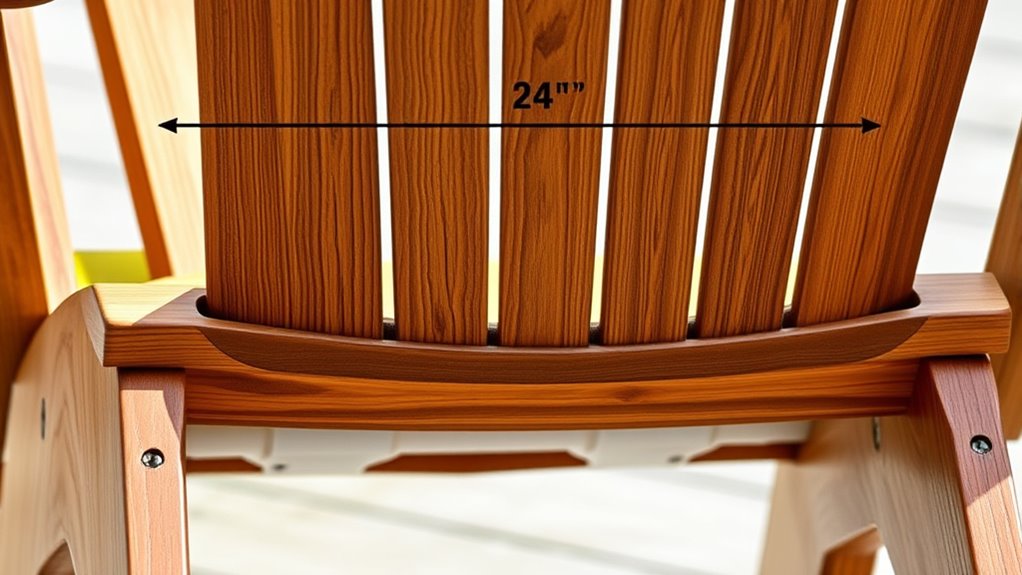

An Adirondack chair’s anatomy features sturdy joints like mortise and tenon or dowels, connecting the wide armrests to the back and seat frames for durability. Its design includes a sloped backrest, angled seat, and wide armrests to promote comfort and proper posture. Key measurements—such as seat height, backrest angle, and armrest width—ensure ergonomic support and stability. For a detailed look at how these elements come together, continue exploring to learn more.
Key Takeaways
- Key joints include mortise and tenon or dowel joints for stability and durability.
- The backrest is typically sloped between 15 to 30 degrees for ergonomic comfort.
- Seat height is designed for feet to rest flat on the ground, usually around 17-19 inches.
- Armrest width provides comfortable support, generally spanning 8-10 inches across.
- Overall measurements ensure proper proportions for comfort, stability, and long-term outdoor use.
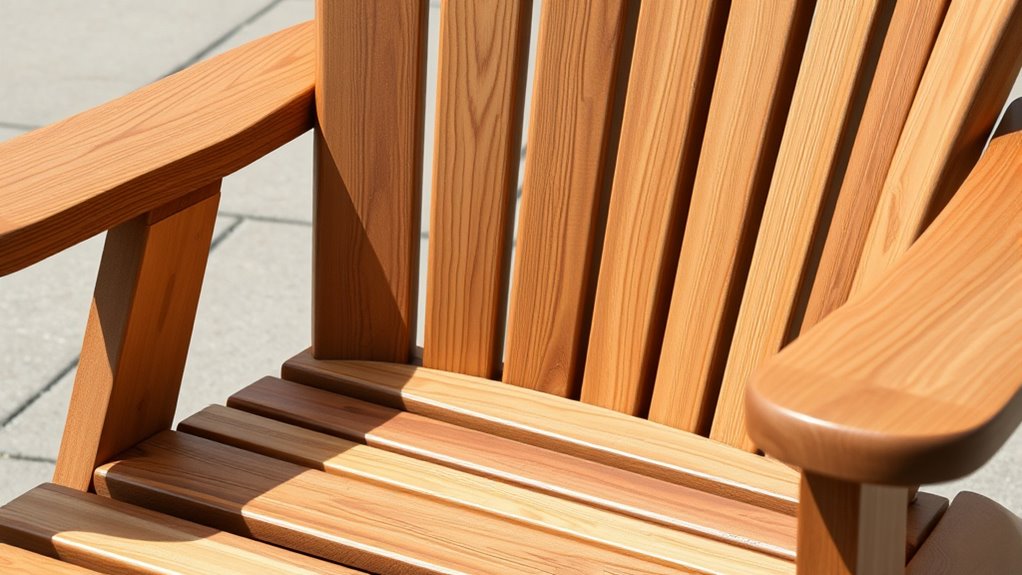
The Adirondack chair is a classic outdoor seating piece known for its comfortable, sloped design. Its distinctive shape isn’t just about style; it’s carefully crafted to provide excellent comfort and support. When you examine its construction, you’ll notice the importance of wood joint types, which are vital for durability and stability. Common joints like mortise and tenon or dowel joints are often used to connect the wide armrests to the back and seat frames. These joints create a sturdy framework that can withstand outdoor elements and regular use. The choice of joint type impacts not only the chair’s robustness but also the overall feel when you sit down. Well-made joints contribute to a seamless, stable experience, ensuring the chair remains solid over time.
Comfort ergonomics play a significant role in the Adirondack’s design. The chair’s sloped backrest and angled seat are intentionally crafted to promote relaxation. When you sit in it, your body naturally leans back into an inviting recline, reducing pressure on your lower back and encouraging a laid-back posture. The wide armrests add to this sense of comfort, giving you a place to rest your arms comfortably and even hold a drink or a book. The ergonomic design minimizes strain on your shoulders and neck, making it easier to unwind for long periods. The precise measurements of the seat height, back angle, and armrest width are all tailored to enhance this comfort, allowing you to sit for hours without discomfort.
Understanding the anatomy of the Adirondack chair also involves appreciating how these measurements contribute to its ergonomic benefits. The seat height is usually set to allow your feet to rest flat on the ground, improving balance and stability. The backrest’s angle is typically between 15 to 30 degrees, which provides a gentle recline that’s perfect for relaxing outdoors. The width of the seat must be broad enough to accommodate different body sizes but not so wide that it feels unwieldy. When you combine these measurements with the proper wood joint types, you get a durable, comfortable chair that supports your body’s natural posture. This thoughtful construction makes the Adirondack a timeless piece that invites you to linger outdoors, enjoying its ergonomic comfort and sturdy build.

VINGLI Tall Adirondack Chairs Set of 2, All-Weather Plastic Adirondack Chair with Cup Holders, Heavy-Duty HDPE Outdoor Bar Stools for Patio, Balcony, Pool, Backyard (Gray, 2 PCS)
[All Weather Material]: Constructed with all-weather HDPE material, this tall adirondack chair can endure various environmental conditions, from…
As an affiliate, we earn on qualifying purchases.
As an affiliate, we earn on qualifying purchases.
Frequently Asked Questions
What Materials Are Best for Durable Adirondack Chairs?
For durable Adirondack chairs, you should choose materials with excellent material durability and weather resistance. Treated cedar, teak, and synthetic resin wicker stand out because they resist rot, insects, and moisture. Aluminum and HDPE plastic also offer strong weather resistance, making your chairs last longer outdoors. By selecting these materials, you guarantee your chairs stay sturdy and look great, even after harsh weather conditions.
How Do I Customize the Seat Height?
Imagine you’re a pioneer in ergonomic seating! To customize your seat height, start by adjusting the legs or adding shims beneath the front or back legs. This allows you to fine-tune the chair for comfortable sitting. make certain the seat height adjustment maintains stability and balance, optimizing your comfort and support. With a little DIY effort, you’ll achieve a perfect, personalized fit for any outdoor lounging session.
Can Adirondack Chairs Be Made Foldable?
Yes, you can make Adirondack chairs foldable by designing a foldable structure with hinges or removable parts. This foldable design allows you to easily store your chairs when not in use, saving space and improving storage solutions. To create a sturdy, functional foldable Adirondack chair, guarantee the hinges are strong and well-placed, and consider using lightweight, durable materials for easy handling and longevity.
What Safety Features Should I Consider?
Imagine your chair as a fortress of safety. To keep your loved ones secure, prioritize child safety features like rounded edges and sturdy construction. Add non-slip feet to anchor the chair, preventing unexpected slides and spills. These features act like protective armor, ensuring everyone relaxes comfortably, knowing they’ve got safety in every detail. Think of it as creating a cozy haven where fun and safety go hand in hand.
How Do Weather Conditions Affect Chair Longevity?
Weather impact critically affects your chair’s longevity, so you should consider how exposure to rain, sun, and snow can cause damage. Material durability is essential; opt for weather-resistant woods or treated plastics that withstand moisture and UV rays. Regularly check for signs of wear, and protect your chair with covers or sealants. Proper maintenance guarantees your Adirondack chair remains sturdy and attractive despite changing weather conditions.

Plawdlik Folding Adirondack Chair, SGS Tested, Wooden Textured with Cup Holder, Heavy All-Weather HDPE Comfortable Set Poolside Backyard Lawn Black
☘️【Robust improvements】Passed the SGS laboratory material durability test. With adjustable cup holders and wider armrests, it has the…
As an affiliate, we earn on qualifying purchases.
As an affiliate, we earn on qualifying purchases.
Conclusion
Now that you know the ins and outs of Adirondack chair anatomy and measurements, you’re practically an expert—ready to craft or critique with confidence. Just remember, behind every perfectly angled slat lies the secret of comfort, and perhaps a few questionable design choices. So go ahead, sit back, relax, and revel in your newfound knowledge—because nothing says “I’ve got this” quite like understanding why your chair’s so darn charming, or just a little bit quirky.

ROCKLER Adirondack Chair Plans with Cardboard Templates – Easy-to-Build – Classic Adirondack Chair Plan Only -Includes Step-by-Step Instructions for Entire Construction Process – Made in USA
Adirondack Chair Templates & Plan: This classic tall Adirondack chair plans includes pre-cut full-size templates in your choice…
As an affiliate, we earn on qualifying purchases.
As an affiliate, we earn on qualifying purchases.

Foldable Armrest Pad for Outdoor Chairs 13.78X4.53 Inches Recliner Elbow Cushion Replacement for Camping Beach Balcony Chairs Comfortable Armrest Pads Set of 2
Enhanced Comfort: These foldable chairs armrest pads provide extra cushioning with soft padding, reducing arm fatigue during outdoor…
As an affiliate, we earn on qualifying purchases.
As an affiliate, we earn on qualifying purchases.