
If you’re working on woodworking projects, choosing between a machinist square and a carpenter square depends on your precision needs. Machinist squares offer high accuracy and are great for fine joinery and detailed work, while carpenter squares are larger, versatile, and suitable for rough layout and framing tasks. Consider your project’s specific requirements; if you want pinpoint accuracy, a machinist square is ideal. Keep going to discover more about which tool fits your work best.
Key Takeaways
- Use machinist squares for high-precision tasks requiring 90-degree angles and tight tolerances.
- Choose carpenter squares for general layout, rough measurements, and larger woodworking projects.
- Machinist squares are made from hardened steel for durability and shape retention; carpenter squares are typically wood or aluminum.
- Prioritize machinist squares for projects demanding meticulous accuracy; opt for carpenter squares for versatility and ease of use.
- Selecting the right square depends on project precision needs and the scale of measurements involved.

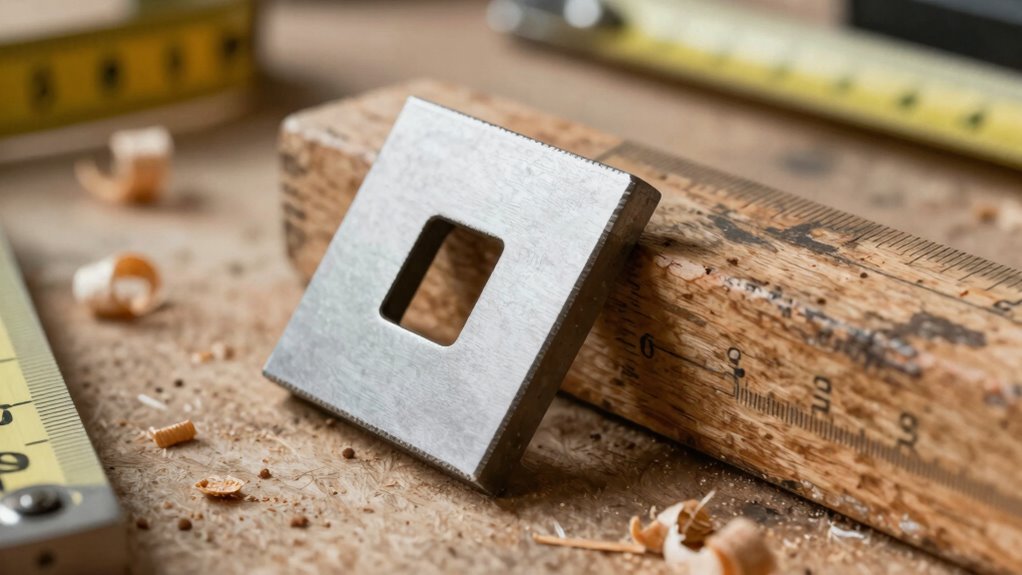
When choosing between machinist squares and carpenter squares, understanding their distinct designs and purposes is essential. Each tool is tailored for specific tasks, and selecting the right one can substantially impact your woodworking accuracy and efficiency. Machinist squares are designed for precision measurement, offering highly accurate, 90-degree angles ideal for metalworking and fine-tuning machinery. Their construction emphasizes tool durability, often featuring hardened steel or other sturdy materials that withstand frequent use and maintain their shape over time. If you need to ensure your cuts and joints are perfectly square, a machinist square provides the precision you require, especially when working on projects demanding tight tolerances.
Choosing the right square—machinist for precision, carpenter for versatility—boosts accuracy and efficiency in woodworking projects.
Carpenter squares, on the other hand, are built with versatility and practicality in mind. They’re typically larger, made from wood, steel, or aluminum, with markings for measuring and marking wood. While they may not match the exact precision of machinist squares, they are durable enough for rougher tasks and everyday woodworking. These squares excel at layout work, helping you transfer measurements across larger pieces of wood or checking the squareness of frames and structures. Their tool durability ensures they can handle the knocks and drops common in a busy workshop, but they are generally not intended for the meticulous precision that machinist squares provide.
When you’re engaged in detailed joinery, cabinetry, or metalwork, precision measurement becomes critical. Here, a machinist square’s finely calibrated blades and solid construction give you confidence that your angles are true. Its durable build means you won’t worry about warping or bending, ensuring consistent accuracy over countless uses. Conversely, if your focus is on framing, rough cuts, or general carpentry tasks, a carpenter square is more practical. It’s easier to handle, often larger for measuring longer distances, and sufficiently durable for typical woodworking environments.
Choosing the right square hinges on understanding your specific needs. If your projects demand meticulous accuracy and long-term tool durability, a machinist square is the best choice. It guarantees precision measurement and maintains its shape through heavy use. If you need a versatile, robust tool for layout and quick checks, then a carpenter square fits the bill. Either way, investing in a quality square suited to your tasks will improve your craftsmanship and save you time in the long run. Keep in mind that the right tool not only boosts your confidence but also ensures your work remains accurate and professional-looking.
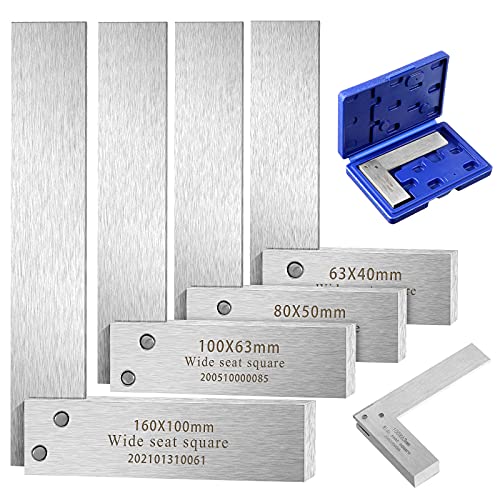
Machinist Square Set, 2", 3", 4" and 6" Squares Machinist Engineer Steel Benchmark Measure Tools High Precision 90 Degree Wide Base Tool L-Type Testing Measuring Tool
Nice craftsmanship: our machinist square has bright surface color and smooth base surface, as well as quality material;…
As an affiliate, we earn on qualifying purchases.
As an affiliate, we earn on qualifying purchases.
Frequently Asked Questions
Can Machinist Squares Be Used for Woodworking Projects?
Yes, machinist squares can be used for woodworking projects, but they’re primarily precision tools designed for metalwork. They offer excellent measurement accuracy, helping you check right angles precisely. However, because they’re made of metal and often heavier, they might be less convenient than carpenter squares for quick, on-the-go measurements. Use machinist squares when you need high precision, but stick with carpenter squares for everyday woodworking tasks.
Which Square Provides Better Accuracy for Framing?
Think of framing as building the backbone of your project—accuracy is key. For that, a carpenter square, designed for wood, offers better precision by providing a true 90-degree angle, especially compared to a metal machinist square. While machinist squares excel in metalwork, they might not match the finesse of a carpenter square when it comes to framing. Trust the tool made for the material, and your project will stand tall.
Are There Hybrid Squares Suitable for Both Metalworking and Woodworking?
Yes, there are hybrid tools called multi-purpose squares that suit both metalworking and woodworking. These multi-purpose squares combine features from machinist and carpenter squares, offering versatility and precision. You can use them for framing, metalwork, or detailed woodworking tasks. They’re ideal if you want a single tool that adapts to different projects, saving you space and money while maintaining accuracy across various applications.
How Do Differences in Materials Affect Square Durability?
Imagine your square as a knight—its material strength is its armor, and corrosion resistance is its shield. Steel squares, with tough material, endure heavy use, but may corrode if untreated. Aluminum squares are lighter, resisting corrosion better but potentially less durable. Your choice depends on balance: if you want longevity and resilience, pick a square with high material strength and corrosion resistance. Otherwise, prepare for a little rust and replacement.
What Maintenance Is Required to Keep Squares Precise?
To keep your squares precise, you should regularly check their calibration, ideally every few months or after heavy use. Store them in a dry, clean place to prevent rust and damage. Avoid dropping or banging them, and clean off dirt or debris after use. Proper storage practices and consistent calibration help make certain your squares stay accurate, so your woodworking projects always turn out right.
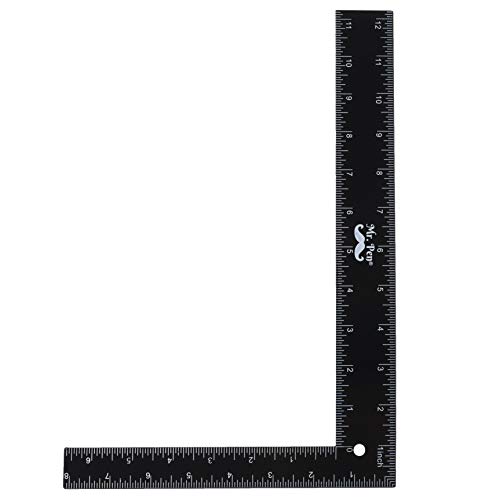
Mr. Pen- Carpenter Square, Framing Square, 8 inch x 12 inch , Carpenters Square , Right Angle Ruler, Framing Tools, L Shape Ruler, Metal Square, Steel Square
Black Framing Ruler, The Shorter Leg Measures At 8 Inch Outside And 6.5 Inch Inside – Longer Leg…
As an affiliate, we earn on qualifying purchases.
As an affiliate, we earn on qualifying purchases.
Conclusion
Choosing between a machinist square and a carpenter square depends on your woodworking needs. For example, if you’re building a finely crafted bookshelf, a carpenter square ensures accurate right angles and easy handling. On the other hand, if you’re precision-cutting metal brackets, a machinist square provides the exact measurements you require. By understanding these differences, you can pick the right tool to guarantee your project turns out perfect, whether it’s a sturdy frame or detailed joinery.
Machinist Square Set, 2", 3", 4" and 6" Squares Machinist Engineer Steel Benchmark Measure Tools High Precision 90 Degree Wide Base Tool L-Type Testing Measuring Tool
Nice craftsmanship: our machinist square has bright surface color and smooth base surface, as well as quality material;…
As an affiliate, we earn on qualifying purchases.
As an affiliate, we earn on qualifying purchases.

Irwin Tools 1794448 16-Inch X 24-Inch Aluminum Framing Square
This professional tool has permanent deep stampings are durable. The aluminum body is rust-proof and lightweight.
As an affiliate, we earn on qualifying purchases.
As an affiliate, we earn on qualifying purchases.