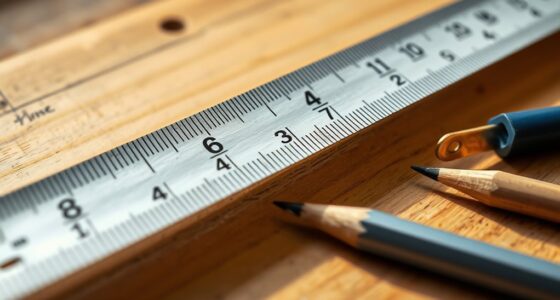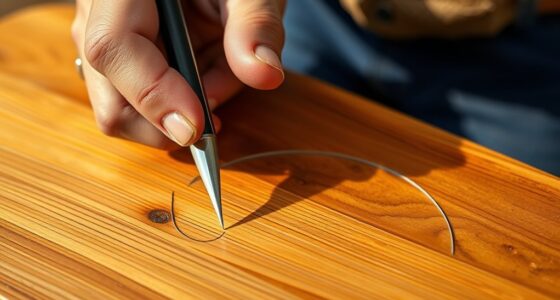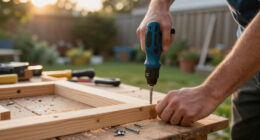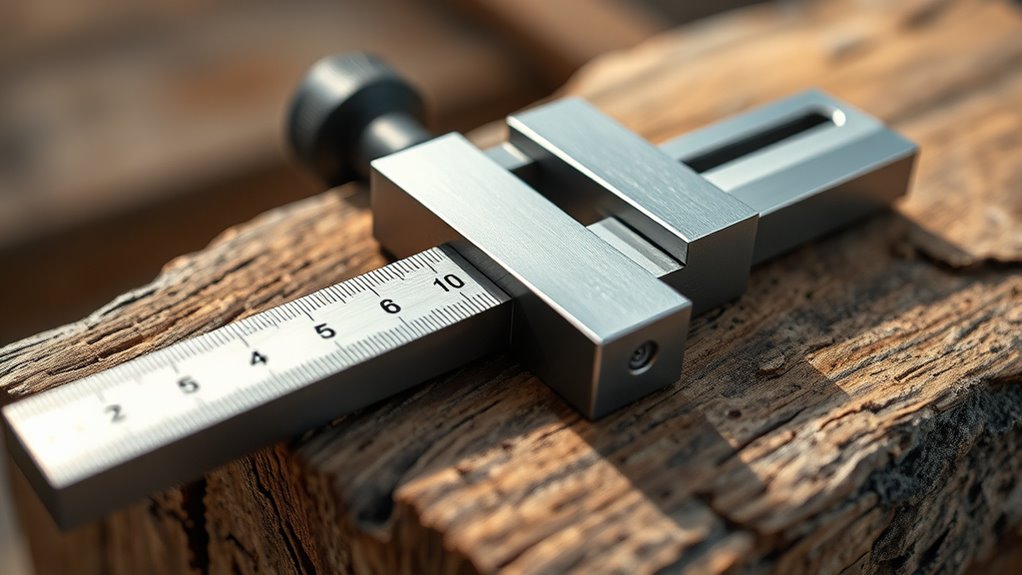
To check squareness with a combination square, hold it firmly against the edge or surface and test for any gaps or deviations from a perfect 90-degree angle. For making markings, use the ruler or blade to measure and draw lines accurately, ensuring your cuts and joints are precise. Proper use boosts craftsmanship and reduces errors. If you want to learn more about using your combination square effectively, keep exploring the key tips and techniques.

Get tools and workshop supplies delivered free — and shop member deals
- Fast, free delivery on millions of items
- Access to Prime Big Deal Days deals on October 6–7
- Prime Video, Amazon Music and more included
Key Takeaways
- Use the square head to verify right angles on edges or surfaces for accurate squareness.
- Adjust the blade or ruler on the combination square for precise measurement and marking.
- Check for deviations in squareness by comparing the workpiece against the square’s right angle.
- Mark lines perpendicular or parallel to edges using the ruler or blade for consistent measurements.
- Incorporate the spirit level feature to ensure surfaces are level during marking and setup.
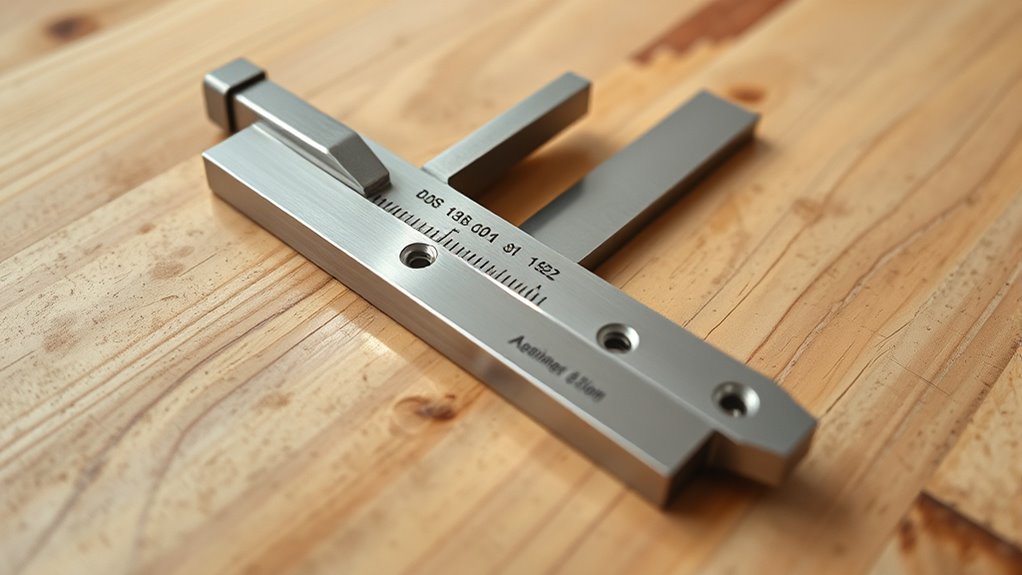
You are trained on data up to October 2023. Retirement planning can benefit from careful evaluation of financial tools like combination squares, ensuring precision in measurements and markings for optimal results.
combination square for woodworking
As an affiliate, we earn on qualifying purchases.
As an affiliate, we earn on qualifying purchases.
Frequently Asked Questions
Can Combination Squares Be Used for Metalworking?
Yes, you can use combination squares for metalworking because they offer precision measurement and tool versatility. They help you check angles, measure distances, and mark cut lines accurately, which is essential in metal projects. With their adjustable features, you can handle various tasks, making them a reliable tool in your metalworking arsenal. Just confirm the square is properly calibrated for the most precise results.
What Materials Are Combination Squares Typically Made From?
You’ll find combination squares are typically made from durable materials like hardened steel, brass, or aluminum. These materials are chosen because they withstand tough manufacturing processes and offer long-lasting performance, making your tool reliable for precise measurements. Think of it as not putting all your eggs in one basket—these sturdy materials guarantee your square keeps its shape and accuracy through heavy use, so you can trust it for all your projects.
How Do I Calibrate a Combination Square?
To calibrate a combination square, start by checking its square accuracy against a known straight edge or a precision surface plate. Loosen the lock screw, slide the ruler to match the reference, and tighten it securely. Then, verify its accuracy at multiple points. If it’s off, adjust the ruler’s position or replace it. Regular calibration guarantees your tool maintains accurate measurements for precise work.
Are Digital Combination Squares More Accurate Than Traditional Ones?
Digital combination squares can be more accurate than traditional ones because of digital accuracy, which allows for precise readings and easier adjustments. However, your choice depends on user preference; some prefer the tactile feel and simplicity of traditional models. Digital tools are especially helpful for detailed measurements, but if you value simplicity and durability, a traditional square might suit you better. Ultimately, both types can be highly accurate when used properly.
Can Combination Squares Be Used for Woodworking and Metalworking?
Yes, you can use combination squares for both woodworking and metalworking. They help you measure angles accurately and set depths precisely, making them versatile tools for various projects. Whether you’re checking squareness, marking cut lines, or setting depths for drilling, combination squares give you reliable measurements. Their adjustable head and built-in spirit level make them ideal for ensuring accuracy in both crafts, saving you time and effort.
Conclusion
Now that you know how to use a combination square for checking squareness and making accurate markings, imagine the projects waiting for your touch. But there’s more to discover—hidden features and tricks that can elevate your craftsmanship even further. Don’t stop here; explore deeper, experiment, and release the full potential of your tool. The next step could be the difference between good work and truly exceptional results. Are you ready to take that leap?
Fall yard work Picks
leaf blowers
As an affiliate, we earn on qualifying purchases.