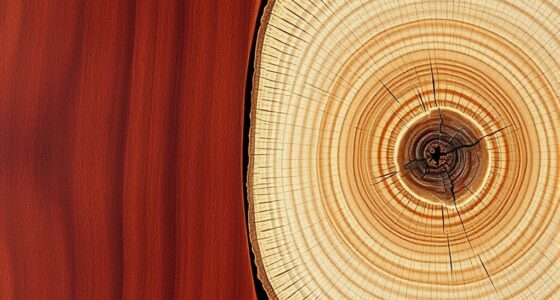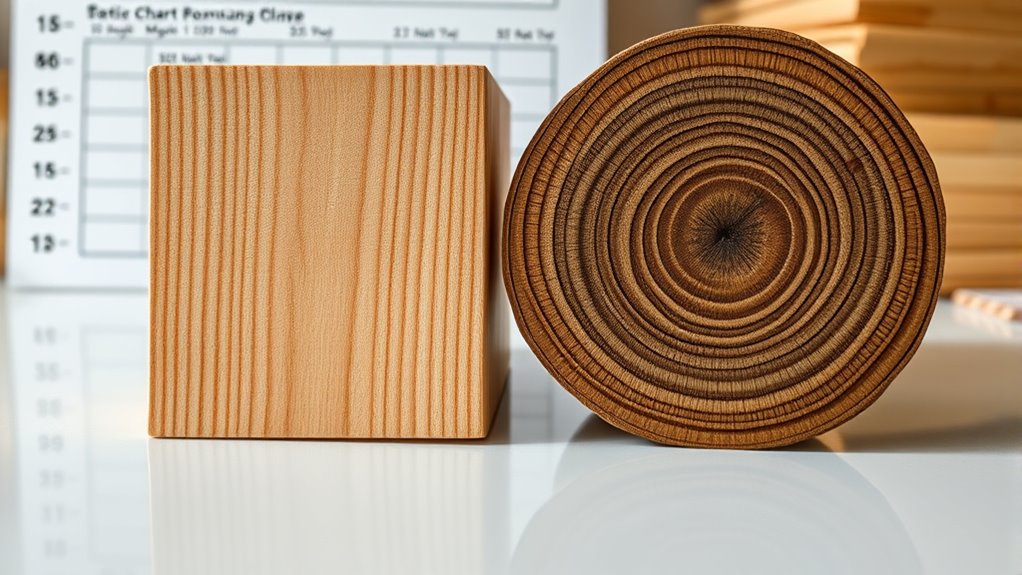

Understanding wood strength versus weight involves studying density charts that show how grain patterns and moisture content affect overall performance. Generally, denser woods are stronger and heavier, providing durability and load capacity, while lighter woods are easier to work with but may be less strong. Recognizing how moisture impacts density helps you select the right wood for your project’s needs. Keep exploring, and you’ll discover how to use these charts for better material choices.
Key Takeaways
- Density charts reveal how wood’s weight correlates with its strength, aiding in selecting appropriate materials.
- Higher density generally indicates greater strength and durability, but moisture content can influence actual performance.
- Grain patterns affect how density translates to strength, with straight grains offering predictable load-bearing capacity.
- Moisture content impacts weight; dry wood appears denser and stronger, while green wood may be misleadingly lighter.
- Combining density data with grain and moisture insights ensures accurate assessment of wood’s strength for specific projects.
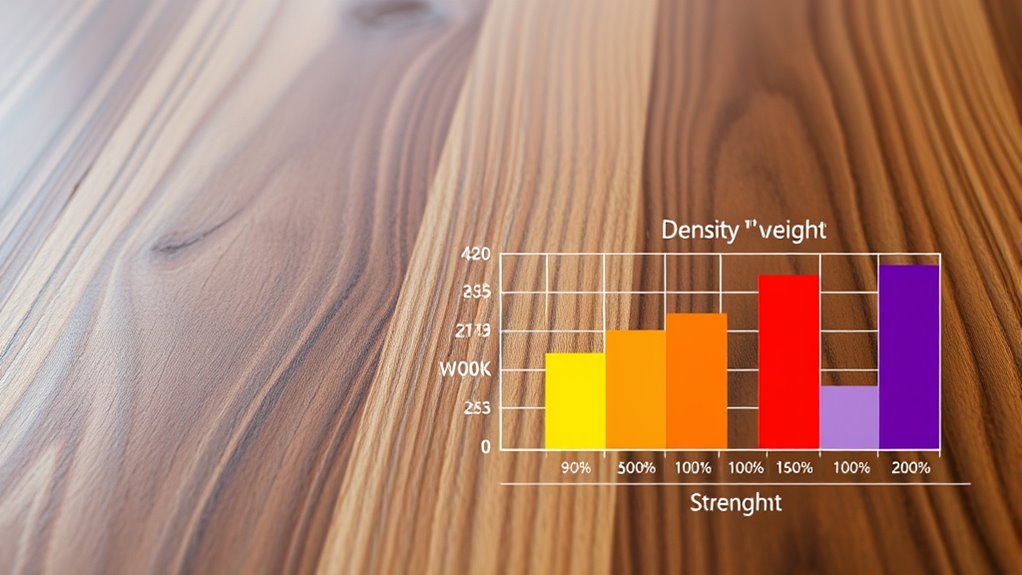
A wood density chart is an essential tool for anyone working with timber, as it helps you quickly identify the strength, weight, and durability of different wood species. When examining a chart, you’ll notice that it often includes details about grain patterns and moisture content, both of which influence a wood’s density and performance. Grain patterns, such as straight, wavy, or interlocked grains, can affect how a wood reacts under stress. For example, straight grains typically indicate predictable strength, while interlocked or irregular grains might lead to uneven strength distribution. Recognizing these patterns on the chart helps you anticipate how the wood will behave under load, especially when combined with density data.
Moisture content plays a vital role in determining the actual density of a piece of wood. Green wood, which contains high moisture levels, appears lighter on the chart but can become considerably heavier and stronger as it dries. As you work with timber, you need to account for this variation, especially if you’re evaluating wood for structural purposes. A piece with high moisture content will have a lower density reading, but once dried to a standard moisture level (usually about 12%), its true strength and weight are revealed. Ignoring moisture content can lead to misjudging a wood’s load-bearing capacity or its overall durability.
Understanding the relationship between grain patterns, moisture content, and density helps you make smarter choices for your projects. For instance, if you need a lightweight, yet strong wood, you might look for species with fine, straight grain patterns and lower density ratings. Conversely, if durability and weight are priorities, selecting woods with dense, interlocked grains and proven high density figures ensures you get the necessary strength. Using the chart effectively means considering both the recorded density and how the grain and moisture content might influence those numbers in real-world conditions.
Choose lightweight, straight-grain woods for strength; opt for dense, interlocked grains for durability.
In essence, a wood density chart is more than just numbers; it’s a guide that helps you interpret how different factors, like grain patterns and moisture content, impact the performance of various woods. By understanding these elements, you can select the right timber for your specific needs, ensuring your project is both strong and reliable. Keep in mind that density is a dynamic property influenced by internal and external factors, and reading the chart with a critical eye allows you to make informed decisions that stand the test of time.

The Wood Database Worldwide Woods Poster
Hardness values for over 500 wood species.
As an affiliate, we earn on qualifying purchases.
As an affiliate, we earn on qualifying purchases.
Frequently Asked Questions
How Does Moisture Content Affect Wood Density Measurements?
Moisture content critically impacts wood density measurements because moisture effects cause density variation. When wood absorbs moisture, it becomes heavier, increasing its density. Conversely, drying reduces moisture content, lowering density. You should account for moisture content when measuring wood density, as fluctuations can lead to inaccurate comparisons. Properly conditioning samples to a consistent moisture level ensures more reliable density readings, helping you make better decisions about wood use and quality.
Which Wood Species Has the Highest Strength-To-Weight Ratio?
You’re wondering which wood species boasts the highest strength-to-weight ratio. Among various options, balsa wood stands out because it’s incredibly lightweight yet surprisingly strong relative to its weight. This high strength ratio makes it ideal for applications where reducing weight is vital, like model building or aircraft components. Keep in mind that different species excel in different contexts, so consider your specific project needs when choosing the right wood.
Can Density Charts Predict Wood’S Durability Over Time?
You might wonder if density charts can predict wood’s durability over time. While they provide useful insights into density variability, they can’t reliably forecast durability because many factors influence aging, such as moisture, use, and environmental conditions. Relying solely on density charts for durability prediction isn’t ideal; instead, combine them with other assessments to get a more accurate picture of how wood will perform long-term.
How Do Different Grading Standards Impact Density Chart Accuracy?
You should consider how grading standards influence density chart accuracy because inconsistent measurement methods can lead to unreliable data. Different standards may have varying criteria for evaluating wood, affecting the consistency of density measurements. When grading standards are strict and standardized, the density charts become more reliable, helping you make better decisions about wood strength and weight. Ensuring measurement consistency across standards is key for accurate predictions.
Are There Specific Density Considerations for Engineered Wood Products?
Like a painter considers both brushstrokes and color, you should weigh grain patterns and coloring variations in engineered wood. These factors influence density considerations, affecting strength and weight. Engineered woods often have layered grains, which can vary in density, so understanding these nuances helps you select the right product. Keep in mind, these subtle details shape performance, much like a masterpiece relies on both bold strokes and delicate hues.

General Tools MMD4E Digital Moisture Meter, Water Leak Detector, Moisture Tester, Pin Type, Backlit LCD Display With Audible and Visual High-Medium-Low Moisture Content Alerts, Grays
HUMIDITY SENSOR: Our handy meter tool can quickly determine what level of remediation is needed to keep your…
As an affiliate, we earn on qualifying purchases.
As an affiliate, we earn on qualifying purchases.
Conclusion
So, next time you’re choosing wood, remember that density charts reveal more than just weight—they hint at strength too. Some believe heavier woods are always stronger, but that’s not entirely true. The real story depends on the specific type and use. By understanding density, you can make smarter choices for your projects. Don’t just rely on assumptions—trust the charts to guide you toward the right wood for your needs.

Woodwise White Oak Test Kit
As an affiliate, we earn on qualifying purchases.
As an affiliate, we earn on qualifying purchases.

The Real Wood Bible: The Complete Illustrated Guide to Choosing and Using 100 Decorative Woods
As an affiliate, we earn on qualifying purchases.
As an affiliate, we earn on qualifying purchases.