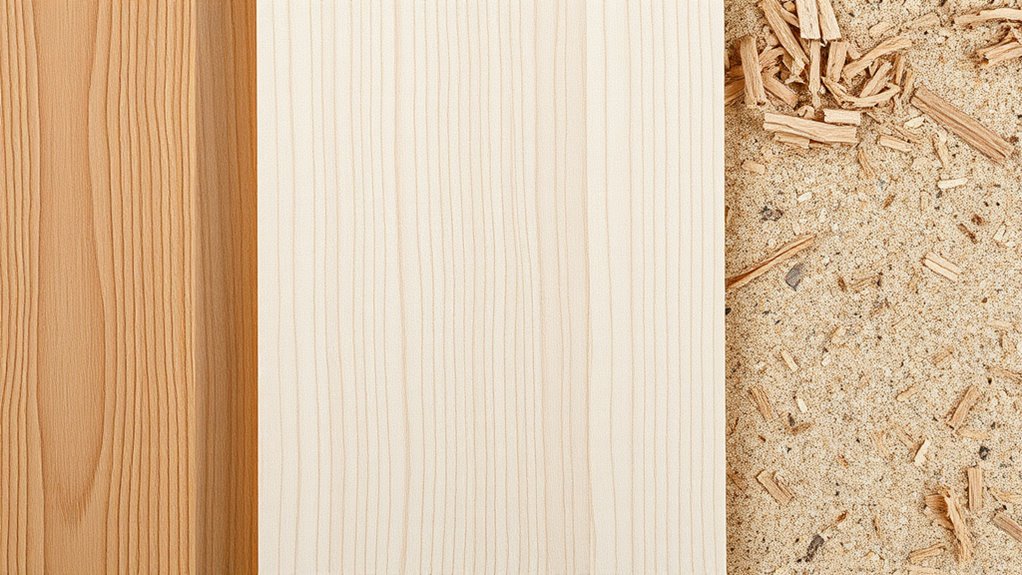
Engineered wood includes plywood, MDF, and particleboard, each designed for specific uses in construction and furniture. Plywood is made by layering thin wood veneers in alternating directions, offering strength and stability, ideal for structural things like flooring and walls. MDF, created from wood fibers bonded under high pressure, provides a smooth surface perfect for molding and painting. Particleboard is less strong but cost-effective for large furniture projects. If you keep exploring, you’ll discover how these materials can transform your projects.
Key Takeaways
- Engineered wood includes plywood, MDF, and particleboard, each made by bonding wood layers or particles under pressure for specific benefits.
- Plywood offers strength and stability through layered veneer sheets, suitable for structural applications like flooring and roofing.
- MDF provides a dense, smooth surface ideal for molding, painting, and detailed finishes in furniture and cabinetry.
- Particleboard is a cost-effective option used in large-scale furniture and cabinetry, though it has less strength than other engineered woods.
- Engineered wood enhances durability, consistency, and versatility, making it a popular choice in construction and interior design.

Have you ever wondered what makes engineered wood different from traditional solid wood? The main distinction lies in how it’s made and its versatility in various projects. Engineered wood includes materials like plywood, MDF, and particleboard, each designed to offer specific benefits. Unlike solid wood, which is just a single piece of timber, engineered wood is created by bonding layers or particles together under pressure, resulting in a stable, durable product. This manufacturing process allows for consistent quality and shapes that can’t be easily achieved with natural wood. One of the key advantages of engineered wood is its ability to be finished with laminate finishes, giving you a sleek, modern look that mimics more expensive materials. These finishes are especially popular in furniture, cabinetry, and flooring, providing aesthetic appeal while also protecting the surface from scratches and moisture. When considering structural applications, engineered wood truly shines. Plywood, for example, is often used in construction due to its strength and stability. It’s made by layering thin sheets of wood veneer in alternating grain directions, which distributes stress evenly and reduces warping or splitting. This makes plywood suitable for flooring sublayers, wall sheathing, and even roofing structures. MDF, or medium-density fiberboard, is another engineered wood that’s widely used in furniture and cabinetry. It’s made from wood fibers bonded with resin under high pressure, resulting in a dense, smooth surface that’s easy to cut and shape. Because of its uniformity, MDF is ideal for detailed molding and painted finishes, making it a favorite among interior designers. Particleboard, on the other hand, is composed of wood particles bonded with adhesives. It’s generally less expensive and less strong than plywood or MDF but still plays an essential role in furniture and cabinetry. Its affordability makes it an attractive choice for large-scale projects where cost efficiency is crucial. Despite their differences, all three types of engineered wood benefit from advancements in finishing techniques like laminate coatings, which enhance durability and visual appeal. They’re also easier to work with than solid wood, allowing for precise cuts and consistent results, especially in complex or large-scale applications. This adaptability makes engineered wood a practical choice for both structural and decorative purposes. In essence, understanding the unique qualities of plywood, MDF, and particleboard helps you choose the right material for your project, whether you’re focusing on structural stability or aesthetic finishes. Their engineered nature ensures reliability, affordability, and versatility, making them essential components in modern construction and interior design.
plywood sheets for flooring
As an affiliate, we earn on qualifying purchases.
As an affiliate, we earn on qualifying purchases.
Frequently Asked Questions
How Environmentally Friendly Is Engineered Wood Compared to Solid Wood?
Engineered wood is generally more environmentally friendly than solid wood because it uses less raw material and often incorporates recycled wood fibers, reducing waste. You can enhance its sustainability by choosing products from manufacturers committed to sustainable practices and responsible sourcing. While it still has some environmental impact, engineered wood typically results in a lower overall environmental footprint, making it a more eco-conscious choice for your projects.
Can Engineered Wood Be Recycled or Reused Effectively?
Imagine turning old furniture into new creations—engineered wood can be recycled and reused effectively. Recycling processes break down materials like MDF and particleboard into fibers or chips, which can then be repurposed for insulation or new boards. While reuse potential exists, it’s limited by glue and resin residues. You can help extend the life of engineered wood by choosing products designed for easier recycling and reuse, reducing waste.
What Are the Best Types of Engineered Wood for Outdoor Use?
For outdoor use, you should choose engineered wood with excellent outdoor durability and weather resistance. Exterior-grade plywood, especially pressure-treated or marine plywood, is your best option because it withstands moisture, temperature fluctuations, and exposure to the elements. Decking and siding made from these materials last longer outside, maintaining their strength and appearance. Always verify the product is rated specifically for exterior use to get the best outdoor performance.
How Does Humidity Affect the Durability of Plywood, MDF, and Particleboard?
Humidity affects the durability of plywood, MDF, and particleboard by causing moisture expansion, which can lead to warping, swelling, or delamination. When exposed to high humidity, these materials absorb moisture, weakening their structure over time. You should guarantee proper sealing and avoid prolonged exposure to moisture to maintain their integrity. Keeping humidity levels controlled helps prevent moisture-related damage, preserving the strength and durability of your engineered wood surfaces.
Are There Health Risks Associated With Off-Gassing From Engineered Wood Products?
Yes, off-gassing from engineered wood products can pose health risks. VOC emissions release chemicals into your indoor air, potentially causing headaches, allergies, or respiratory issues. While these products are convenient, poor ventilation increases exposure. To protect your indoor air quality, choose low-VOC or formaldehyde-free options, and guarantee proper ventilation during and after installation. Staying informed helps you minimize health risks associated with off-gassing.
MDF molding and trim boards
As an affiliate, we earn on qualifying purchases.
As an affiliate, we earn on qualifying purchases.
Conclusion
Now that you know the ins and outs of plywood, MDF, and particleboard, you’re better equipped to choose the right material for your project. Each type has its strengths and weaknesses, so weigh your options carefully. Remember, don’t put all your eggs in one basket—understand what each offers and make an informed decision. With this knowledge, you’re ready to build something that lasts and stands the test of time.
particleboard furniture panels
As an affiliate, we earn on qualifying purchases.
As an affiliate, we earn on qualifying purchases.
engineered wood construction materials
As an affiliate, we earn on qualifying purchases.
As an affiliate, we earn on qualifying purchases.