Incorporating stone and tile accents brings natural textures, vibrant colors, and durability to your space, offering a sophisticated alternative to traditional wood materials. You can use natural stone patterns and varied tile sizes to add visual interest, depth, and harmony within your design. By coordinating colors and patterns, you create a cohesive and balanced environment that feels warm and inviting. Continue exploring to discover how these accents can elevate your style with organic elegance.
Key Takeaways
- Use natural stone patterns like marble or granite to add texture and earthy appeal without relying on wood.
- Incorporate colorful tiles with veining or unique patterns to create visual interest and contrast.
- Coordinate stone and tile hues with existing decor for cohesive and harmonious design.
- Select larger or mosaic tiles to enhance space perception and introduce intricate details.
- Balance textures and colors to achieve a stylish, timeless environment that emphasizes natural non-wood materials.
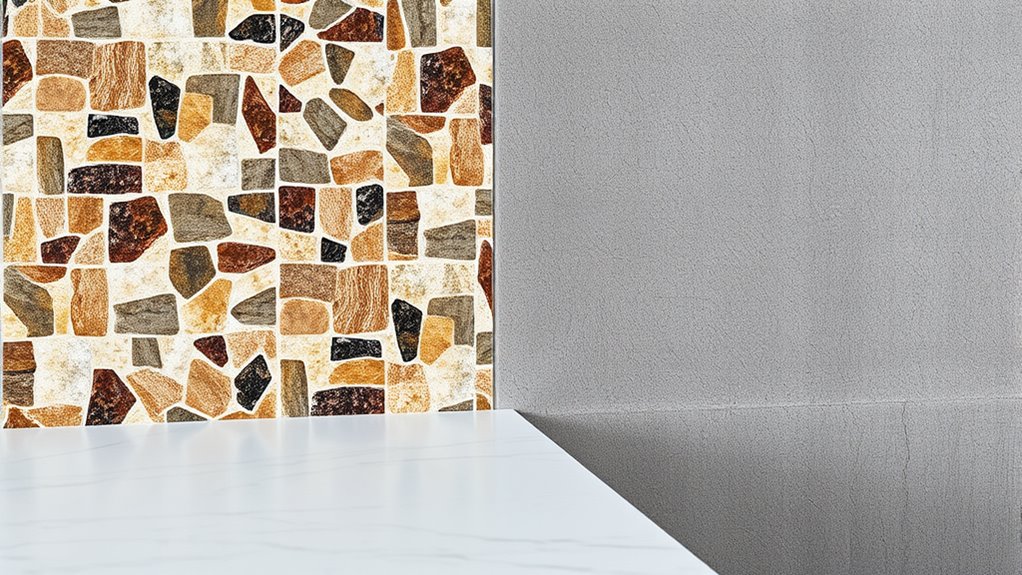
Have you ever considered how stone and tile accents can transform a space? These materials bring a unique blend of texture, color, and durability that can elevate the entire design. When you incorporate natural stone patterns, you introduce an organic, earthy feel that’s impossible to replicate with synthetic materials. Each stone has its own distinct veining, coloration, and grain, making every installation one-of-a-kind. This natural variation adds depth and visual interest to your space, whether it’s a kitchen backsplash, bathroom wall, or fireplace surround.
Natural stone patterns add unique texture and earthy beauty to any space.
But to truly harness the beauty of stone and tile accents, you need to pay attention to tile color coordination. Choosing the right colors ensures that your accents complement the existing elements rather than clash or look out of place. Think about the overall palette of your room: If your walls are painted in neutral shades, like whites, greys, or beiges, you can opt for stones with subtle hues or muted patterns to maintain a cohesive look. Conversely, if your space features bold colors or eclectic decor, you can select vibrant tiles or stones with striking veining to create a focal point.
When planning your design, consider how natural stone patterns can serve as a visual anchor. For example, a marble or granite countertop with prominent veining can tie together various elements of your space. Coordinate the tile color to pick up on those hues—if your stone has hints of gold or green, choose tiles that echo those tones. This creates harmony and makes the accents look intentional rather than random. If you prefer a more subtle approach, go for tiles in shades that contrast softly with your stones, highlighting their textures without overwhelming the room.
Additionally, think about the size and shape of your tiles. Larger tiles with natural stone patterns can make a space feel more expansive and sophisticated. Smaller tiles, like mosaics, allow for intricate patterning and can add a decorative touch. Whichever you choose, ensure that your tile color coordination enhances the natural beauty of the stone. Furthermore, understanding vibrational energy and how it influences your perception of space can help you select materials that promote a positive and uplifting environment.
Ultimately, integrating stone and tile accents is about balancing texture, color, and pattern. By paying attention to natural stone patterns and carefully selecting tile colors that harmonize with your overall decor, you can create a space that feels both stylish and timeless. These non-wood materials are more than just functional—they’re a statement of elegance and natural beauty that, when thoughtfully incorporated, can redefine your environment.
natural stone backsplash tiles
As an affiliate, we earn on qualifying purchases.
As an affiliate, we earn on qualifying purchases.
Frequently Asked Questions
How Do Stone and Tile Accents Affect Indoor Air Quality?
Stone and tile accents can improve indoor air quality by reducing airborne particulates and VOC emissions often linked to other materials. They don’t emit VOCs themselves, unlike some synthetic options, so they help create a healthier environment. However, if not properly sealed or cleaned, dust and dirt can accumulate, potentially impacting air quality. Regular maintenance guarantees these accents continue to contribute positively to your home’s air quality.
What Maintenance Is Required for Stone and Tile Accents?
Think of your stone and tile accents as the guardians of your space, demanding regular upkeep. You should establish cleaning routines using gentle, pH-balanced cleaners to keep their luster intact. Sealing requirements depend on the material; some need resealing annually, others less often. By maintaining these routines and addressing sealing needs, you preserve their natural beauty and make certain they stand resilient against daily wear.
Are There Eco-Friendly Options for Stone and Tile Accents?
Yes, you can choose eco-friendly stone and tile accents by looking for options with sustainable sourcing and recycling options. Opt for materials sourced from quarries that practice responsible extraction, and consider recycled glass or ceramic tiles created from post-consumer waste. These choices reduce environmental impact and promote sustainability. By selecting eco-conscious materials, you help conserve resources and support environmentally responsible manufacturing practices in your home design.
How Do Stone and Tile Accents Impact Home Resale Value?
You’ll likely see a boost in resale value and market appeal when you add stone and tile accents to your home. These materials catch the eye and convey a sense of quality, making your space stand out. As potential buyers walk through, they appreciate the durability and style, which can lead to quicker sales and higher offers. Incorporating these accents smartly can truly elevate your home’s overall appeal and value.
Can Stone and Tile Accents Be Used Outdoors Year-Round?
Yes, you can use stone and tile accents outdoors year-round because they offer excellent weather durability, standing up to rain, snow, and sun. Their design versatility allows you to create stunning, long-lasting features like patios, fire pits, or garden borders that enhance your home’s look. Just make certain you select materials suitable for outdoor use and seal them properly to maintain their appearance and durability over time.
marble and granite countertop accents
As an affiliate, we earn on qualifying purchases.
As an affiliate, we earn on qualifying purchases.
Conclusion
Incorporating stone and tile accents can truly transform your space, adding durability and timeless elegance. Did you know that homes with stone features see a 20% increase in property value? By choosing these non-wood materials, you not only boost your home’s aesthetic appeal but also enhance its longevity. So, go ahead—embrace the natural beauty and resilience of stone and tile accents to create a stunning, lasting impression.
mosaic tile for walls
As an affiliate, we earn on qualifying purchases.
As an affiliate, we earn on qualifying purchases.
stone and tile accent decor
As an affiliate, we earn on qualifying purchases.
As an affiliate, we earn on qualifying purchases.