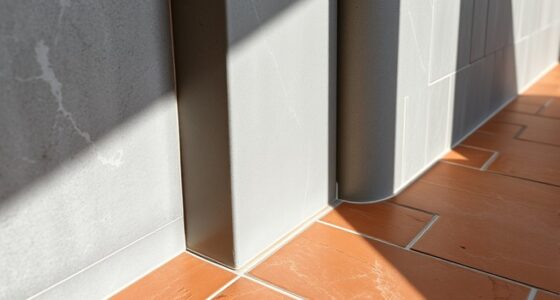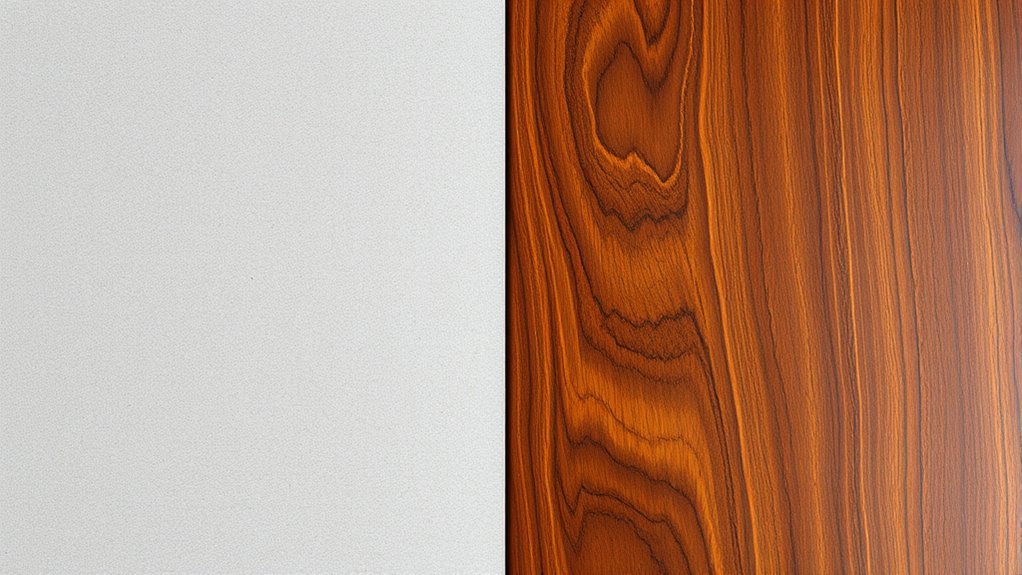

Laminate offers a smooth, uniform surface with a wide variety of colors and patterns, making it highly durable and resistant to scratches, heat, and moisture. Veneer shows natural wood grain, adding warmth and character but is more prone to scratches and damage over time. If you prioritize durability and low maintenance, laminate is likely best. For natural beauty and sophisticated appeal, veneer could suit you better. Keep exploring to understand how these options can fit your style and needs.
Key Takeaways
- Laminate offers a uniform, consistent surface with a wide variety of colors and textures, while veneer showcases natural wood grain and subtle variations.
- Laminate is highly resistant to scratches, heat, and moisture, making it more durable for high-traffic areas, whereas veneer is more susceptible to damage.
- Veneer provides a natural, authentic wood appearance with unique grain patterns, adding warmth and character, unlike the artificial look of laminate.
- Edge banding in laminate typically matches or contrasts with the surface for a seamless finish, while in veneer it complements the natural wood look.
- Laminate requires minimal maintenance and is easier to clean, whereas veneer may need refinishing or repairs over time due to its sensitivity to damage.
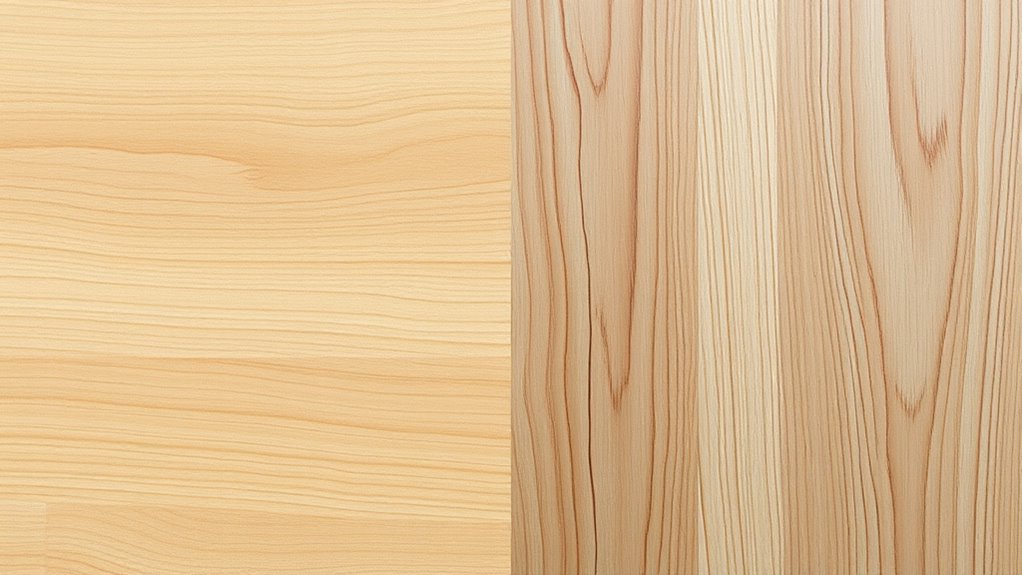
When choosing between laminate and veneer for your furniture or surfaces, understanding their differences can help you make an informed decision. Both options offer unique qualities that influence appearance, durability, and maintenance, so knowing what sets them apart is essential. Laminate is a synthetic material made by pressing layers of paper or fabric infused with resin onto a core substrate, usually particleboard or MDF. Its surface finish is smooth and uniform, often mimicking the look of wood, stone, or other materials. Veneer, on the other hand, involves a thin slice of real wood glued onto a core, providing a natural and authentic appearance. The surface finish of veneer showcases the intricate grain patterns and color variations of the wood, which can add warmth and character to your furniture. Natural wood grain is a defining feature that can enhance the elegance of furniture made with veneer.
Choosing between laminate and veneer depends on your preference for durability or natural wood character.
Edge banding plays a significant role in both laminate and veneer applications. For laminate surfaces, edge banding is typically a matching or contrasting strip applied to cover the raw edges of the particleboard or MDF. This creates a seamless look and helps protect the edges from moisture and damage. With veneer, edge banding is usually a thin strip of wood or veneer material that complements the surface, giving the finished piece a polished appearance. Proper edge banding enhances the overall aesthetic and durability, especially when the furniture will see regular use.
In terms of appearance, laminate offers consistency and a wide variety of designs, colors, and textures. Because it’s manufactured, you won’t see natural grain variations or imperfections, which makes it ideal if you want uniformity. Veneer, however, provides a more natural and sophisticated look, showcasing the unique grain patterns and subtle color shifts inherent to real wood. This natural surface finish can add an element of luxury and authenticity that laminate often cannot replicate.
Durability is another key consideration. Laminate is highly resistant to scratches, heat, and moisture, making it suitable for high-traffic areas or environments prone to spills. Its surface finish is tough and easy to clean, requiring little maintenance. Veneer, while attractive, can be more susceptible to scratches, dents, and moisture damage, especially if not properly sealed or maintained. Over time, veneer surfaces may show signs of wear, but they can often be refinished or repaired if needed. Ultimately, your choice depends on whether you prioritize durability and ease of maintenance or the natural beauty and character of real wood.

ClosetMaid ProGarage Workbench Top, Heavy Duty Rubberwood, Scratch Resistant, Durable, for Garage or Workshop
DURABLE WORKBENCH TOP: Durable rubberwood tabletop finish for your garage, workshop, shed, utility space or work area
As an affiliate, we earn on qualifying purchases.
Frequently Asked Questions
Are Laminate and Veneer Eco-Friendly Options?
Yes, laminate and veneer can be eco-friendly options if you choose sustainable materials. Laminate often uses recycled paper and low-emission adhesives, reducing environmental impact. Veneer, especially when sourced responsibly, involves less waste and uses fewer resources. By selecting products with eco-certifications, you minimize your environmental impact and promote sustainable practices. So, with careful choices, you can enjoy durable, attractive surfaces while supporting environmentally friendly options.
Which Is More Resistant to Scratches and Stains?
Surprisingly, laminate usually wins when it comes to surface resilience against scratches and stains. You’d think delicate veneer would handle everyday mishaps better, but it’s more prone to damage and requires more maintenance. Laminate’s tough surface keeps it looking fresh longer, making it ideal for high-traffic areas. So, if you want a stylish yet durable finish that resists scratches and stains, laminate’s your best bet for low-maintenance beauty.
Can Laminate or Veneer Be Repaired if Damaged?
You can repair laminate and veneer, but repairability concerns vary. Laminate surfaces are harder to repair because damage is often visible and requires replacing entire panels for effective damage concealment. Veneer, on the other hand, can sometimes be fixed with fillers or touch-up techniques, making repairs less noticeable. However, the success depends on the damage extent, so weigh repair options carefully before choosing.
What Are the Cost Differences Over Time?
Think of laminate as a trusty workhorse and veneer as a delicate artist. Over time, laminate tends to cost less because it’s more durable and resistant to damage, saving you money on repairs. Veneer, while initially cheaper, may require more upkeep, adding up in costs. For long-term value, laminate offers better cost savings, making it a smarter investment that keeps your space looking sharp without breaking the bank.
How Do They Affect Indoor Air Quality?
You might notice that laminate and veneer can influence indoor air quality through VOC emissions. Laminate surfaces often emit higher VOC levels due to adhesives and resins used in manufacturing, impacting air quality impact over time. Veneer, being more natural and less processed, typically releases fewer VOCs, making it a healthier choice indoors. To minimize air quality impact, look for low-VOC or VOC-free options when choosing your surface materials.

VEVOR Adjustable Workbench, 5000 lbs Capacity, 96 x 24 Inch Oak Wood Top Workstation with 4 AC Outlets & 2 USB Ports, Heavy-Duty Hardwood Worktable for Garage, Workshop, Home, Office, Commercial
Heavy-Duty 5,000 lb Capacity: This 96 inches adjustable workbench handles up to 5,000 lb, so you tackle carving,...
As an affiliate, we earn on qualifying purchases.
Conclusion
When choosing between laminate and veneer, consider your priorities for appearance and durability. Laminate offers a modern, resilient surface, perfect for busy households, while veneer provides a classic, elegant look that ages gracefully—like fine wine. Think of it as selecting between a sleek, futuristic robot or a charming, vintage typewriter; both have their charm. Ultimately, your decision hinges on your style and lifestyle. So, weigh your options carefully and pick what truly fits your vision.

Heavyweight 24 in W x 48 in D DIY Plastic Ceiling Storage Kit, Gray, Overhead Garage Storage Hardware, 500 lb Capacity, Easy 90° Cuts (Lumber Not Included)
Complete Workbench Hardware Kit: Includes all brackets, hardware, fasteners, and step-by-step plans needed to build a sturdy 2'...
As an affiliate, we earn on qualifying purchases.

Bench Top Board Mill XL, 24 Inch Capacity, Router Sled For Flattening & Surfacing Cutting Boards, Glued-Up Panels,Multifunctional Woodworking Fixture Limit Block Set
WORKS WITH ANY ROUTER: Works with any big or small router, from lightweight laminate trimmers to powerful 3HP...
As an affiliate, we earn on qualifying purchases.