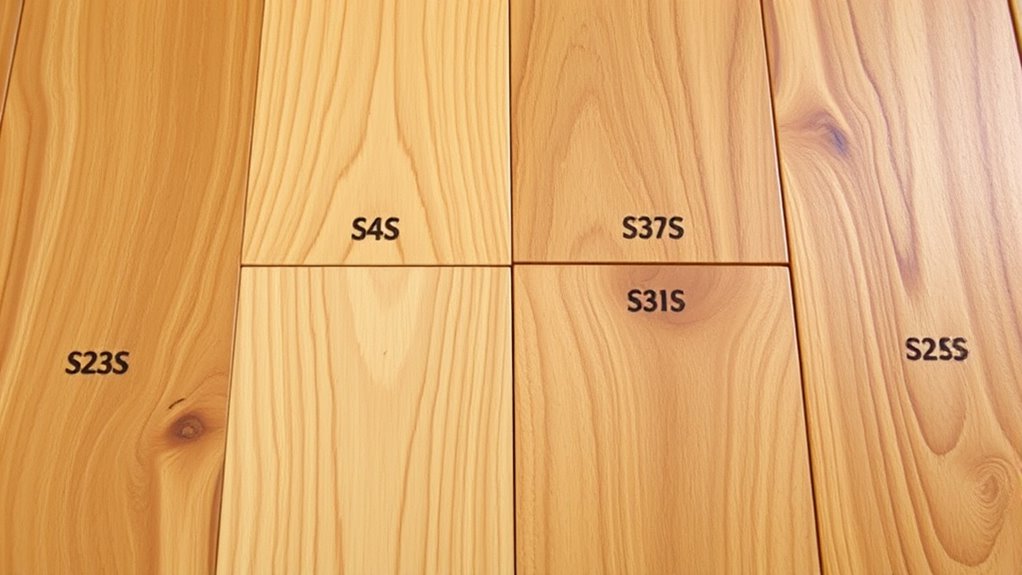
Hardwood grades and surfacing codes like S2S, S3S, and S4S help you understand the quality and appearance of your wood flooring. Grades are based on knots, color variation, and natural features, guiding you to balance beauty with durability. Surfacing codes indicate how much the wood has been planed: S2S for two sides, S3S for three, and S4S for four. Learning these details helps you choose the right flooring for your project’s look and function.
Key Takeaways
- Hardwood grades classify wood based on knots, color variation, and natural features, indicating quality and appearance.
- Surfacing codes (S2S, S3S, S4S) specify the number of sides planed for surface smoothness and finish.
- S2S is surfaced on two sides, suitable for visible surfaces, while S4S is planed on all four sides for a finished look.
- Understanding these codes helps match flooring to project needs, balancing cost, appearance, and durability.
- Grading standards ensure transparency about natural features and imperfections, aiding informed material selection.
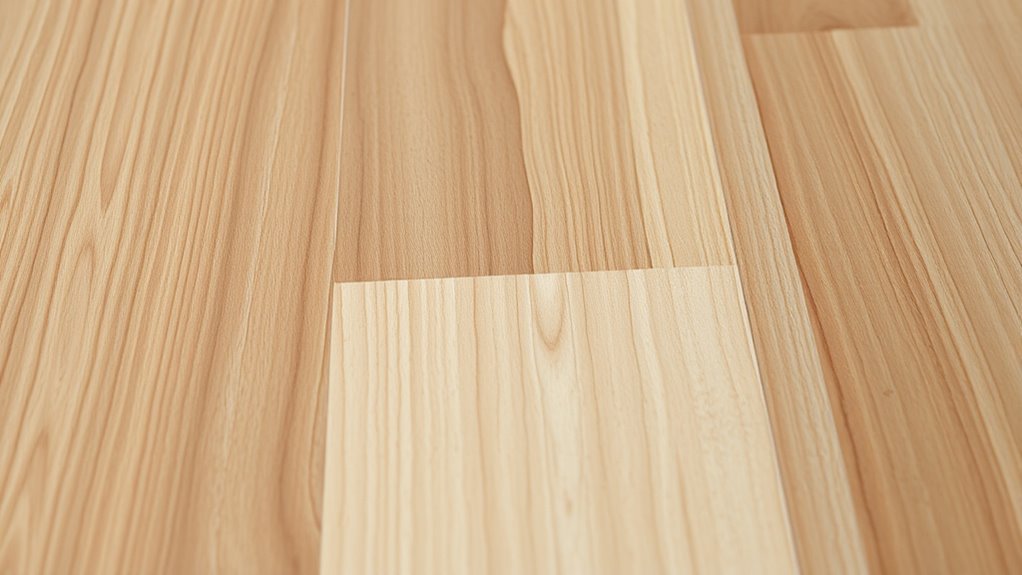
Understanding hardwood grades and surfacing codes is essential when selecting the right flooring for your project. These terms help you determine the appearance, quality, and finish of the wood, ensuring you make an informed decision that aligns with your aesthetic and durability needs. Wood grading standards categorize hardwoods based on the presence of knots, color variation, and other natural characteristics, providing a clear guide for what to expect from each grade. When you’re choosing flooring, knowing these standards helps you balance visual appeal with cost and performance. Surface finishing terminology, on the other hand, describes the process and level of surface preparation, giving you insight into how the wood has been processed and how it will look once installed. Additionally, hardwood grading standards provide a framework for understanding the natural features and imperfections that may be present in your flooring. The surfacing codes—S2S, S3S, and S4S—are key to understanding how the wood’s surface has been processed before installation. S2S stands for “Surfaced Two Sides,” meaning the board has been planed on both the top and bottom surfaces to create a smooth, uniform appearance. This finish is ideal if you want a consistent look and a smooth surface for easier cleaning and maintenance. S3S, or “Surfaced Three Sides,” indicates that the board has been planed on the top and bottom, with one edge also smoothed, often for easier installation or when you want a more refined finish on the visible surfaces. S4S, or “Surfaced Four Sides,” takes it further by smoothing all four edges and surfaces, giving you a more finished product that’s ready for flooring without additional work. This level of surfacing is usually preferred for high-end projects where a flawless appearance is paramount.
Frequently Asked Questions
How Do Surfacing Codes Affect Installation Costs?
Surfacing codes directly impact your installation costs by influencing installation time and surface preparation. For example, surfaces with higher grades like S4S require less prep and can be installed faster, saving you labor costs. Conversely, lower-grade surfaces may need more sanding, filling, or leveling, increasing prep time and expenses. Choosing the right surfacing code helps optimize your project budget by reducing unnecessary prep and speeding up installation.
Can Hardwood Grades Influence Indoor Air Quality?
Hardwood grades can influence indoor air quality by affecting VOC emissions. Lower-grade woods often contain more knots and imperfections, which may require additional treatments or adhesives that emit VOCs. Higher-grade hardwoods typically have fewer defects and may emit fewer VOCs, reducing air quality impact. Selecting quality hardwood with low VOC finishes helps guarantee better indoor air quality and minimizes potential health risks associated with VOC emissions.
Are Certain Grades Better for High-Traffic Areas?
You might think the highest-grade hardwoods are best for busy areas, but ironically, lower grades often hide scratches and dents better, making them more practical. For installation aesthetics, they still look good, while also minimizing environmental impact since less processing is needed. So, if you want durability in high-traffic zones, don’t dismiss the lower grades—they’re more resilient than their fancy counterparts.
How Do Grading Standards Vary by Region?
You’ll find that regional variations influence hardwood grading standards, with different areas emphasizing specific grading criteria based on local preferences and uses. For example, some regions prioritize appearance grades, while others focus on durability for high-traffic areas. These differences mean you should check local standards when selecting hardwood, as what’s considered premium in one region might not meet criteria elsewhere. Always verify regional grading standards before making your choice.
What Maintenance Is Required for Different Surfacing Codes?
To keep your floors looking pristine, you need to stay vigilant with maintenance. For higher surfacing codes like S4S, regular floor sanding removes scratches and prepares the surface for a fresh finish application. Lower codes like S2S may require less frequent attention, but don’t neglect periodic cleaning and minor touch-ups. Suspense builds as neglect can lead to costly repairs—so, schedule routine maintenance to preserve the beauty and longevity of your floors.
Conclusion
Understanding hardwood grades and surfacing codes helps you make informed decisions and achieve the best results in your projects. Remember, “a stitch in time saves nine,” so taking the time to learn these codes now can save you headaches later. By paying attention to the details, you’ll ensure your hardwood surfaces look great and last long. Stay diligent, and your craftsmanship will truly shine—because quality work speaks for itself.