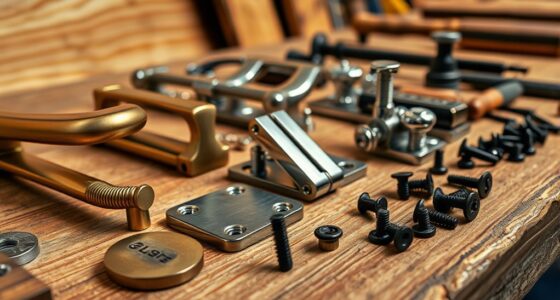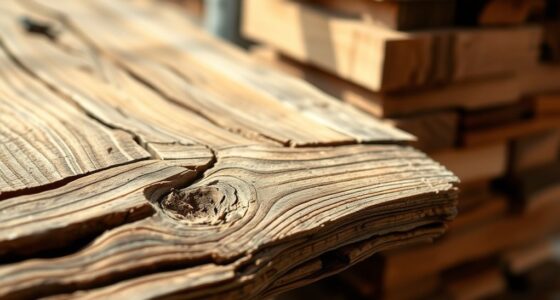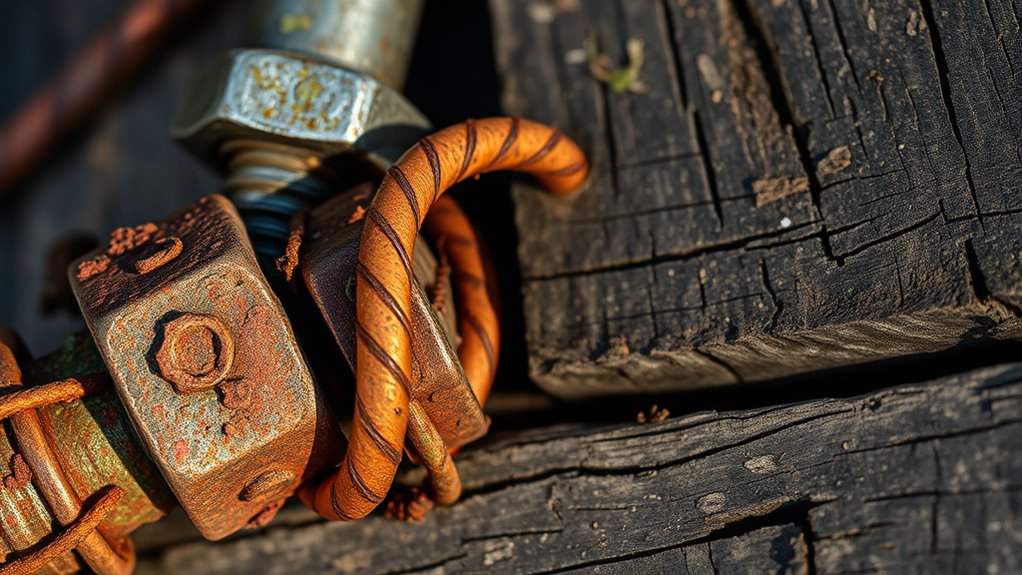

When you use metal hardware with wood, corrosion can occur, especially with steel and iron, as moisture trapped in or around the wood promotes rust and deterioration. This not only weakens the hardware but can also stain or damage the wood surface. To prevent this, choose corrosion-resistant materials like stainless steel or brass, apply protective coatings, and manage moisture levels. Exploring how different metals interact with wood reveals simple ways to boost your project’s durability and appearance.
Key Takeaways
- Metals like steel and iron are prone to rust when in contact with moisture in wood.
- Using corrosion-resistant metals such as stainless steel, brass, or aluminum reduces rust formation.
- Protective coatings or sealants on metal hardware prevent moisture contact and corrosion.
- Proper ventilation and moisture control minimize metal oxidation and extend hardware lifespan.
- Avoiding direct contact between dissimilar metals prevents galvanic corrosion in wood projects.

When hardware metals come into contact with wood, corrosion can become a crucial issue, especially over time. You might notice that metal components like nails, screws, or brackets degrade faster than expected, which can compromise the integrity of your project. This process largely stems from metal oxidation, a chemical reaction that occurs when metals react with moisture and oxygen in the environment. In wood metal interactions, this oxidation accelerates because wood naturally retains moisture, creating a perfect environment for corrosion. As the metal oxidizes, it forms rust or other corrosion products, weakening the hardware and potentially damaging the wood itself. The more exposed the metal is to moisture and air, the faster this process occurs, making it essential to understand how these interactions work to prevent long-term problems.
You should be aware that different metals react differently when in contact with wood. For example, steel and iron are highly susceptible to rust due to their tendency to undergo oxidation. When these metals are in contact with moist wood, the wood’s moisture content fuels the metal oxidation process. This interaction not only causes the metal to corrode but can also stain or discolor the wood, leading to unsightly results. Additionally, the corrosion process can cause the metal to swell or crack, which might result in hardware failure. In some cases, the rust can seep into the wood fibers, compromising the structural integrity of the entire assembly. This is why choosing the right type of hardware and understanding the nature of wood metal interactions is crucial for durability. Using corrosion-resistant materials can significantly improve the longevity of your hardware in such environments.
To minimize these issues, you can opt for corrosion-resistant metals like stainless steel, brass, or aluminum. These materials are less prone to oxidation and are specifically designed to withstand harsh environments, including contact with wood. Applying protective coatings or sealants on the metal surfaces can also help slow down the oxidation process. Proper installation techniques, such as avoiding direct contact between dissimilar metals (which can accelerate corrosion through galvanic reactions), can further extend the lifespan of your hardware. Keeping moisture levels in check by ensuring good ventilation and avoiding prolonged exposure to water will also considerably reduce the risk of metal oxidation. By understanding these dynamics, you can make smarter choices in selecting hardware, prolong the life of your projects, and maintain the aesthetic appeal of your woodwork over time.

VGBUY 210Pcs Wood Screws Assortment Kit, 304 Stainless Steel Screws, Phillips Drive, Wood Screws, Screws, Screw Set, Assorted Screws, Screws Assortment Kit, 6 Sizes (2”,1-1/2”,1-1/4”,1”,3/4”,1/2”)
Package Includes: You will get 210pcs wood screws assortment kit includes 6 sizes, 50pcs #6 x 1/2", 45pcs…
As an affiliate, we earn on qualifying purchases.
As an affiliate, we earn on qualifying purchases.
Frequently Asked Questions
How Do Different Wood Types Affect Hardware Metal Corrosion?
Different wood types affect hardware metal corrosion based on their wood grain and moisture absorption. You’ll find that woods with a higher moisture absorption, like cedar or redwood, can trap more moisture around metal, increasing corrosion risk. Conversely, woods with less moisture absorption, such as teak or oak, allow better airflow and dry faster, helping to protect your hardware from rust and corrosion. Always consider the wood’s properties when installing hardware.
Can Hardware Metals Cause Discoloration on Treated Wood Surfaces?
Imagine your treated wood shimmering under sunlight, then suddenly developing dull, dark patches—that’s surface staining caused by metal oxidation. Metal oxidation from hardware metals can indeed cause discoloration on treated wood surfaces. The corrosion releases particles that settle and react with the wood’s surface, leading to unwanted stains. You’ll notice this more with certain metals like iron or steel, which react more aggressively, leaving your wood looking less pristine.
What Are Eco-Friendly Solutions to Prevent Metal Corrosion in Wood Projects?
To prevent metal corrosion in your wood projects, you can use eco-friendly solutions like biodegradable coatings and natural rust inhibitors. Applying biodegradable coatings creates a protective barrier that’s safe for the environment and helps prevent rust. Additionally, natural rust inhibitors, such as tannic acid or beeswax, can be applied to metal surfaces to inhibit corrosion without harmful chemicals. These methods keep your project eco-friendly and extend the lifespan of your hardware.
How Does Humidity Influence Corrosion Rates on Hardware Metals in Wood?
Like Pandora’s box, humidity effects can release corrosion on your hardware metals in wood. When moisture levels rise, they accelerate oxidation, leading to rust and decay. High humidity creates a constant cycle of dampness, making metals more vulnerable. Keep humidity levels in check to slow corrosion, ensuring your wood projects stay durable longer. Proper ventilation and dehumidifiers are your allies in preventing moisture-driven damage.
Are There Specific Hardware Metals Recommended for Outdoor Wooden Structures?
For outdoor wooden structures, you should choose hardware metals like stainless steel or hot-dip galvanized steel, as they offer excellent hardware durability. Opt for metals with protective coatings, such as powder coating or zinc plating, to prevent rust and corrosion. These coatings act as barriers against moisture, ensuring your hardware stays strong and reliable over time, even when exposed to varying humidity levels and outdoor elements.
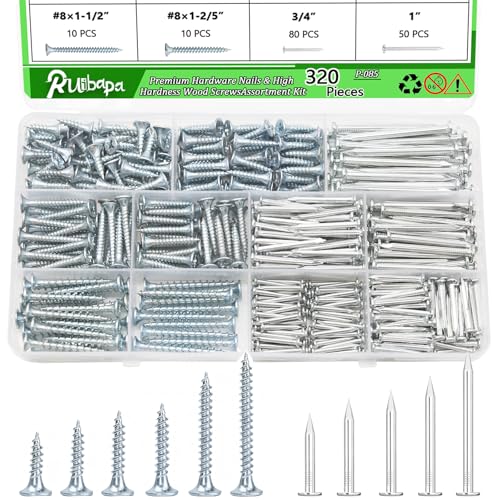
320Pcs Premium Hardware Nails & High Hardness Wood Screws Assortment Kit,11 Sizes (1/2"-2"),Phillips Drive Flat Head, Wood Screws,Galvanized,Picture Hanging,Wood,Common Nails with Storage Box
Various Size: Wood Screws Assortment Kit includes 11 sizes,6 Sizes(130pcs)wood screws:(#8 x 1-2/5 in, #8 x 1-1/2 in,…
As an affiliate, we earn on qualifying purchases.
As an affiliate, we earn on qualifying purchases.
Conclusion
To keep your wood projects lasting, you need to pay attention to hardware metals and their tendency to corrode. Regular maintenance and choosing the right materials can save you from unnecessary headaches down the road. Remember, a stitch in time saves nine—addressing small issues early prevents bigger problems later. By staying proactive, you’ll ensure your woodwork remains sturdy and beautiful, proving that a little forethought goes a long way in safeguarding your craftsmanship.

Everbrite Protective Coating for Metal (4 Oz.)
Everbrite Coating is a tough, durable clear coating that will restore the color and luster of faded metals,…
As an affiliate, we earn on qualifying purchases.
As an affiliate, we earn on qualifying purchases.

Furniture Knowledge Variety Count Flat Straight 1×1 22 Gauge Steel Corner Brace Brackets Antique Brass Bronze Zinc Finish Shelf Chair Cabinet Rustic Vintage 90 Dozen Statuary (12, Bronze)
Variety Count FLAT STRAIGHT 1×1 22 Gauge Steel Corner Brace Brackets Antique Brass Bronze Zinc Finish shelf chair…
As an affiliate, we earn on qualifying purchases.
As an affiliate, we earn on qualifying purchases.