Hardwoods are generally stronger and more durable, making them ideal for furniture and flooring, but they can be tougher to work with because of their density. Softwoods are lighter and easier to cut, carve, and handle, which makes them great for quick projects, framing, and beginners. If you want to know how their strength and workability compare for your project, there’s more to discover that can help you choose the right material.
Key Takeaways
- Hardwoods are denser and stronger, making them suitable for load-bearing and durable applications.
- Softwoods are lighter and less dense, generally offering less strength but easier to work with.
- Hardwoods are more challenging to cut, carve, and sand due to their density and interlocking fibers.
- Softwoods are easier to machine, shape, and finish, making them ideal for quick DIY projects.
- The strength and workability differences influence their use in furniture, flooring, and structural building.

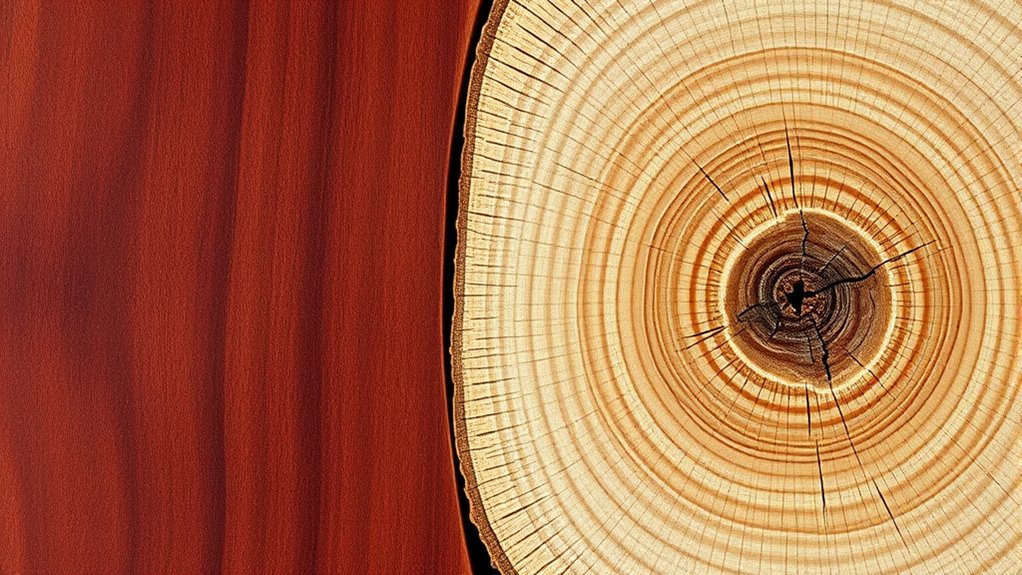
Have you ever wondered what sets hardwoods apart from softwoods? The answer often lies in their distinct grain patterns and how they interact with the environment. Hardwood trees, like oak, maple, and cherry, tend to have more complex and varied grain patterns. These patterns result from the dense, interlocking fibers that develop as the tree grows, giving hardwoods a richer, more intricate appearance. Softwoods, such as pine, cedar, and spruce, generally have straighter, more uniform grain patterns, making them easier to work with but sometimes less visually detailed. When choosing between the two, consider how the grain pattern will influence the final look of your project, whether you want a natural, textured aesthetic or a smooth, consistent finish. Additionally, the environmental impact of harvesting these woods plays a vital role. Hardwood trees usually take longer to mature, often spanning decades, which means their extraction can have a more significant environmental footprint if not managed sustainably. However, many hardwoods are now harvested from responsibly managed forests, reducing their ecological impact. Softwoods, on the other hand, are generally faster-growing, making them more sustainable and easier to replenish, especially when sourced from certified plantations. This quicker growth cycle often results in less deforestation pressure and a lower environmental impact overall. When considering strength and workability, hardwoods are typically denser and stronger, making them suitable for furniture, flooring, and structural uses that demand durability. Their density, however, can make them more challenging to cut, carve, or sand, requiring more effort and sharper tools. Softwoods, being lighter and less dense, are easier to work with, which is why they’re favored for framing, carpentry, and DIY projects. They cut more smoothly and require less effort, but they might not hold up as well under heavy use or stress. In terms of workability, softwoods are often preferred for quick projects and beginners, while hardwoods are chosen when strength, longevity, and a refined appearance are priorities. Ultimately, your choice depends on what you value most—whether it’s the aesthetic appeal of complex grain patterns, the sustainability of your sources, or the ease of working with the material. Understanding these differences helps you make informed decisions, ensuring your project aligns with your goals for durability, look, and environmental responsibility. Additionally, considering the workability of each type can help you plan your project more effectively, especially if you’re a DIY enthusiast.

KEILEOHO 2 PCS Flooring Jacks for Hardwood Floors, Hardwood Flooring Jack Positioning Tool, Professional Flooring Jack Tool, Hardwood Floor Installation Jack for Wood and Laminate Flooring
PREMIUM MATERIAL – These flooring jacks for hardwood floors are made of high-quality cast steel, which comes with…
As an affiliate, we earn on qualifying purchases.
As an affiliate, we earn on qualifying purchases.
Frequently Asked Questions
How Does Climate Affect Hardwood and Softwood Durability?
Climate impact plays a significant role in hardwood and softwood durability. You’ll find that high humidity and moisture can cause wood to warp, rot, or decay faster, reducing durability factors. Conversely, dry climates help preserve wood’s strength over time. Proper sealing and treatment can mitigate climate effects, but understanding local conditions allows you to select the best wood for long-lasting use, ensuring your project withstands environmental challenges.
Are There Eco-Friendly Options Within Hardwood and Softwood Choices?
Think of eco-friendly options like a lush forest teeming with life. You can choose sustainably harvested hardwoods and softwoods that come from well-managed forests, ensuring minimal environmental impact. Look for woods treated with eco-friendly preservatives instead of harmful chemicals. These choices help protect ecosystems, reduce carbon footprint, and promote responsible forestry, making your projects both beautiful and environmentally conscious.
What Are the Best Finishes for Softwood Versus Hardwood?
For softwood, you’ll want a clear finish like polyurethane or varnish that highlights its grain pattern and offers durability. Hardwoods benefit from oil-based finishes or stains that emphasize their rich color variation and intricate grain. You should consider the look you prefer; softwoods often need lighter finishes to enhance their texture, while hardwoods can handle deeper stains to showcase their natural beauty.
How Does Pest Resistance Vary Between Hardwood and Softwood?
You’ll find pest resistance differs between hardwood and softwood, affecting durability. Hardwood generally offers better pest resistance due to its dense, tight grain, making it harder for insects to penetrate. Softwood, with its lighter, more porous structure, is more susceptible to pests. Considering durability factors, hardwood’s natural resistance can prolong the lifespan of your project, while softwood may require treatments to improve pest resistance.
Can Softwood Be as Strong as Hardwood With Treatments?
Did you know that softwood can reach up to 80% of hardwood’s strength with proper treatments? You can enhance softwood’s durability and load-bearing capacity through specific softwood treatments, making it nearly as strong as hardwood for many applications. While hardwood naturally offers higher strength, applying these treatments allows softwood to perform remarkably well, giving you a cost-effective and versatile option without sacrificing too much strength.

RUITOOL Japanese Hand Saw 6 Inch Double Edge Sided Pull Saw Ryoba SK5 Flexible Blade 14/17 TPI Flush Cut Beech Handle Wood Saw for Woodworking Tools
An Idea Gift for Woodworker, Carpenter and Craft Man
As an affiliate, we earn on qualifying purchases.
As an affiliate, we earn on qualifying purchases.
Conclusion
When choosing between hardwood and softwood, remember that the common belief isn’t always true. Softwoods like pine can be surprisingly strong and durable, while some hardwoods may be harder to work with. Don’t rely solely on labels; test and consider your specific project needs. Ultimately, your choice should be based on actual properties and performance, not just assumptions. This way, you get the best material for your work, ensuring strength and ease of use.

4 Pack Hand Sanding Sponge Set -120 220 320 400 Grit- Coarse Medium Fine Grit Sanding Block, Sander Sponges for Wood-Working Drywall Metal, Washable and Reusable Sponge for Rust Removal Polishing
Assorted Grit Sanding Blocks – This set includes 4 sponge sanding blocks (4 x 2.6 x 0.7 inches)…
As an affiliate, we earn on qualifying purchases.
As an affiliate, we earn on qualifying purchases.

Exotic Wood Zone Variety Pack – 5 Walnut, 5 Maple, 5 Cherry Hardwood Boards (3/4" x 2" x 24") – 15 Pcs Total for Woodworking, Crafting, DIY Projects, Wood Carving
【Artisanal Craftsmanship】Our cutting board blanks are handcrafted from the finest hardwoods, showcasing exceptional attention to detail and a…
As an affiliate, we earn on qualifying purchases.
As an affiliate, we earn on qualifying purchases.