Making safety a priority in your woodshop is key to a healthy woodworking lifestyle. Wear PPE like goggles, ear protection, and masks to safeguard your health. Follow proper tool use, keep your workspace tidy, and stay focused during each task. Regular safety training encourages good habits and reduces injuries. By integrating these practices, you guarantee your projects are enjoyable and injury-free. Keep exploring how to maintain these safety standards for a more secure woodworking experience.
Key Takeaways
- Incorporate PPE usage into daily routines to protect health and prevent injuries during woodworking activities.
- Engage in ongoing safety training to develop good habits and stay updated on best practices.
- Maintain organized, clean workspaces to reduce accidents and promote mental well-being.
- Prioritize safety to minimize injury risks that could disrupt personal projects and daily life.
- Foster a safety-first mindset that supports physical health and enhances overall quality of life.
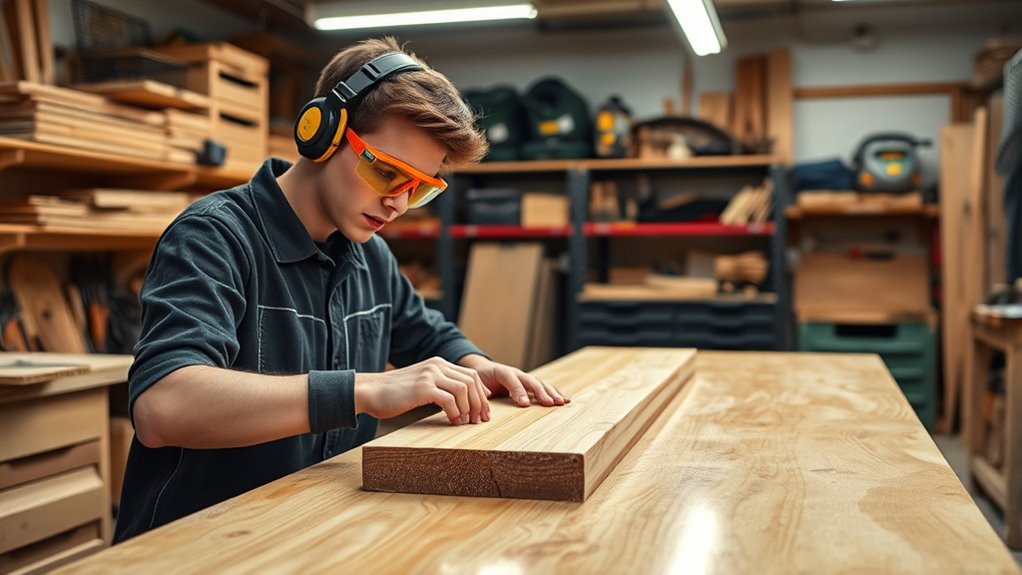
Working safely in a woodshop is essential to prevent accidents and injuries. When you’re handling tools and working with wood, your first line of defense is always personal protective equipment. This means wearing safety goggles or glasses to shield your eyes from flying debris, ear protection to guard against loud noise, and a dust mask or respirator to prevent inhaling fine particles. Gloves might seem helpful, but use them carefully—sometimes they can get caught in machinery, so it’s best to follow specific safety guidelines. Investing in high-quality personal protective equipment shows you respect your workspace and prioritize your health. Remember, PPE isn’t just about compliance; it’s about actively protecting yourself during every project.
Equally important is safety training. Before you start working on any project, you should undergo proper safety training to understand how to operate tools safely and recognize potential hazards. Training provides you with crucial knowledge about the correct use of equipment, safe work practices, and emergency procedures. It helps you develop good habits that keep you safe and increases your confidence in handling various tasks. You’ll learn how to identify risks, like loose clothing or cluttered workspaces, that could lead to accidents. Regularly updating your safety training ensures you stay current with best practices and any new safety protocols. When you combine safety training with consistent use of personal protective equipment, you considerably reduce your chances of injury.
In a woodshop, safety isn’t a one-time effort; it’s a continuous commitment. Always inspect your tools before use, ensuring blades are sharp and guards are in place. Keep your workspace clean and organized to prevent trips and falls, and never rush through a task. If you’re unsure about how to operate a machine or handle a particular process, seek guidance from a more experienced woodworker or revisit safety training materials. Maintaining a safety-first mindset not only protects you but also sets a positive example for others in the workshop. Additionally, understanding woodshop safety standards and adhering to them helps create a safer environment for everyone involved.
Integrating safety into your woodworking routine aligns with a healthy lifestyle by promoting physical well-being and mental focus. When you prioritize safety, you reduce the risk of injuries that could sideline your projects or impact your daily life. It’s about creating a balanced approach to work and health—respecting your body and the tools you use. By consistently wearing personal protective equipment and staying committed to ongoing safety training, you establish habits that keep you safe, productive, and injury-free. Safety isn’t just a requirement; it’s a crucial part of enjoying woodworking as a fulfilling and healthy activity.
Frequently Asked Questions
How Does Woodshop Safety Impact Overall Physical Health?
Woodshop safety directly impacts your overall physical health by emphasizing personal safety and injury prevention. When you follow safety protocols, you reduce the risk of cuts, burns, or more serious injuries. Staying alert and wearing protective gear helps you avoid accidents that could lead to long-term health issues. By prioritizing safety, you guarantee that your woodworking activities remain enjoyable and safe, supporting your well-being and maintaining your physical health.
What Mental Health Benefits Come From Practicing Woodshop Safety?
Like a calming river flowing steadily, practicing woodshop safety enhances your mental well-being. When you follow safety protocols, you cultivate mindfulness meditation and reduce stress, sharpening focus and fostering confidence. This intentional approach encourages patience and precision, helping you stay present. As a result, you experience improved mental clarity and resilience, turning woodworking into a therapeutic activity that nurtures your mind while creating something meaningful.
Can Safety Routines Improve Long-Term Woodworking Skills?
Yes, safety routines can markedly improve your long-term woodworking skills. By consistently practicing safety habits, you develop better focus, precision, and control, which are essential for skill development. When you prioritize safety, you’re less likely to make mistakes or experience accidents, allowing you to practice more confidently and effectively. Over time, these routines become second nature, helping you refine your techniques and achieve higher craftsmanship in your woodworking projects.
How Does Maintaining Safety Gear Contribute to a Healthy Lifestyle?
Maintaining safety gear like protective clothing and following safety protocols directly contributes to a healthy lifestyle by preventing injuries and reducing exposure to hazards. When you prioritize safety, you protect your body and mind from harm, enabling you to stay active and focused on your well-being. Consistently wearing proper gear and adhering to safety measures helps you build habits that promote long-term health and safety in all aspects of life.
Are There Ergonomic Practices That Promote Health in Woodworking?
Yes, practicing proper posture and focusing on tool ergonomics can greatly promote your health in woodworking. You should stand or sit with your back straight, keeping your wrists neutral, and avoid awkward positions. Use tools that fit comfortably in your hands to reduce strain. Regular breaks and stretching also help prevent injuries. These ergonomic habits keep you safe, comfortable, and healthy while enjoying your woodworking projects.
Conclusion
By prioritizing safety in your woodworking routine, you create a healthier, more enjoyable experience. When you follow proper procedures and wear protective gear, you reduce risks and stay focused on your craft. Believe it or not, maintaining safety habits can boost your confidence and even make woodworking feel more satisfying. Think of safety as part of your overall wellness—protecting your body helps you enjoy the art of woodworking longer. Stay safe, and keep creating with joy!