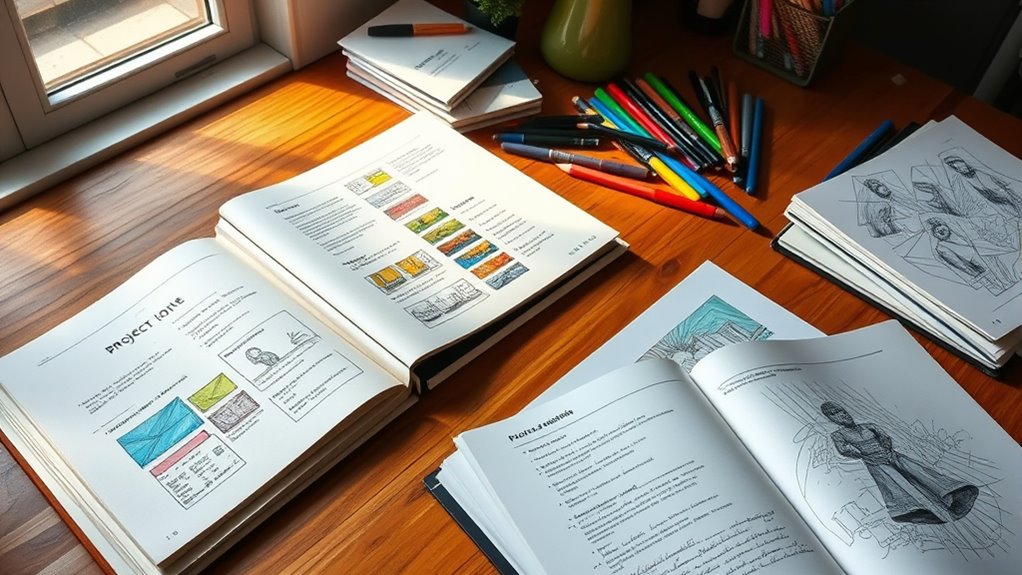
To organize your project records and sketchbooks effectively, combine digital archiving with physical storage solutions. Scan important sketches and documents for quick searchability and store them in clearly labeled folders or folders with a consistent naming system. Keep original sketches and printed materials in sturdy, labeled physical folders or boxes, and regularly review and update both digital and physical files. Staying organized makes it easier to access, track progress, and meet deadlines—if you continue, you’ll discover how to create a seamless, balanced system.
Key Takeaways
- Digitize sketches and project documents for easy search, access, and backup.
- Use labeled folders and storage boxes to organize physical sketches and records systematically.
- Establish consistent naming conventions and categories for digital and physical files.
- Create a master index or inventory list for quick identification of project materials.
- Regularly review, update, and discard outdated items to maintain an organized system.

Have you ever struggled to find important project documents when you need them most? It’s frustrating to waste time digging through cluttered folders or rummaging through piles of papers. That’s where effective organization becomes essential. By implementing a solid system for managing your project records, you’ll save yourself stress and stay on top of deadlines. One of the best ways to do this is through digital archiving. Instead of relying solely on physical storage solutions, digital archiving allows you to scan and store documents electronically, making them easy to retrieve with a quick search. With digital files, you can access your project records anytime, anywhere, and from any device, which is especially helpful if you work remotely or need to share information with team members. Plus, digital archiving reduces clutter and minimizes the risk of losing crucial documents due to damage or misplacement. Using organized data management practices can further enhance your system’s efficiency and reliability.
However, digital archiving isn’t enough on its own. A reliable physical storage solution remains indispensable, especially for original sketches, blueprints, or printed documents that are difficult to reproduce electronically. Invest in sturdy filing cabinets, labeled folders, or storage boxes designed to keep your physical records organized and protected. Clear labeling is key—use descriptive titles and date stamps so you can quickly identify what you need without rummaging through everything. Consider creating a master index or inventory list that maps out where each physical item is stored, making retrieval straightforward. Combining digital archiving with well-organized physical storage solutions gives you a thorough system that covers all your bases.
It’s also helpful to establish a consistent naming convention for digital files and physical labels. This way, similar documents are grouped logically, and you avoid confusion. Regularly backing up your digital archive ensures that your records are safe from hardware failures or accidental deletions. Likewise, periodically reviewing your physical storage can prevent clutter buildup and help you discard outdated or unnecessary items. Maintaining this routine makes it easier to keep your project records current and accessible.
Ultimately, organizing project records is about creating a system that works for you—one that balances the convenience of digital archiving with the security of reliable physical storage solutions. When your records are well-organized, you’ll find it easier to track progress, prepare reports, and make informed decisions. Plus, you’ll save precious time and reduce stress during critical moments. So, take a moment to evaluate your current system, invest in the right tools, and establish clear procedures. Doing so transforms chaos into clarity, ensuring your project records are always within reach when you need them most.
Frequently Asked Questions
How Often Should I Review and Update My Project Records?
You should review your project records at least once a month to stay organized and on track. Regular record review frequency helps you catch inconsistencies and update strategies promptly. By setting a routine, like scheduled check-ins, you ensure your records stay current and useful. Keep your updates consistent, and don’t hesitate to adapt the frequency if your projects become more complex, ensuring your system remains effective.
What Are the Best Digital Tools for Organizing Sketches?
You should try digital archiving tools like Evernote, Notion, or Adobe Bridge for organizing sketches. These platforms use cloud storage, making access seamless across devices. Remarkably, over 70% of artists now prefer digital solutions for quick retrieval and backup. With cloud storage, your sketches stay safe and organized, allowing you to focus on creativity without worrying about losing your work.
How Do I Handle Sensitive or Confidential Project Information?
You should implement confidentiality protocols like password protection and encryption to keep sensitive project information secure. Use secure storage options such as encrypted cloud services or external drives with robust security features. Regularly update your security settings and limit access to only those who need it. By staying vigilant and using trusted tools, you guarantee your confidential data remains protected while maintaining easy access when necessary.
Can Organizing Records Improve Overall Project Efficiency?
Yes, organizing your records can considerably improve project efficiency. By creating digital archives for quick access and maintaining physical filing systems for hard copies, you streamline retrieval and reduce time wasted searching. Consistent naming conventions and categorization help you stay organized. This dual approach ensures you find the right information fast, keeps your workspace tidy, and allows you to focus more on the project itself rather than hunting for files.
What Are Common Mistakes to Avoid When Managing Project Records?
You should avoid neglecting consistent file naming and version control. For example, a designer once lost hours of work because she didn’t update file versions, leading to confusion. Always use clear, descriptive file names and track changes meticulously. This prevents overwriting important documents and saves time searching for the latest versions. Skipping these practices results in chaos and delays, so make them a priority in managing project records.
Conclusion
By keeping your project records and sketchbooks organized, you set yourself up for success and growth. When everything’s in its place, you can find inspiration quickly and avoid reinventing the wheel. Remember, a tidy workspace is a tidy mind—so don’t let clutter hold you back. Stay disciplined, and you’ll discover that success is just around the corner. After all, a well-organized project is the foundation for turning dreams into reality.