The best way to store your cutting boards so they stay flat is to keep them upright in a well-ventilated area. This prevents warping and moisture buildup, while also making them easy to access. Make sure they’re completely dry before storing, and consider using dedicated racks or wall-mounted holders for organization. Proper storage maintains their shape, hygiene, and longevity. Keep exploring for more tips to keep your boards in top condition.

Get business pricing on tools and workshop supplies
- Business-only prices and quantity discounts
- Tax-exempt purchasing
- Multiple users, one account, clear invoices
Key Takeaways
- Store cutting boards upright in a well-ventilated, dry area to prevent warping and promote airflow.
- Use dedicated racks, wall-mounted holders, or slim upright drawers for organized vertical storage.
- Ensure boards are completely dry before storing to inhibit bacterial growth and mold.
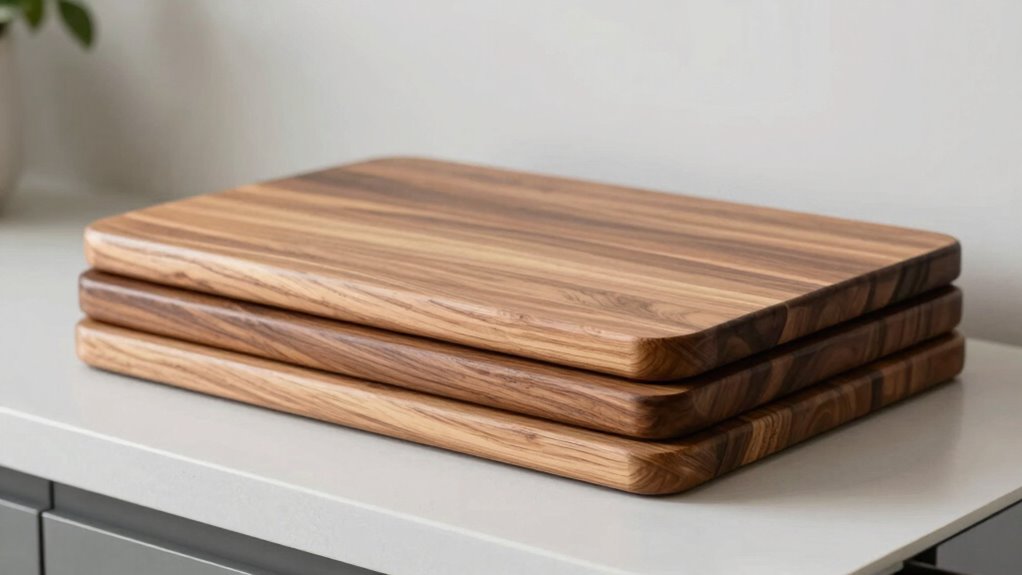
- Avoid stacking boards flat to prevent bending and pressure points.
- Regularly inspect and maintain boards with mineral oil to preserve flatness and prevent warping.
Storing your cutting boards properly is essential to keep them clean, safe, and in good condition. When you focus on effective kitchen organization, you make it easier to access your tools and maintain a tidy space. Proper storage also helps prevent warping and keeps your cutting boards flat, which is key for safe and efficient food prep. To achieve this, you need to pay attention to how you store and clean your boards, especially when it comes to cleaning techniques that preserve their shape and hygiene.
Start by choosing the right storage method. Vertical storage is often the best option because it allows air circulation around your cutting boards, reducing moisture buildup that can cause warping. You can use a dedicated rack, a wall-mounted holder, or even a slim, upright drawer if space allows. Avoid stacking multiple boards flat on top of each other, as this can cause them to bend or develop pressure points over time. When stored vertically, your boards stay flat and dry, making them easier to grab and use whenever needed. Ensuring proper air circulation is crucial for maintaining your boards’ shape and preventing moisture retention. Additionally, selecting the correct storage environment, such as a dry and well-ventilated space, further supports the longevity of your boards. Proper storage conditions are fundamental in reducing the risk of bacterial growth and warping. Using a well-ventilated space helps keep your boards dry and prevents mold or bacteria from developing, which is essential for food safety. Incorporating a dedicated storage solution can also help keep your space organized and your boards accessible, making it easier to maintain hygiene routines.
Cleaning techniques play a critical role in maintaining the integrity of your cutting boards. Always wash your boards after each use with hot, soapy water, and dry them thoroughly. For deeper cleaning, especially if you’ve cut raw meat or dealt with stubborn stains, use a mixture of vinegar and water or a food-safe sanitizer. Regularly inspecting your boards for cracks or warping helps you catch issues early, preventing damage from worsening. Remember, never leave your boards soaking in water for extended periods, as this can lead to warping and mold growth, undoing your efforts to keep them flat. Proper drying and cleaning routines are vital for hygiene maintenance and preventing bacterial buildup. To further protect your cutting boards and prolong their lifespan, consider applying mineral oil or a food-grade board conditioner every few months. This helps maintain the wood’s moisture balance, keeping it from drying out and warping. When it’s time to store your boards, ensure they are completely dry and upright in a well-ventilated space. This not only keeps them flat but also reduces the risk of bacterial growth. Consistent cleaning and proper storage are your best tools for preserving your cutting boards’ shape, hygiene, and durability.
vertical cutting board storage rack
As an affiliate, we earn on qualifying purchases.
As an affiliate, we earn on qualifying purchases.
Frequently Asked Questions
How Often Should I Oil My Wooden Cutting Boards?
You should oil your wooden cutting boards every few weeks to maintain proper wood care. Regular oiling prevents cracks, warping, and keeps the surface smooth for cutting. After washing and drying, apply a food-grade mineral oil or beeswax, letting it soak in before wiping off excess. Consistent cutting board maintenance like this prolongs its life and preserves its flatness, making your kitchen tools safer and more durable over time.
Can Plastic Cutting Boards Warp Over Time?
Plastic cutting boards can warp over time, especially if exposed to high heat or prolonged moisture. Their durability varies depending on the quality and type of plastic used. Cheaper materials tend to warp more easily, while high-quality plastics resist warping better. To prevent this, avoid dishwasher heat, dry your boards thoroughly, and store them flat or upright in a cool, dry place. Proper care extends the life of your cutting board.
What’s the Best Way to Sanitize Cutting Boards?
To sanitize your cutting boards and guarantee kitchen hygiene and food safety, wash them with hot, soapy water after each use. For deeper cleaning, use a solution of one part white vinegar to four parts water or sprinkle with coarse salt and rub with half a lemon. Rinse thoroughly and air dry. Regular sanitizing prevents bacteria buildup, keeping your kitchen safe and your cutting boards in top condition.
Are Bamboo Cutting Boards More Prone to Warping?
Bamboo cutting boards are less prone to warping compared to other materials, thanks to their durability. However, you should still practice warping prevention by avoiding excessive exposure to water and extreme temperature changes. Proper drying after cleaning and storing them in a well-ventilated area help maintain their flatness. With good care, bamboo boards stay durable and flat, making them a reliable choice for your kitchen tasks.
How Do I Prevent Knife Scars on My Boards?
You can prevent knife scars by practicing proper knife maintenance and choosing the right cutting board materials. Use a sharp, well-maintained knife to reduce damage, and opt for softer woods or plastic boards that absorb cuts better. Ironically, the harder the material, the more scars it can show. Regularly oil wooden boards to fill in cuts, and rotate your cutting surface to minimize deep gouges.
Conclusion
Storing your cutting boards properly keeps them flat and ready for action, like a well-tuned orchestra. By choosing a vertical rack or leaning them against a wall, you prevent warping and maintain their shape. Think of your boards as soldiers standing at attention—organized and sturdy, always prepared for the next task. With a little care, you’ll keep your cutting boards in top shape, ensuring they serve you well without bending under pressure.
Fall yard work Picks
leaf blowers
As an affiliate, we earn on qualifying purchases.