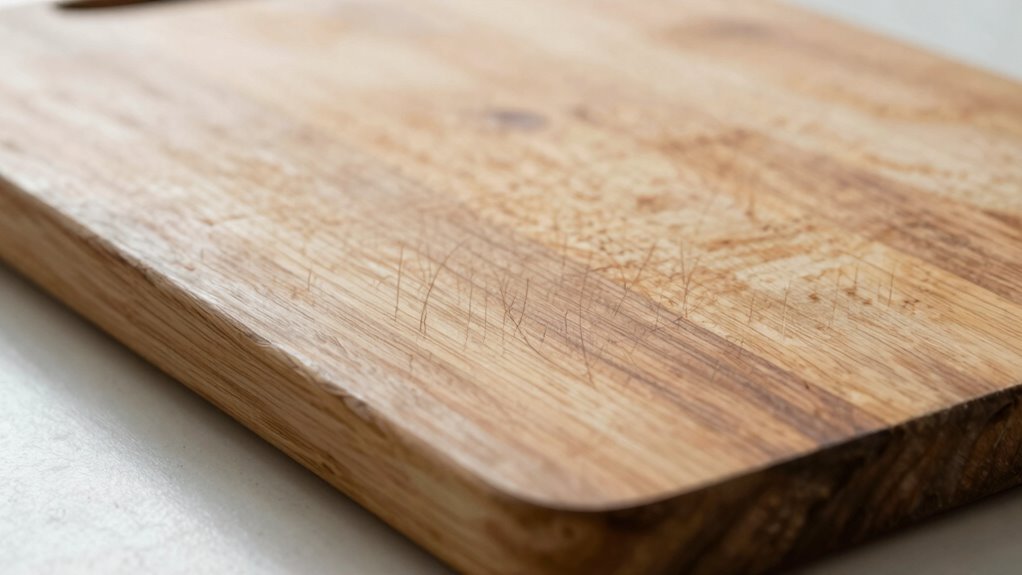
The most common mistake that causes warping is failing to dry and store your cutting board properly. Excess moisture and inadequate drying lead to swelling, bending, or cracking, especially with wooden boards. To prevent this, dry your board thoroughly immediately after cleaning and store it in a cool, dry place away from heat or direct sunlight. Continuing along, you’ll discover important care tips to keep your cutting board in top shape for years.
Key Takeaways
- Excess moisture from improper drying causes wooden cutting boards to warp.
- Failing to dry immediately after cleaning allows moisture to seep in and weaken the material.
- Using a dishwasher or exposing the board to high heat accelerates warping risks.
- Storing the board in humid or improper conditions promotes expansion and deformation.
- Deep cuts from dull knives trap moisture and contribute to warping over time.
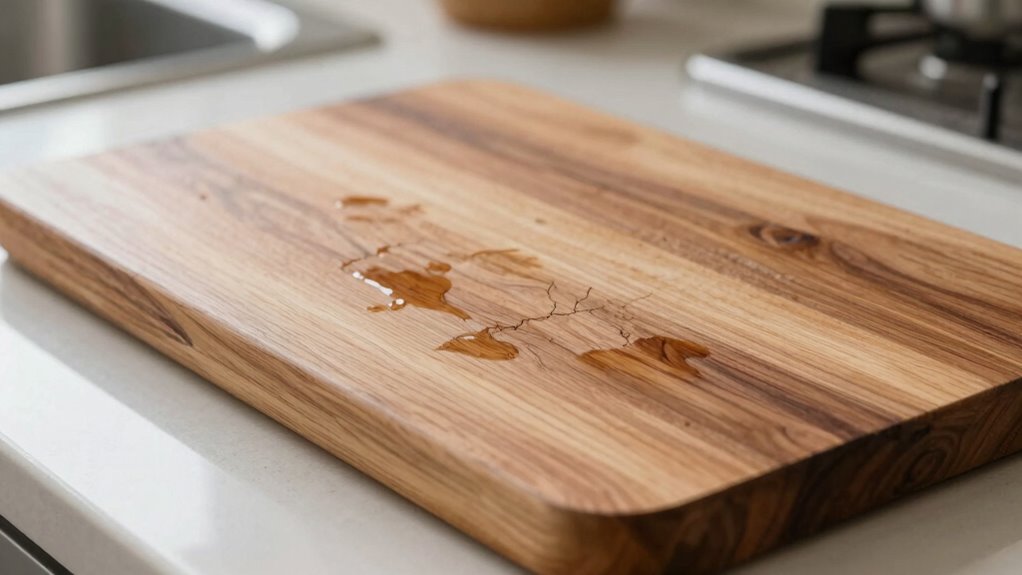
Are you giving your cutting board the proper care it needs? Many people overlook the importance of regular maintenance, which can lead to warping and damage over time. One of the key factors in keeping your cutting board in top shape is understanding proper knife maintenance. Dull knives require more force, increasing the risk of scoring and gouging your board’s surface. Sharp knives not only make chopping easier but also reduce unnecessary strain on the wood or plastic. When your knives are well-maintained, you minimize deep cuts that trap moisture, a common culprit behind warping. Additionally, ensuring your knives are consistently sharp helps prevent accidental slips that can cause uneven wear on the board.
Equally important is adopting effective sanitizing techniques. After each use, especially when preparing raw meat or seafood, you should thoroughly clean your cutting board. Use hot, soapy water and a scrub brush to remove food particles and bacteria. For added protection, consider using a diluted bleach solution or vinegar to sanitize the surface. This prevents bacteria buildup that can weaken the material and lead to warping. Be cautious not to leave your board soaking in water for extended periods, as excess moisture seeps into the material, causing it to swell or warp. Instead, dry it immediately with a clean towel or air dry in a well-ventilated area. Proper drying is *vital* because lingering moisture is one of the main contributors to warping, especially in wooden boards. Incorporating supportive materials, such as silicone feet or mats, can also help prevent moisture buildup and promote better airflow beneath the board.
Another mistake that often causes warping is exposure to extreme temperatures. Never put your cutting board in the dishwasher unless it’s specifically labeled as dishwasher-safe, as the intense heat and water pressure can cause warping or cracking. Similarly, avoid leaving your board in direct sunlight or near heat sources, which can dry out the material unevenly or cause it to expand and contract. If you’re storing your board, keep it in a dry, cool place and avoid stacking heavy objects on top that could bend or warp it over time.

HBlife Bamboo Dish Plate Bowl Cup Book Pot Lid Cutting Board Drying Rack Stand Drainer Storage Holder Organizer Kitchen Cabinet(Keep Dry)
– Made of sturdy, eco-friendly, and easy-to-clean bamboo. Surface special treatment, the water is not easy to penetrate….
As an affiliate, we earn on qualifying purchases.
As an affiliate, we earn on qualifying purchases.
Frequently Asked Questions
Can I Put My Cutting Board in the Dishwasher?
You shouldn’t put your cutting board in the dishwasher because the dishwasher risks warping or cracking it, especially if it’s wood. Instead, use cleaning alternatives like hand washing with warm, soapy water and scrubbing with a brush. Rinse thoroughly and dry immediately to prevent bacteria growth. Avoid soaking or using harsh chemicals, which can damage your board over time. Proper care keeps your cutting board in top shape longer.
How Often Should I Oil My Wooden Cutting Board?
Scheduling seasonal oiling keeps your wooden cutting board in prime condition. You should oil your board every few weeks or whenever you notice it feeling dry, considering the oil absorption rate. This regular routine helps prevent warping, cracking, and warping, ensuring longevity and safety. Don’t delay—diligently dampen with oil to defend against damage, because consistent care keeps your cutting board creating culinary creations comfortably and cleanly!
Is It Safe to Use Vinegar to Clean My Cutting Board?
Yes, vinegar cleaning is safe for your cutting board and helps with board disinfection. Vinegar’s natural acidity effectively kills bacteria without harsh chemicals. You should wipe your board with a mixture of equal parts white vinegar and water, then let it sit for a few minutes before rinsing. Regular vinegar cleaning not only keeps your board hygienic but also helps prevent warping caused by moisture buildup.
What Are Signs My Cutting Board Needs Replacing?
Your cutting board is like a trusty sidekick, but even heroes have their limits. If it has deep grooves, persistent stains, or a foul odor that won’t go away, it’s time for replacement. Visible cracks or warping also signal the end of its lifespan. These are clear indicators that your board can no longer protect your food or serve you well, so consider swapping it out to stay safe and efficient.
Can I Use a Plastic Cutting Board Instead of Wood?
Yes, you can use a plastic cutting board instead of wood. Plastic alternatives are durable, easy to clean, and less prone to warping when cared for properly. When comparing wooden vs plastic, plastic boards resist bacteria buildup better and are more affordable. Just make sure to replace them when they become deeply scratched or stained, as bacteria can hide there. Both types work well, but plastic offers convenience and hygiene benefits.

NiHome 16-Pack 1.6 Inch Round Non-Slip Cutting Board Feet, Self-Adhesive Silicone Pads, No Screws Needed, Reusable & Washable Gripper Pads for Trays, Furniture, Chairs
Enlarged Silicone Pads: Made of oversized silicone for stronger anti-slip performance, securely holding cutting boards in place and…
As an affiliate, we earn on qualifying purchases.
As an affiliate, we earn on qualifying purchases.
Conclusion
Remember, proper care keeps your cutting board in top shape. Avoid the mistake of neglecting to regularly oil it or exposing it to excess moisture, which can cause warping. Isn’t your kitchen worth the effort to preserve your tools? By following these simple care rules, you’ll enjoy a durable, beautiful cutting board for years to come. Don’t let one careless mistake ruin your investment—treat it with the attention it deserves. Your culinary creations will thank you.

GORILLA GRIP BPA-Free Reversible Kitchen Cutting Board Set of 3, US Designed, Nonporous, Juice Grooves Catch Liquid, Slip Resistant Border, Dishwasher Safe, Durable Large Food Chopping Boards, Black
ULTRA DURABLE STRENGTH: 3rd Party Tested for durability, thick cutting boards have a nonporous surface that won’t splinter…
As an affiliate, we earn on qualifying purchases.
As an affiliate, we earn on qualifying purchases.

Jani-Source Bussit Clean Foodservice Surface Sanitizer & Cleaner, Spray and Wipe, Kills 99.9% of Kitchen Bacteria, 1 Quart (Each)
Kills 99.9% of Kitchen Bacteria
As an affiliate, we earn on qualifying purchases.
As an affiliate, we earn on qualifying purchases.