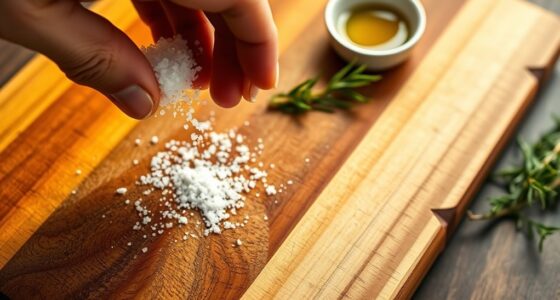
When selecting the right wood species for your kitchen, focus on durability, safety, and aesthetic appeal to withstand daily wear. Opt for woods with tight grains like maple or oak, which resist scratches and moisture. Consider finishes that complement the wood’s natural characteristics while offering protection. Your choice should match your style preference, whether sleek or rustic, ensuring longevity and easy maintenance. Keep exploring to learn which specific woods best suit your kitchen needs and style.
Key Takeaways
- Choose durable, hard woods like oak or maple to withstand daily kitchen wear and tear.
- Consider grain patterns; straight grains offer uniformity, while dramatic grains add character.
- Ensure the wood responds well to finishes for moisture resistance and stain compatibility.
- Prioritize species with tight, dense grain for better resistance to scratches and damage.
- Match the wood’s aesthetic and grain to your kitchen style—modern, rustic, or traditional.

Choosing the right wood species for your kitchen is essential to guarantee durability, safety, and aesthetic appeal. When selecting wood, you need to consider how its grain patterns will contribute to the overall look and feel of your space. Grain patterns influence not only the visual texture but also how the wood ages and reacts to daily use. For example, straight-grain woods like oak or maple tend to offer a uniform appearance, making them easier to work with and ensuring a consistent look over time. Conversely, more dramatic grain patterns, such as those in walnut or cherry, can add character and uniqueness to your kitchen surfaces. Think about the style you want to achieve—do you prefer a sleek, modern look or a more rustic, textured vibe? Your choice of grain pattern plays a significant role in creating that aesthetic.
Finish suitability is another critical factor when choosing a wood species. The finish you apply will protect the wood from moisture, stains, and scratches, so you want to pick a species that responds well to different finishing techniques. Some woods absorb stains and sealants evenly, giving you a smooth, consistent surface, while others might require special preparation to avoid blotchiness or uneven coloration. For instance, woods like cherry or mahogany are known for their excellent finish suitability, allowing you to achieve a polished, high-end appearance. On the other hand, woods with open or coarse grain patterns, like oak or ash, may need more careful finishing to prevent dirt and liquids from settling into the grain. Understanding how a wood species interacts with various finishes helps you decide which type will best suit your needs, whether you’re aiming for a matte, glossy, or semi-transparent look. Additionally, selecting a wood with durability, such as a hard and tight-grain species, is crucial for withstanding the everyday wear and tear of a busy kitchen.
Frequently Asked Questions
How Does Wood Humidity Affect Kitchen Durability?
Wood humidity critically impacts kitchen durability because excess moisture weakens the wood, making it prone to warping, cracking, or swelling. By controlling humidity levels, you prevent fluctuations in wood moisture, guaranteeing your surfaces stay stable and resilient. Proper humidity control maintains consistent wood moisture, which prolongs the lifespan of your kitchen furniture and countertops. Keep humidity levels steady to avoid damage and ensure your wood remains durable and beautiful over time.
Are There Eco-Friendly Wood Options for Kitchen Use?
Yes, there are eco-friendly options for your kitchen. You can choose reclaimed wood, which is repurposed from old structures, reducing waste and environmental impact. Additionally, opt for wood from sustainable forestry practices that ensure responsible harvesting and replanting. These choices help you create a beautiful, durable kitchen while supporting environmental conservation. Reclaimed and sustainably sourced woods are both stylish and eco-conscious, making them excellent options for your kitchen project.
What Are the Best Finishes for Kitchen Wood Surfaces?
You should choose finishes like food-safe oils or polyurethane to protect your kitchen wood surfaces. These finishes enhance the natural wood grain patterns and help control color variation, giving your surfaces a beautiful, durable look. Oil finishes penetrate the wood, emphasizing grain details, while polyurethane offers a tough, glossy layer. Both options keep your surfaces resistant to moisture and stains, ensuring they stay looking great over time.
How to Prevent Wood From Warping in Humid Kitchens?
Like a ship steering through stormy seas, you must protect your wood from warping in humid kitchens. Use proper wood treatment, sealing your surfaces thoroughly, and install moisture barriers to block excess humidity. Keep the environment well-ventilated and maintain consistent humidity levels. Regularly check and reapply sealants if needed, ensuring your wood stays stable and beautiful, no matter how the weather shifts around you.
Can Certain Wood Species Resist Kitchen Staining Effectively?
Yes, some wood species resist kitchen staining better than others. Look for woods with tight, dense grain patterns like maple or oak, which naturally repel liquids and stains. These woods tend to have higher staining resistance because their grain patterns make it harder for liquids to penetrate. By choosing these species, you’ll reduce staining and keep your kitchen surfaces looking clean and beautiful longer.
Conclusion
Choosing the right wood for your kitchen guarantees durability and beauty. While some worry about maintenance, picture a well-sealed oak countertop resisting stains and scratches, or maple holding up to daily wear. By selecting a wood that matches your lifestyle and care routine, you’ll enjoy a stunning, functional space for years to come. Don’t let concerns hold you back—visualize your perfect kitchen, and pick the wood that brings it to life.