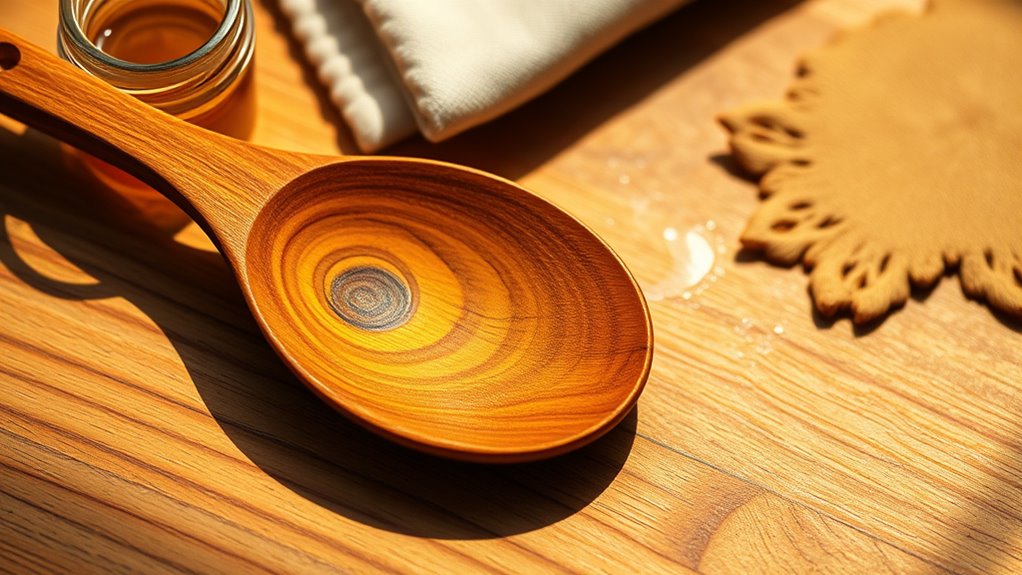

To protect your wood utensils, regularly apply food-safe oils like mineral oil or beeswax to seal in moisture and prevent bacteria buildup. Clean and dry your utensils thoroughly after each use, inspecting them for wear and reapplying finishes as needed. Avoid harsh chemicals to keep finishes safe for food contact. Proper maintenance prolongs their life and keeps them hygienic. If you want to learn more about effective techniques and products, keep exploring how to care for your wooden tools effectively.
Key Takeaways
- Use food-grade oils like mineral oil and beeswax to penetrate and protect wooden utensils.
- Regularly apply a thin layer of oil to maintain the wood’s integrity and prevent drying out.
- Clean utensils thoroughly after each use and dry completely to prevent mold and bacteria growth.
- Avoid harsh chemicals; opt for safe finishes that do not leach into food.
- Inspect and reapply oils or finishes as needed to prolong utensil lifespan and ensure safety.
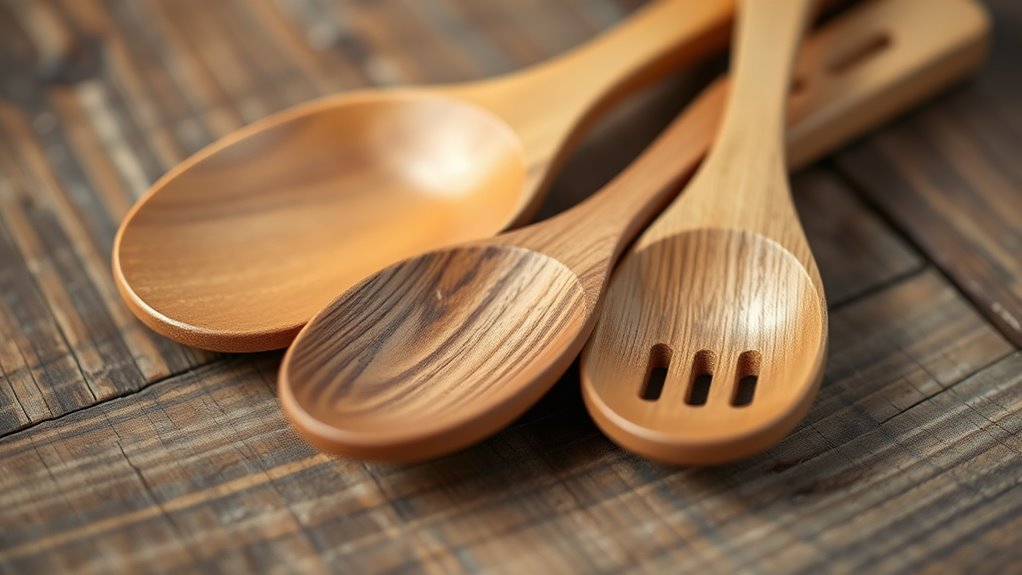
Wooden utensils are a popular choice in many kitchens due to their durability and natural aesthetic. To ensure their longevity, it is essential to apply the right oils or finishes that penetrate the wood and provide a protective barrier against moisture and bacteria. Food-grade mineral oil is a common and safe option, as it does not go rancid and helps maintain the wood’s integrity. Applying a thin layer of oil regularly can prevent cracking and drying out, especially after washing. Additionally, beeswax or specialized wood finishes can add a layer of protection and enhance the appearance of the utensils. It is important to avoid using harsh chemicals or finishes that may leach into food or cause health concerns. Proper cleaning and thorough drying after each use help preserve the wood and prevent mold or bacterial growth. Regularly inspecting utensils for signs of wear and reapplying oil as needed will keep them in good condition. Proper maintenance of wooden utensils not only prolongs their life but also ensures safe and hygienic use in your kitchen.
Frequently Asked Questions
How Often Should I Reapply Protective Oils on My Wooden Utensils?
You should reapply protective oils on your wooden utensils every few months or based on seasonal reapplication, especially if you notice they’re drying out or losing their sheen. For frequent usage, like daily cooking, consider re-oiling more often—about once a month. Regular maintenance helps keep your utensils in great condition, preventing cracking and ensuring they stay safe and functional. Adjust reapplication frequency according to usage and environmental conditions.
Are There Any Natural Oils That Are Best for Food Safety?
You’re probably wondering if any natural oils are truly food safe, and the answer is yes. Oils like beeswax, mineral oil, and walnut oil are excellent choices, providing safe, natural finishes that won’t harm your food. These natural oils penetrate deeply, protecting your utensils while keeping them safe for everyday use. Just remember to reapply regularly for continued protection and enjoy your beautifully maintained, food-safe wooden utensils.
Can I Use Essential Oils as a Finish for Wood Utensils?
You can’t use essential oils as a finish for wood utensils because they’re not food-safe and may cause skin irritation. Instead, consider natural oils like beeswax or mineral oil designed for food contact. If you want to incorporate aromatic benefits, try adding essential oil blends for aromatherapy uses during cleaning or maintenance, but avoid applying them directly to the utensil’s surface. Always prioritize safety and food-grade finishes.
What Signs Indicate My Wood Utensils Need Resealing or Refinishing?
You notice the wood grain wear and finish discoloration on your utensils, like fading paint on a cherished picture. These signs indicate it’s time to reseal or refinish. When the surface feels rough or looks dull, the protective layer has weakened. Cracks or splinters emerging also signal the need. Addressing these issues promptly helps maintain your utensils’ integrity, keeping them safe and beautiful for everyday use.
Are There Any Finishes I Should Avoid Due to Health Concerns?
You should avoid finishes with toxic chemical finishes and harmful additives, as they can pose health risks when in contact with food. Look for food-safe, natural options like beeswax, mineral oil, or pure tung oil. These finishes are non-toxic and safe for utensils that touch your food. Always check ingredient labels and opt for products specifically labeled as food-safe to safeguard your health and ensure safe use.
Conclusion
Think of your wood utensils as trusted friends, delicate but resilient. Applying oils and safe finishes is like giving them a gentle shield, much like a knight’s armor, to guard against the wear of daily battles. With proper care, your utensils will stand strong, serving faithfully for years to come. Protecting them isn’t just maintenance—it’s nurturing a lasting bond, ensuring your kitchen’s silent heroes remain beautiful and functional, ready for every culinary adventure ahead.