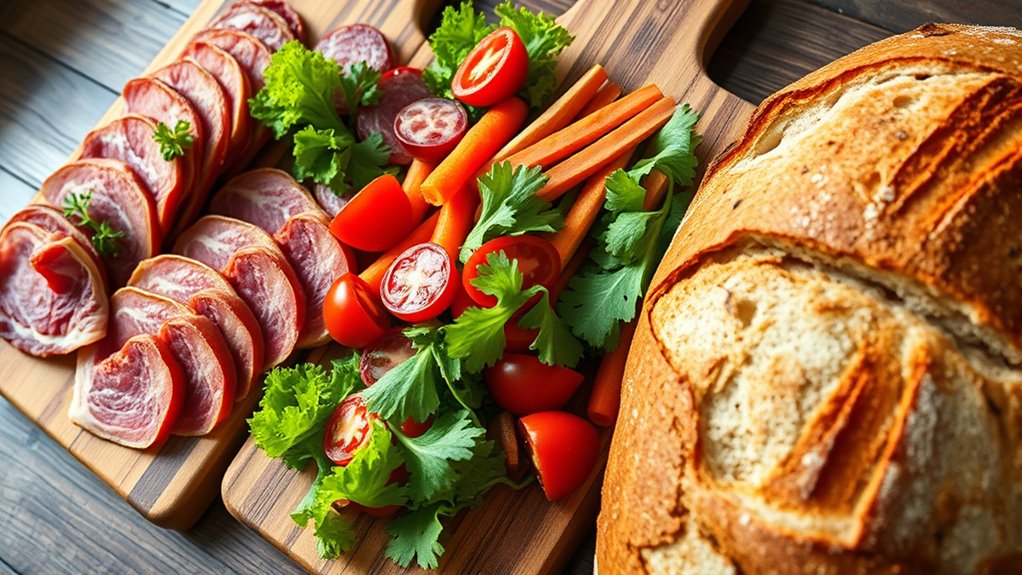

Designating separate cutting boards for meat, vegetables, and bread helps you prevent cross-contamination and keep your food safer. By using specific boards for each type, you reduce bacteria transfer, avoid flavor mix-ups, and make sanitation easier. Always wash and sanitize each board properly after use, especially when handling raw meat. Consistently applying these practices protects your health and improves kitchen organization. If you stay tuned, you’ll discover more tips to enhance your food safety routines.
Key Takeaways
- Use separate cutting boards for meat, vegetables, and bread to prevent cross-contamination and ensure food safety.
- Label or color-code boards for easy identification, reducing mistakes during food preparation.
- Sanitize each board thoroughly after use, especially when switching between raw meat and other items.
- Store boards vertically or separately to maintain organization and prevent accidental contact.
- Develop consistent practices, like dedicated utensils, to reinforce the use of designated boards for each food group.

To prevent cross-contamination and maintain the freshness of your food, it is vital to designate separate boards for meat, vegetables, and bread. Using different cutting boards helps you control cross contamination prevention because it reduces the risk of bacteria transfer from raw meat to produce or baked goods. When you handle raw meat, bacteria like Salmonella or E. coli can easily spread if you don’t switch to a clean board before preparing other items. By assigning specific boards for each food group, you create a clear system that minimizes the chance of accidental contamination, keeping your food safe and your kitchen organized. Implementing vertical storage solutions can further optimize your kitchen workspace and support organized food handling.
Proper sanitation techniques are essential to reinforce your efforts. After each use, wash your cutting boards thoroughly with hot, soapy water. For added safety, consider sanitizing with a solution of one tablespoon of unscented bleach per gallon of water, especially after cutting raw meat. This step helps eliminate lingering bacteria that could cause foodborne illnesses. If your boards are plastic, you can often run them through the dishwasher for a more thorough cleaning, but wooden boards benefit from hand washing and air drying to prevent warping and cracking. Regularly inspecting your boards for deep cuts or grooves is also wise, as bacteria can hide in those crevices and multiply.
Having designated boards for different foods makes proper sanitation easier and more effective. For example, when you’re done cutting vegetables, you can wash that board separately, then sanitize it before using it for bread or other items. This practice prevents cross contamination between raw and cooked foods, especially when handling items that won’t be cooked further, like bread. Remember, cross contamination prevention is not just about the initial separation but also about maintaining cleanliness throughout food preparation. Use separate knives and utensils for each type of food, and clean them regularly, especially after working with raw meat.
Adopting this system simplifies your kitchen routine and enhances food safety. It’s a proactive step that reduces the risk of illness and keeps your ingredients tasting their best. By committing to proper sanitation techniques and consistently using designated boards, you develop habits that protect both your health and your family’s. Keeping raw meat, vegetables, and bread on separate boards isn’t just a recommendation; it’s a key part of responsible food handling. With these simple practices, you can confidently prepare meals without fear of cross contamination, ensuring every bite is safe and delicious.
Frequently Asked Questions
Are There Specific Materials Best Suited for Each Type of Board?
Yes, specific materials suit each type of board for ideal material suitability and board maintenance. Use wood or bamboo for bread and vegetables because they’re gentle on blades and easy to clean. For meat, choose plastic or bamboo, as they resist bacteria better and are easier to sanitize. Regularly clean and dry each board to prevent cross-contamination and maintain their longevity, ensuring they stay safe and effective for your food prep.
How Often Should I Replace or Sanitize the Designated Boards?
You should sanitize your boards after each use to prevent cross-contamination, especially when switching between meat, vegetables, and bread. Regular board maintenance includes thorough cleaning with hot, soapy water and sanitizing at least once a day or after handling raw meat. Replace boards that show deep cuts, stains, or persistent odors, as these can harbor bacteria. Proper sanitation frequency and maintenance keep your kitchen safe and your food fresh.
Can I Use the Same Board for Raw and Cooked Foods?
Did you know that cross contamination causes 48 million foodborne illnesses annually? You shouldn’t use the same board for raw and cooked foods, as it risks spreading bacteria. To prevent cross contamination and maintain kitchen hygiene practices, always use separate boards for raw meat and cooked items. This simple step protects you and others from illness, ensuring your kitchen stays safe and hygienic.
What Color Coding System Is Most Effective for Food Safety?
You should use a clear color coding system to boost food safety and prevent cross-contamination. Assign specific colors to different food types—like red for raw meats, green for vegetables, and blue for cooked foods. This visual cue helps you quickly identify the right board or utensil, reducing the risk of foodborne illnesses. Consistent color coding makes your kitchen safer and keeps your food handling organized.
Do I Need Separate Boards for Dairy and Seafood?
You should use separate boards for dairy and seafood to prevent cross-contamination. A dairy board isn’t always necessary if you use a dedicated seafood board, which offers clear benefits like reducing bacteria transfer. By keeping dairy and seafood separate, you guarantee food safety, protect against allergens, and maintain quality. This simple step helps you avoid potential health risks, making your kitchen safer and more organized.
Conclusion
Think of your kitchen like a well-orchestrated symphony, where each board plays its essential part. Just like a chef’s precision keeps flavors pure, designating separate boards for meat, vegetables, and bread prevents cross-contamination. When I started doing this, I felt like I’d tamed a wild kitchen. Now, it’s smooth, safe, and satisfying—proof that small habits can turn chaos into harmony. Your utensils are the instruments; let them play their part in harmony.