Both maple and walnut cutting boards resist bacteria well when you maintain them properly. Maple’s dense, tight grain makes it durable and less prone to scratches where bacteria can hide, while walnut’s natural oils and softer surface still inhibit bacterial growth effectively. Regular cleaning, drying, and oiling are key to keeping your board hygienic long-term. Want to discover how to maximize their lifespan and safety? Keep exploring to find out more.
Key Takeaways
- Maple’s dense, tight grain naturally resists bacteria and deep cuts where bacteria can hide.
- Walnut’s dense, closed grain and natural oils inhibit bacterial growth effectively.
- Proper maintenance—regular cleaning, drying, and oiling—is essential for both woods’ bacteria resistance.
- Maple’s hardness reduces scratches and grooves, lowering bacterial harboring risks.
- Walnut’s antimicrobial oils provide an additional natural defense against bacterial contamination.
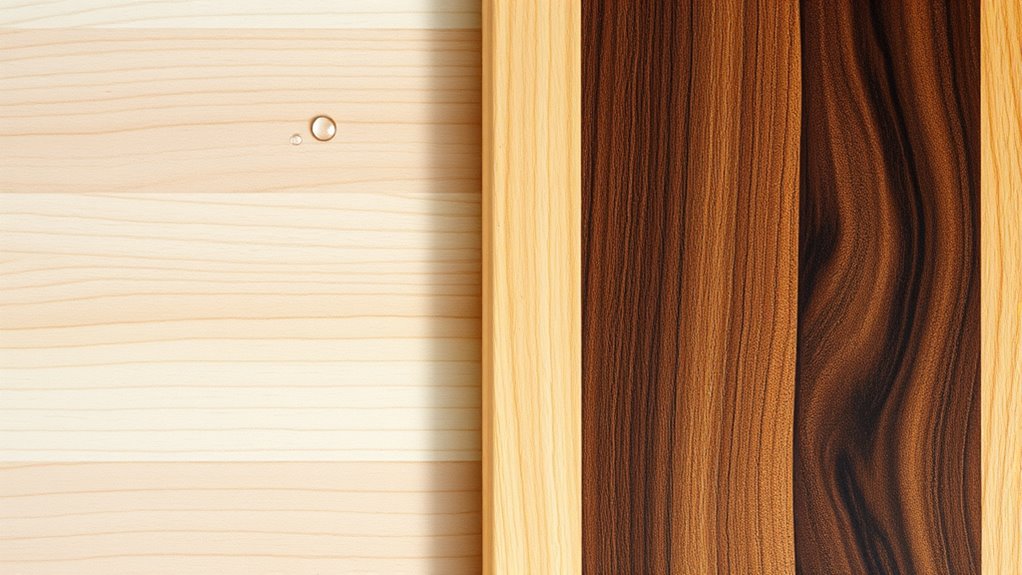
When choosing a cutting board, you’ll want to contemplate the material’s durability, appearance, and how it impacts your kitchen. One key aspect to consider is bacteria resistance, which directly influences food safety. Maple and walnut are two popular options, each with unique characteristics that affect how well they resist bacteria and how easy they are to maintain. Understanding these differences helps you pick the right board and keep it in top shape.
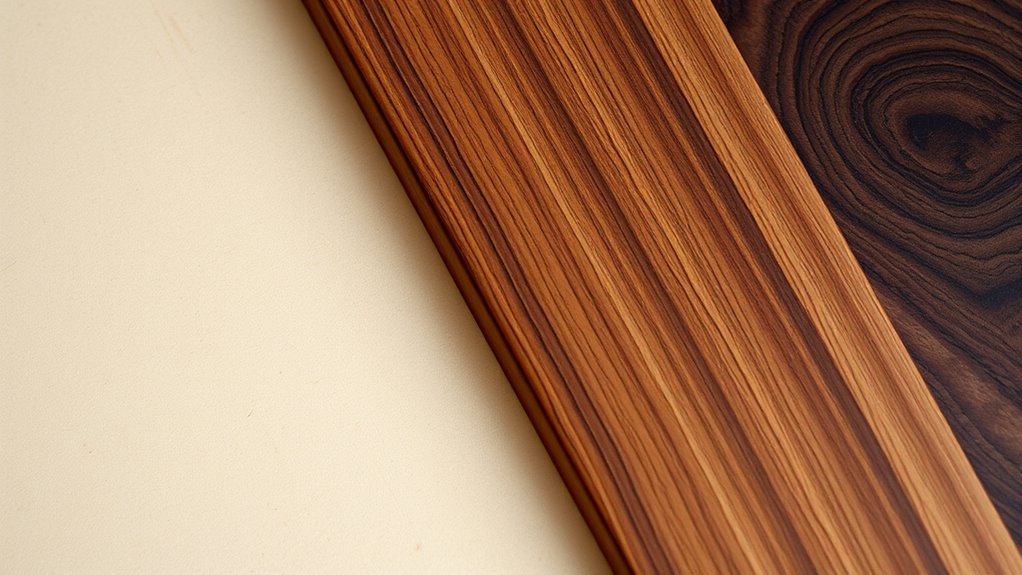
Maple cutting boards are known for their hardness and tight grain structure, making them naturally resistant to bacteria. This density means fewer grooves and scratches where bacteria can hide, which is a big plus for food safety. However, even with a resilient surface, regular maintenance is essential. Proper cleaning after each use prevents bacterial buildup. Use hot, soapy water and a thorough scrub, then dry the board immediately to prevent moisture absorption. Occasionally, you can sanitize with a diluted vinegar solution or a food-safe disinfectant. Applying mineral oil regularly keeps the wood hydrated and less prone to cracking, which can harbor bacteria over time. These maintenance tips help guarantee your maple board remains a safe, bacteria-resistant surface. Additionally, choosing a hygienic material can further enhance food safety in your kitchen.
Walnut cutting boards, while slightly softer than maple, still offer strong resistance to bacteria due to their dense, closed grain. This makes them less likely to develop deep cuts where bacteria can settle. Walnut’s rich oils also have natural antimicrobial properties, helping to inhibit bacterial growth. For food safety, it’s important to clean your walnut board thoroughly after each use, especially when handling raw meats or vegetables. Use hot water and soap, and avoid soaking it for too long, as excessive moisture can cause warping or cracking. Regular oiling with food-grade mineral oil not only enhances appearance but also forms a protective layer against moisture and bacteria. Maintenance tips like avoiding harsh detergents and keeping the surface dry between uses will prolong your walnut board’s lifespan and maintain its bacteria resistance.
Both maple and walnut boards excel at resisting bacteria when properly cared for, but their different textures and maintenance needs influence your choice. Maple’s tight grain makes it a durable, low-maintenance option, while walnut’s natural oils and softer surface offer unique benefits. Whichever you choose, consistent cleaning, proper drying, and regular oiling are vital to guaranteeing food safety. By following these maintenance tips, you can enjoy a beautiful, bacteria-resistant cutting board that serves you well for years. Remember, the key to safety isn’t just in selecting the right material but also in how you care for it daily.
As an affiliate, we earn on qualifying purchases.
Frequently Asked Questions
How Do Maintenance Routines Differ for Maple and Walnut Cutting Boards?
When maintaining your cutting boards, you focus on proper board cleaning and oiling routines. For both maple and walnut, wash with warm, soapy water after each use and dry thoroughly. Regularly oil your board with food-grade mineral oil to prevent cracking and maintain moisture. While the routines are similar, walnut may need slightly more frequent oiling due to its oil content, but overall, consistent cleaning and oiling keep both types in top condition.
Are There Specific Foods Better Suited for Each Wood Type?
You might think it’s a toss-up, but certain foods are best suited for each wood type. Maple’s surface is gentle on knives and resists staining, making it perfect for fruit pairing and delicate items. Walnut’s rich, oily surface can handle tougher tasks, like raw meats or cheeses, without warping. Keep in mind, always clean thoroughly to prevent cross-contamination. Your choice depends on what you’re preparing and how you care for it.
What Is the Environmental Impact of Sourcing Maple Versus Walnut?
When considering the environmental impact of sourcing maple versus walnut, think about sustainable harvesting practices and carbon footprint. Maple trees grow quickly and are often harvested sustainably, reducing environmental strain. Walnut trees grow more slowly, and their harvesting can have a higher carbon footprint. By choosing products from suppliers committed to sustainability, you help lower environmental impact and support responsible forestry practices.
How Long Do Maple and Walnut Cutting Boards Typically Last?
You’ll find that the durability of maple and walnut cutting boards depends largely on your maintenance practices. Maple boards tend to last around 10 to 15 years with proper care, while walnut boards can last even longer due to their dense wood. Regular oiling and gentle cleaning help preserve their surface, ensuring they stay functional and attractive for years. Good upkeep maximizes your investment in these beautiful, durable woods.
Can Treatments or Sealants Affect Bacteria Resistance on These Boards?
You might wonder if treatments or sealants influence bacteria resistance on your cutting boards. Sealant effectiveness depends on the product used; some sealants create a barrier that reduces bacteria penetration, while others may not. The treatment impact varies—properly applied, they can enhance resistance, but poor application can trap bacteria. Always choose food-safe sealants and follow instructions carefully to guarantee your boards stay hygienic and safe for food prep.
Conclusion
Think of your cutting board as the frontline of your kitchen battle. Maple and walnut both stand strong, but maple’s denser surface acts like a shield, resisting bacteria more effectively. Choosing the right board is like selecting a trusted warrior—one that keeps your food safe and your kitchen healthy. So, pick the surface that fights off bacteria best, and let it be your trusty sidekick in every meal. Your kitchen’s safety depends on it.