TL;DR

Get business pricing on tools and workshop supplies
- Business-only prices and quantity discounts
- Tax-exempt purchasing
- Multiple users, one account, clear invoices
Ideal Home reports that tightly packed wardrobes and drawers can restrict airflow, allowing moisture to build up and potentially contribute to condensation and mould. Professional organisers recommend leaving space between clothes, improving room ventilation and checking behind large furniture, especially during colder months.
An Ideal Home report warns that overfilled wardrobes and drawers can restrict airflow and trap moisture, increasing the risk of condensation, damp and mould in bedrooms. Professional organisers cited by the publication recommend leaving space between clothes, ventilating rooms and checking areas hidden behind large furniture, particularly during colder months.
Shannon Murphy, a professional organiser and founder of Simpl Living Co, told Ideal Home that closely packed clothing can prevent air from circulating inside wardrobes and chests of drawers. In her account, moisture can then become trapped in the enclosed space, raising humidity and creating conditions in which condensation and mould may develop. The report presents this as a risk, not a guarantee that a full wardrobe will become mouldy.
Kate Dufton, a professional organiser and declutterer at Ace Your Space, recommends keeping wardrobes at no more than 80% full, leaving room between garments. The report suggests rotating seasonal clothing to free up space without requiring people to discard clothes they still use. Out-of-season items can be stored elsewhere, including under a bed or in a suitcase, and the article mentions vacuum storage bags as one option.
Other suggestions include using space-saving hangers and drawer organisers to make storage less crowded. Hanging moisture absorbers or a room dehumidifier may help manage excess moisture, according to the report, but these products are not presented as a substitute for ventilation or investigating a damp problem. The article also advises leaving a gap between large furniture and cold external walls where possible, and periodically checking concealed areas.
How Crowded Storage Traps Moisture
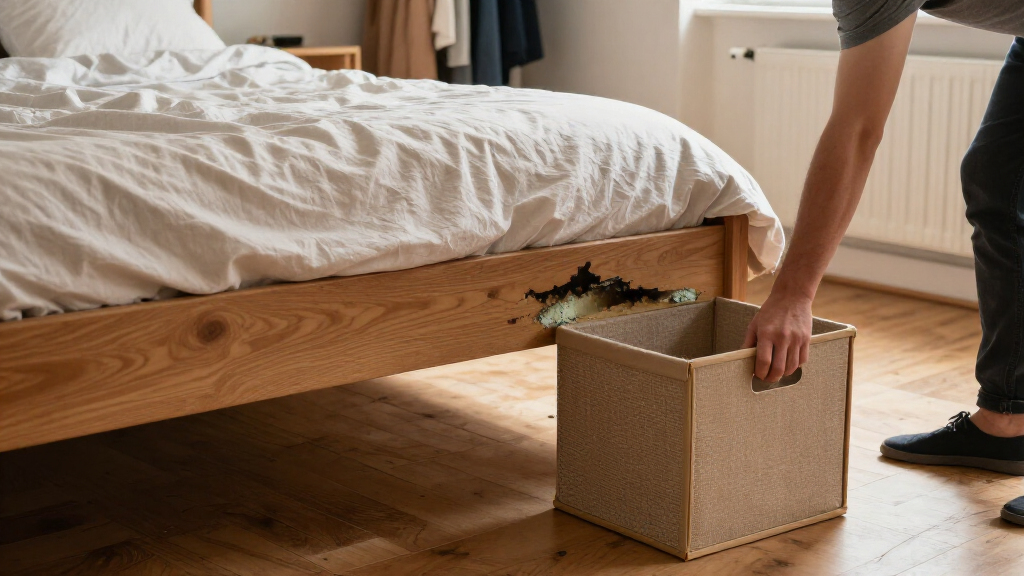
The advice matters because wardrobes and drawers can conceal early signs of moisture. When clothes are packed tightly, there is less room for air to move around them; when a large wardrobe or chest sits flush against an external wall, the wall behind it can also be harder to inspect. Murphy told Ideal Home that a bedroom may appear clean and organised even while damp develops out of sight behind furniture.
That can delay noticing a problem until there are visible signs on clothing, furniture or the wall. The report says the risk is especially relevant in autumn and winter, when homes are used differently and condensation is more common. Making storage less crowded and checking hidden spaces are relatively simple steps, though they cannot identify or resolve every underlying cause of damp.
For readers, the practical point is to treat ventilation and inspection as part of bedroom storage, rather than relying on a tidy appearance alone. If mould is already present or keeps returning, the article’s storage tips do not establish the cause; the affected area and any ongoing moisture source may need further attention.
vacuum storage bags for seasonal clothes
As an affiliate, we earn on qualifying purchases.
As an affiliate, we earn on qualifying purchases.
Why Winter Wardrobes Get Crowded
The report focuses on a seasonal pattern in UK homes: colder weather encourages people to bring out thicker clothing and spend more time indoors, while bedrooms may also hold clothes from other seasons. Combining winter and summer items in one wardrobe can leave little space between garments. Ideal Home identifies this crowding as a common storage problem, but does not provide survey data measuring how many households experience it or how often it causes mould.
Its recommendations centre on creating more space and making concealed areas easier to inspect. A seasonal clothing swap can move items not currently in use to another location. Furniture can be pulled slightly away from an external wall if the room allows, and ventilation can be maintained. Where fitted or heavy storage cannot be moved, the report suggests opening wardrobe doors occasionally and checking for signs of moisture.
“A room can appear clean and organised while damp develops unnoticed behind a chest of drawers or wardrobe.”
— Shannon Murphy, quoted by Ideal Home
What the Storage Advice Cannot Establish
The report does not provide test results, population data or a measured estimate of how much overfilling raises the risk of mould. The 80% figure is advice attributed to a professional organiser, not a threshold shown in the article to apply in every home. Damp can have causes beyond crowded clothes storage, and the report does not diagnose any individual property.
It is also unclear from the source how effective particular moisture-absorbing products are under different conditions. The article names commercial products and prices, but does not offer comparative testing. It does not provide detailed remediation guidance for established mould or explain when a recurring problem may require a specialist assessment. Readers should not assume that rearranging clothes alone will fix persistent damp.
Steps to Take Around the Bedroom
The report recommends starting with a check of wardrobes and drawers: make room between garments, move out-of-season clothes elsewhere where practical, and avoid packing storage completely full. Readers can also inspect behind wardrobes and chests, leave a gap from cold external walls when possible, and keep the bedroom ventilated. Moisture absorbers or a dehumidifier are presented as possible additions when excess moisture is a concern.
After making those changes, check concealed walls and stored clothing periodically for signs of moisture or mould. If mould is visible, returns after cleaning, or appears alongside persistent damp, the source material does not say that storage changes are enough; the underlying cause remains to be identified. Ideal Home points readers to separate guidance on removing mould from walls, but gives no timetable for further reporting or new findings.
Key Questions
Can an overfilled wardrobe cause mould?
It can contribute to conditions that encourage mould, according to the organisers quoted by Ideal Home. Tightly packed clothes restrict airflow and may trap moisture, but a full wardrobe does not automatically mean mould will develop.
How full should a wardrobe be?
Kate Dufton recommends keeping it at a maximum of 80% full, with breathing room between clothes. The article presents this as professional advice, not a scientifically established rule for every home.
What can I do if I cannot move a wardrobe?
Ideal Home suggests ventilating the room, opening wardrobe doors occasionally and checking accessible hidden areas for damp. A dehumidifier may also be considered, but the report does not say it will resolve every cause of moisture.
Will a moisture absorber solve existing damp or mould?
The source does not establish that moisture absorbers can treat existing mould or fix its underlying cause. They are described as a way to manage excess moisture; persistent or recurring damp needs further investigation.
Source: rss
Halloween Picks
halloween
As an affiliate, we earn on qualifying purchases.