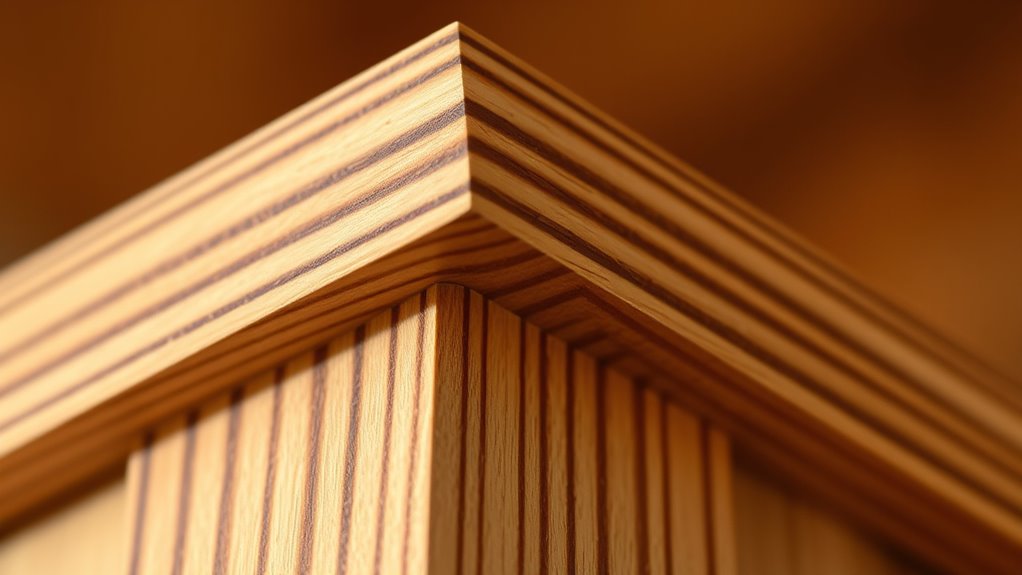

Lock miter joints combine precision craftsmanship with striking aesthetics to create strong, seamless corners in your woodworking projects. By ensuring accurate cuts and fitting the interlocking parts snugly, you achieve a professional look that’s both durable and decorative. If you focus on precise techniques, you’ll produce joints that enhance both the strength and visual appeal of your work. Keep exploring to discover how mastering this joinery can elevate your projects even further.
Key Takeaways
- Precise cuts ensure tight interlocking joints, enhancing both strength and seamless appearance.
- Specialized router bits or dado blades improve accuracy for crisp, clean lock miter corners.
- Proper planning and measurement are essential for achieving consistent, professional-looking joints.
- Decorative options like veneers or inlays can highlight the craftsmanship of lock miter corners.
- Accurate, well-fitted joints provide durability and elevate the aesthetic appeal of woodworking projects.
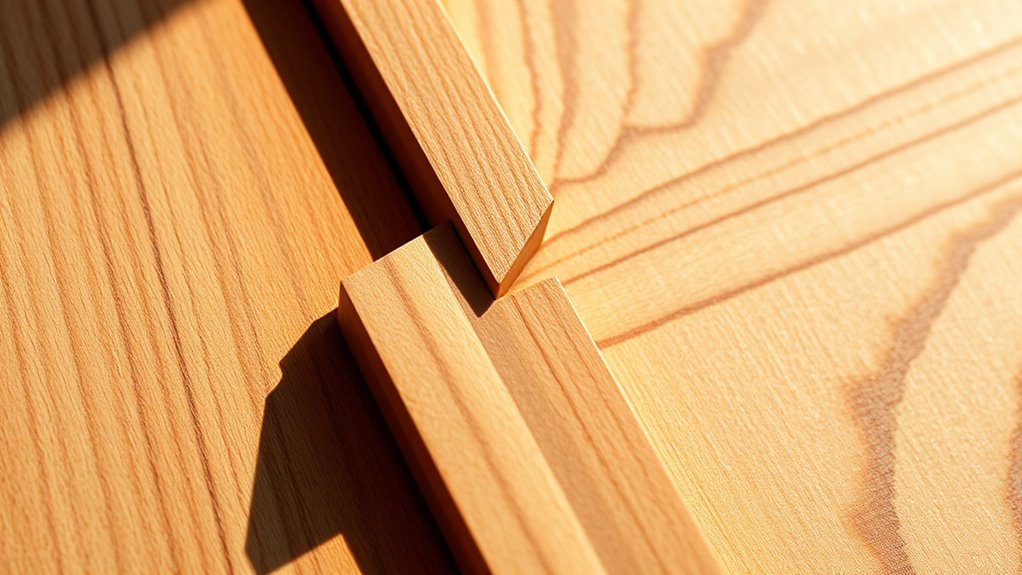
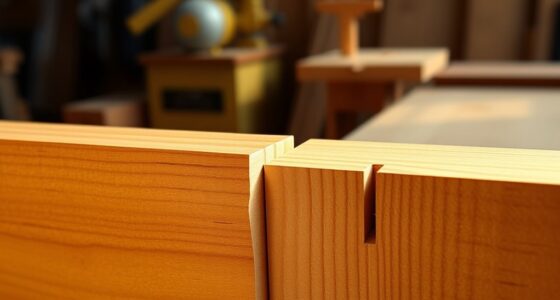
Lock miter joints are a popular woodworking technique for creating strong, seamless corners that lock together securely. When you use lock miter joints, you’re not just achieving a sturdy connection; you’re also opening up a world of decorative possibilities. These joints are especially valued in projects where both strength and visual appeal matter, such as cabinetry, furniture, and display cases. The joint’s design allows the pieces to interlock tightly, providing exceptional joint strength that resists pulling apart or warping over time. This makes lock miter joints ideal for load-bearing structures or items that will see frequent use.
Lock miter joints create strong, seamless, and decorative corners ideal for cabinetry and furniture.
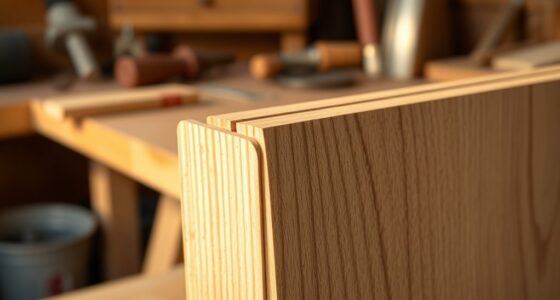
One of the key benefits of lock miter joints is their ability to combine durability with a clean, professional look. Because the joint is cut with precision, it creates a seamless corner that looks almost integrated, eliminating the need for bulky fasteners or visible hardware. This seamlessness enhances the overall aesthetic, giving your project a polished, high-quality appearance. The joint’s interlocking nature means you can achieve sharp, crisp corners that look intentional and refined. With the right choice of wood and finish, you can accentuate the joint’s decorative potential, turning it into a feature rather than just a structural necessity.
Getting a perfect lock miter joint requires careful planning and precise cuts. Using a specialized router bit or a dado blade on your table saw ensures the cuts are accurate and consistent. When you cut the joint, you’ll want to make sure the interlocking parts fit snugly without forcing them together. A loose fit defeats the purpose of the joint’s strength, while an overly tight fit can make assembly difficult or damage the wood. Once assembled, the joint provides a continuous, smooth surface, making it easier to apply finishes or veneer for an even more attractive appearance. Additionally, understanding the importance of precision cutting can greatly improve the joint’s overall quality and strength.
You can also experiment with decorative techniques to highlight the joint. For instance, contrasting wood veneers or inlays can be embedded into the joint to draw attention to the craftsmanship. Finishing techniques like staining or painting can further enhance the visual impact, emphasizing the clean lines and precise joinery. Lock miter joints aren’t just about strength—they’re about elevating your woodworking projects to a higher aesthetic level, combining durability with detailed craftsmanship. Whether you’re building a simple box or an elaborate cabinet, these joints give you the confidence that your corners will remain tight and attractive for years to come.
Frequently Asked Questions
Can Lock Miter Joints Be Used With Metal or Only Wood?
Lock miter joints are primarily designed for wood, offering precision and a neat finish. While you can adapt them for metal applications, it’s not common because metals require stronger joints. Using lock miter joints with metal may compromise joint strength, especially if the metal isn’t thick or durable enough. For metal projects, consider other joining techniques like welding or specialized metal fasteners to guarantee maximum joint strength.
What Tools Are Best for Cutting Lock Miter Joints?
Imagine guiding a router smoothly along the edge as you cut a lock miter joint. The best tools for this task are specialized router bits designed for lock miter cuts. Use sharp, high-quality bits and steady cutting techniques to guarantee precision and clean corners. A router with adjustable speed helps control the cut, giving you a perfectly interlocking joint that’s both strong and visually appealing.
How Do Lock Miter Joints Hold up Over Time?
Lock miter joints hold up well over time if you focus on joint durability and finish longevity. When properly crafted, they resist loosening and maintain their tight fit, even with regular use. Using quality materials and applying a good finish helps protect the joint from moisture and wear. With proper care, your lock miter joints will stay strong and attractive, ensuring your project looks great years down the line.
Are Lock Miter Joints Suitable for Outdoor Furniture?
Think of lock miter joints as a sturdy ship’s hull—they can handle outdoor conditions if made from the right materials. They’re suitable for outdoor furniture when crafted with weather-resistant woods or treated with sealants. Material durability is key, so make certain you choose options like cedar or treated plywood. With proper care, these joints will stand strong against the elements, keeping your furniture both beautiful and functional over time.
What Are Common Mistakes to Avoid When Making Lock Miter Joints?
When making lock miter joints, avoid misalignment by carefully checking joint alignment before assembly. Confirm your tools, especially your router or miter gauge, are properly calibrated to cut precise, matching edges. Don’t rush the process—measure twice, cut once. Keep your workpiece steady to prevent uneven cuts. Also, avoid applying too much force, which can compromise joint integrity. Proper technique and preparation lead to perfect, durable lock miter joints.
Conclusion
Lock miter joints are like puzzle pieces that fit perfectly, ensuring your corners are both strong and beautiful. I once watched a craftsman assemble a cabinet, and the lock miter joints snapped together like a secret handshake—tight and seamless. Just as a well-made lock miter provides precision and elegance, your projects will stand the test of time, showcasing craftsmanship that’s as reliable as it is visually stunning. Embrace this technique for flawless, durable corners every time.