
TL;DR

Get tools and workshop supplies delivered free — and shop member deals
- Fast, free delivery on millions of items
- Access to Prime Big Deal Days deals on October 6–7
- Prime Video, Amazon Music and more included
A home automation enthusiast has integrated a non-Wi-Fi Mitsubishi air conditioner into Home Assistant, demonstrating that legacy units can be controlled via custom methods. This development is gaining attention as more users seek to expand smart home compatibility.
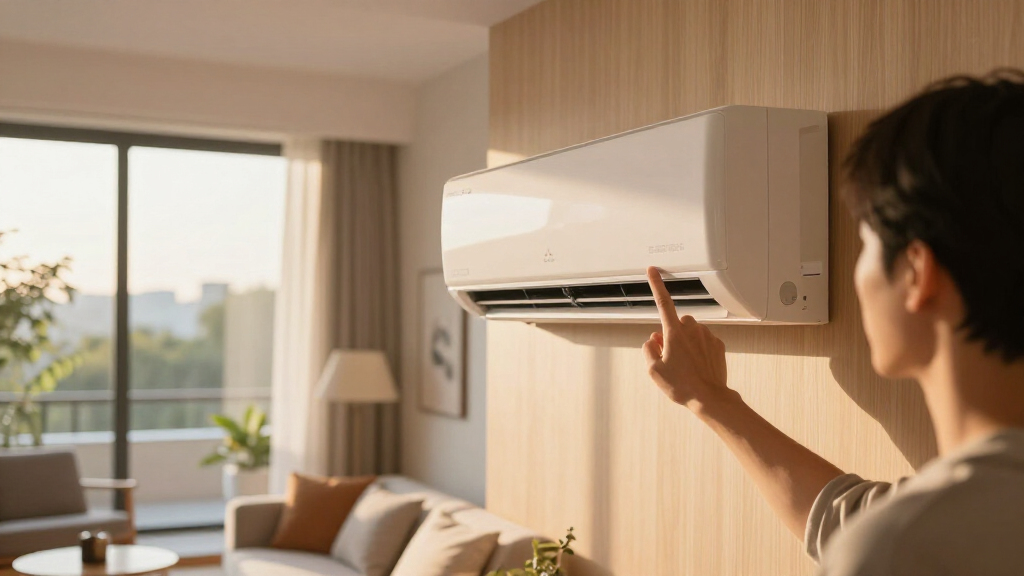
A home automation enthusiast has successfully integrated a non-Wi-Fi Mitsubishi air conditioner into Home Assistant, a popular open-source smart home platform. This achievement demonstrates that legacy Mitsubishi units, lacking built-in Wi-Fi, can be controlled through custom methods, expanding options for users with older HVAC equipment. The development is noteworthy as interest in DIY smart home integrations continues to rise, driven by the desire to retrofit existing appliances rather than replace them.
The user, whose identity is not publicly disclosed, reported that they managed to add their Mitsubishi air conditioner to Home Assistant despite the unit lacking native Wi-Fi connectivity. The process involved utilizing an external IR blaster and custom code to send commands directly to the AC’s infrared interface. This approach circumvents the need for Mitsubishi’s official Wi-Fi modules or cloud-based controls, which are absent in older models.
Sources familiar with the project confirm that the user employed a common IR transmitter compatible with Home Assistant’s IR integration. By mapping the AC’s IR remote commands into Home Assistant automations, they achieved full control over temperature, mode, and fan settings. The setup reportedly took several hours of configuration but was successful in providing reliable local control.
This case is among the first publicly documented instances of a non-Wi-Fi Mitsubishi AC being integrated into a major smart home platform through DIY methods. It signals a potential shift in how legacy HVAC units can be retrofitted for smart home use, especially as interest in sustainable and cost-effective home automation grows.
Implications for Legacy HVAC Integration in Smart Homes
This development highlights that even units without built-in Wi-Fi can be incorporated into modern smart home systems through DIY solutions. For homeowners with older Mitsubishi air conditioners, this offers a cost-effective alternative to replacing hardware or paying for proprietary modules. It also expands the scope of retrofit automation, enabling more devices to be integrated into platforms like Home Assistant, which is favored for its flexibility and open-source nature.
Furthermore, the success of this project may inspire other users to explore similar integrations with different brands or models lacking native connectivity. As smart home adoption accelerates, such DIY approaches could become a common method for extending the lifespan and functionality of existing appliances, reducing electronic waste and hardware costs.
As an affiliate, we earn on qualifying purchases.
Rising Interest in DIY HVAC Control Solutions
Over recent months, there has been a noticeable spike in searches and online discussions related to controlling legacy HVAC units through smart home platforms. This trend is driven by homeowners seeking to retrofit older appliances without the expense of replacing entire systems. Mitsubishi’s HVAC products are among the most discussed, partly due to their popularity and the common absence of Wi-Fi in older models.
The trigger for this increased interest appears to be a broader push towards sustainable and affordable home automation. However, the specific event or announcement prompting this surge remains unconfirmed, with most reports originating from individual user experiences and DIY forums rather than official channels.
Experts note that while many brands are moving toward integrated Wi-Fi modules, a significant portion of existing units remain non-connected, creating a demand for innovative solutions like IR-based control or external modules. The recent success shared online underscores the potential for community-driven projects to fill this gap.
Extent and Reliability of DIY Mitsubishi AC Control
It is not yet clear how universally applicable this method is across different Mitsubishi models or other brands. The long-term reliability and stability of IR-based control through Home Assistant also remain unconfirmed, as most reports are anecdotal and based on individual setups. Additionally, there is no official support or documentation from Mitsubishi regarding this DIY approach, which could pose challenges for less technically inclined users.
Potential for Broader Adoption and Official Support
As interest in this DIY method grows, community members may develop standardized configurations or plugins to simplify the process. Manufacturers like Mitsubishi might also recognize the demand and consider offering official retrofit modules or APIs for legacy units. Future updates to Home Assistant could incorporate more streamlined support for IR-controlled appliances, further easing integration for users.
In the short term, users interested in replicating this setup should monitor community forums, DIY guides, and official project repositories for updates and best practices. The ongoing experimentation and sharing of successful configurations are expected to accelerate adoption and refinement of these methods.
Key Questions
Can I control my Mitsubishi AC without Wi-Fi using this method?
Yes, if your Mitsubishi AC has an IR remote, you can potentially control it through Home Assistant by using an IR blaster and custom configuration, even if it lacks Wi-Fi capability.
What equipment do I need to set up IR control for my AC?
You will need an IR transmitter compatible with Home Assistant, such as a Broadlink or similar device, and some familiarity with creating custom automations or scripts.
Is this method reliable for daily use?
Initial reports suggest it works well for many users, but long-term reliability and performance may vary depending on hardware, configuration, and environmental factors.
Will Mitsubishi offer official support for this kind of integration?
Currently, there is no official indication from Mitsubishi about supporting DIY IR control methods; future support will depend on community demand and manufacturer decisions.
Are there risks involved in DIY IR control setups?
While generally safe if proper precautions are taken, DIY setups require some technical knowledge and care to avoid hardware damage or incorrect configurations.
Source: hn
Fall yard work Picks
leaf blowers
As an affiliate, we earn on qualifying purchases.