To craft a charcuterie board with a juice groove, start by selecting a platter that features an integrated juice groove to contain liquids from fruits and spreads. Arrange your cheeses, meats, and accompaniments thoughtfully, creating visual interest with different shapes and heights. Fill gaps with nuts, berries, or sliced vegetables, and place juicy fruits or spreads in small bowls within the groove to keep everything tidy. Keep exploring for tips to perfect your presentation and impress guests.
Key Takeaways
- Select a cheese platter with a built-in juice groove to contain liquids and keep the presentation tidy.
- Arrange cheeses thoughtfully, leaving space for accompaniments and utilizing the groove for spills or juices.
- Incorporate fresh fruits, nuts, and spreads around the cheeses, using the groove to catch any drips from juicy items.
- Use sliced or rolled cheeses to create visual interest and maximize space within the juice groove area.
- Keep the overall layout balanced, colorful, and accessible, ensuring the juice groove enhances both function and aesthetics.
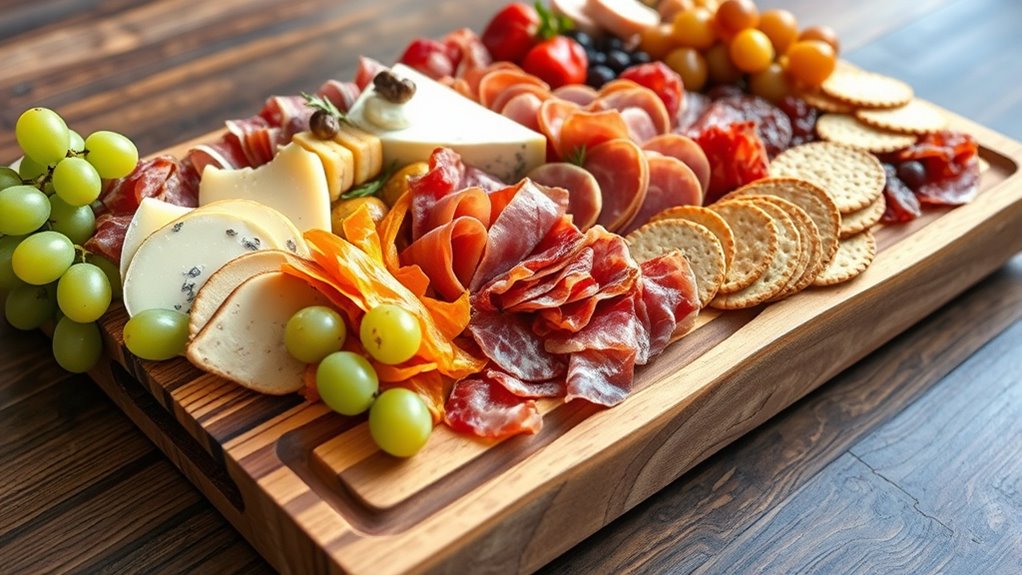
Creating a beautiful and delicious charcuterie board might seem intimidating, but with a few simple steps, you can assemble one that impresses your guests and satisfies every palate. One of the key elements to making your board stand out is understanding cheese pairings. Think about selecting cheeses with contrasting textures and flavors—creamy brie, sharp cheddar, tangy goat cheese, and nutty gouda work well together. When choosing cheeses, consider variety: include soft, semi-soft, hard, and blue cheeses to add depth. To enhance the visual appeal, arrange the cheeses thoughtfully—slice some and leave others whole, creating different shapes and heights. This not only makes the board more inviting but also offers guests options for nibbling.
Vary textures and flavors with soft, hard, and blue cheeses for a visually appealing, flavorful charcuterie board.
Presentation tips are essential in elevating your charcuterie board from ordinary to extraordinary. Use the juice groove of your serving platter to your advantage—this feature helps contain juices from fruits or marinated items, keeping your presentation neat. Place cheeses at different points on the board, then fill gaps with accompaniments like nuts, dried fruits, fresh berries, or sliced vegetables. When arranging, consider color contrast and balance: vibrant grapes, bright cherry tomatoes, and dark olives add visual interest. Incorporate height by stacking some items or using small bowls for spreads and dips, which creates layers and prevents clutter. Don’t forget to include a variety of textures—crunchy crackers, tender meats, and smooth cheeses—so every bite offers a different experience. Additionally, incorporating timeless wisdom can inspire your presentation style and help you create a more harmonious display.
For cheese pairings, keep in mind that certain flavors complement each other naturally. For example, a nutty gouda pairs beautifully with sliced apples, while a creamy brie goes well with fig jam or honey. Place cheeses near their ideal pairings to make grabbing a complementary combination effortless for your guests. Use cheese knives or small tongs for each cheese type to prevent mixing flavors and to keep your presentation tidy. When laying out sliced cheeses, fan or roll them for a decorative touch, making the board more inviting.
Ultimately, your goal is to create a balanced, colorful, and accessible display. Use the juice groove to contain any drips from juicy fruits or spreads, keeping your board clean. Combining thoughtful cheese pairings with strategic presentation tips will help you craft a stunning charcuterie board that’s as appealing to the eyes as it is to the palate. With a little planning and creativity, you’ll be serving up a gorgeous, delicious spread that leaves your guests impressed and satisfied.
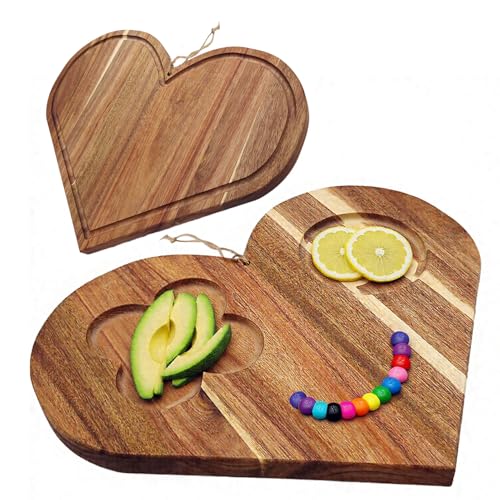
Double-Sided Acacia Wood Heart Cutting Board & Serving Tray Set – XO Charcuterie Serving Tray & Cheese Platter for Wife/Mom,Charcuterie Platter with Juice Groove 14"x12"x0.8"
Dual-Functional Heart Design:Use the juice groove side for meat/veggie prep, then flip to the XO snack tray side…
As an affiliate, we earn on qualifying purchases.
As an affiliate, we earn on qualifying purchases.
Frequently Asked Questions
What Types of Juices Are Best for a Juice Groove?
You should use juices that complement your fruit pairings and enhance flavor infusions. Freshly squeezed citrus juices like orange or lemon work well, adding a bright, tangy touch. Berry juices, such as raspberry or blueberry, bring sweetness and richness. Additionally, apple or pear juice offers a mild, natural flavor. Choose juices with vibrant colors and balanced acidity to keep your juice groove functional and visually appealing, making your charcuterie board even more delicious.
How Do I Maintain and Clean a Juice Groove?
You might wonder how to keep your juice groove pristine. Start with simple cleaning techniques: wipe it immediately after use with warm, soapy water, avoiding harsh chemicals. Regular maintenance tips include drying thoroughly to prevent residue buildup and occasionally applying mineral oil to keep the wood nourished. Don’t neglect it—consistent care guarantees your juice groove stays functional and attractive, ready to catch every delicious drop in your next charcuterie masterpiece.
Can a Juice Groove Be Added After the Board Is Made?
Yes, you can add a juice groove after the board is made through DIY installation, but it requires careful planning and some woodworking skills. Consider cost considerations, as hiring a professional might be more expensive than doing it yourself. Measure accurately, choose the right tools, and follow tutorials closely. This way, you’ll get a functional juice groove that enhances your charcuterie board without breaking the bank.
What Materials Are Ideal for a Juice Groove?
For a juice groove, choose hardwoods like maple, cherry, or walnut, as they’re durable and food-safe. Your design considerations should include a gentle, consistent slope to prevent spills, and the groove’s width should accommodate juicy foods without being too shallow or deep. Make sure the material is well-sealed or finished to prevent liquid absorption, ensuring your charcuterie board remains functional and attractive during use.
How Deep Should a Juice Groove Be for Optimal Use?
You should aim for a juice groove depth of about 1/4 to 1/2 inch for ideal groove size. This strikes a good balance, preventing overflow while catching all the drips, so you’re not biting off more than you can chew. A groove that’s too shallow won’t catch juice well, and one that’s too deep can weaken the board. Keep it just right, and you’ll have a masterful setup.

Extra Large Cutting Board, 17.6" Bamboo Cutting Boards for Kitchen with Juice Groove and Handles Kitchen Chopping Board for Meat Cheese board Heavy Duty Serving Tray, XL, Empune
【MADE OF BAMBOO】Empune cutting boards are made of bamboo which can give you long-lasting service. Not only can…
As an affiliate, we earn on qualifying purchases.
As an affiliate, we earn on qualifying purchases.
Conclusion
Now that you’ve crafted your perfect charcuterie board with a juice groove, remember it’s like a well-orchestrated symphony—each element plays its part seamlessly. I once watched a friend’s eyes light up as they discovered how the groove kept juices contained, much like a dam holding back a river. Your board becomes a masterpiece, balancing flavors and presentation effortlessly. With just a little attention, you’ve created more than food—you’ve built a memorable experience.

Meat Cutting Board – Large 18"x12" Reversible Bamboo Carving Board for Turkey – Heavy Duty Butcher Chopping Block with Deep Juice Groove, Spikes, & Grip, Kitchen Platter, Christmas Gift
PERFECT TURKEY PLATTER FOR THANKSGIVING: Extra-large bamboo carving board designed for carving turkey, roasts, brisket, or BBQ. This…
As an affiliate, we earn on qualifying purchases.
As an affiliate, we earn on qualifying purchases.

LifeMusican Charcuterie Board Accessories Wooden Cheese Spreader Knive Set, Wood Handle Butter knives For Cheese Kit, Mini Cheese Knife Slicer With Tongs, Spoons, Forks,Honey Dipper (23 Pack)
【 EASY TO CLEAN & STORAGE】Cheese knife set uses a mirror polishing process, the blade is as bright…
As an affiliate, we earn on qualifying purchases.
As an affiliate, we earn on qualifying purchases.