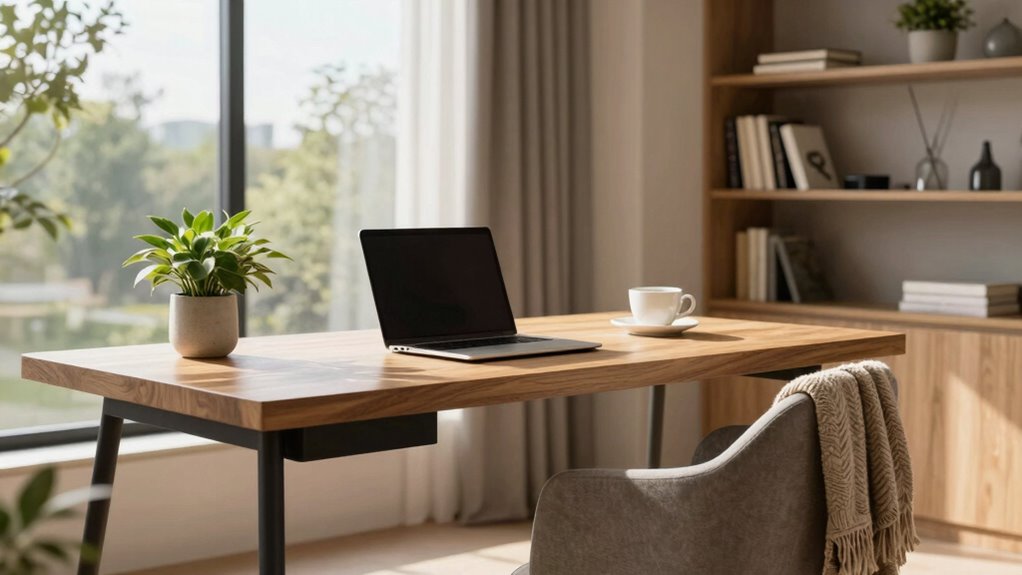
Designing a home office that boosts your daily comfort starts with ergonomic furniture, like adjustable chairs and desks that support good posture. Add layered lighting and natural light to keep you alert, while staying well-organized with stylish storage to reduce clutter. Incorporate sound-absorbing elements to create a quiet, focused environment. When you combine these elements thoughtfully, your workspace becomes a supportive haven that makes each workday easier and more enjoyable — and there’s more to explore to make it even better.

Get business pricing on tools and workshop supplies
- Business-only prices and quantity discounts
- Tax-exempt purchasing
- Multiple users, one account, clear invoices
Key Takeaways
- Incorporate ergonomic furniture to support posture and reduce fatigue during long work hours.
- Use layered and adjustable lighting to create a bright, eye-friendly environment that boosts mood and alertness.
- Keep the workspace organized with stylish storage solutions to minimize clutter and enhance focus.
- Add sound-absorbing elements to create a quiet, distraction-free zone for improved concentration.
- Design a balanced layout with personal touches to foster comfort, motivation, and a welcoming atmosphere.

Transforming a portion of your home into a functional office can boost your productivity and create a dedicated space for work. When you establish a workspace that’s tailored to your needs, you set yourself up for better focus and efficiency. One of the most vital aspects of this transformation is choosing the right furniture—ergonomic furniture. Investing in an adjustable chair that supports your back and encourages good posture makes a significant difference. Look for a desk that allows your arms to rest comfortably and provides enough surface area for your tasks. When your furniture is ergonomic, you’ll reduce strain and fatigue, which helps you stay focused longer and experience fewer discomforts during the day. Incorporating ergonomic furniture into your workspace creates a more comfortable and health-conscious environment that promotes sustained productivity. Additionally, selecting furniture that is adjustable and customizable can further enhance comfort and support throughout long work hours.
Creating an ergonomic workspace with supportive furniture boosts focus and reduces fatigue.
Lighting design plays a pivotal role in creating a workspace that feels inviting and energizing. Natural light is ideal, so position your desk near a window if possible. If natural light isn’t enough, supplement it with layered lighting—combining overhead lights with task lamps. Choose lighting that’s bright enough to prevent eye strain but not so harsh that it causes glare. Adjustable lighting options give you control over the ambiance, allowing you to switch from bright, focused light during work hours to softer lighting for breaks or winding down at the end of the day. Proper lighting not only improves visibility but also influences your mood and alertness, making your work hours more productive and less stressful. Incorporating lighting design principles can help you create an environment that adapts to your needs throughout the day. Ensuring the right lighting conditions can significantly impact your overall well-being and productivity.
Beyond furniture and lighting, pay attention to the overall layout of your home office. Keep your workspace organized with storage solutions that prevent clutter from piling up. A tidy environment helps your mind stay clear and focused on your tasks. Incorporate personal touches like plants or artwork to make the space more inviting, but avoid overcrowding. Your goal is a balance that fosters concentration without distractions. Using storage solutions that are both functional and stylish can help you maintain this balance effortlessly. Adding organized storage can further streamline your workflow and reduce time spent searching for essentials. Properly planned storage can also help you maintain a clutter-free environment that supports mental clarity and productivity.
Finally, consider the acoustics of your office. If noise is an issue, think about adding sound-absorbing elements like rugs, curtains, or acoustic panels. Maintaining a quiet environment allows you to concentrate better and reduces frustration. By thoughtfully combining ergonomic furniture, effective lighting design, and a well-organized layout, you create an office that makes your daily life smoother. This dedicated space becomes more than just a work zone—it transforms into a haven where productivity and comfort go hand in hand, making every workday feel a little better.
ergonomic adjustable office chair
As an affiliate, we earn on qualifying purchases.
As an affiliate, we earn on qualifying purchases.
Frequently Asked Questions
How Much Does the Home Office Project Typically Cost?
The cost of your home office project varies based on your budget planning and material selection. Typically, you might spend anywhere from a few hundred to several thousand dollars, depending on the size and quality of materials used. To keep costs manageable, prioritize essential features, compare prices, and choose durable, budget-friendly materials. This approach helps you create a functional, comfortable workspace without overspending.
What Is the Best Way to Maximize Small Home Office Spaces?
Did you know that optimizing small spaces can boost productivity by 20%? To maximize your tiny home office, prioritize ergonomic furniture to guarantee comfort and prevent strain. Use smart lighting solutions like adjustable lamps or natural light to brighten your workspace and reduce fatigue. Keep clutter minimal by using vertical storage, and choose multi-functional furniture. These tips help you create a functional, comfortable environment that makes working at home more enjoyable.
How Long Does the Renovation Usually Take?
Renovation times vary, but typically, it takes about 2 to 4 weeks. During this period, you’ll focus on furniture arrangement and lighting solutions to optimize your small home office space. You might need a few days for planning and sourcing materials, then several for actual work. Keep in mind, delays can happen, so it’s wise to build in extra time for unexpected issues.
Are There Eco-Friendly Options for Home Office Materials?
Did you know that using eco-friendly materials can reduce your home’s carbon footprint by up to 30%? You can choose recycled materials like reclaimed wood or recycled plastic for furniture and decor. Biodegradable options, such as natural fiber rugs or plant-based paints, are also great choices. These environmentally conscious options not only protect the planet but also create a healthier, more sustainable workspace for you to enjoy every day.
Can the Project Be Customized for Different Professions?
Yes, the project can be customized for different professions. You can explore various personalization options to tailor the space to your needs, whether you’re a creative artist or a corporate executive. Profession-specific designs enhance functionality and comfort, helping you stay productive and motivated. By selecting materials and layouts suited to your work style, you create a home office that’s not only efficient but also reflects your unique professional identity.
Conclusion
So, are you ready to transform your workspace into a place that truly boosts your mood and productivity? With a few simple changes, you can create a home office that feels less like work and more like a sanctuary. Think about how much better your daily life could be when you’re surrounded by comfort and inspiration. Isn’t it time you invested in a space that makes you excited to start each day?
Columbus Day / Indigenous Peoples' Day Picks
long weekend sales
As an affiliate, we earn on qualifying purchases.