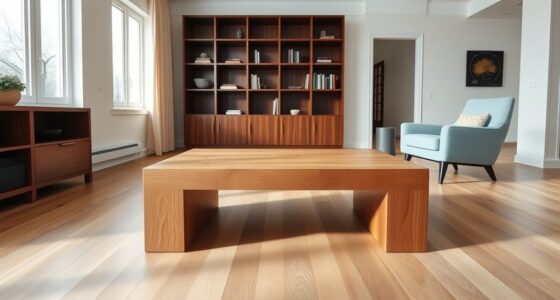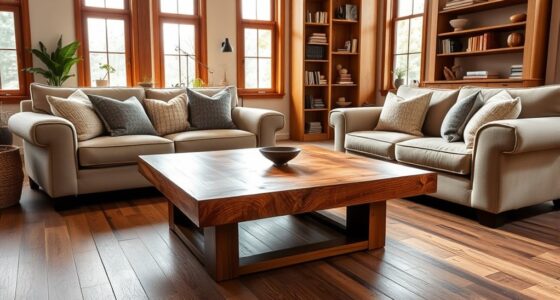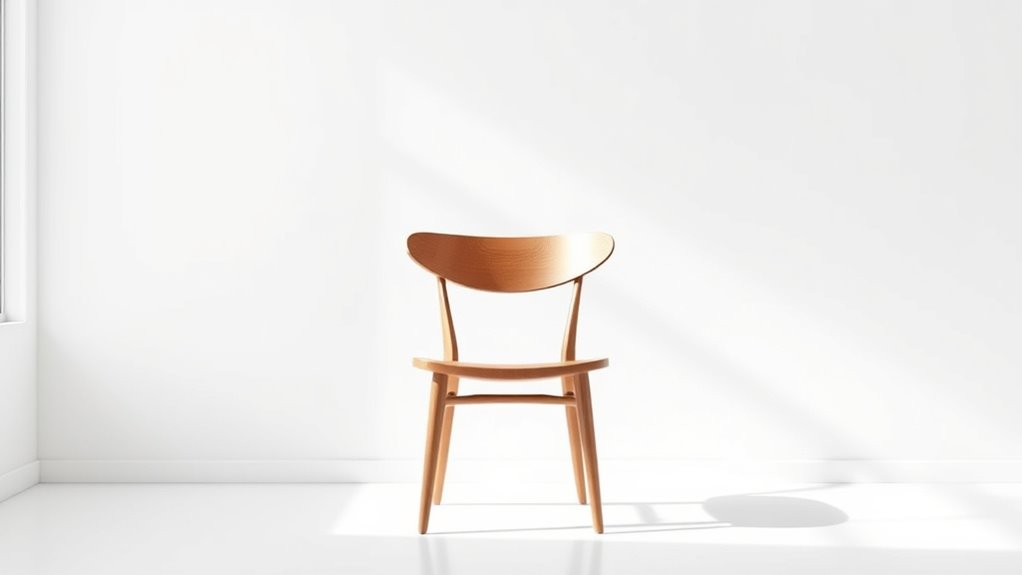

Exploring negative space in furniture design helps you create balanced and inviting rooms. It involves intentionally leaving open areas around furniture pieces to improve visual flow and functionality. When you consider scale, proportion, and placement, you ensure each piece has room to breathe, reducing clutter and highlighting focal points. Mastering negative space makes your space feel harmonious and well-organized. Keep discovering how carefully shaped open areas can transform your room’s vibe and efficiency.
Key Takeaways
- Negative space surrounds and separates furniture, shaping the room’s overall aesthetic and functionality.
- Proper negative space creates visual balance by distributing furniture and open areas evenly.
- It frames focal points and guides visual flow, highlighting key design features.
- Scale and proportion of furniture influence the amount of negative space, affecting comfort and movement.
- Thoughtful use of negative space reduces clutter, making spaces feel inviting and organized.

Negative space, the area around and between furniture pieces, plays a crucial role in shaping a room’s overall aesthetic and functionality. When you consider negative space, you’re not just leaving empty spots; you’re actively applying design principles that influence how your space feels and functions. One of the key principles at play here is visual balance. You want to create a harmony that makes your room inviting and easy to navigate. If your furniture is packed tightly without negative space, your room can feel cluttered and overwhelming. Conversely, too much open space can make it seem empty or uninviting. Striking the right balance involves understanding how negative space interacts with your furniture arrangements.
Visual balance isn’t just about symmetry; it’s about distributing visual weight evenly across a room. When you plan your layout, think about how each piece of furniture relates to the space around it. For example, placing a large sofa against a wall with enough space on either side creates a sense of stability. You can then balance this with smaller accent chairs positioned to create a conversational zone, leaving enough negative space to avoid crowding. This approach ensures that your eye moves smoothly around the room, appreciating each element without feeling overwhelmed. Remember, negative space acts as a visual breathing room, helping your furniture pieces stand out and reducing clutter.
Design principles guide you in using negative space intentionally. Instead of filling every available corner, you let some areas breathe, which enhances the overall harmony. For instance, when you choose furniture sizes and placements thoughtfully, you allow for pathways that lead effortlessly through the room. This not only improves functionality but also contributes to a pleasing visual flow. Additionally, negative space can emphasize focal points, such as a statement piece or a beautiful view, by framing it with surrounding open areas. This technique draws attention without overwhelming the senses.
Using negative space effectively also involves considering scale and proportion. If your furniture is too large or too small relative to the room, negative space can either be minimized or exaggerated undesirably. You want to leave enough room for movement and comfort, which means understanding how to balance furniture size with the surrounding space. When you master the use of negative space in your furniture layout, you create a room that feels both lively and calm, functional and beautiful. It’s about making deliberate choices that enhance your room’s visual balance, ensuring every element has room to breathe while contributing to a cohesive, inviting environment.
Frequently Asked Questions
How Does Negative Space Influence Furniture Stability?
Negative space can enhance furniture stability by creating visual balance and distributing weight more evenly. When you consider negative space, you improve the aesthetic perception, making the piece feel grounded and proportionate. This balance prevents tipping or wobbling, especially in designs with open areas. By thoughtfully incorporating negative space, you guarantee your furniture remains stable while also maintaining an appealing, harmonious look.
Can Negative Space Improve Furniture Ergonomics?
Yes, negative space can improve furniture ergonomics by enhancing visual balance and aesthetic appeal. When you incorporate well-designed negative space, it creates a sense of openness and comfort, making furniture easier and more comfortable to use. You’ll notice better airflow, easier access, and a more natural posture. This thoughtful use of space not only makes furniture more functional but also more pleasing to the eye, boosting overall ergonomic comfort.
Which Materials Best Highlight Negative Space in Furniture Design?
They say “less is more,” and selecting materials like glass, acrylic, or metal can really highlight negative space. These materials create striking contrast through transparency effects and material contrast, making empty areas stand out. Using transparent or reflective surfaces enhances the sense of openness, drawing attention to negative space. You’ll want to experiment with these materials to craft furniture that emphasizes space while maintaining elegance and functionality.
How Does Negative Space Affect Furniture Manufacturing Costs?
Negative space can lower your furniture manufacturing costs by promoting cost reduction and material efficiency. When you design with intentional negative space, you use fewer materials, which cuts expenses. Additionally, it simplifies production processes and reduces waste, saving time and money. By effectively integrating negative space, you optimize resource use and streamline manufacturing, making your furniture more affordable without sacrificing style or function.
Are There Cultural Differences in Negative Space Usage in Furniture?
Yes, cultural aesthetics and regional design influence negative space in furniture. In some cultures, like Japanese or Scandinavian, minimalism emphasizes open, uncluttered negative space for serenity. In contrast, ornate regions may use less negative space, favoring intricate details. You’ll notice these differences when designing or choosing furniture, as regional traditions shape how negative space balances form and function, reflecting cultural values and aesthetic preferences worldwide.
Conclusion
So, next time you walk into a room, remember that negative space isn’t just empty—it’s the secret weapon transforming furniture into art. By mastering this invisible magic, you could turn your space into a masterpiece so stunning, it might just leave visitors breathless. Think of negative space as the superhero cape for your furniture, elevating your entire design game to epic proportions. Get ready to make your space unforgettable—because in the world of furniture, negative space is the real superstar!