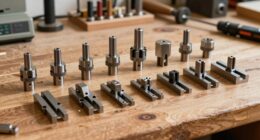
To guarantee quality control in your small shop, focus on simple, consistent inspection procedures at different production stages. Train your staff briefly yet effectively on recognizing defects, adhering to standards, and maintaining proper techniques. Clear communication and regular feedback help catch issues early and prevent rework. Building a culture of quality through ongoing training and routine checks boosts your shop’s reputation. Keep exploring to discover practical tips for implementing these strategies smoothly.
Key Takeaways
- Implement simple, regular inspection procedures at critical production stages to detect defects early.
- Train employees effectively on quality standards and inspection techniques for consistent checks.
- Communicate clearly and establish feedback loops to address recurring quality issues promptly.
- Foster a quality-focused culture through ongoing training and shared responsibility among staff.
- Document procedures to ensure consistency and maintain high standards, even with new or temporary staff.

Have you ever wondered how small shops maintain consistent quality without the extensive resources of larger companies? The secret often lies in their meticulous inspection procedures and dedicated employee training. Unlike big corporations with dedicated quality assurance teams, small shops rely on simple yet effective processes to guarantee every product meets their standards. Inspection procedures are the backbone of quality control, and in small shops, these are straightforward but essential. You might implement regular checks at different stages of production, visually inspecting items for defects, consistency, and adherence to specifications. For example, if you run a bakery, you could check the texture, appearance, and flavor of baked goods before packaging. These checks don’t need to be complex; they just need to be consistent and thorough. Establishing clear inspection points helps catch issues early, preventing subpar products from reaching customers and saving you time and money in the long run. Incorporating simple quality metrics can further streamline the process and make inspections more effective.
However, inspection procedures alone won’t assure quality if your team isn’t trained properly. Employee training plays a crucial role in small shop quality control because your staff is often directly involved in production and quality checks. When you invest in training, you empower your employees to identify problems, understand quality standards, and follow proper procedures. This doesn’t mean you need elaborate courses; simple hands-on training sessions work well. Teach your team what to look for during inspections, how to handle defective items, and the importance of consistency in their work. Regular training sessions reinforce good habits and help everyone stay aligned on quality expectations. Plus, when employees understand why quality matters, they’re more motivated to maintain high standards.
In small shops, communication is key. Make sure your team knows the inspection procedures inside out and encourages feedback. If someone notices a recurring issue during inspections, address it promptly through additional training or process adjustments. This proactive approach minimizes errors and maintains product quality. Also, document your inspection procedures and training practices so that everyone stays on the same page, especially if new employees join. Consistency is critical; even the most skilled workers can slip if procedures aren’t clear or if they aren’t adequately trained.
Ultimately, maintaining quality in a small shop hinges on your commitment to simple, effective inspection procedures and ongoing employee training. These elements work together to create a culture of quality, where everyone understands their role in delivering the best product possible. By focusing on these areas, you can ensure your small business builds a reputation for reliability and excellence, even without the vast resources of larger companies.
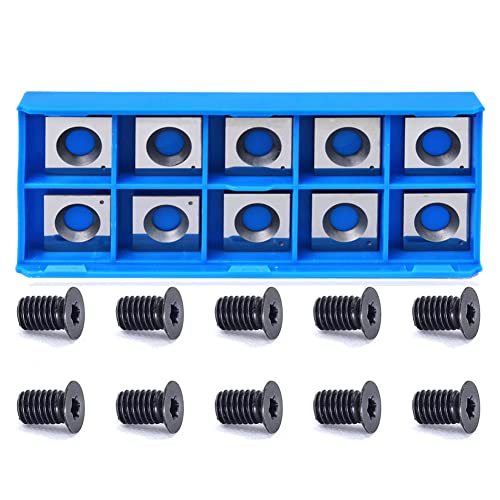
Indexable Carbide Insert Knife 14.3x14.3x2.0mm-50° 2-Edge Replacement Cutter for Cutech Tool Rikon Carbatec and Most Planer Jointer Helical Cutterheads, 10 Packs
Standard Cutter Size: 14.3mm square with straight corners 2mm thick,2 indexable cutting edges, 50 degree cutting bevel. Inserts...
As an affiliate, we earn on qualifying purchases.
Frequently Asked Questions
How Can I Implement Quality Control With Limited Staff?
You can implement quality control with limited staff by establishing simple inspection procedures for each product or batch. Train your team to perform quick checks and document results to maintain quality assurance. Use checklists to streamline inspections and identify issues early. Automate where possible and set clear standards to guarantee consistency. This approach helps maintain high quality without overburdening your small team.
What Affordable Tools Are Best for Small Shop Quality Checks?
You should start with affordable inspection tools and measurement devices like calipers, inspection gauges, and simple digital scales. These tools help you quickly identify defects and guarantee consistency. Look for budget-friendly options online or second-hand stores. Regularly using these devices during production allows you to catch issues early, saving time and costs. They’re easy to operate and perfect for small shops aiming to maintain quality without overspending.
How Do I Train Employees on Quality Standards Effectively?
Think of training your employees as planting a garden—you need steady care and clear communication. To do this effectively, involve your team in setting quality standards, use simple, consistent language, and provide hands-on demonstrations. Foster employee engagement by encouraging questions and feedback. Regularly reinforce standards with ongoing training and positive reinforcement. This approach guarantees everyone understands and commits to maintaining high-quality work, turning your shop into a well-tended garden of excellence.
How Often Should Quality Audits Be Conducted in a Small Shop?
You should conduct quality audits frequently enough to catch issues early, typically every one to three months, depending on your shop’s volume and product complexity. By establishing a consistent inspection frequency and audit scheduling, you guarantee your team maintains high standards and identifies problems promptly. Regular audits help you stay on top of quality, prevent defects, and continuously improve your processes, keeping your shop efficient and your products reliable.
What Are Common Quality Issues in Small Shop Manufacturing?
You often face common quality issues like defects in your products, inconsistent finishes, or misaligned components. To address these, you should implement defect tracking to identify recurring problems and monitor supplier quality to guarantee raw materials meet standards. Regularly reviewing these areas helps catch issues early, improve processes, and maintain product excellence, ultimately satisfying your customers and reducing costly rework or returns.

Findbuytool Carbide Inserts cutters (15x15x2.5mm-30°-R150-4R0.5) Insert for Woodworking Helical Cutter Head Tools, 10 Pcs (10)
{Product Contains}:10pcs Carbide Insert Knife 15x15x2.5mm-30°-R150-4R0.5 for Helical Cutterhead.
As an affiliate, we earn on qualifying purchases.
Conclusion
By implementing simple quality control measures, you can considerably boost your small shop’s reputation. Did you know that 82% of customers say they’re more likely to buy from a business with consistent quality? Staying vigilant and regularly checking your products ensures customer satisfaction and loyalty. Remember, quality control isn’t just a task—it’s an essential step to growing your shop and standing out in a competitive market. Keep quality high, and your business will thrive.

POWERTEC 14.3mm Carbide Inserts Cutter Knives for Spiral & Helical Cutterheads - Fits Wen PL1326, JT630H & Rikon 25-130H, Tungsten Carbide Replacement Blades for Planer and Jointer (14301)
INCLUDES: (10) Carbide Insert Blades
As an affiliate, we earn on qualifying purchases.

Grizzly Industrial T25920-12" x 18" Variable-Speed Benchtop Wood Lathe
This Variable-Speed Wood Lathe provides 12" of turning radius and spindles up to 16-1/2"
As an affiliate, we earn on qualifying purchases.