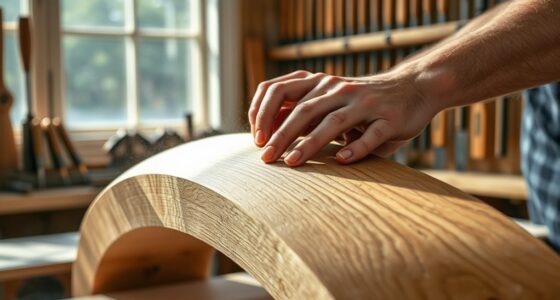
In wood crafting inspired by Wabi-Sabi, you celebrate imperfection and the natural aging process, embracing cracks, irregularities, and patinas as beautiful features. Rather than hiding flaws, you see them as proof of authenticity and a story of time. Asymmetrical designs and organic forms reflect the beauty of the natural world, gaining character over time. By understanding these principles, you’ll discover how imperfections can become the most compelling aspect of your work. Continue to explore how this philosophy transforms craftsmanship.
Key Takeaways
- Wabi-sabi emphasizes embracing natural imperfections, cracks, and irregularities as unique aesthetic features in wood craftsmanship.
- Aging wood develops a distinctive patina that enhances its beauty, celebrating transience and history.
- Imperfections are viewed as authentic expressions of organic harmony, not flaws to hide or fix.
- Asymmetrical designs reflect natural forms, highlighting the beauty of irregularity and spontaneous balance.
- Thoughtful contrast and natural textures emphasize the character and authenticity of aged, imperfect wood pieces.

Wabi-sabi in wood crafting celebrates imperfection and transience, embracing the beauty found in aging, cracks, and irregularities. When you work with wood through a wabi-sabi lens, you notice how its natural aging process tells a story. Each piece of wood carries marks of time—weathered surfaces, subtle discolorations, and small cracks—that add character and depth. These imperfections aren’t flaws; they’re proof of authenticity and life’s organic flow. As you shape and craft with this philosophy, you appreciate that no two pieces are exactly alike, and that’s what makes each creation unique.
In embracing natural aging, you allow the wood to reveal its history. Over time, it develops a patina that cannot be artificially replicated, giving your work an aura of quiet wisdom. Rather than trying to conceal these signs of age, you incorporate them into your design, letting them enhance the piece’s beauty. This approach reminds you that perfection isn’t about flawlessness but about harmony with nature’s imperfections. You recognize that aging wood, with its irregularities, becomes even more beautiful with time, echoing the transient essence of wabi-sabi. Additionally, understanding the importance of contrast ratio helps you appreciate how the visual depth and clarity of your finished piece can be enhanced through thoughtful design choices.
The asymmetrical design is another core element you embrace in wabi-sabi wood crafting. You understand that symmetry often feels artificial and contrived, while asymmetry creates a natural, effortless balance. When you intentionally craft pieces with uneven lines or asymmetrical proportions, you reflect the imperfect harmony found in nature. This design philosophy encourages you to trust your intuition, allowing irregular shapes and uneven textures to coexist peacefully. Such asymmetry not only celebrates the uniqueness of each piece but also captures the fleeting, imperfect beauty inherent in the natural world.
Wabi-Sabi wood crafting tools
As an affiliate, we earn on qualifying purchases.
As an affiliate, we earn on qualifying purchases.
Frequently Asked Questions
How Can I Incorporate Wabi-Sabi Principles Into Modern Woodworking?
To incorporate wabi-sabi principles into modern woodworking, embrace natural asymmetry and rustic finishes. You can intentionally leave some imperfections, like irregular grain or minor cracks, to highlight their beauty. Use unfinished or weathered wood to enhance the rustic feel. Focus on simplicity and authenticity, allowing each piece’s unique character to shine through. This approach creates furniture that’s both functional and deeply connected to nature’s imperfect beauty.
What Tools Best Suit Imperfect, Natural Wood Textures?
You should use hand tools like chisels and rasps to enhance natural grain and highlight texture, embracing imperfections. A fine steel brush can reveal the wood’s raw beauty, emphasizing grain enhancement and adding tactile interest. Sanding with varied grits allows you to accentuate natural textures without smoothing out imperfections. These tools help you celebrate the wood’s authenticity, creating pieces that honor wabi-sabi’s appreciation for natural, imperfect beauty.
How Do I Select Wood That Embodies Wabi-Sabi Aesthetics?
You should look for wood that shows natural aging and rustic character, as these qualities embody wabi-sabi aesthetics. Focus on pieces with weathered textures, subtle imperfections, and unique grain patterns. Trust your intuition to select wood that feels authentic and imperfect, because its natural flaws highlight beauty in imperfection. The right wood will resonate with your craft, showcasing its history and natural charm, perfectly aligning with wabi-sabi principles.
Can Wabi-Sabi Apply to Furniture Restoration Projects?
Yes, you can definitely apply wabi-sabi to furniture restoration projects. Think of it as embracing the beauty in imperfection acceptance, where each crack and patina adds rustic charm. Instead of aiming for perfection, you highlight the character that time and wear have given the piece. This approach transforms old furniture into unique, soulful treasures that tell a story, celebrating the imperfect beauty that makes each piece special.
What Are Common Challenges When Embracing Imperfection in Woodcraft?
You might face technique dilemmas when embracing imperfection, as traditional methods sometimes clash with wabi-sabi principles. Aesthetic conflicts can also arise, making it hard to balance rustic charm with functionality. You’ll need patience and creativity to navigate these challenges, accepting flaws as part of the beauty. By focusing on authenticity and embracing flaws, you’ll create unique, soulful pieces that celebrate imperfection rather than hide it.
natural wood patina finishing kit
As an affiliate, we earn on qualifying purchases.
As an affiliate, we earn on qualifying purchases.
Conclusion
As you hold a weathered block of wood, notice its gentle cracks and uneven grains, each telling a story of time and imperfection. Embrace the beauty in its flaws, feeling the warmth of its natural character beneath your fingertips. Wabi-sabi reminds you that true artistry lies in the imperfect, the transient, and the aged. Let these subtle imperfections inspire you to see beauty in every knot and scar, celebrating the unique soul of your craft.
asymmetrical wood sculpture supplies
As an affiliate, we earn on qualifying purchases.
As an affiliate, we earn on qualifying purchases.
rustic unfinished wood pieces
As an affiliate, we earn on qualifying purchases.
As an affiliate, we earn on qualifying purchases.