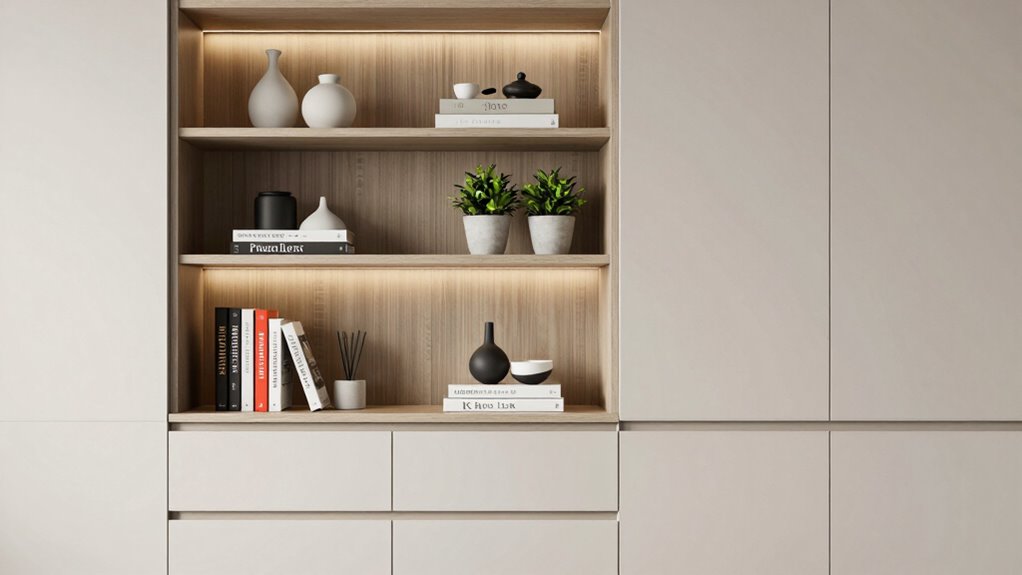

To balance open and closed storage in built-ins, mix these elements thoughtfully to create visual interest and practicality. Use open shelves to display decorative accents and keep frequently used items accessible, while closed cabinets hide clutter and less attractive items. Add lighting within open spaces to highlight displays and maintain a cozy feel. By varying the size and placement of open and closed sections, you’ll create a cohesive, stylish, and functional design. Discover more tips for perfecting your built-in balance below.
Open a free Amazon Business account
Business pricing, bulk buying and tax-exempt orders.
As an affiliate, we earn on qualifying purchases.
Key Takeaways
- Mix open shelves and closed cabinets strategically to create visual interest and functional storage.
- Use lighting within open shelving to highlight decorative accents and enhance ambiance.
- Incorporate open cubbies within larger units for easy access and display flexibility.
- Keep open shelves organized with baskets or boxes to prevent clutter and maintain harmony.
- Consider proportions and balance to ensure open and closed sections complement each other seamlessly.
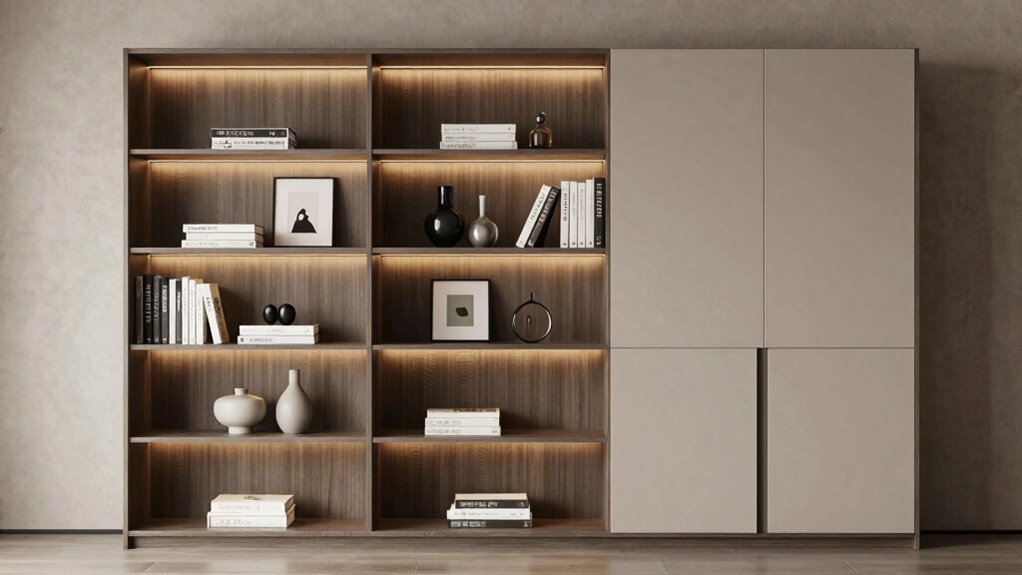
Balancing open and closed storage in built-ins can transform a space from cluttered to cohesive, making your home both functional and stylish. When designing your built-ins, think carefully about how you’ll divide the space to showcase decorative accents while keeping everyday items out of sight. Open shelves offer the perfect opportunity to display meaningful objects, books, or art pieces that add personality and warmth. To prevent visual chaos, limit what you display and curate the collection regularly. Closed cabinets or drawers, on the other hand, help you hide less attractive or less frequently used items, maintaining a clean, organized look.
Balancing open and closed storage creates a stylish, organized, and inviting built-in design.
Lighting integration plays a vital role in balancing these storage types. Thoughtfully placed lighting can highlight your decorative accents on open shelves, drawing attention to favorite collectibles or artwork. Use LED strip lights or puck lights to add warmth and focus, making your displays stand out without overwhelming the space. Incorporate lighting within the cabinetry itself—such as inside glass-front cabinets—to create a sense of depth and sophistication. This also helps you see your decorative accents clearly, even in dimmer conditions. When you combine good lighting with well-chosen accents, the built-in becomes a focal point rather than just storage.
To achieve a harmonious balance, consider the rhythm of your built-in design. Mix open and closed sections thoughtfully, avoiding large expanses of only one type. For example, alternate open shelves with closed cabinetry or incorporate open cubbies within a larger closed unit. This variation creates visual interest and allows for both display and concealment. When selecting decorative accents, choose items that complement your overall decor style and color scheme. Use textures, shapes, and sizes to add depth and prevent monotony. Proper organization ensures ease of access and can also help you maintain visual harmony by creating a cohesive look across your storage spaces. Additionally, paying attention to visual harmony can help your built-ins seamlessly blend with the rest of your interior design.
Keep accessibility in mind—your open shelves should be easy to reach and browse, while closed storage can be more secluded for items you don’t need every day. Avoid overcrowding open shelves, as excess clutter can negate the benefits of display. Instead, utilize baskets or boxes on open shelves to organize smaller items and maintain a tidy appearance. Regularly reassess your storage and display choices, swapping out decorative accents or adjusting lighting as your needs evolve. Being intentional about storage efficiency can further enhance your space’s overall function and style. Paying attention to design principles such as balance and proportion will ensure your built-ins are both attractive and practical. When done thoughtfully, your built-ins will seamlessly blend functionality with style, creating a space that’s both inviting and orderly.
LED strip lights for open shelves
As an affiliate, we earn on qualifying purchases.
As an affiliate, we earn on qualifying purchases.
Frequently Asked Questions
How Do I Choose Between Open and Closed Storage for Specific Items?
You should choose open storage for decorative accessories you want to display and keep easily accessible, adding visual interest to your space. Use closed storage for items that need organization or are less attractive, like supplies or seasonal decor. Organizational strategies help you decide, ensuring you balance functionality and aesthetics. Keep frequently used items in open shelves and hide clutter behind closed doors, creating a tidy, inviting environment.
What Materials Work Best for Open Shelving to Prevent Damage?
For open shelving, choose materials with high durability like hardwood, metal, or tempered glass to prevent damage from daily use. These materials withstand weight and scratches better over time. Additionally, guarantee the material’s aesthetic matches your room’s style; natural wood adds warmth, while sleek metal offers modern appeal. By selecting durable, visually compatible materials, you maintain both the function and beauty of your open shelves.
How Can I Make Open Storage Look Less Cluttered?
Think of your open storage as a stage; keep the spotlight on your best pieces. Use decorative accessories sparingly, and choose items that complement each other in color and style. Group similar objects together to create visual harmony, like a well-orchestrated symphony. Regularly declutter, and rotate accessories seasonally. This approach transforms clutter into curated displays, making your open shelving inviting and stylish, rather than chaotic.
Are There Safety Tips for Displaying Fragile or Valuable Items Openly?
To guarantee display security and theft prevention, place fragile or valuable items in secure, closed cabinets when you’re not around. Use sturdy glass or acrylic doors with locks for open shelves, and consider installing a discreet alarm system or security cameras nearby. Keep an eye on your items in busy areas, and avoid overloading shelves to prevent accidents. Regularly check for signs of tampering or damage to maintain safe, attractive displays.
How Do Lighting Choices Affect Open Versus Closed Storage Aesthetics?
Lighting choices markedly influence your open versus closed storage aesthetics. Use warm lighting to create a cozy ambiance for open shelves, highlighting your decorative items. Bright, neutral lighting works well for closed cabinets, emphasizing clean lines and color coordination without distractions. Combining different lighting styles enhances visual interest, guiding the eye naturally across your built-ins. Proper lighting balances functionality and style, ensuring your display looks inviting and cohesive.
Conclusion
By balancing open and closed storage, you create a space that’s both functional and inviting. You showcase your favorite pieces while hiding the clutter. You add personality with open shelves, and you keep things tidy with closed cabinets. You craft a room that feels organized, yet warm. You design a space that’s balanced, beautiful, and uniquely yours—where everything has its place and your style shines through effortlessly.
Fall Picks
fall essentials
As an affiliate, we earn on qualifying purchases.