
TL;DR

Get business pricing on tools and workshop supplies
- Business-only prices and quantity discounts
- Tax-exempt purchasing
- Multiple users, one account, clear invoices
Archaeologists have discovered a 4,400-year-old tomb of an Egyptian judge at Saqqara, notable for its preserved wall colors. The find provides new insights into early Egyptian burial practices and governance.
Archaeologists have announced the discovery of a 4,400-year-old tomb of an Egyptian judge at Saqqara, featuring remarkably preserved wall paintings with vibrant colors. The find offers valuable insights into early Egyptian judicial and burial practices, and underscores ongoing archaeological efforts at the site.
The tomb was uncovered during recent excavations at Saqqara, Egypt’s renowned necropolis, which has yielded numerous significant artifacts over the years. The tomb’s age has been confirmed through radiocarbon dating and pottery analysis, placing it firmly in the early dynastic period of ancient Egypt, around 2200 BCE.
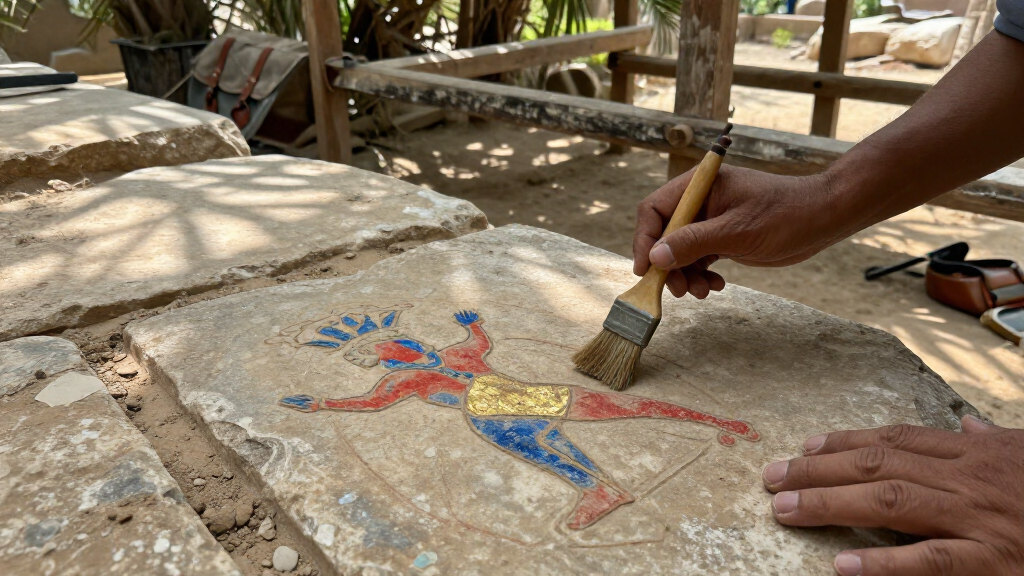
What makes this discovery particularly notable is the state of preservation of the wall paintings, which still display vivid colors and detailed imagery. These paintings depict scenes likely related to the judge’s life and duties, as well as religious rituals associated with the afterlife. The tomb’s architecture is typical of the period, with a rectangular burial chamber and a decorated corridor leading to the burial shaft.
Egyptian authorities and archaeologists involved in the excavation have emphasized that this find adds a new dimension to understanding the social hierarchy and judicial system of early Egypt. The presence of colorful wall art suggests a high status for the tomb’s occupant, consistent with his role as a judge or official of significant influence.
Implications for Ancient Egyptian Judicial and Religious Practices
This discovery is significant because it provides tangible evidence of the role of judges in early Egypt, highlighting their importance in both governance and religious life. The preserved wall paintings offer rare visual insights into the iconography and symbolism associated with justice and the afterlife during this period.
Furthermore, the finding underscores the richness of Saqqara as an archaeological site, which continues to yield artifacts that deepen understanding of Egypt’s early dynastic civilization. It also demonstrates the potential for future discoveries that could further illuminate the social and political structures of ancient Egypt.
As an affiliate, we earn on qualifying purchases.
Saqqara’s Ongoing Archaeological Significance
Saqqara has been a focal point for Egyptologists for decades due to its extensive burial grounds, including the Step Pyramid of Djoser, the world’s oldest stone pyramid. Recent excavations have uncovered a range of tombs and artifacts spanning different periods of Egyptian history, revealing evolving burial customs and social stratification.
Previous discoveries at Saqqara include tombs of officials, priests, and royalty, often decorated with elaborate hieroglyphs and artwork. The current find adds to this legacy, emphasizing the site’s importance for understanding Egypt’s early political and religious development.
Interest in Saqqara has surged in recent years, driven by new technological methods such as ground-penetrating radar and drone surveys, which have identified promising excavation targets. The recent discovery of the judge’s tomb continues this trend, attracting global attention to ongoing excavations.
Unresolved Questions About the Tomb’s Contents and Context
Details about the identity of the tomb’s occupant remain unconfirmed, though the size and decoration suggest a person of high status. The specific role and achievements of the judge are still under investigation, and the full extent of the wall paintings has yet to be documented.
It is also unclear whether this tomb is part of a larger burial complex or a standalone monument. Further excavations are needed to understand its relationship with nearby tombs and structures within Saqqara.
Researchers are also working to establish whether there are additional artifacts or inscriptions that could shed light on the judge’s life and the political landscape of the period.
Upcoming Excavations and Research Plans at Saqqara
Archaeologists plan to continue excavating the tomb to uncover additional artifacts and inscriptions. Detailed analysis of the wall paintings and architecture is expected to provide deeper insights into the religious and social practices of the time.
Further dating and contextual studies are also underway to clarify the tomb’s place within Saqqara’s broader archaeological landscape. International collaboration and advanced imaging techniques are likely to be employed to enhance understanding.
The ongoing work aims to determine whether this tomb is part of a larger necropolis complex and to identify other related structures that could reveal more about early Egyptian governance and society.
Key Questions
How old is the tomb?
The tomb is approximately 4,400 years old, dating back to around 2200 BCE, based on radiocarbon dating and artifact analysis.
What makes this discovery significant?
The well-preserved wall paintings and the tomb’s age provide rare insights into early Egyptian judicial, religious, and burial practices, highlighting Saqqara’s ongoing archaeological importance.
Who was the tomb’s occupant?
While the exact identity remains unconfirmed, the size and decoration suggest the occupant was a high-ranking judge or official of the early dynastic period.
Are there other similar tombs nearby?
It is not yet clear whether this tomb is part of a larger complex. Ongoing excavations aim to determine its relationship with nearby structures.
When will further details be available?
Further analysis and excavations are planned in the coming months, with detailed reports expected to be published after comprehensive study of the site.
Source: hn
Fall yard work Picks
leaf blowers
As an affiliate, we earn on qualifying purchases.