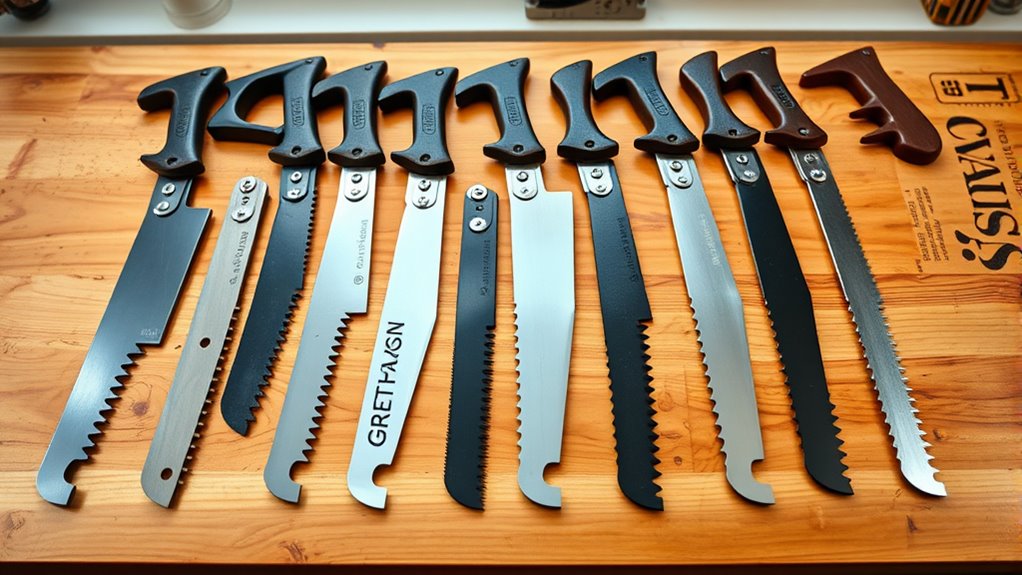
For a versatile general-purpose hand saw, I’d start with the JORGENSEN 15-Inch Hand Saw, while the RUITOOL Japanese Ryoba suits controlled woodworking and the Fiskars Folding Pruning Saw is built for garden cuts. The right choice depends on what you cut most: longer fixed blades cover boards and household materials, while folding saws travel more safely and handle branches. Tooth count and blade style also shape the cut, so a pruning saw may feel rough on finish work. I compare all 11 options by task fit, handling, build, and versatility. Read on for the full breakdown and help matching a saw to your work.

Get business pricing on tools and workshop supplies
- Business-only prices and quantity discounts
- Tax-exempt purchasing
- Multiple users, one account, clear invoices
Complete the kit


Key Takeaways
- The JORGENSEN 15-inch saw is the most balanced general-purpose pick in this lineup, while its fixed blade is less convenient to carry than a folding model.
- The RUITOOL Ryoba is the clearest woodworking specialist: its double-edge design supports different cut directions, but it asks for more technique than a basic push saw.
- Folding pruning saws serve a distinct job: the VRYTOR, Fiskars, REXBETI, and camping saw prioritize branch work and compact storage over straight cuts through boards.
- The two 14-inch fine-cut saws and HAUTMEC emphasize finer teeth, a better match for controlled cuts than the 7–8 TPI pruning and general-purpose options.
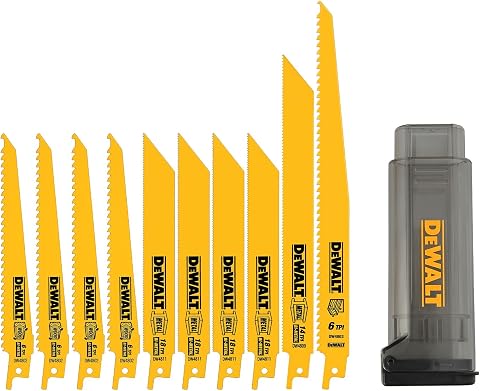
- The TOOLAN multi-blade saw trades simplicity for flexibility; it can cover varied materials, while a dedicated saw is usually easier to choose and use for a single recurring task.
| JORGENSEN 15-Inch Hand Saw with 8 TPI Blade |  | Best Overall for Fast, General-Purpose Cuts | Blade length: 15 inches | Tooth count: 8 TPI | Blade material: SK5 high-carbon steel | VIEW ON AMAZON | See Our Full Breakdown |
| VRYTOR 7-Inch Folding Pruning Saw with Safety Lock |  | Best Compact Pick for Branches | Blade length: 7 inches | Blade material: 65Mn steel | Tooth configuration: 7 TPI triple-cut | VIEW ON AMAZON | See Our Full Breakdown |
| Fiskars 10″ Folding Pruning Saw with Dual Position Locking Blade |  | Best for Regular Garden Pruning | Blade length: 10 inches | Blade type: Power Tooth | Blade material: Steel | VIEW ON AMAZON | See Our Full Breakdown |
| RUITOOL Japanese Hand Saw 6 Inch Double Edge Ryoba Pull Saw |  | Best for Precise Finish Cuts | Blade length: 6 inches | Tooth pitch: 14 TPI for softwood; 17 TPI for hardwood | Blade material: SK5 high-carbon steel | VIEW ON AMAZON | See Our Full Breakdown |
| 14 in. Pro Hand Saw, 11 TPI Fine-Cut Soft-Grip Hardpoint Handsaw Perfect for Sawing, Trimming, Gardening, Cutting Wood, Drywall, Plastic Pipes, Sharp Blade, Ergonomic Non-Slip Handle (green) |  | Best for Finer Cuts Across Materials | Blade length: 14 inches | Tooth pitch: 11 TPI | Blade thickness: 0.9 mm | VIEW ON AMAZON | See Our Full Breakdown |
| 14-inch Hand Saw with Fine-Cut Teeth and Soft-Grip Handle |  | Best for Comfortable Fine Cuts | Blade length: 14 inches | Teeth per inch: 11 TPI | Blade material: 65Mn steel | VIEW ON AMAZON | See Our Full Breakdown |
| REXBETI 11-Inch Folding Pruning Saw with 7 TPI SK-5 Steel Blade |  | Best for Portable Pruning | Blade length: 11 inches | Blade material: SK-5 alloy steel | Teeth: 7 TPI staggered | VIEW ON AMAZON | See Our Full Breakdown |
| Craftsman 12-Inch Hand Saw (CMHT20138) |  | Best for Adjustable Flush Cuts | Blade length: 12 inches | Cutting depth: 4.375 inches | Frame tension capacity: 225 pounds | VIEW ON AMAZON | See Our Full Breakdown |
| HAUTMEC 14-Inch Hand Saw with 11 TPI Triple-Ground Teeth |  | Best for Mixed-Material DIY | Blade length: 14 inches | Blade thickness: 1.0 mm | Tooth count: 11 TPI | VIEW ON AMAZON | See Our Full Breakdown |
| Folding Camping Saw 11-Inch Heavy Duty Pruning Saw with Triple-Cut SK5 Blade, 7 TPI Razor Teeth |  | Best for Aggressive Outdoor Cutting | Blade length: 11 inches | Blade material: SK5 high-carbon steel | Blade shape: Curved | VIEW ON AMAZON | See Our Full Breakdown |
| TOOLAN 8-in-1 Multi-Blade Hand Saw |  | Best Multi-Material Pick | Brand: TOOLAN | Model: SW2204N | Power source: Manual | VIEW ON AMAZON | See Our Full Breakdown |
| hand saw | Blade length | Blade material | Handle |
|---|---|---|---|
| JORGENSEN 15-Inch Hand Saw wit | 15 inches | SK5 high-carbon steel | Aluminum frame with TPE and ABS grip |
| VRYTOR 7-Inch Folding Pruning | 7 inches | 65Mn steel | Rubber |
| Fiskars 10" Folding Pruning Sa | 10 inches | Steel | Non-slip grip |
| RUITOOL Japanese Hand Saw 6 In | 6 inches | SK5 high-carbon steel | Beechwood |
| 14 in. Pro Hand Saw | 14 inches | Alloy steel | Thermoplastic elastomer |
| 14-inch Hand Saw with Fine-Cut | 14 inches | 65Mn steel | Anti-slip TPR soft handle |
| REXBETI 11-Inch Folding Prunin | 11 inches | SK-5 alloy steel | — |
| Craftsman 12-Inch Hand Saw | 12 inches | Metal | — |
| HAUTMEC 14-Inch Hand Saw with | 14 inches | 65Mn high-carbon steel | — |
| Folding Camping Saw 11-Inch He | 11 inches | SK5 high-carbon steel | — |
| TOOLAN 8-in-1 Multi-Blade Hand | 6 inches | — | — |
More Details on Our Top Picks
JORGENSEN 15-Inch Hand Saw with 8 TPI Blade
The 15-inch blade and 8 TPI triple-ground teeth make this JORGENSEN a strong fit for quick cuts through wood and plastic when finish quality is secondary. Its Teflon coating is intended to reduce drag and buildup, while the reinforced aluminum frame and shaped grip offer more support than the compact, flexible blade of the RUITOOL Japanese pull saw. Marking guides at 45° and 90° are handy for rough layout without reaching for a square. The tradeoff is tooth size: this saw is geared toward aggressive work, so it is less suited to clean, fine cuts than the RUITOOL or the 11 TPI 14-inch Pro Hand Saw. At 0.61 kg, it is also heavier than a small pruning saw, and cutting still takes manual effort.
Pros:- 15-inch blade and coarse teeth support fast, aggressive cuts
- Teflon coating is designed to reduce friction and material buildup
- Reinforced aluminum frame and contoured grip support controlled handling
- Built-in 45° and 90° guides help with quick layout
Cons:- 8 TPI teeth can leave a rougher cut than the 11 TPI Pro Hand Saw
- Long, fixed blade is less convenient to carry than folding pruning saws
- Manual cutting requires sustained effort
Best for: Homeowners and DIYers who want one sturdy saw for quick cuts in lumber and plastic, plus basic angle marking.
Not ideal for: Woodworkers focused on flush, fine finishing cuts or gardeners who need a compact folding saw for carrying outdoors.
- Blade length:15 inches
- Tooth count:8 TPI
- Blade material:SK5 high-carbon steel
- Blade coating:Teflon
- Handle:Aluminum frame with TPE and ABS grip
- Weight:0.61 kg
- Marking guides:45° and 90°
- Included:Plastic edge protector
Our verdict“Choose the JORGENSEN for versatile, fast rough cutting and built-in layout guides; choose a finer-tooth saw for finish work.”
VRYTOR 7-Inch Folding Pruning Saw with Safety Lock
For pruning jobs where a saw needs to ride in a garden bag or camping kit, the folding 7-inch blade is the VRYTOR’s main advantage. Its 7 TPI triple-cut teeth are designed to clear chips while cutting branches up to 4 inches thick, giving it a more focused outdoor role than the fixed-blade JORGENSEN or the fine-tooth RUITOOL. The locking blade stays open for work and covers the teeth when folded, while the rubber handle is shaped for a secure grip. The short blade limits reach and makes larger limbs slower to tackle; the 10-inch Fiskars gives more blade length for thicker pruning. This remains a hand-powered saw, so frequent or heavy branch cutting will take effort.
Pros:- Folds compactly with teeth covered for carrying and storage
- Locking mechanism holds the blade open during use
- Triple-cut tooth design is intended to clear chips efficiently
- Rated for branches up to 4 inches thick
Cons:- 7-inch blade offers less reach and cutting stroke than the Fiskars 10-inch saw
- Pruning-focused tooth pattern is less suited to fine woodworking
- Manual operation can be tiring for repeated heavy cuts
Best for: Gardeners, campers, and trail users who need a compact saw for occasional branch pruning and easy storage.
Not ideal for: DIYers cutting lumber or sheet materials, and anyone regularly pruning large branches who would benefit from a longer blade.
- Blade length:7 inches
- Blade material:65Mn steel
- Tooth configuration:7 TPI triple-cut
- Tooth count:43
- Cutting capacity:Branches up to 4 inches thick
- Handle:Rubber
- Dimensions:8.8 × 2.4 × 0.9 inches
- Power source:Hand powered
Our verdict“Pick the VRYTOR for portable, occasional branch work; choose the longer Fiskars for more reach during regular pruning.”
Fiskars 10″ Folding Pruning Saw with Dual Position Locking Blade
The Fiskars sits between the compact VRYTOR and longer fixed hand saws: its 10-inch power-tooth blade gives more reach for pruning thick branches and bushes, while the folding design remains easier to store than the JORGENSEN’s 15-inch blade. Two locking positions add flexibility in how the blade is held for outdoor cuts, and the non-slip grip supports handling in garden work. Its triple-ground teeth are aimed at efficient cutting, not the clean, controlled finish offered by the RUITOOL pull saw. The available product details do not specify tooth pitch or a branch diameter limit, so buyers looking for those measurements should compare carefully. It may also be less suited to very heavy-duty cutting, and its 10-inch reach still has limits.
Pros:- 10-inch blade offers more reach than the VRYTOR’s 7-inch blade
- Folding format simplifies storage and transport
- Two locking positions support different cutting positions
- Non-slip grip is suited to outdoor pruning
Cons:- May not suit very heavy-duty cutting
- 10-inch blade limits reach on larger branches
- Product details do not state tooth pitch or a specific cutting capacity
Best for: Gardeners who prune bushes and branches regularly and want a folding saw with more reach than a compact 7-inch model.
Not ideal for: Woodworkers who need fine flush cuts or users tackling very heavy-duty branches that call for a larger saw.
- Blade length:10 inches
- Blade type:Power Tooth
- Blade material:Steel
- Locking positions:Two
- Handle:Non-slip grip
- Design:Folding
- Warranty:Lifetime
Our verdict“Choose the Fiskars for routine garden pruning with a useful balance of reach and foldability, but look elsewhere for fine woodworking or heavy branches.”
RUITOOL Japanese Hand Saw 6 Inch Double Edge Ryoba Pull Saw
The RUITOOL is the precision specialist in this group. Its 6-inch double-edged blade pairs 14 TPI teeth for softwood with 17 TPI for hardwood, giving woodworkers separate edges for rip and cross cuts. Because it cuts on the pull stroke, the thin, flexible blade can follow a line and make flush cuts with less effort than pushing a rigid blade through the work. That technique differs from the familiar JORGENSEN, which is better suited to longer, rougher cuts. The beechwood handle and 0.11 kg weight keep it light in hand. Its short blade is less efficient for large stock, and the thin profile can bend if pushed sideways; this is a careful woodworking tool, not a pruning saw.
Pros:- Two tooth patterns support rip and cross cuts in different woods
- Pull-cut action and flexible blade suit precise flush work
- Lightweight at 0.11 kg for controlled handling
- Beechwood handle provides a traditional grip
Cons:- Pull-saw technique may take adjustment for users accustomed to push saws
- Six-inch blade is less efficient on larger pieces than the JORGENSEN
- Thin blade can bend under excessive sideways pressure
Best for: Woodworkers and furniture DIYers making precise flush, rip, or cross cuts in hardwood and softwood.
Not ideal for: Gardeners cutting branches or beginners who prefer the familiar push stroke and need a longer general-purpose blade.
- Blade length:6 inches
- Tooth pitch:14 TPI for softwood; 17 TPI for hardwood
- Blade material:SK5 high-carbon steel
- Blade hardness:HRC 60–63
- Handle:Beechwood
- Weight:0.11 kg
- Cutting action:Pull
- Warranty:Lifetime
Our verdict“Choose the RUITOOL for controlled woodworking and flush cuts, and choose a longer push saw for general construction or pruning.”
14 in. Pro Hand Saw, 11 TPI Fine-Cut Soft-Grip Hardpoint Handsaw Perfect for Sawing, Trimming, Gardening, Cutting Wood, Drywall, Plastic Pipes, Sharp Blade, Ergonomic Non-Slip Handle (green)
This 14-inch Pro Hand Saw is the finer-cut counterpart to the coarse-tooth JORGENSEN: its 11 TPI blade is aimed at more controlled cuts through wood, plywood, drywall, and plastic pipe. The description says its three cutting surfaces work on push and pull strokes, with deep gullets intended to clear chips; that combination may suit mixed repair jobs where a folding pruning saw like the VRYTOR is too short or specialized. A low-friction coating, protective tooth cover, and TPR grip round out its practical features. The supplied details do not name the coating material or provide a specific cutting capacity, so those seeking exact performance limits have less to go on. At 343 g, it is still a full-size fixed saw rather than a compact carry option.
Pros:- 11 TPI tooth pitch favors more controlled cuts than the JORGENSEN’s 8 TPI blade
- Designed for wood, plywood, drywall, and plastic pipe
- Cutting surfaces are intended to work on both push and pull strokes
- TPR non-slip handle and included tooth protector support handling and storage
Cons:- Fixed 14-inch format is less portable than the VRYTOR folding saw
- Finer tooth pattern is less suited to aggressive cuts through thick stock
- Product details do not specify coating material or a cutting capacity
Best for: DIY renovators and general contractors who need one hand saw for finer cuts in wood, drywall, and plastic pipe.
Not ideal for: Campers or gardeners who want a folding tool, and users prioritizing aggressive cuts through thick stock.
- Blade length:14 inches
- Tooth pitch:11 TPI
- Blade thickness:0.9 mm
- Blade material:Alloy steel
- Handle:Thermoplastic elastomer
- Weight:343 g
- Cutting surfaces:Three; designed for push and pull strokes
- Recommended materials:Wood, drywall, plastic
Our verdict“Pick this saw for mixed repair work where finer cuts across several materials matter more than compact storage or fast rough cutting.”
14-inch Hand Saw with Fine-Cut Teeth and Soft-Grip Handle
The 11 TPI triple-ground teeth and 14-inch blade suit DIYers who want controlled cuts across common workshop and garden materials. Its soft-grip TPR handle is a practical advantage for repeated hand sawing, while the 0.9 mm blade keeps the tool relatively slim. Compared with the HAUTMEC 14-Inch Hand Saw, this saw has a slightly thinner blade and similarly fine tooth spacing, so it favors a lighter feel over the HAUTMEC’s stated bend resistance. That tradeoff also sets a limit: the blade is not intended for heavy-duty work, and its length can feel restrictive on larger stock. Choose it for routine, moderate cuts; pick a more robust or longer saw for demanding projects.
Pros:- 11 TPI triple-ground teeth are designed for fast, smooth cuts
- Anti-slip TPR handle supports comfort and control during repeated sawing
- 65Mn steel blade is described as rust-proof
- 14-inch blade works for a range of routine projects
Cons:- Not suited to heavy-duty cutting tasks
- Blade length may be limiting on larger projects
Best for: DIYers and gardeners making frequent, moderate cuts who value a comfortable non-slip grip and fine teeth
Not ideal for: People cutting large stock or tackling heavy-duty jobs, since the 14-inch blade and slim 0.9 mm profile have limits
- Blade length:14 inches
- Teeth per inch:11 TPI
- Blade material:65Mn steel
- Blade thickness:0.9 mm
- Handle:Anti-slip TPR soft handle
- Cutting method:Manual
Our verdict“Pick this for comfortable, fine-tooth hand sawing on moderate projects, and choose a sturdier saw for heavy work.”
REXBETI 11-Inch Folding Pruning Saw with 7 TPI SK-5 Steel Blade
The REXBETI is the lineup’s clear choice for carrying into the garden or out on a trail: its 11-inch blade folds into the handle, and the 14.88-ounce weight is manageable in a kit. Its 7 TPI staggered teeth are aimed at green wood, branches, and firewood, making it a more focused pruning tool than the fine-tooth 14-inch HAUTMEC. That aggressive wood-cutting setup is less suited to laminate, PVC, or other mixed-material jobs. The rubber-coated polymer handle is specified for grip in wet, cold, or dry conditions, but manual cutting still takes effort, especially on larger branches. The stated branch range reaches 6–7 inches; for bigger stock or sustained workshop cuts, a longer fixed saw is a better fit.
Pros:- Folding design makes the saw compact to carry and store
- SK-5 steel blade with staggered 7 TPI teeth is designed for wood cutting
- Rubber-coated polymer handle supports grip in varied conditions
- Reinforced blade design aims to improve stability during repeated use
Cons:- Manual cutting requires physical effort
- Wood-focused design limits usefulness on other materials
- 11-inch blade is less suited to larger or sustained cutting jobs
Best for: Gardeners, campers, and trail users who want a folding saw for pruning branches and processing firewood
Not ideal for: DIYers seeking one saw for wood, laminate, and PVC, or users regularly cutting branches beyond the stated 6–7-inch range
- Blade length:11 inches
- Blade material:SK-5 alloy steel
- Teeth:7 TPI staggered
- Weight:14.88 ounces
- Handle material:Rubber-coated polymer
- Design:Folding
- Recommended branch diameter:Up to 6–7 inches
- Warranty:Lifetime
Our verdict“Choose the REXBETI for portable branch and firewood cutting, but select a fixed fine-tooth saw for workshop versatility.”
Craftsman 12-Inch Hand Saw (CMHT20138)
The Craftsman stands apart from the fixed-blade saws here with a 12-inch blade that adjusts to 90° or 180°. That range gives trim and repair work more flexibility, including flush-cut positioning that the fixed 14-inch HAUTMEC does not offer. Its metal frame is rated for up to 225 pounds of tension, and the full-grip handle and tension knob provide a substantial control point. The main compromise is tooth detail: the supplied data lists only six teeth, so this is a poor match for fine, clean cuts where the HAUTMEC’s 11 TPI design is better suited. Consider it for adjustable positioning and sturdy frame construction; skip it if fine-tooth performance is your priority.
Pros:- Blade adjusts to 90° and 180° for flexible positioning
- Metal frame is rated for up to 225 pounds of tension
- Full-grip handle and large tension knob support control
- 12-inch blade provides a 4.375-inch cutting depth
Cons:- Six teeth make it a poor fit for fine-tooth cutting tasks
- Plastic handle may feel less comfortable than the TPR grips on the 14-inch saws
Best for: Home repair users and trim workers who need an adjustable blade position for flush-cut tasks
Not ideal for: Woodworkers focused on fine, smooth cuts, since the supplied specification lists only six teeth
- Blade length:12 inches
- Cutting depth:4.375 inches
- Frame tension capacity:225 pounds
- Adjustable blade angles:90° and 180°
- Number of teeth:6
- Blade material:Metal
- Handle material:Plastic
- Warranty:Lifetime
Our verdict“Choose this Craftsman for adjustable positioning and flush cuts, not for fine woodworking cuts.”
HAUTMEC 14-Inch Hand Saw with 11 TPI Triple-Ground Teeth
The HAUTMEC is the most versatile fixed-blade option in this group on the supplied material list: it is designed for wood, laminate, PVC, plastic, and branches. Its 14-inch, 1.0 mm blade is thicker than the 0.9 mm blade on the 14-inch Fine-Cut Hand Saw, which the listing says helps resist bending. Both use 11 TPI teeth for smoother cutting, but HAUTMEC adds a blade cover for storage and a stated 13-ounce weight. This breadth comes with a limitation: it remains a manual saw, and its one-year warranty is shorter than the Craftsman’s lifetime warranty. Choose it when one hand saw needs to cover varied household materials; pick a folding pruning saw for easier outdoor carry.
Pros:- Specified for several materials, including wood, laminate, PVC, plastic, and branches
- Triple-ground 11 TPI teeth are designed for smooth, quick cuts
- 1.0 mm blade is described as resistant to bending
- Ergonomic ABS and TPR handle and included blade cover aid handling and storage
Cons:- Manual operation requires physical effort
- Fixed 14-inch design is less portable than folding pruning saws
- One-year warranty is shorter than the Craftsman’s stated lifetime warranty
Best for: DIY homeowners who want one hand saw for wood, laminate, PVC, plastic, and occasional branch cutting
Not ideal for: Campers prioritizing compact carry or buyers seeking a folding tool for dedicated pruning
- Blade length:14 inches
- Blade thickness:1.0 mm
- Tooth count:11 TPI
- Blade material:65Mn high-carbon steel
- Handle material:ABS plastic with TPR rubber
- Item weight:13 ounces
- Cutting angle:90 degrees
- Included component:Blade cover
- Warranty:1 year
Our verdict“Choose the HAUTMEC if your household needs a fine-tooth saw across several materials and can trade away folding portability.”
Folding Camping Saw 11-Inch Heavy Duty Pruning Saw with Triple-Cut SK5 Blade, 7 TPI Razor Teeth
Craft911’s folding saw prioritizes fast outdoor wood cutting: its curved 11-inch SK5 high-carbon steel blade has triple-cut 7 TPI teeth aimed at dry and green wood. That makes it more specialized than the REXBETI, whose straight 11-inch blade is also designed for branches and firewood. The curved profile and non-slip TPR handle suit controlled pruning and camping tasks, while the folding format packs into a backpack or tool bag. The tradeoff is reach and rigidity: the 11-inch blade may not handle very large branches, and the folding mechanism can feel less sturdy than a full-size fixed saw under heavy work. Choose it for portable, aggressive cuts outdoors; for mixed materials or finer work, the HAUTMEC is the better match.
Pros:- Triple-cut 7 TPI SK5 blade is designed for fast cutting in dry and green wood
- Curved 11-inch blade is suited to branch and outdoor wood work
- Non-slip TPR handle supports grip and control
- Folding design packs into a backpack or tool bag
Cons:- 11-inch blade may be too short for very large branches
- Folding mechanism may feel less sturdy than a full-size fixed saw during heavy work
- Wood-focused design is less versatile than the HAUTMEC on mixed materials
Best for: Campers and gardeners cutting green or dry wood who want an aggressive folding saw for a backpack or tool bag
Not ideal for: People handling very large branches or demanding sustained cuts where a longer fixed blade offers more reach and rigidity
- Blade length:11 inches
- Blade material:SK5 high-carbon steel
- Blade shape:Curved
- Teeth:7 TPI
- Handle material:TPR rubber
- Power source:Manual
- Model number:PS-11
- Dimensions:14.01 × 2.36 × 0.98 inches
Our verdict“Pick this Craft911 for aggressive, portable outdoor wood cutting, and use a fixed saw for larger or more demanding jobs.”
TOOLAN 8-in-1 Multi-Blade Hand Saw
The TOOLAN is the most adaptable choice here for jobs that switch between wood, drywall, plastic, and metal. Its handle accepts eight blades through a locking clamp, so one compact tool can cover cuts that would otherwise call for separate saws. That makes it more versatile than the JORGENSEN 15-Inch Hand Saw, which is a more direct choice for longer wood cuts, but the TOOLAN’s short six-inch blades are less suited to those. The non-slip plastic handle is designed to reduce hand fatigue, though its compact size may feel cramped during extended work or when extra leverage matters. Blade material is described both as alloy steel and high-speed steel, so the exact material is unclear. I’d choose it for occasional mixed-material repairs, not as my main saw for repetitive lumber work.
Pros:- Eight included blades cover several materials and cutting tasks
- Locking quick-change clamp is designed to hold different blade sizes
- Compact kit takes up little toolbox space
- Non-slip ergonomic handle is designed to limit hand fatigue
Cons:- Six-inch blades offer less reach and leverage than the full-size JORGENSEN 15-Inch Hand Saw
- Blade material is listed inconsistently as alloy steel and high-speed steel
- Compact handle may be less comfortable for extended cutting
Best for: DIYers who handle occasional repair and remodeling jobs across wood, drywall, plastic, and metal and want several blade options in one compact kit
Not ideal for: People making frequent long cuts in lumber or who need a clearly specified blade material and a full-size handle
- Brand:TOOLAN
- Model:SW2204N
- Power source:Manual
- Included components:1 handle and 8 blades
- Blade length:6 inches
- Number of teeth:32
- Handle material:Plastic
- Weight:8.48 ounces
Our verdict“Choose the TOOLAN if you want one compact handle and multiple blades for varied repair cuts; choose a full-size saw for regular lumber work.”
How We Picked
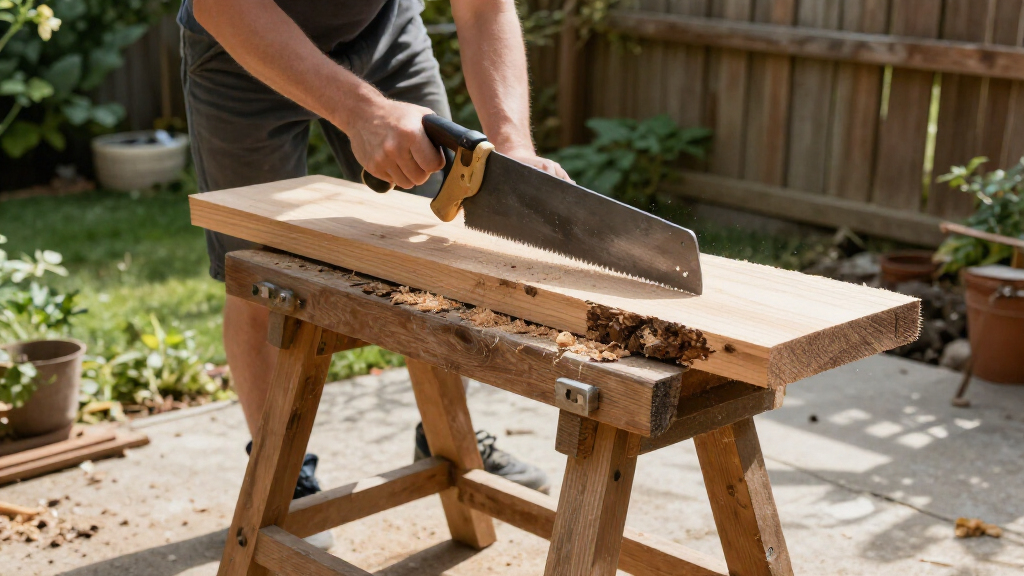
I ranked these saws by how well their design matches common hand-saw jobs: cutting boards and household materials, making controlled woodworking cuts, or pruning branches. I weighed blade length and tooth style against handling, safe storage, and the practical value of features such as a folding lock or multiple blades. A saw that does one job well can rank highly for that role, but I favored models with broader usefulness for the overall position.
The order reflects those tradeoffs rather than a claim that one tooth pattern works for every cut. The JORGENSEN takes the overall lead for general cutting, while the RUITOOL and folding pruners earn their places through distinct task fit. The fine-cut 14-inch options and HAUTMEC suit buyers prioritizing controlled cuts; the Craftsman is a straightforward fixed-blade alternative, and TOOLAN is for buyers who value blade choice. Product descriptions provide limited detail on long-term durability and cut performance, so I focus on stated design and intended use.
| hand saw | Handle |
|---|---|
| JORGENSEN 15-Inch Hand Saw wit | Aluminum frame with TPE and ABS grip |
| VRYTOR 7-Inch Folding Pruning | Rubber |
| Fiskars 10" Folding Pruning Sa | Non-slip grip |
| RUITOOL Japanese Hand Saw 6 In | Beechwood |
| 14 in. Pro Hand Saw | Thermoplastic elastomer |
| 14-inch Hand Saw with Fine-Cut | Anti-slip TPR soft handle |
| REXBETI 11-Inch Folding Prunin | — |
| Craftsman 12-Inch Hand Saw | — |
| HAUTMEC 14-Inch Hand Saw with | — |
| Folding Camping Saw 11-Inch He | — |
| TOOLAN 8-in-1 Multi-Blade Hand | — |
Factors to Consider When Choosing Hand Saw
Before choosing a hand saw, decide what you expect it to cut most often and where you’ll use it. The saw that feels versatile on paper can be awkward if its blade, teeth, or storage style don’t fit your actual jobs. These broader factors help narrow the field before comparing individual models.
Match the Saw to the Material and Cut
Start with the material you expect to cut most: lumber, branches, plastic, or mixed household materials. A pruning saw’s aggressive teeth are designed around green or dry branches and may leave a rougher result on visible wood. Fine-tooth saws can offer more control on boards, though they may cut slowly through thick stock. Pull saws cut on the pull stroke, which can help keep a thin blade tracking neatly when you use a light touch. Multi-material claims don’t mean every blade works equally well across every material. Choose for your most frequent job, then decide whether occasional flexibility is worth a compromise.
Choose Tooth Pattern for Control or Speed
Tooth count is only part of the cutting picture, but it gives a useful clue: finer teeth tend to favor a smoother, more controlled cut, while coarser teeth clear material faster. A common mistake is to choose the finest teeth for every job, then find that thick branches or boards take too much effort. Very aggressive teeth can also tear the surface when appearance matters. Look at the intended cut and whether the saw is designed to cut on a push, pull, or both strokes. A double-edge blade can provide two cutting approaches, but it requires you to select the right side. If you often alternate between rough pruning and finish work, two purpose-built saws may be easier to manage than one compromise.
Pick Blade Length for Reach and Maneuvering
A longer blade can cover more material with each stroke and is useful on wider boards, but it needs room to move. A shorter blade gives you more control in tight spots and is easier to pack for outdoor work. Buyers sometimes focus only on blade length and overlook the space needed for a full, comfortable stroke. For trimming in dense growth or a small workshop, maneuverability may matter more than maximum reach. For repeated cuts through wider stock, a compact blade can make the work slower. Think about the largest cut you’ll make and the space around it before deciding.
Weigh Folding Convenience Against Fixed-Blade Simplicity
Folding saws are easier to store and carry, and a locking mechanism helps keep the blade in a set position while cutting. Their hinges and locks add moving parts that a fixed-blade saw does not have. Fixed blades are straightforward to use and can feel more natural for repeated workshop cuts, but they need a sheath or safe storage location. Don’t treat a folding lock as a substitute for checking that the blade is fully secured before use. If the saw will live in a toolbox or garden kit, compact storage can be a real advantage. If it will stay at a bench, a fixed design may be the simpler fit.
Consider Grip, Balance, and Cutting Position
A comfortable grip matters more as a job involves repeated strokes, awkward angles, or gloves. Soft-grip handles can help with control, but handle shape and balance still determine how naturally the saw sits in your hand. A handle that suits a large hand may feel bulky to someone with a smaller grip. For pruning, check whether the handle gives you a secure hold when reaching around branches; for workshop cuts, favor a position that keeps the blade aligned without twisting your wrist. If possible, handle the saw before buying. Don’t assume that a more padded handle automatically makes a saw easier to control.
Pay for Features That Solve a Recurring Problem
Extra blades, dual cutting edges, and folding locks are useful when they address jobs you actually do. A multi-blade design can reduce the need to carry separate saws, but swapping blades adds steps and calls for secure storage of unused blades. A dedicated pruning saw is simpler when branches are the main task. Buyers can also overvalue a long list of compatible materials without checking which blade handles each one. Spend more for a feature that reduces friction in a regular task, such as safe carry for frequent garden work or a second edge for a recurring woodworking need. For occasional repairs, a straightforward fixed saw may be all the flexibility you need.
Frequently Asked Questions
Can one hand saw handle pruning and cutting boards?
Some general-purpose saws can cover light work on both, but pruning teeth and fine-cut teeth serve different goals. Aggressive pruning teeth clear branches quickly and can leave a rough finish on boards. A fine-cut saw can give more control on lumber, though it may feel slow on larger branches. If you regularly do both jobs, separate saws often make the work more predictable. If you only need occasional branch trimming, weigh that convenience against the extra tool.
Is a folding pruning saw suitable for woodworking?
A folding pruning saw can cut wood, but its tooth geometry and shorter blade are generally aimed at branches rather than clean, straight board cuts. For visible woodworking, a fine-tooth or pull saw is usually easier to control. The folding format is helpful when portability and safe storage matter more than finish quality. Check the blade’s intended use before assuming a high tooth count alone makes it a woodworking saw. For occasional rough cuts outside, it may be adequate; for joinery or finish work, choose a dedicated design.
Should I choose a pull saw or a conventional push saw?
A pull saw cuts as you draw the blade toward you, which can keep a thin blade under tension and support controlled strokes. A conventional push saw cuts on the forward stroke and may feel more familiar for general household jobs. Neither style is universally easier: technique, blade thickness, and the material all matter. If you are new to hand sawing, begin with gentle strokes and let the teeth do the cutting rather than forcing the blade. Choose the stroke direction that feels stable for the cuts you make most.
Does a higher TPI always produce a cleaner cut?
No. A higher teeth-per-inch count can support finer cuts, but material, tooth shape, blade sharpness, and technique also affect the result. Fine teeth can clog or cut slowly in thick material, while coarse teeth may remove material quickly but leave a rough edge. Match the tooth pattern to the size and finish of the work. A clean cut also depends on supporting the workpiece and starting the cut carefully. Treat TPI as one selection clue, not a guarantee of finish.
When is a multi-blade hand saw worth choosing?
A multi-blade saw is useful when you regularly move between materials or tasks and want fewer separate tools. Its value depends on whether the included blades match those jobs and whether changing them is convenient. For one recurring task, a dedicated saw is simpler to select and keep ready. Check how blades attach and how unused blades are stored before relying on the system. A broad range of blade options matters less than having the right blade for your common cuts.
Conclusion
For the best overall balance, choose the JORGENSEN 15-Inch Hand Saw for general household and workshop cutting. For value-minded buyers, the Craftsman 12-Inch is a straightforward fixed-blade option, while beginners may prefer a simple fixed saw with a manageable length and familiar push stroke. For a premium woodworking approach, the RUITOOL Ryoba stands out for its double-edge pull-saw design. Gardeners should look to the Fiskars folding pruner for compact branch work, while the VRYTOR, REXBETI, and camping saw offer other folding formats to compare. Choose TOOLAN if varied blade options matter more than the simplicity of a dedicated saw, and consider the fine-cut 14-inch models or HAUTMEC when controlled cuts are the priority.